WORDS & PHOTOS:
VÉRONIQUE MUSUMECI
Véronique Musumeci
Bio
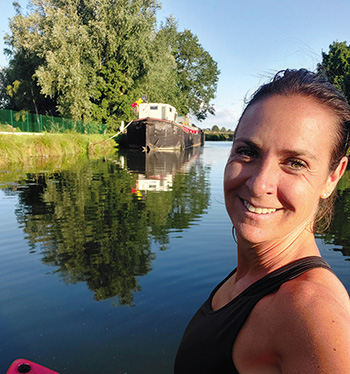
Véronique, aka SupandSee, was born with a backpack on her shoulders, a camera around her neck and a compass in her pocket. Passionate about travel and discovery, she has explored over 118 countries to date and feels most at home in the great outdoors. Since 2018, SUP has been her sport of choice, and in her various books and articles, she shows you the world from a different angle.
SUP Malawi: Africa’s Freshwater Paradise
Why Malawi? That was probably the question I heard most often when I told people where I was going.
Malawi is hardly the first place that springs to mind when you think of SUP. But after travelling to around 120 countries, I wanted to take my inflatable SUP somewhere new, with plenty of water and plenty left to discover.
Lake Malawi is the third-largest lake in Africa and covers around 29,600 square kilometres. It’s sometimes nicknamed the ‘Calendar Lake’: 365 miles long and, according to the popular description, 52 miles wide – one for every day and week of the year. It’s also known as the ‘Lake of Stars’, a name traditionally associated with the lights of fishermen on the water at night.
I had ten days and could find hardly any information about paddling on the lake. I looked for accommodation with direct water access and settled on two bases: Senga Bay and Cape Maclear.
First encounters at Senga Bay
I reached Senga Bay, checked into Safari Beach Lodge, and did what any impatient paddler does after travelling halfway across the world with an inflatable SUP – I got on the water almost immediately.
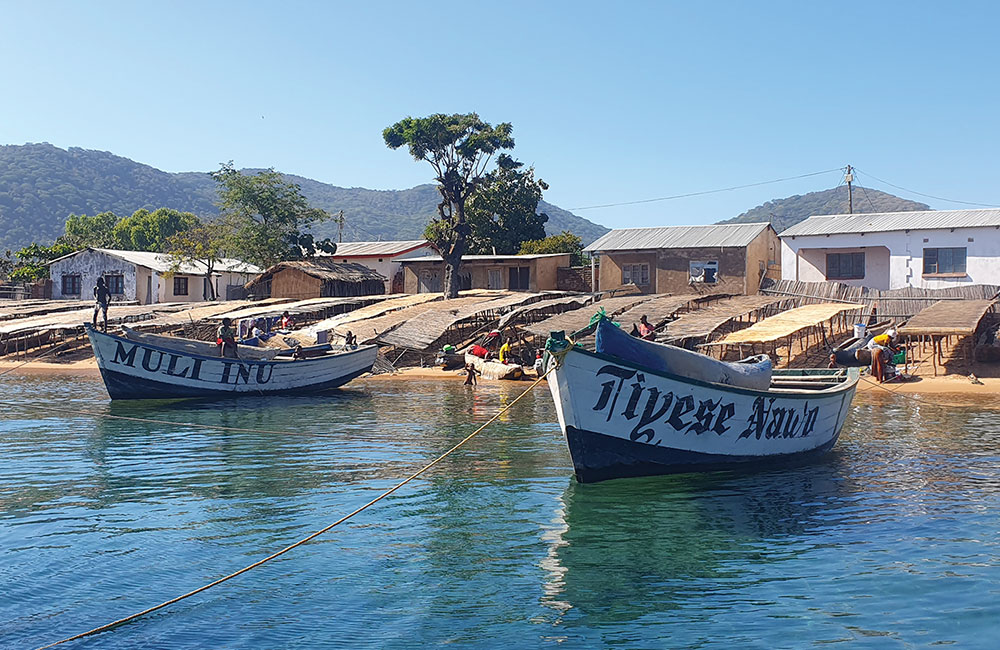
I didn’t have to paddle far before I reached a fishing village. Narrow wooden canoes lay along the sand, fishermen moved between the beach and the water, and houses stood almost directly on the shoreline.
The children waved, and I waved back. I asked before taking photographs, and a few of the people with phones promptly started photographing me too.
Then the children began swimming towards my board. One climbed on. Then another. And another. Before long I seemed to have ten children attempting to balance on my SUP at the same time, laughter everywhere, and I started wondering how I was ever going to get moving again without all of us ending up in the lake.
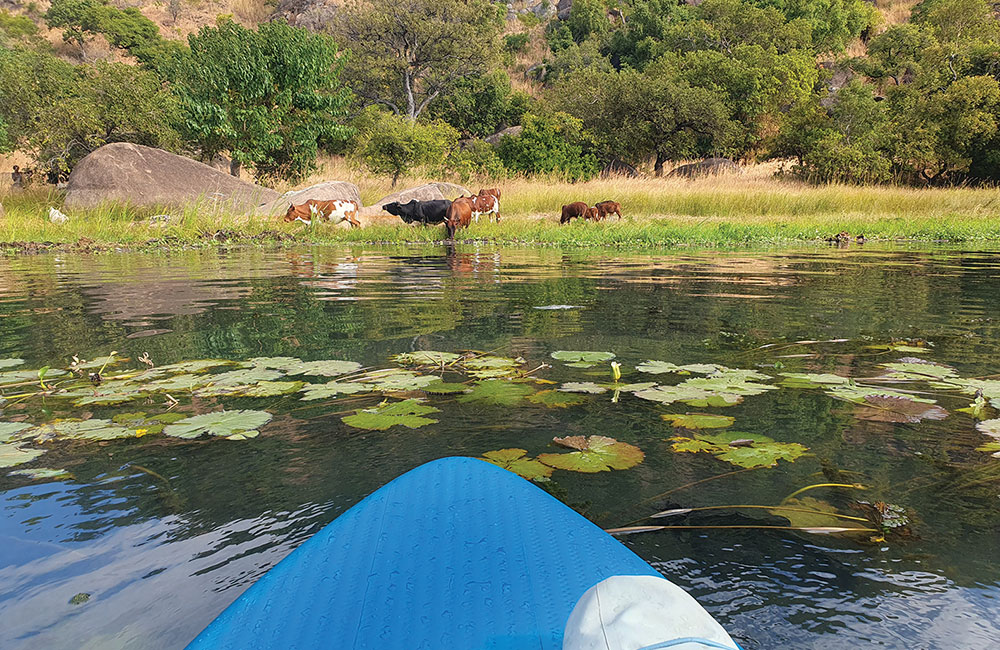
Beyond the village, the shoreline gradually became quieter and wilder. Cattle wandered down to drink at the water’s edge. Children slipped past in impossibly narrow wooden canoes, paddling with simple wooden blades. Trees stood partially submerged in the lake, low hills rose behind the shoreline, and African fish eagles circled overhead.
Then came the reeds. I’d asked about hippos and crocodiles before setting off and had been reassured about this stretch near the village. Paddling alone beside thick reeds, my imagination remained slightly less convinced.
That evening, I swapped my SUP for hiking shoes and climbed a nearby hill with a local guide to watch the sunset. After spending the afternoon experiencing the lake from water level, seeing it from above gave me my first real sense of its scale. It seemed to go on forever.
Early morning with the fishermen
After a good night’s sleep, I was back on my SUP at sunrise, this time heading in the opposite direction, following the shoreline towards the broader beaches of Senga Bay.
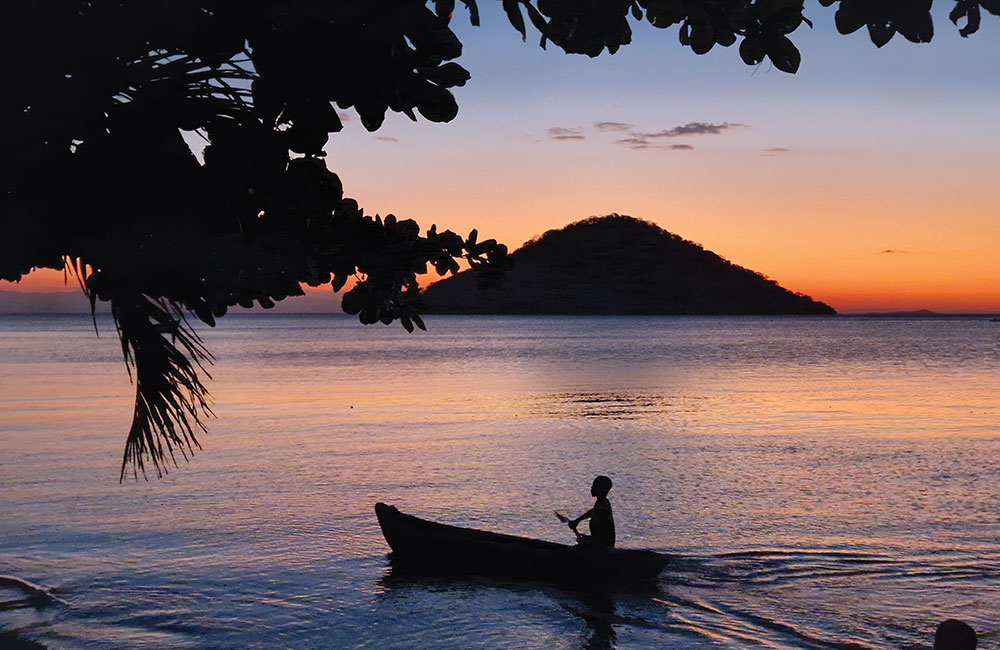
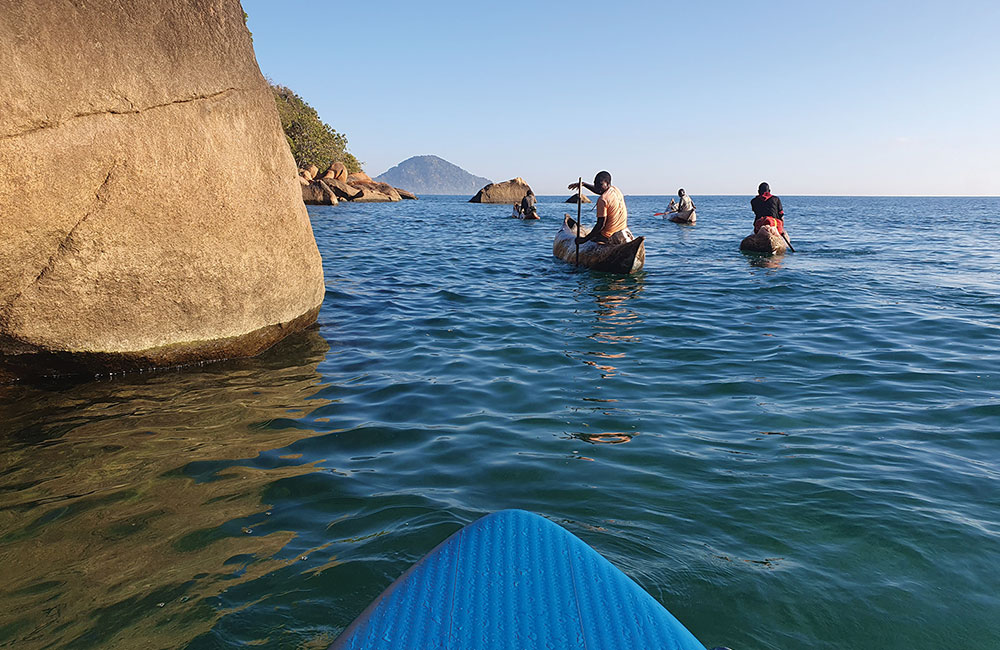
Then the fishermen started appearing. One narrow wooden canoe came towards me, then another, until perhaps ten canoes were making their way home after a night of fishing, sitting incredibly low on the water.
What struck me most was their mood – they were smiling, curious about the woman approaching them on a stand-up paddleboard, and I was equally curious about people whose working day took place through the night on this enormous lake. English is widely spoken in Malawi, which made these spontaneous encounters particularly easy; we could stop in the middle of the lake and talk. One fisherman explained that he liked being out on the water, that fishing allowed him to provide for his family, and that for him it was a good life.
Further along, I spotted monkeys on the rocks and baobabs above the shoreline. Tiny coves gave way to longer stretches of sand. At a broad beach where fishermen were working on their nets, I stopped for a swim and turned around.
SUP by boat: Lizard Island
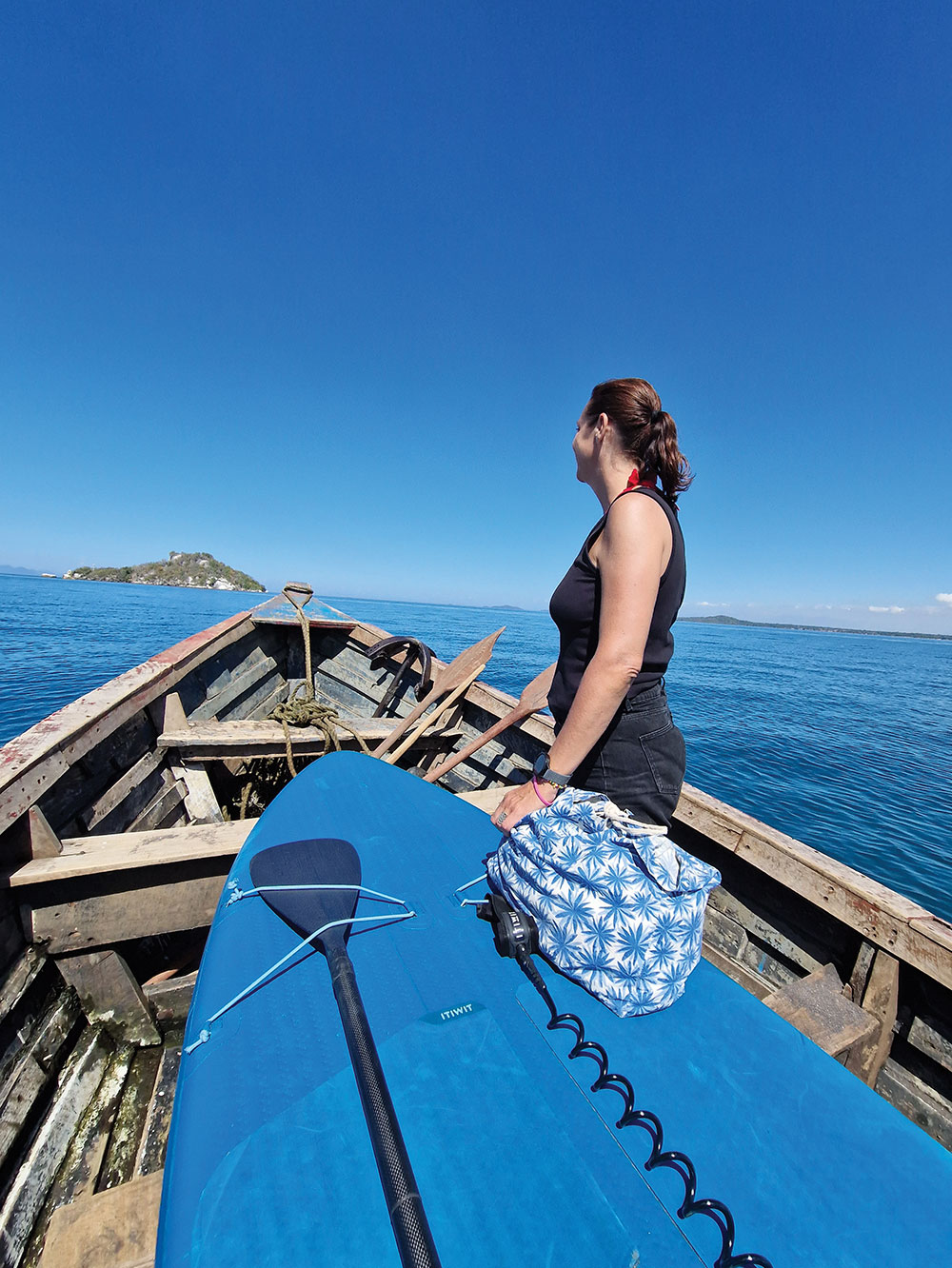
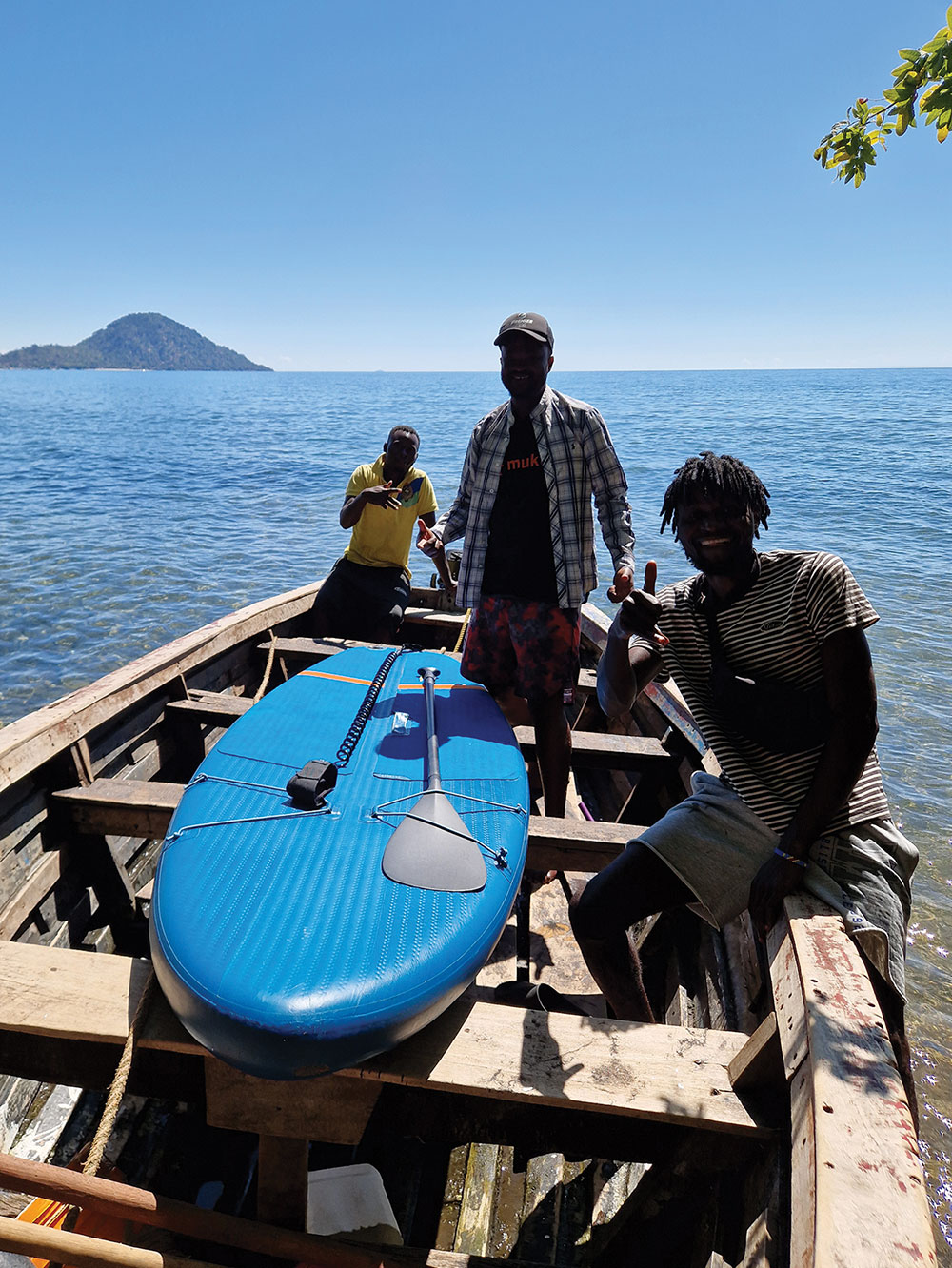
That afternoon, a local crew picked me up at the lodge and loaded my inflatable SUP onto their wooden boat. We talked and laughed as the shoreline disappeared behind us.
I paddled around Lizard Island, watching fish through the clear water. When a tourist boat arrived and visitors started throwing bread to attract fish for snorkelling, I carried on, as it is a practice that I do not agree with. After circumnavigating the island, I went ashore and climbed to the top. It had become a pattern on this trip: explore a place from water level first, then find somewhere high enough to look back down and understand where I’d just been.
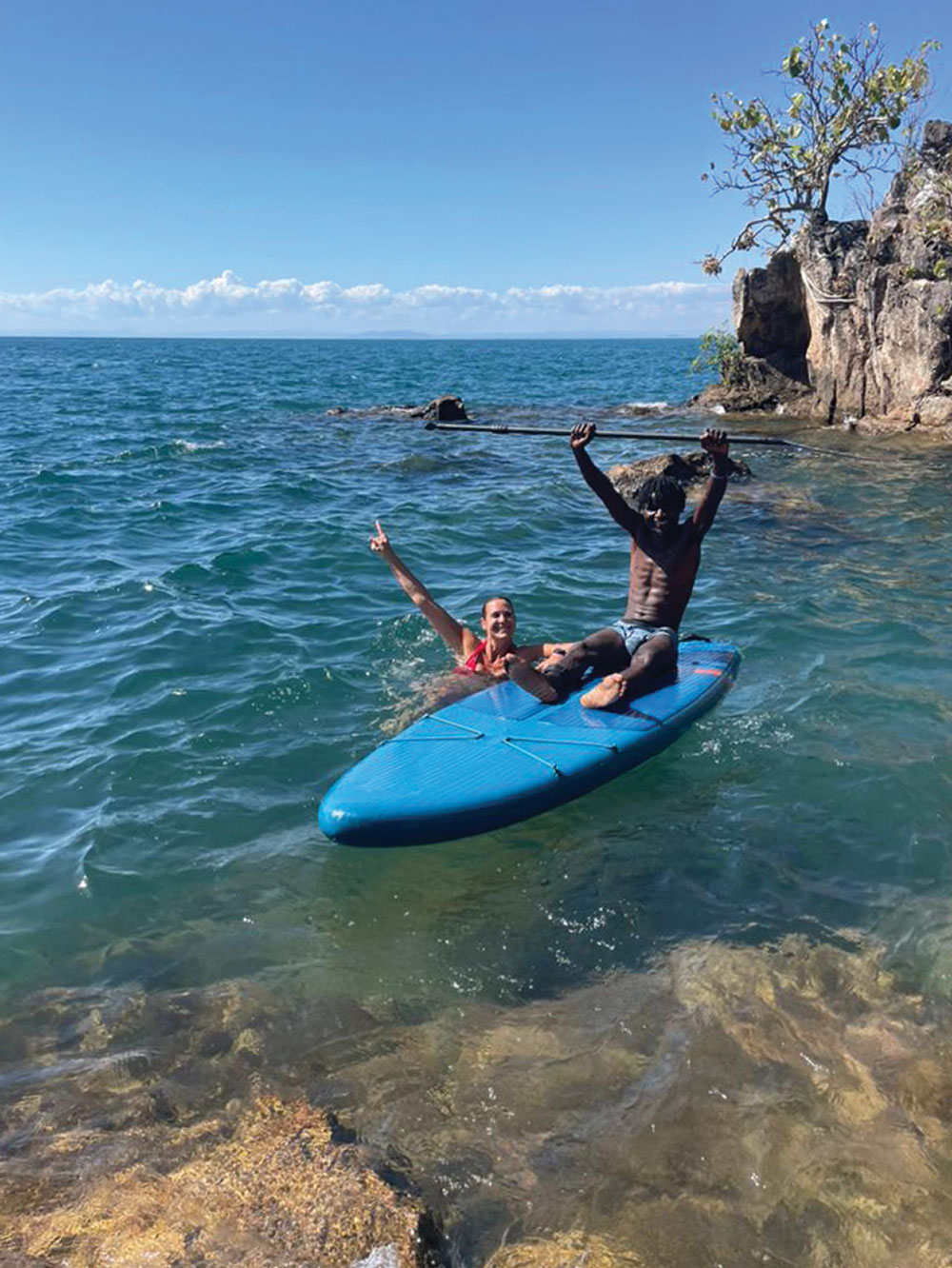
Before we left, one of the guys who’d brought me out to the island decided he wanted to try my SUP. What followed involved considerably more laughter than technique – another of those completely unplanned moments that became as memorable as the destination itself.
Cape Maclear – and a small navigational miscalculation
From Senga Bay, I continued south to Cape Maclear. My first accommodation there was Thumbi View Lodge, almost directly opposite Thumbi West Island.
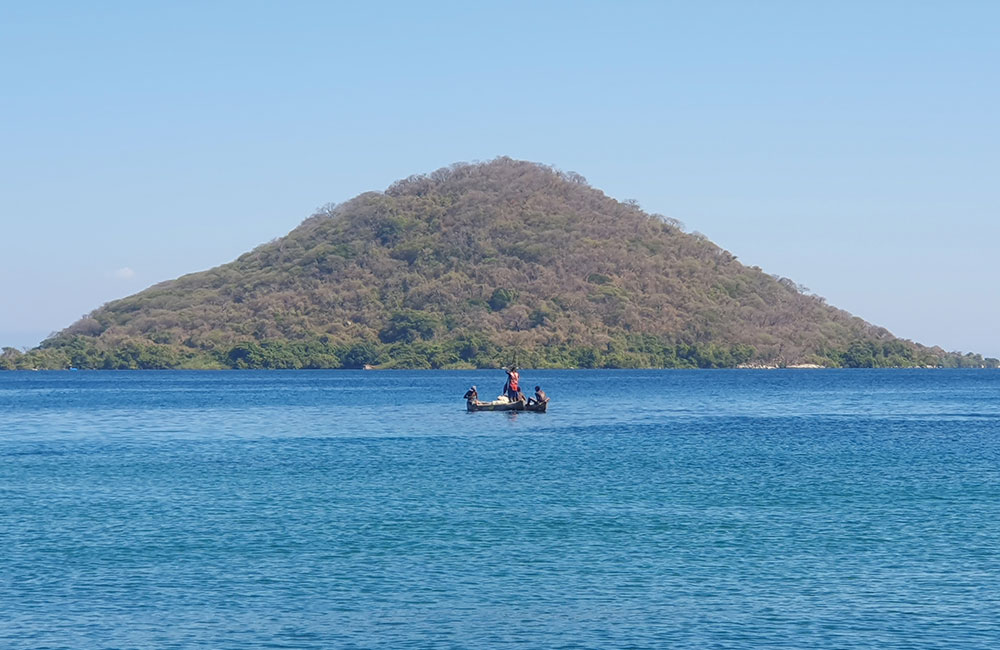
The island looked reassuringly small from the beach, about a kilometre offshore. I asked locally about the crossing, then set off, assuming Thumbi West was more or less round.
Once I reached the island, the shoreline seemed to go on and on. A glance at the map on my watch showed just how elongated it was. My quick little lap had become a proper paddle, and I couldn’t have been happier.
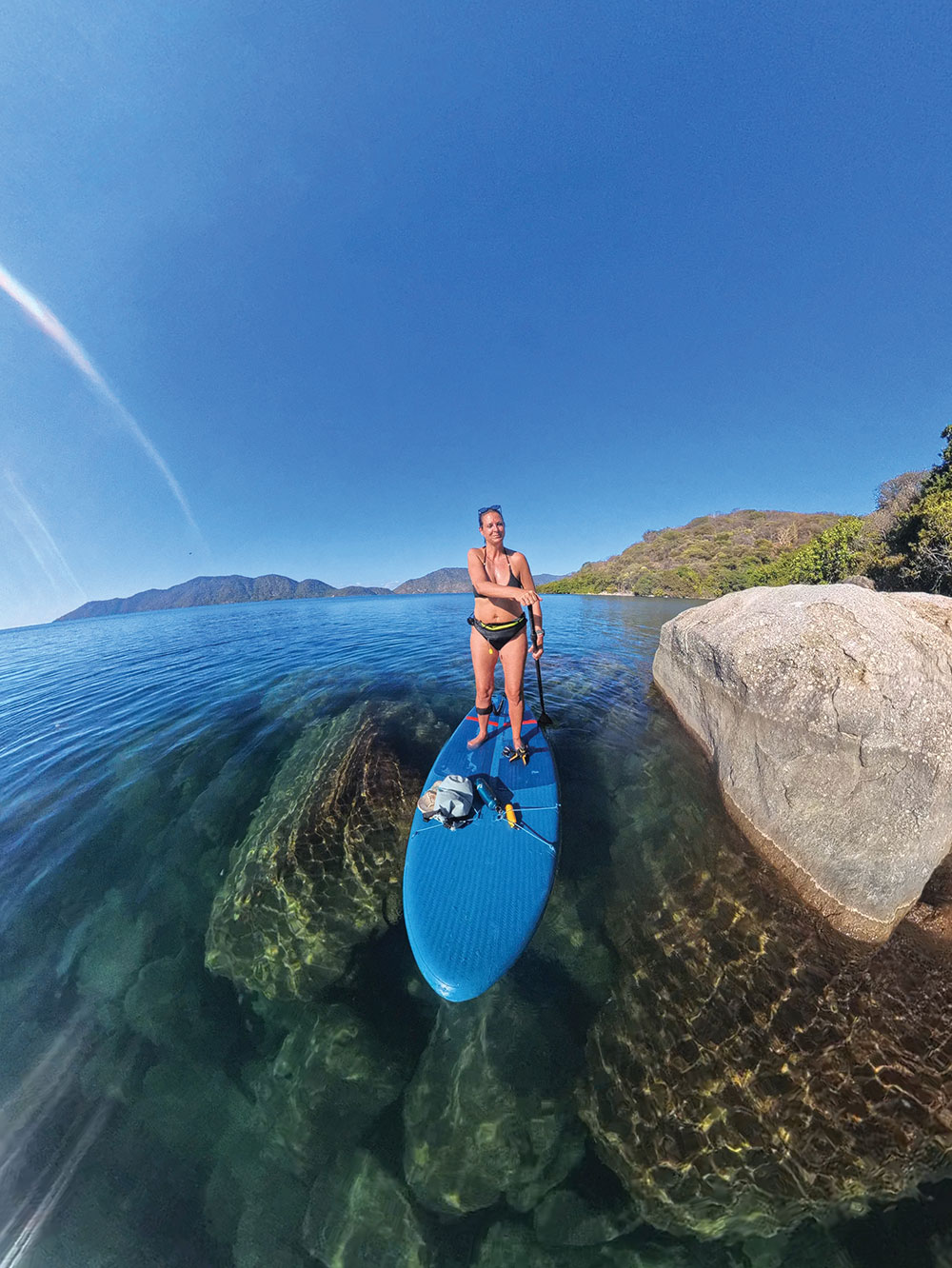
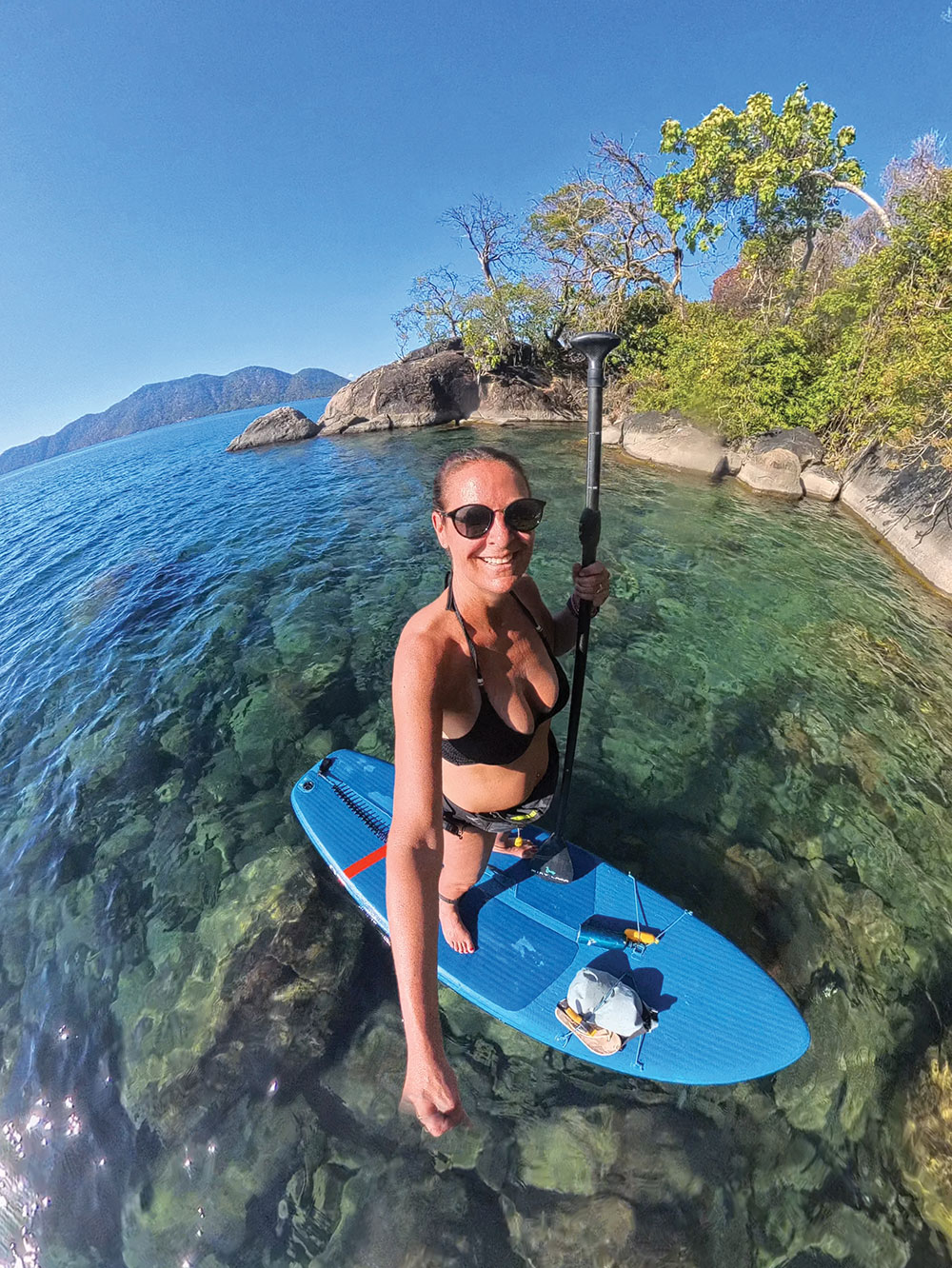
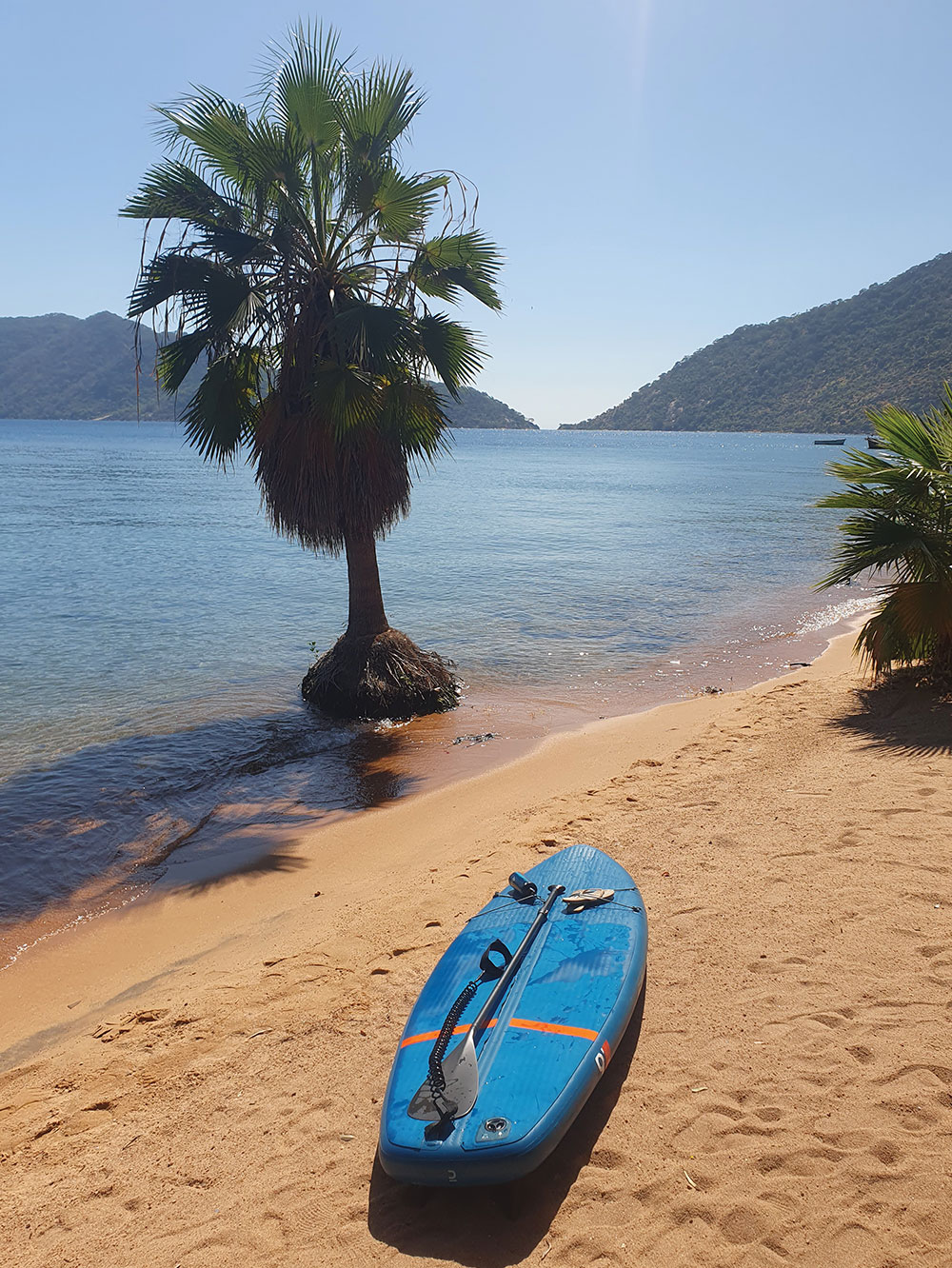
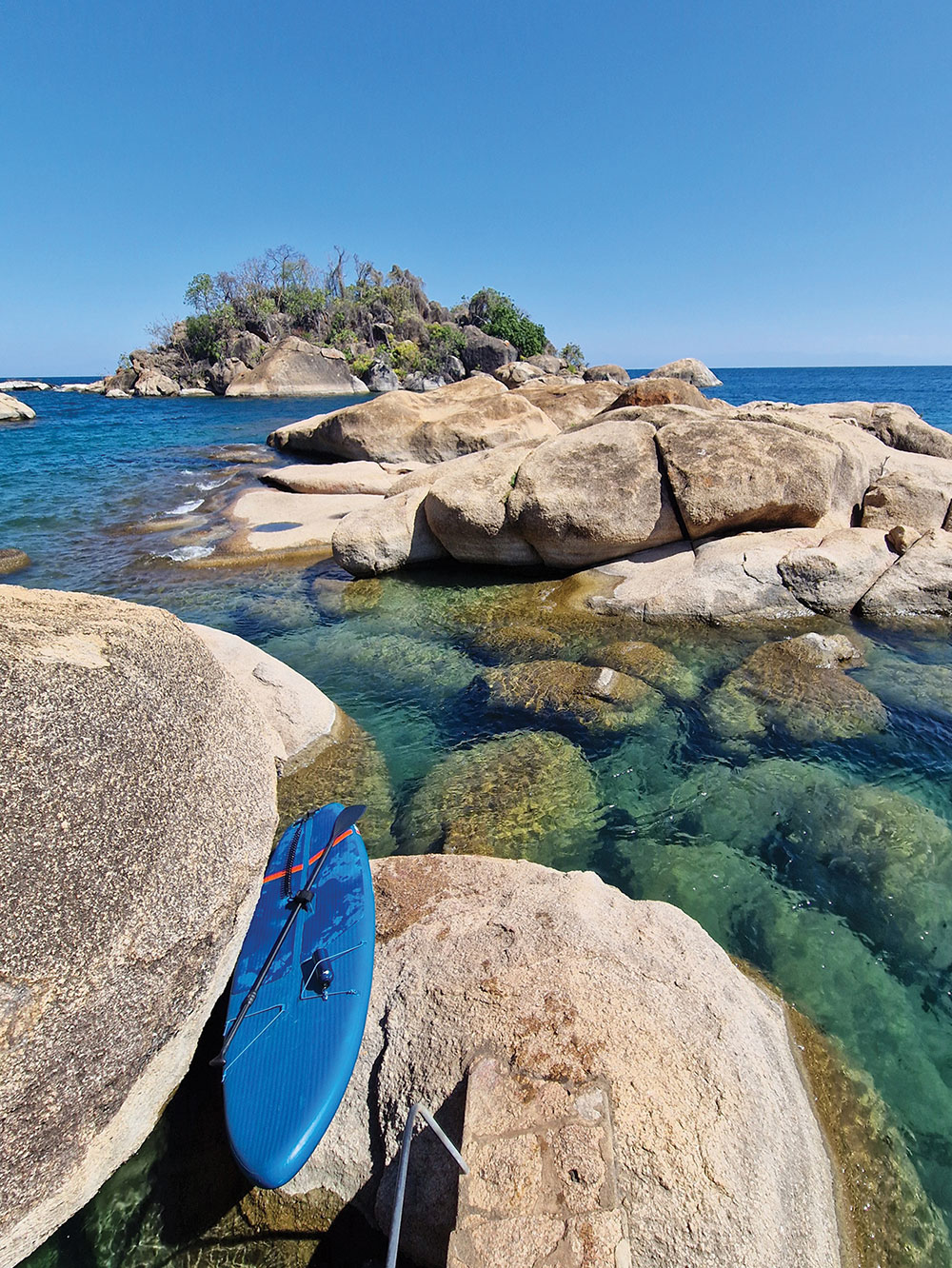
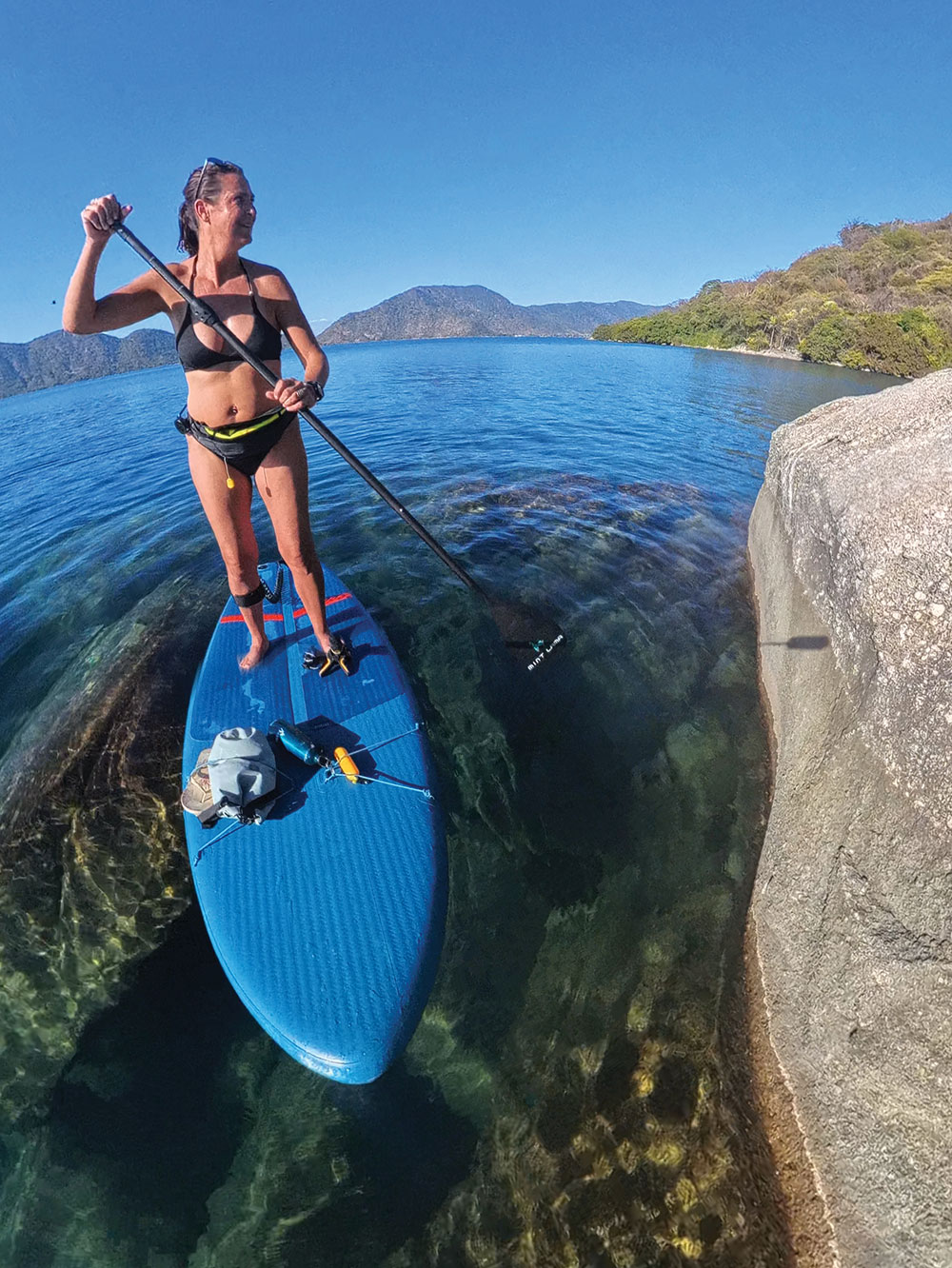
The scenery around Thumbi West was probably the most beautiful I encountered anywhere on the trip. The water was extraordinarily transparent, with huge, smooth boulders perfectly visible beneath my board and colourful fish swimming around. The shallows shifted through shades of turquoise and blue, while baobabs punctuated the rocky landscape above.
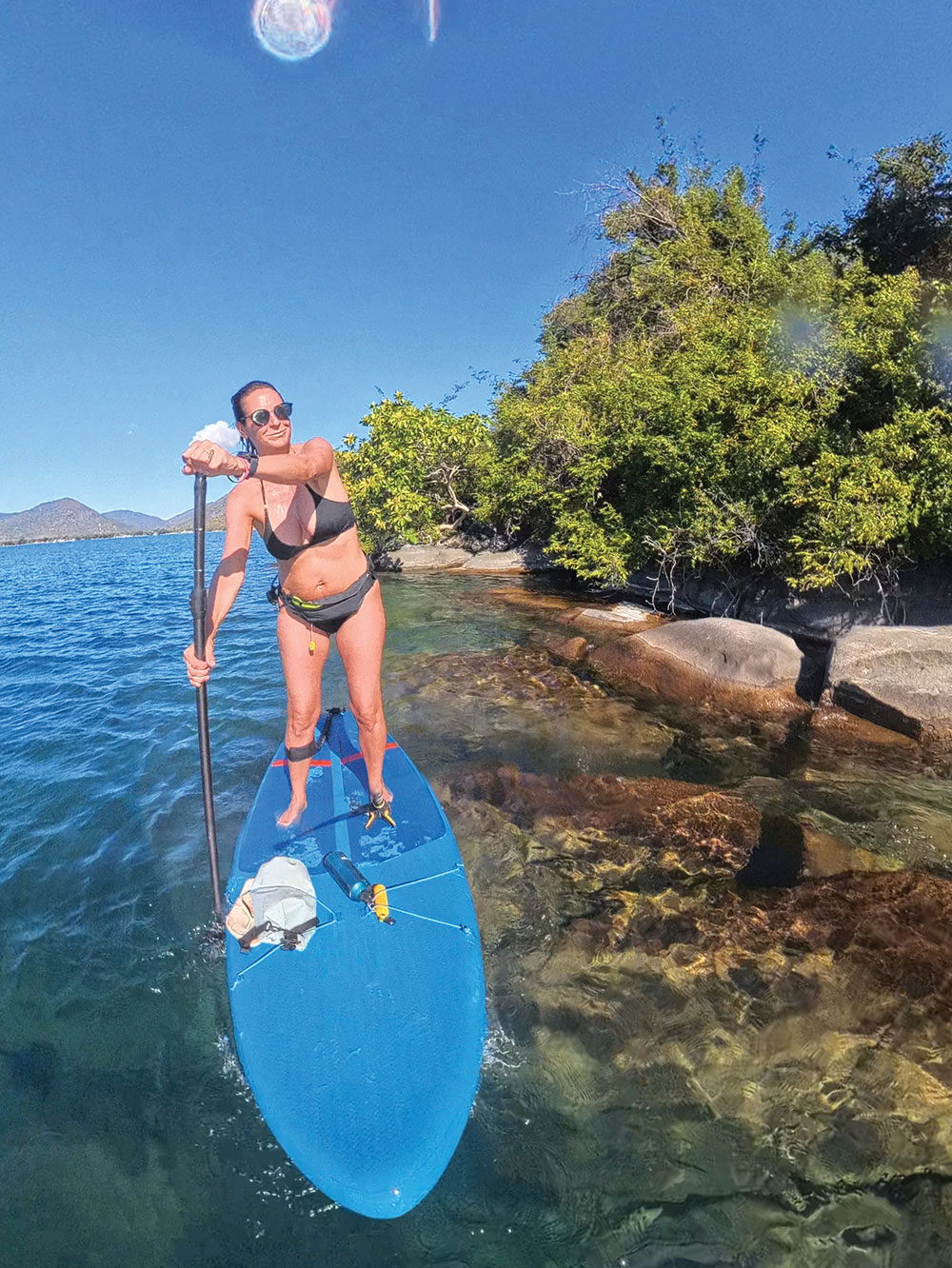
I stopped whenever I felt like it. At one little beach I pulled the board ashore; elsewhere I slipped into the water for a swim before continuing around the island. In one sheltered cove, a rather smart-looking tourist boat was anchored – apart from that, I felt completely alone: just me, my board, the rocks, the fish, and that incredible water.
By the time I returned to Cape Maclear, I’d covered around eight kilometres, with the wind changing as I rounded the island. Lesson learned. Before deciding to circumnavigate an island, check what shape it actually is.


Life from a paddleboard
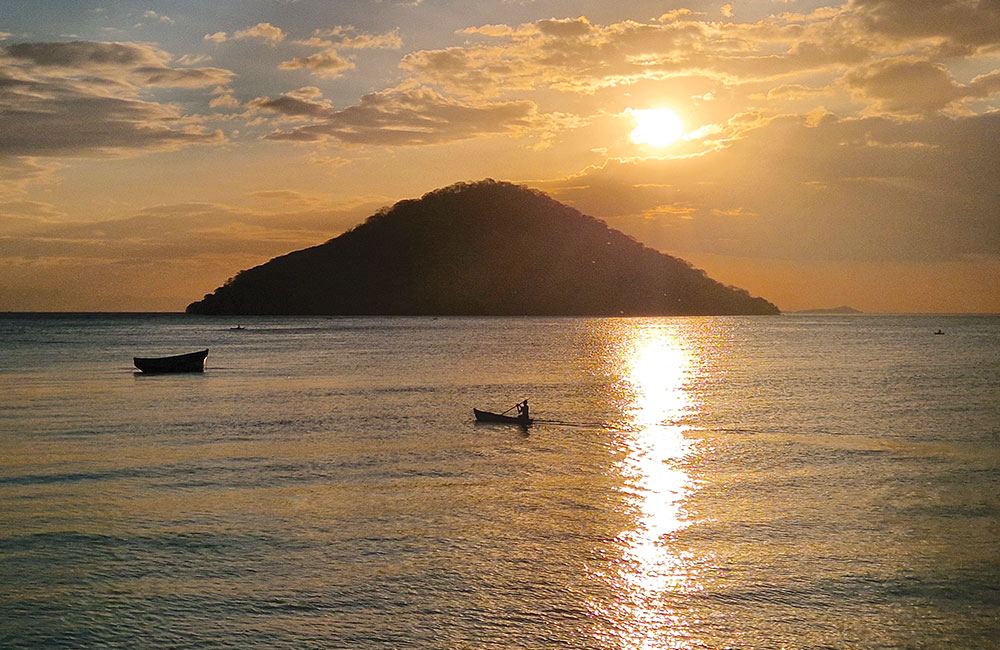
I moved a short distance along the shore to Mgoza Lodge. One thing I loved about Cape Maclear was that I could take the board out at sunrise or paddle a short distance offshore to watch the sun go down.
The shoreline was a constant spectacle: children played and washed in the water, fishermen repaired their nets, fish were laid out on large drying racks, wooden boats lined the beach, vendors sold homemade samosas, and there were little bars where you could stop for a drink – perhaps a fresh fruit juice or a Kuche Kuche, one of Malawi’s local beers. There was always something happening.
I kept an eye out for mooring lines below the surface. They were easy to miss and could catch the fin.
About 1.6 kilometres along the coast, I paddled over the submerged remains of a building destroyed by Cyclone Freddy, which devastated parts of Malawi in March 2023.
Paddling into Lake Malawi National Park
From Mgoza Lodge, I also paddled towards Otter Point, about six kilometres return if you can paddle in a straight line. That’s never really been my speciality.
This route took me into Lake Malawi National Park, established in 1980 and regarded as the world’s first freshwater national park; four years later, it became a UNESCO World Heritage Site.
After stopping at the park entrance and paying the entrance fee, I continued along the shoreline. Once again, the water was spectacular – golden beaches alternated with enormous smooth boulders, and beneath the SUP, colourful fish moved through incredibly clear water.
Lake Malawi is famous for its extraordinary fish diversity, particularly its cichlids. UNESCO estimates that the lake may contain a 1,000 fish species, with an exceptional number found nowhere else, and its importance for the study of evolution has even been compared to Darwin’s finches in the Galápagos.
As I rounded Otter Point, the wind caught me and the water turned considerably rougher. I left the SUP beside some concrete steps and climbed to the viewpoint, where I could look back over the rocky coastline and the vast blue expanse of Lake Malawi.
Sometimes the best decision on a SUP is knowing when to get off it.
The day the lake said no
There was another day when Lake Malawi decided for me before I even launched. It was simply too windy to SUP. So I came up with Plan B: if I couldn’t paddle, I would go and find some hippos. It seemed straightforward enough. It wasn’t.
We set off in a wooden boat with my SUP aboard, in case we found sheltered water. Then we rounded an exposed point, and the waves picked up. I was worried about the boat, and the crew didn’t look particularly relaxed either. We turned around.
Somebody found a motorbike. I deflated my SUP, stuffed it into its backpack and climbed on behind the driver. Then came a bicycle taxi, another boat, more wind and another attempt to reach a spot where hippos were usually seen.
After an entire day of boats, motorbikes and bicycles, do you know how many hippos we saw? None. My guide was devastated. I’d seen places I would never otherwise have visited and met people along the way. Eventually we sat down together for a beer. I told him the hippos could wait until next time. The adventure had been more than enough.
Solo, but not unnoticed
Travelling alone and paddling alone are two slightly different things. On land, being a solo female traveller in Malawi never prevented me from enjoying the trip. On the water, though, I was conscious that I was sometimes heading several kilometres away by myself on an enormous lake.
Before every longer paddle, I told someone at the lodge where I was going and when I expected to be back. “If you don’t see me again in a few hours, start wondering where I am.”
Wind can appear quickly on Lake Malawi. Water that looks perfectly calm from the beach can be something very different a few kilometres away, as I found more than once.
More than a SUP trip
I’d arranged a local driver before leaving home, which gave me more time to explore between stops. After Cape Maclear, I finished the journey at Kuti Wildlife Reserve – a complete change of pace, a wonderfully simple, back-to-nature lodge, and the chance to explore the reserve on foot and by bicycle, looking for wildlife rather than islands. It was a fitting final chapter, because although I’d gone to Malawi for the SUP, the trip had become about much more than paddling.
The beauty of the blank page
I didn’t want a list telling me which five paddles I had to complete. I didn’t want to arrive knowing exactly what photograph I was supposed to take from exactly which beach. I wanted the blank page.
That’s why I went to Malawi – to find out for myself.