WORDS:
CORY JONES
PHOTOS:
CORY JONES

Cory Jones
Bio
Cory Jones is a sea kayak and polar expedition guide with Quark Expeditions, a wilderness first aid trainer, and co-founder of the First Aid Training Co-operative. He has paddle-guided in Scotland, Canada, Antarctica, and South Georgia, combining a passion for paddling with deep knowledge of wildlife, safety, and polar history. He writes a blog about his travels at @weewildadventures.
Paddling in the Footsteps of…Shackleton
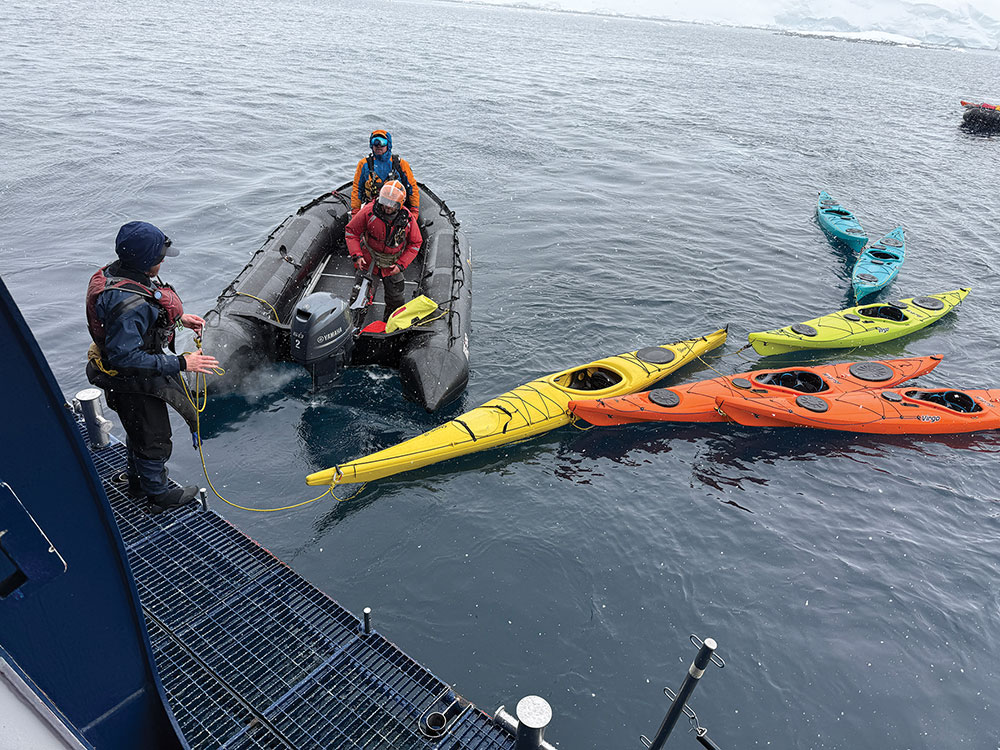
For a second season, I have had the privilege of working as a sea kayak guide in Antarctica – surely one of the most astonishing paddling environments on Earth. Expedition ship supported kayaking here means returning to warm showers, good food, and a comfortable cabin after each icy adventure, even as you paddle among icebergs, glaciers, and extraordinary wildlife in a place steeped in polar history.
This season, I guided for Quark Expeditions. My travels took me along the Antarctic Peninsula and to the shores of Elephant Island and the wild, mountainous island of South Georgia. These places formed the stage for Sir Ernest Shackleton’s greatest survival story.
The Endurance Story: A Route Written into Polar Legend
Most paddlers know the basic outline of Shackleton’s 1914–17 Imperial Trans-Antarctic Expedition. In 1915, the ship Endurance became trapped in pack ice deep in the Weddell Sea. Shackleton and his 27 men drifted for months until the ship was crushed by the ice. Forced to abandon the wreck, the crew camped on shifting ice floes, then made a desperate escape in three small, open boats. They crossed dangerous seas and broken ice, finally reaching Elephant Island – an exposed and icy outcrop at the edge of the South Shetlands. Even this was a remarkable feat.
But the hardest part was still ahead. Shackleton knew that no rescue would come, so he chose five men to join him and left Elephant Island in the 22-foot lifeboat, James Caird. Their goal was to sail 800 nautical miles across the dangerous Scotia Sea to reach South Georgia – a daunting journey in such a small boat. After 17 days at sea, guided by Captain Frank Worsley’s precise navigation, they reached land. However, they landed on the wrong side of the island. The whaling stations were separated from them by mountains and glaciers that no one had ever crossed.
Shackleton, Worsley, and Tom Crean made that crossing in a non-stop 36-hour push, arriving at Stromness Whaling Station utterly spent. It took four attempts to reach Elephant Island by ship, but Shackleton finally succeeded, and every man survived. To paddle these same waters is to feel the ghost of that journey at your shoulder.
The Peninsula: Blue Ice, Brash Ice, and Whale Roads
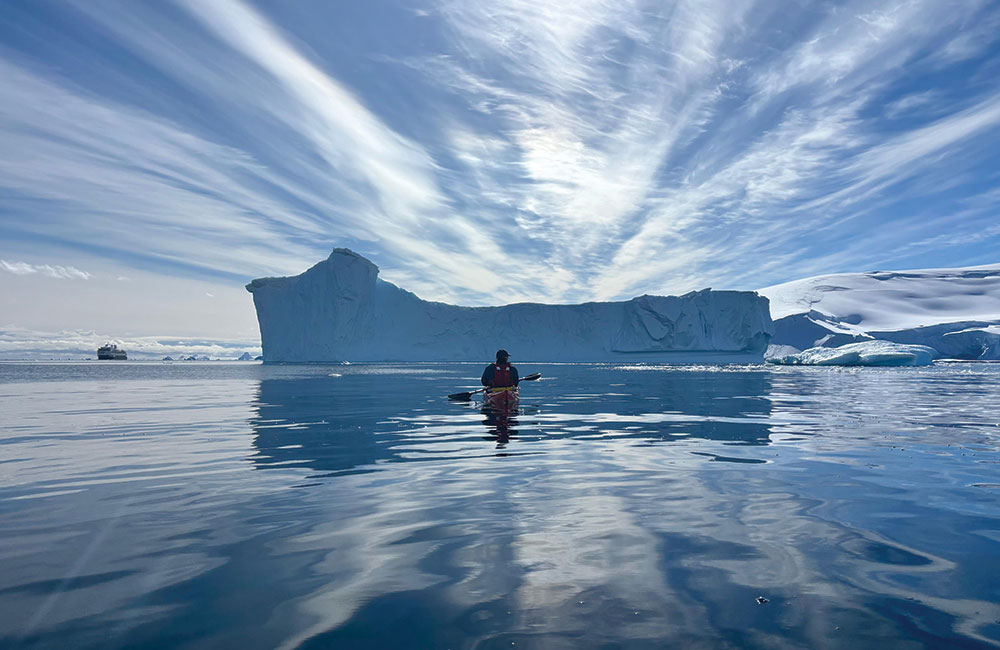
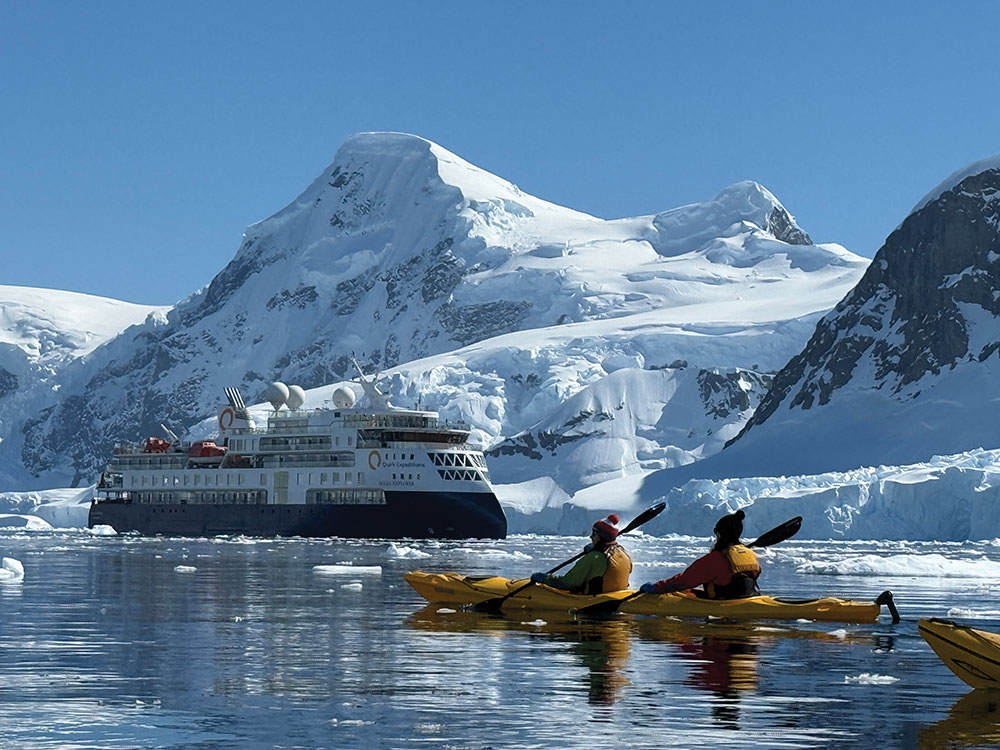
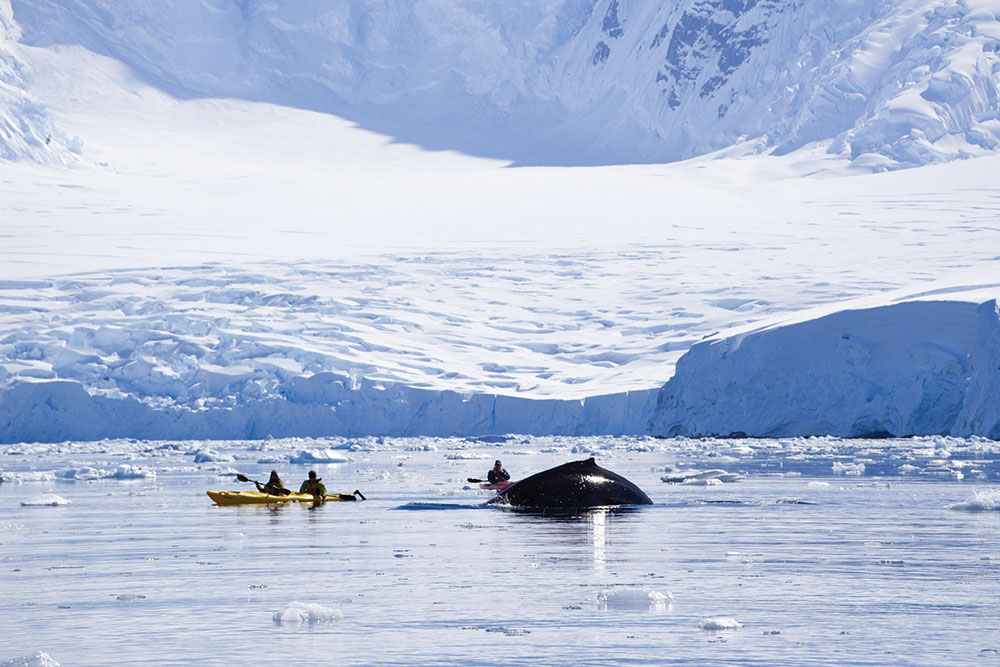
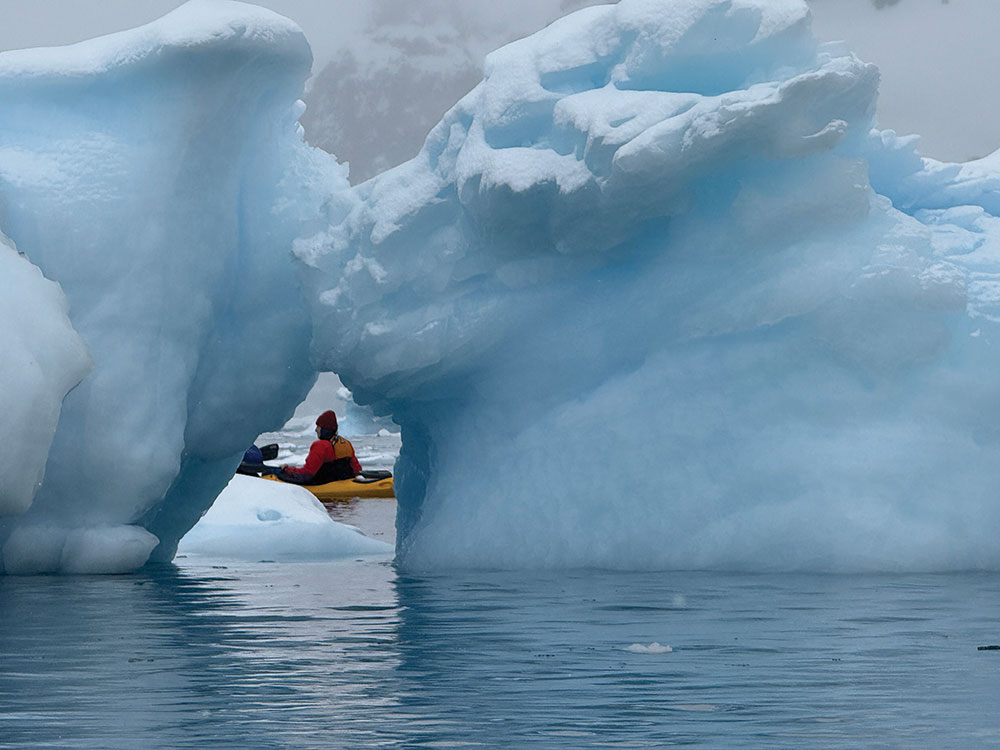
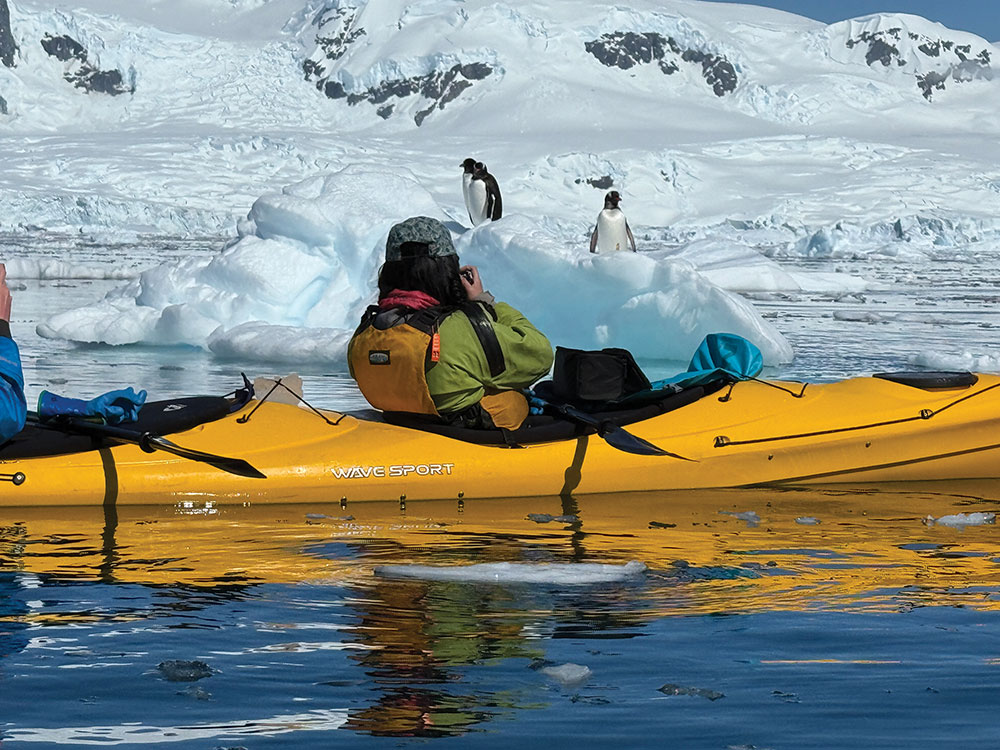
Our own voyage began on the Antarctic Peninsula. We enjoyed several glorious days of sea kayaking, and each launch felt like a gift. The icebergs glowed in deep blue and white. Their fluted walls rose like cathedrals above the kayaks, while brash ice crackled and tinkled as we pushed through it, bouncing harmlessly off our plastic hulls.
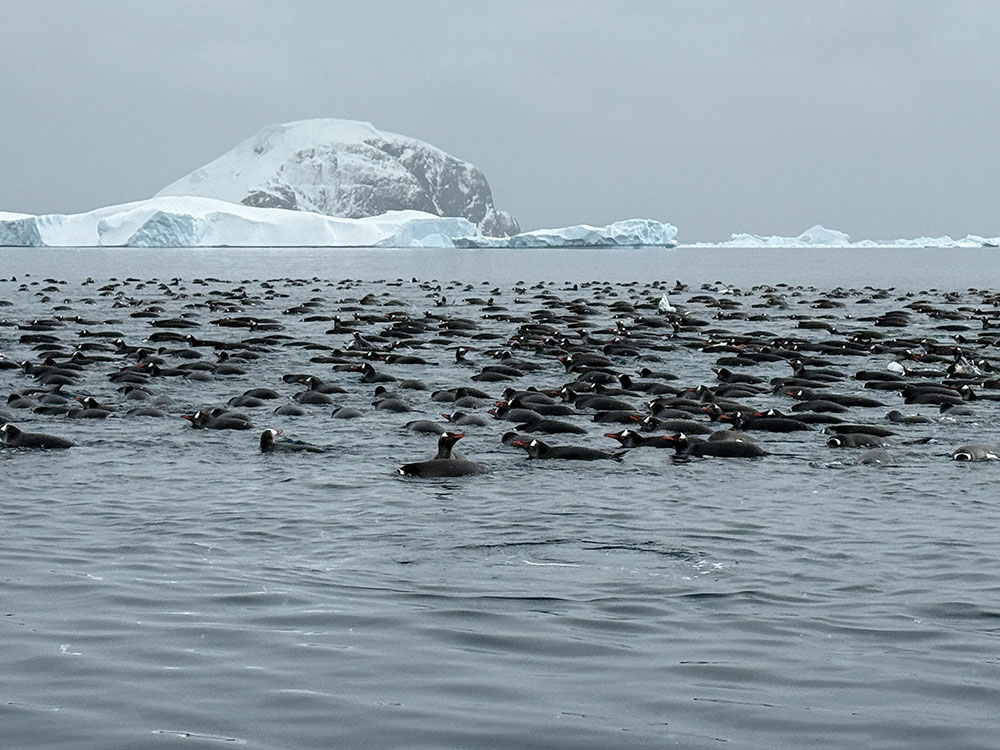
Penguins escorted us, porpoising in sleek arcs beside the boats. Now and then, a humpback surfaced in the distance, reminding us that we were paddling through waters once ravaged by industrial whaling. The scars of that history remain in the old whaling bays we visited, but so too does the sense of revival, with humpback whale numbers slowly recovering in parts of the Southern Ocean.
After rounding the northern tip of the peninsula, we headed through Antarctic Sound, a place of tabular icebergs and dramatic weather, on our way to Elephant Island.
Elephant Island: Shackleton’s Beach
If ever a place deserved to be called ‘wild’, it is Elephant Island. Our landing point, Wild Point, is named after Frank Wild, Shackleton’s second-in-command. He oversaw the castaways’ camp, which is battered by katabatic winds, rimmed by cliffs, and hemmed in by shifting pack ice. Landings here are rare. Kayaking here is rarer still.
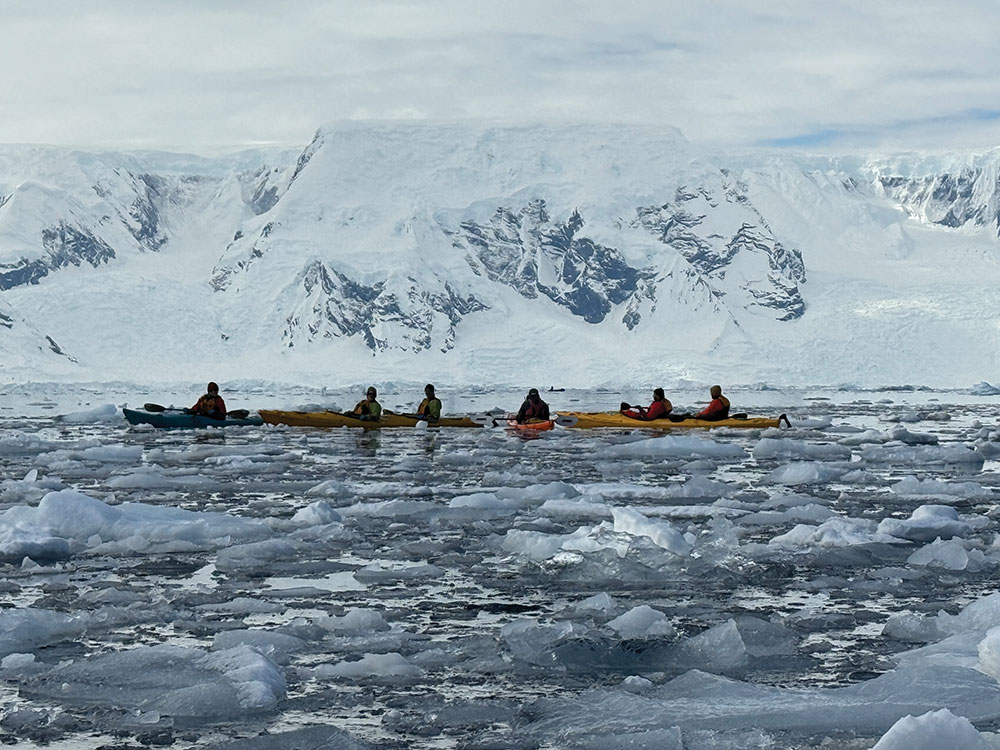
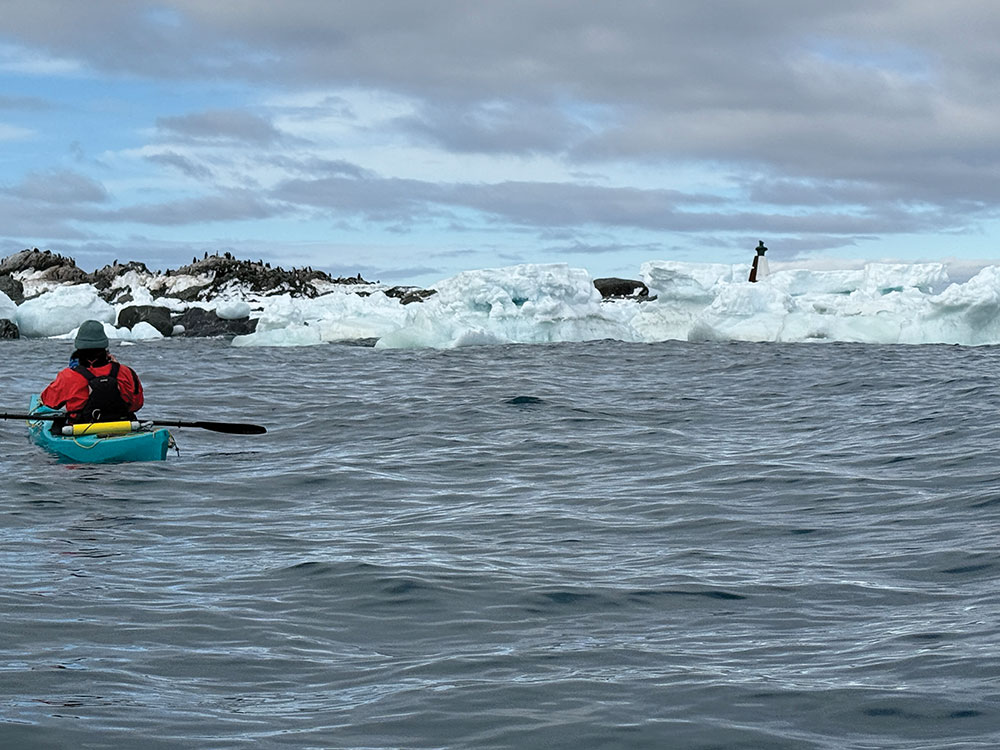
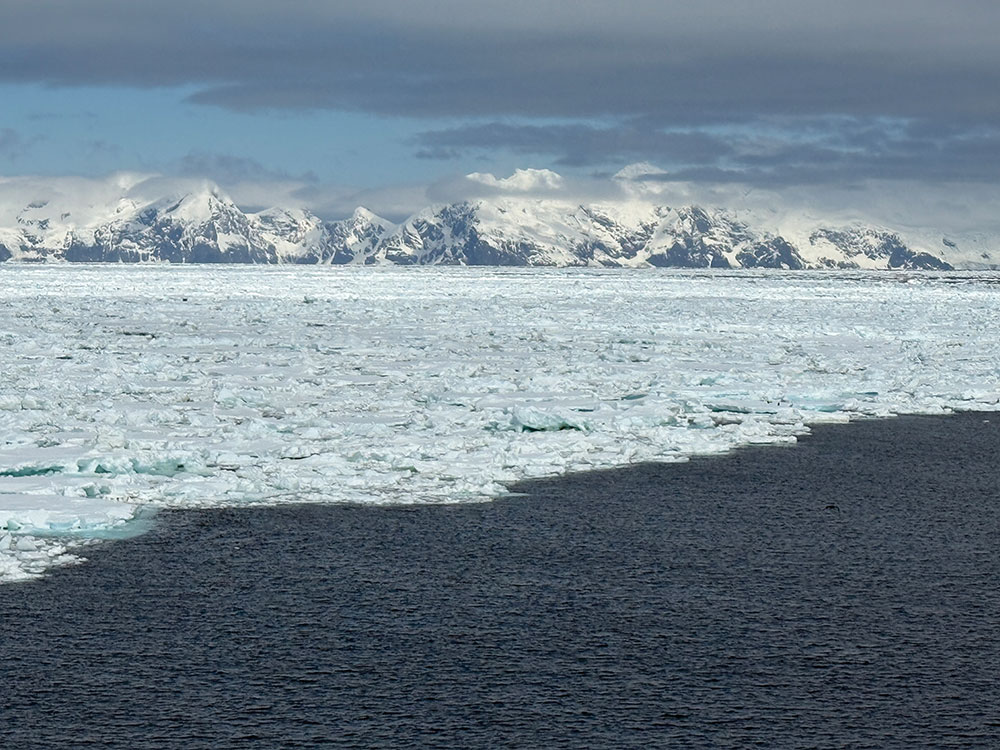
The day we approached the island, it was surrounded by miles of heavy brash ice. Eventually, we not only reached the island but also launched the kayaks, which felt extraordinary.
The beaches, if they can be called that, are thin ribbons of shingle squeezed between the sea and steep, icy rock faces. It is almost impossible to imagine 22 men surviving here for months under two upturned boats, eating penguins and the occasional seal while waiting for a rescue they were never sure would come.
Chinstrap penguins were abundant during our visit, their colonies filling the air with noise and movement, though their numbers are declining in parts of the island due to declining krill stocks. Gentoo penguins were also present, both species echoing the diet that once sustained Shackleton’s marooned crew.
We paddled around the bay and headland, savouring every moment. As the afternoon winds began to rise, a reminder that conditions can change in minutes, we made a timely retreat to the ship. Before leaving, we visited the bronze bust of Captain Luis Pardo, whose Chilean naval vessel, the Yelcho, rescued the Endurance men after earlier attempts were turned back by ice.


Crossing the Scotia Sea: Following the James Caird
From Elephant Island, our ship crossed the Scotia Sea toward South Georgia, tracing the approximate route of the James Caird. We covered the distance in three days. Shackleton’s tiny open boat took 16. To stand on deck and look out at the vast grey swell was to marvel at their survival once again.
As we approached South Georgia, the peaks rose jagged and snow-laden from the sea. This is an island of ferocious beauty – glaciers, tussock-grass valleys, and steep mountains abound. Wildlife is so abundant, it feels almost pre-industrial.
King Haakon Bay: Landfall of the James Caird
Shackleton made landfall at King Haakon Bay on the island’s exposed west coast. Even in a modern ship, you feel the raw force of the Roaring Fifties here. Yet we were fortunate. Conditions allowed us to sail inside the fjord. We passed Peggotty Bluff, named for the makeshift shelter fashioned from the James Caird. It is reminiscent of Peggotty’s overturned boat-house in David Copperfield.
Kayaking in the same waters where the exhausted six men staggered ashore after their impossible voyage felt reverential. The scale of the cliffs, the surge of the swell, and the cold biting wind all hinted at what they endured.
Stromness: The End of the Mountain Crossing
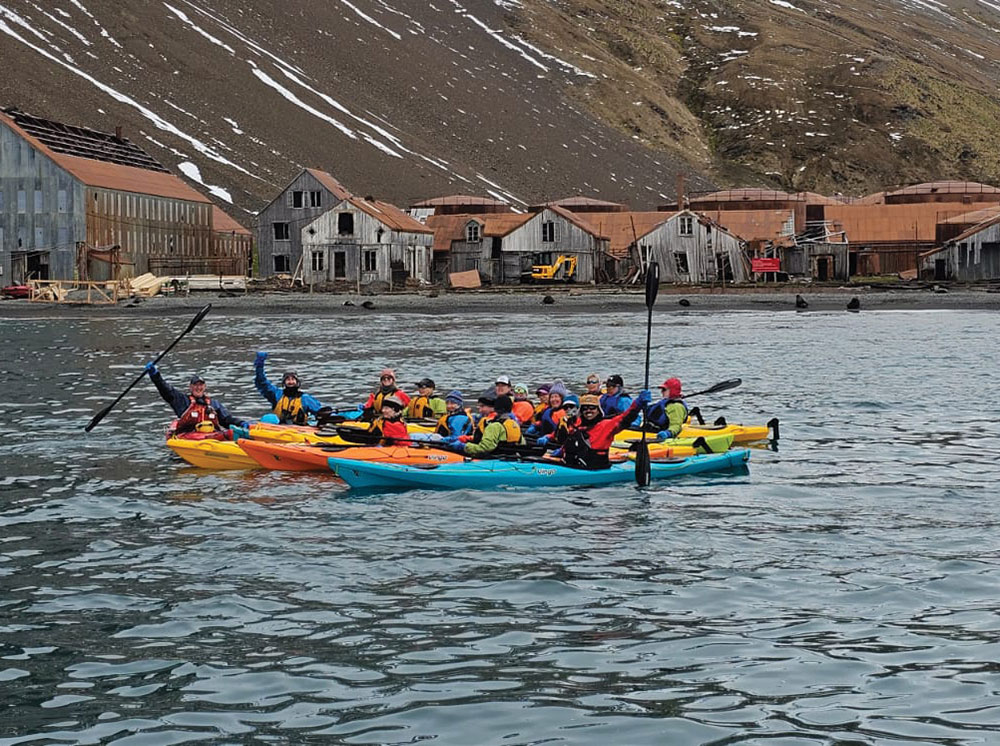
From Peggotty Bluff, Shackleton, Worsley, and Crean began their legendary, sleep-deprived crossing to Stromness. Today, Stromness Whaling Station stands silent, with rusting machinery, collapsing buildings, and jagged remnants of a brutal industry. But the manager’s house is still recognisable, and it was here Shackleton finally knocked, asking for help.
We launched the kayaks at Stromness and paddled along the coast, passing the station and heading toward Grytviken. The sense of history was immense. Few journeys combine physical adventure with storytelling as palpable as this coastline offers.
Grytviken: Seals, Kings, and Shackleton’s Resting Place
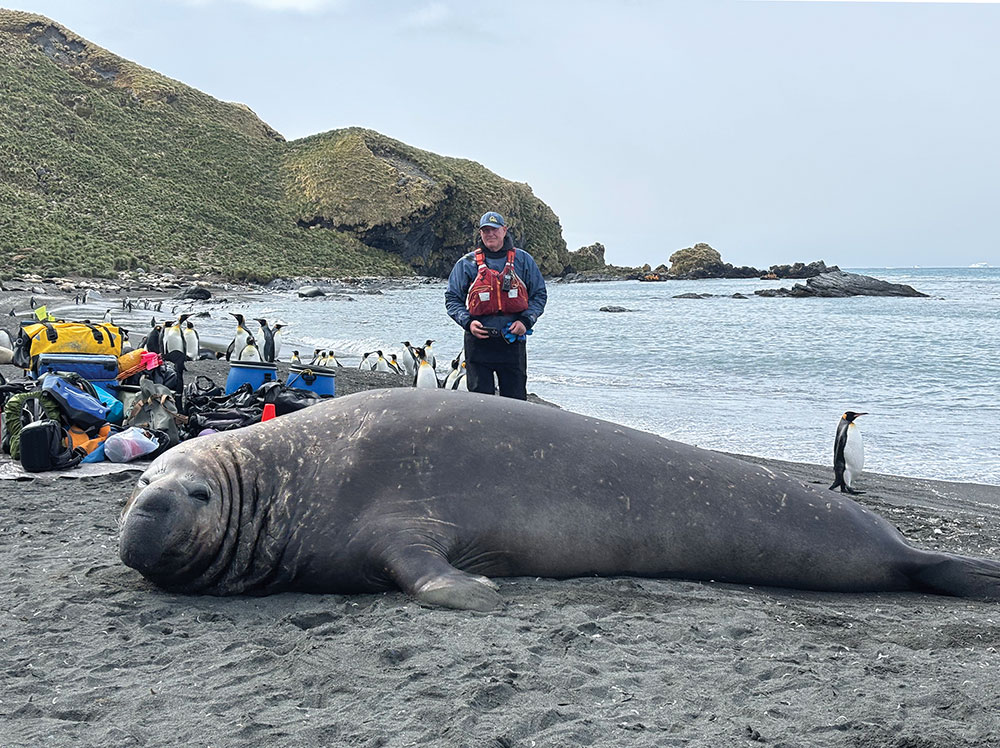
From Stromness, we relocated to Grytviken, another major whaling station in South Georgia’s heyday. The beaches were crowded with wildlife; fur seals jostling and barking, elephant seals sprawled in great heaps, and the king penguin standing serene among the chaos.
Fur seal numbers on South Georgia have exploded in recent decades, and they can be territorial in the water. One large female made a mock charge at our kayak group, hissing with teeth bared. A reminder that even with experience, paddlers must stay alert.
Elephant seals, by contrast, are enormous but generally placid, reaching up to three metres in length with a kind of lethargic dignity.
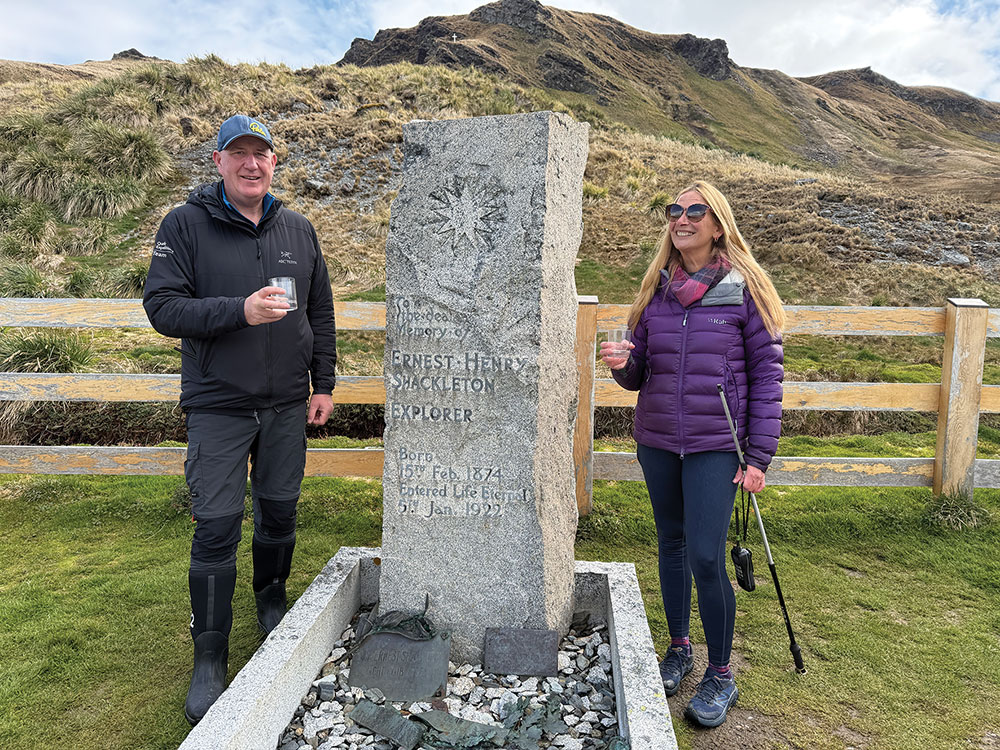
After stowing the kayaks, we walked to Shackleton’s grave. After the Endurance expedition, Shackleton returned to the island in 1922 while leading another voyage. He suffered a fatal heart attack aboard his ship Quest while anchored in Grytviken. At his wife’s request, he was buried here. Visitors traditionally toast him with whisky, “To the Boss.” It is a salute to leadership under unimaginable pressure.

Why we paddle these places
Very few have the chance to kayak in the actual places where the drama of Shackleton’s story unfolded, in the fjords where the James Caird landed, beside the beaches where 22 starving men waited for rescue, or beneath the mountains that three determined men crossed with nothing but rope, nails hammered into boots, and an indomitable will.
Leading this trip felt like paddling not just through stunning wilderness, but through history itself. Modern expedition ships make these journeys accessible, but the environment remains raw, elemental, and humbling.
Sea kayaking in the footsteps of Shackleton is a privilege, blending adventure, wildlife, ice, and polar heritage like few destinations. As a Quark kayak guide, I feel fortunate to help paddlers experience a landscape where every element whispers stories from the Heroic Age of Exploration.