Words:
Dr Sarah L. Gordon
Photos:
New Hope Canoe Club Ministry – Team Atlantic
Dr Sarah L. Gordon
Six paddlers. One canoe. One miracle
Lessons in courage, faith, and the spirit of Aloha
When the unpredictable forces of nature challenge us, it is not individual strength alone that carries us through. It is the trust we place in one another, the leadership that guides us, and the community that holds us together. The ama slammed into the channel marker piling.
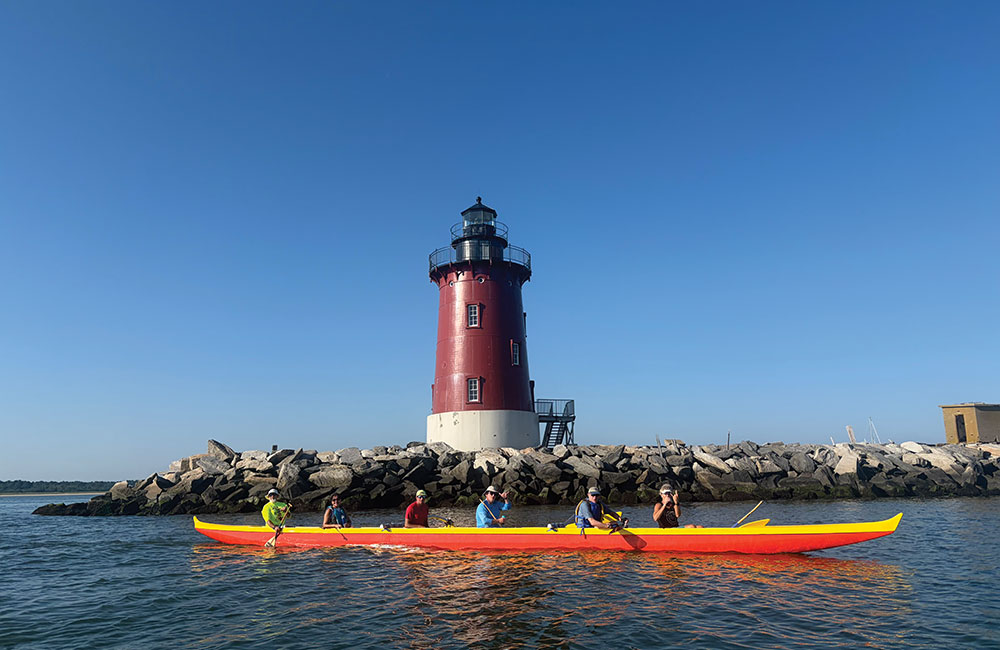
In that instant, paddlers aboard a traditional six-person Hawaiian outrigger canoe (OC6) found themselves in a situation none of us could have anticipated.
We were navigating an inlet near Lewes, Delaware, in the United States, where deceptively powerful currents created conditions far more dangerous than the surrounding landscape might have suggested.
Our OC6 had struck a piling with its ama – the lateral float that provides stability to the canoe.
Nearby were strong currents, swirling water, and a rock jetty. The possibility of capsizing, known in Hawaiian outrigger paddling as a huli, was frighteningly real.
Four men. Two women. Six people sharing one canoe. And suddenly, one extraordinary moment that would leave us with a story none of us expected to tell.
Our steersman and head coach, David Schofield, has decades of paddling experience, including more than 15 years immersed in traditional Hawaiian outrigger paddling.
When he later reflected on what happened, he described the incident and the ability to get back to shore safely in one word.
A ‘miracle.’
I have thought about that word many times since.
Because while we emerged from the experience without the catastrophe that seemed so possible, I believe what happened that day deserves more than a passing acknowledgement of good fortune.
It deserves reflection. About safety. About courage. About trust. About leadership. And about the spirit of Aloha.
And perhaps most importantly, about what it means to be part of something larger than ourselves.
A Small Coastal Town and a Hawaiian Tradition
Lewes, Delaware, is a historic coastal community situated where the Delaware Bay meets the Atlantic Ocean. It is a place known for its maritime heritage, beautiful waterways, and the quieter rhythms of coastal living. However, the water here commands respect. Tides, currents, wind, boat traffic, and changing conditions remind us that even familiar waters can become unpredictable.
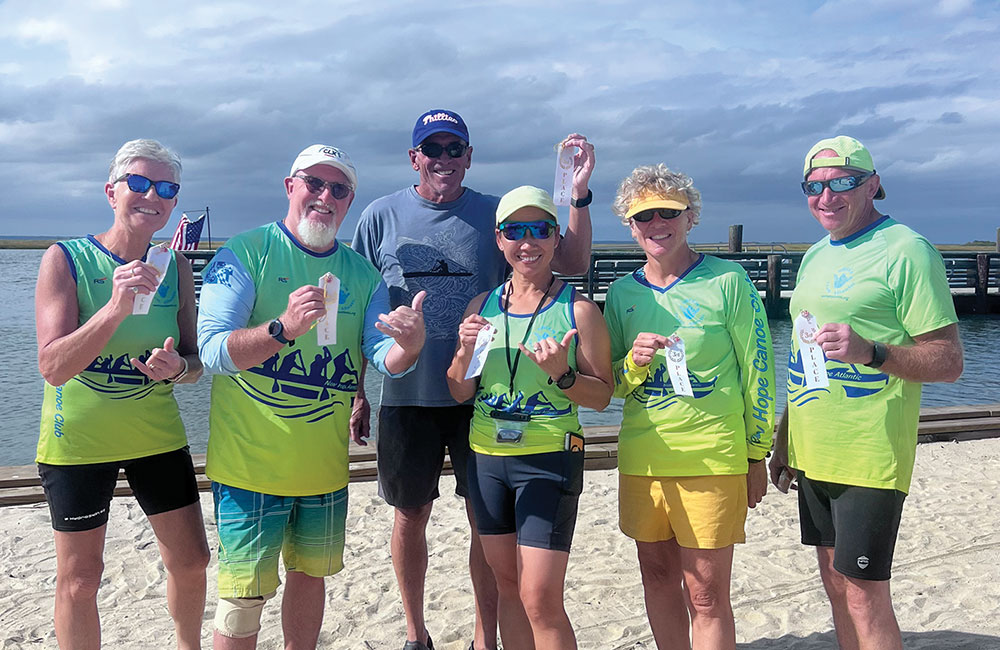
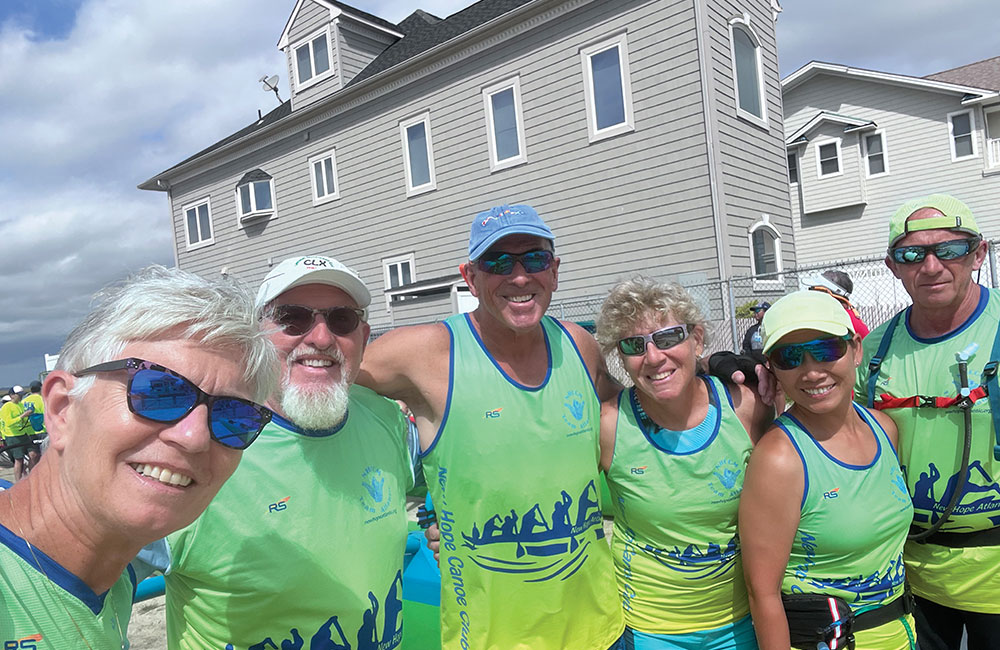
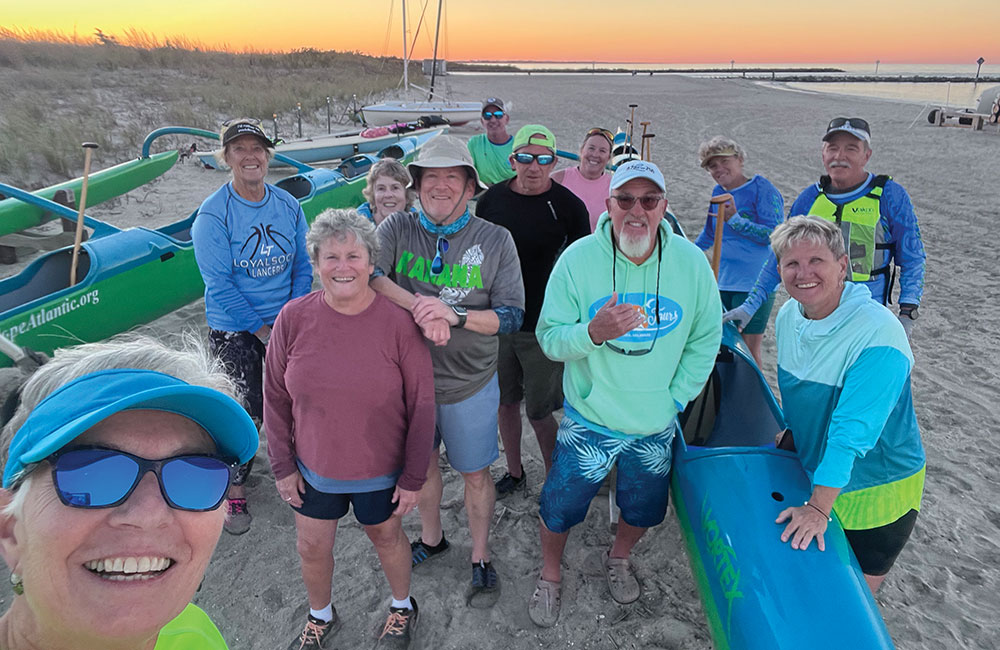
It is also home to New Hope Canoe Club Ministry – Team Atlantic (NHCC), Delaware’s only Hawaiian outrigger canoe club. Our club is part of a tradition that extends far beyond Delaware’s shores.
Rooted in the Hawaiian practice of outrigger canoe paddling, NHCC brings together individuals who share a love for fitness, faith, fellowship, competition, service, and the water. Our head coach, David Schofield, spent years in Hawaii learning and practising traditional paddling before bringing his passion for the sport to Delaware. Our club is the Delaware sister organisation of New Hope Oahu’s canoe ministry, founded in Hawaii in 2000.
Head Coach David Schofield, a former NOAA professional whose career included conservation and marine life care, brings a love of the ocean, a commitment to service, and a faith-centred philosophy to his leadership. His career spanned 33 years, during which he started as a dolphin trainer and retired from NOAA overseeing large marine animal response in Hawaii and across the Pacific.
He brought this love of being on and near the water to the canoe club’s founding roots.
NHCC welcomes people of different backgrounds and beliefs. Some join for fitness. Others are drawn to competition, fellowship, or the opportunity to spend time on the water. But NHCC is more than a place to paddle. It is a community built around the spirit of Aloha.
Understanding that spirit is essential to recognising what happened in our canoe.
Six Paddlers, One Canoe
An OC6 requires six people to work together. Each paddler occupies a different seat. Each contributes to the canoe’s forward movement. The steersmate guides its direction, while the crew must maintain rhythm, balance, communication, and awareness.
No individual can accomplish what the entire crew must achieve together. It is one reason I have grown to appreciate this sport so deeply.
In many athletic pursuits, success is measured through individual achievement: personal records, finishing times, distances, or rankings. Outrigger canoe paddling offers something much different. Individual strength matters, but it must serve the collective effort.
Six strong paddlers moving independently cannot match the efficiency of six paddlers working in harmony. The canoe teaches us to listen. To trust. To adjust. To recognise that our individual contributions matter most when they support the people beside us.
On the day of our accident, those lessons took on a significance none of us could have imagined.
When the Water Changes Everything
Something is humbling about being reminded how quickly circumstances can change. One moment, you are participating in an activity you love. The next, you are confronted with forces beyond your control.
The inlet currents were deceptively strong.
As our ama struck the piling, we were dangerously close to a situation that could have placed six people in moving water near a rock jetty. The consequences of a capsize in those conditions could have been severe.
Yet our canoe did not hull. We did not find ourselves separated in the swirling current. Somehow, six paddlers came through an event that could have ended very differently.
I do not want to romanticise what happened. It was dangerous. It was frightening. And it deserves serious examination from a water-safety perspective. But I also believe it revealed something extraordinary about the people in our canoe.
Four men and two women shared an experience that is difficult to describe, even now.
Perhaps what stands out most is the profound realisation that our lives, our decisions, and our safety were connected. We were not six individuals navigating a dangerous situation independently.
We were one crew. And that distinction matters. No one panicked. No one jumped out. We all worked in harmony, with strength and endurance.
In reflection, the strong current pinned the canoe against the inlet piling. At that moment, we heard a loud crunching sound as the ama began to crack and take on water.
As the ama filled with water, the steersman called the command to back paddle, to move the canoe backwards in an attempt to free it. That didn’t work. So a command to paddle forward was given, and very slowly, as the ama filled with more water, we found some forward momentum.
It didn’t end there.
We limped back about a half mile to a boat ramp where the ama was now swamped and underwater. With all paddlers leaning and paddling on the right, while the ama was submerged and barely positively buoyant, the crew found safety, and the spirit of Aloha was strong.
The Spirit of Aloha
At NHCC, we are guided by five traditional Hawaiian values associated with the spirit of Aloha.
- Akahai – kindness.
- Lokahi – unity.
- Oluʻolu – To be agreeable.
- Haʻahaʻa – humility.
- Ahonui – patience.
These are not simply words we admire. They are values we aspire to practice, both on and off the water. Our experience in the inlet gave these principles an entirely new meaning. Unity reminds us that our strength comes from working together.
Humility reminds us that experience and preparation, however extensive, do not make us invulnerable. Patience reminds us of the importance of thoughtful decisions rather than impulsive reactions. Kindness and being agreeable remind us to care for one another, especially when circumstances become difficult.
I have come to believe that these values are not separate from the sport. They are part of what makes the sport meaningful. And they are just as relevant when the canoe rests safely on shore as when six paddles enter the water together.

The Lessons We Carry Forward
One of the most important lessons from our experience is that safety cannot be assumed simply because a route is familiar or the surrounding environment appears calm.
Inlets deserve particular respect.
Tidal flow, current velocity, submerged hazards, fixed structures, and changing water conditions can create risks that are not immediately apparent.
Even experienced paddlers must remain vigilant.
Our experience reinforces the importance of evaluating currents, winds, and tides; understanding local hazards; communicating clearly; maintaining appropriate safety equipment; preparing for emergencies; and always staying vigilant.
It also reminds us that training is not only about paddling faster or becoming physically stronger.
Training is about judgment. Awareness. Communication. And knowing when conditions warrant a different decision.
As a lifelong endurance athlete, I have spent years thinking about the relationship between preparation and performance. But experiences like this challenge us to ask different questions.
What are we preparing for?
Certainly, we train to become stronger paddlers. We train to develop endurance, improve technique, and perform as a team. But we must also train to recognise danger, respond appropriately, and respect the environment in which we paddle.
Surviving a dangerous incident does not necessarily mean every decision leading up to it was correct.
That is an important distinction.
Gratitude for a fortunate outcome should never prevent us from examining what happened and identifying opportunities to improve. Perhaps the greatest way to honour the experience is to learn from it.
The Blessing of Community
NHCC is a faith-based organisation that welcomes paddlers from all backgrounds.
We paddle for fitness, fellowship, competition, and service. Our mission extends beyond competition and recreation.
We also seek opportunities to support our broader community through outreach, environmental stewardship, and acts of service.
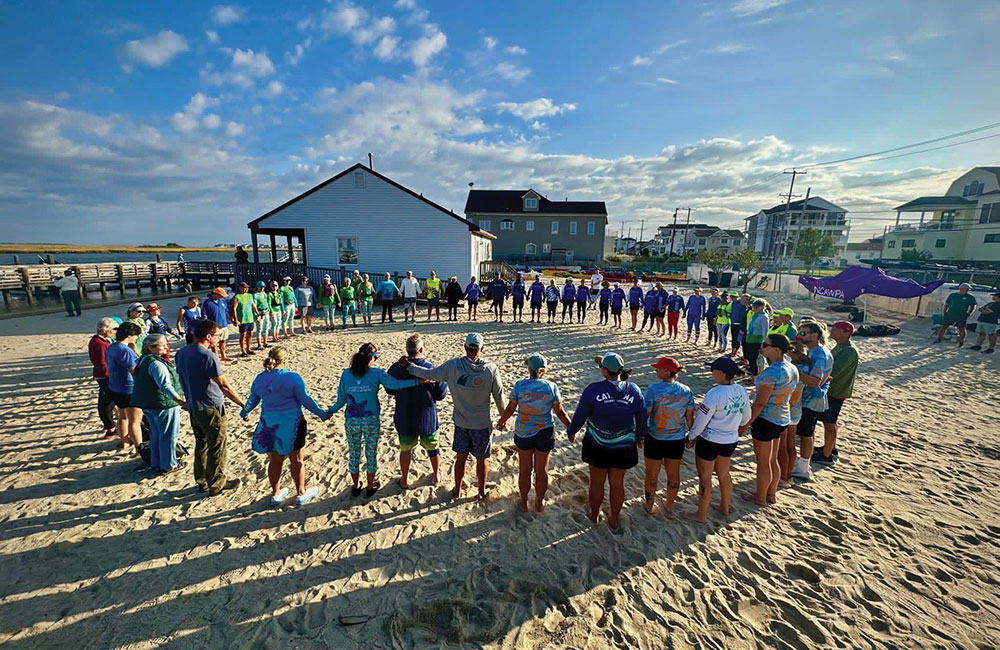
Before every practice, seats are assigned, the course is discussed, and we gather in a small pule (a traditional Hawaiian prayer) to ask for safety on the water and support each other through life’s challenges as we navigate turbulent waters.
NHCC also partners with a local children’s-based charity where we teach kids about teamwork, the Polynesian legacy of canoe navigation, and the true meaning of aloha.
The canoe becomes a place where relationships develop, friendships deepen, and people discover a sense of belonging. The club takes these virtues and extends them to the broader community. Through collaboration with a local church, NHCC participates in a Disaster Response Ministry, where teams are sent into communities after disasters to offer hope, prayer, and property renovations.
NHCC holds a wintertime bible study and support group, called the ‘Lifegroup’. Head Coach Schofield brings his experience as an ordained chaplain into these opportunities to further our club’s spiritual journey.
For some, paddling and the club are opportunities to pursue athletic goals. For others, it is a place of healing, reflection, ministry work, encouragement, or spiritual connection. For many of us, it is all of these things.
In hindsight, our experience in the inlet reinforced something I have come to appreciate about this community. We are responsible not only for ourselves but also for the people who share the canoe with us. The strength of the crew is found in that shared responsibility.
And perhaps this is one of the most meaningful lessons outrigger paddling has to offer. “We are stronger when we recognise that we are not meant to navigate every challenge alone.”
There is a Hawaiian phrase, He waʻa he moku, he moku he waʻa, which translates to “The canoe is an island, and the island is the canoe.” This deeply meaningful phrase represents how we have to rely on each other and be responsible for one another, as if we all lived on a small, remote island.
When the Story Becomes Your Own
As the founder and host of ‘The PhD Journey Unplugged’, I spend much of my time listening to people’s stories.
My guests share experiences of resilience, adversity, achievement, personal transformation, and the lessons they have learned along the way.
I often find myself asking what gives people strength during life’s most difficult moments.
What helps us adapt?
What allows us to keep moving forward?
relationships, purpose, and community play in our capacity to overcome challenges?
These questions have also shaped my academic work in leadership, health, and human performance. But something changed for me that day in the inlet. For once, I was not interviewing someone about an extraordinary experience. I was living one.
I was one of six people in a canoe, facing circumstances that reminded me how vulnerable we can be and how deeply our lives depend upon one another. And I realised that sometimes the most meaningful stories are not the ones we set out to discover.
They are the ones that find us.
Six Paddlers. One Journey
I keep thinking about our coach’s description of what happened. A ‘miracle’.
As someone who values both scientific understanding and the deeply personal nature of human experience, I recognise that people may interpret such moments differently.
Some may see extraordinary good fortune. Others may see the influence of preparation, experience, and collective action. And for those of us whose lives are shaped by faith, there may also be a profound sense of blessing.
These perspectives need not diminish one another.
What matters is what we choose to do with the
Will we become more attentive to safety?
Will we approach the water with greater humility?
Will we deepen our commitment to one another?
Will we carry the lessons of the canoe into our lives beyond paddling?
Will our faith be strengthened?
I hope so.
Because the experience reminded me that strength is not simply measured by how powerfully we pull a paddle through the water.
Sometimes strength is found in trust.
Sometimes it is found in restraint.
Sometimes it is found in acknowledging our vulnerability.
And sometimes it is found in the people beside us.
We entered the water that day as six paddlers sharing a canoe. We emerged with something more. A renewed appreciation for life, for one another, and for the responsibility that comes with the privilege of being on the water.
As Schofield reminds us, “We really would not have survived the accident without the strong hand of our creator protecting us.”
We don’t just live to paddle. We paddle to live.
About the Author
Dr Sarah L. Gordon holds a PhD in Leadership in Health and Human Performance and founded and hosts The PhD Journey Unplugged, a podcast exploring health, motivation, resilience, and the human experience. An endurance athlete and member of NHCC in Lewes, Delaware, she enjoys exploring the connections between physical activity, human flourishing, and the lessons we discover through life’s journeys.
Learn more:
https://newhopeatlantic.org
Related podcast:
The PhD Journey Unplugged, Episode 82 – Life Lessons from Traditional Hawaiian Outrigger Canoe Paddling, featuring coach David Schofield.

Notes
- The accident happened during a Wednesday morning practice, the week before a race the team was scheduled to participate in in Wrightsville, NC. We were out on a training paddle in preparation for the race. (Four days out from race day)
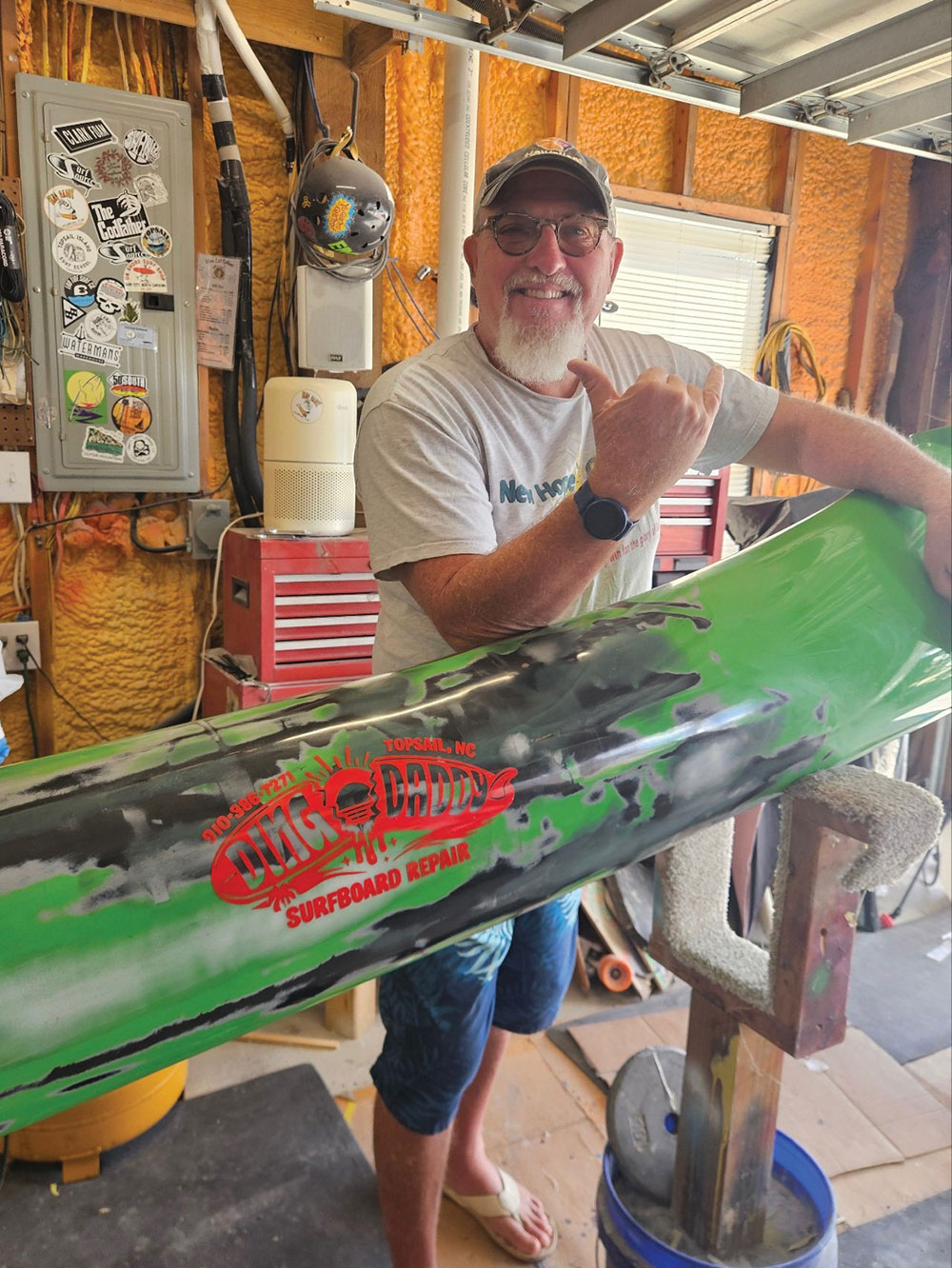
- David, our head coach, found a gentleman in north Carolina who was able to fix the ama, which was truly a miracle, given the short time frame and the fact that he was near the race. The race site was about 6-8 hours away in north Carolina from where we live in Delaware. I sent over a picture of David hugging the ama, and the scuffed-up repair job visible. (We trailered two boats down to North Carolina, one our team was racing in, and the other another club was supposed to be using. So this added to the urgency in figuring out if fixing it in time was even possible). The gentleman who repaired it charged our club nearly anything – and was so incredibly responsive and helpful. I believe he spent long hours once David dropped off the ama to have it ready for our team. (It’s incredible how people come together to help each other!)
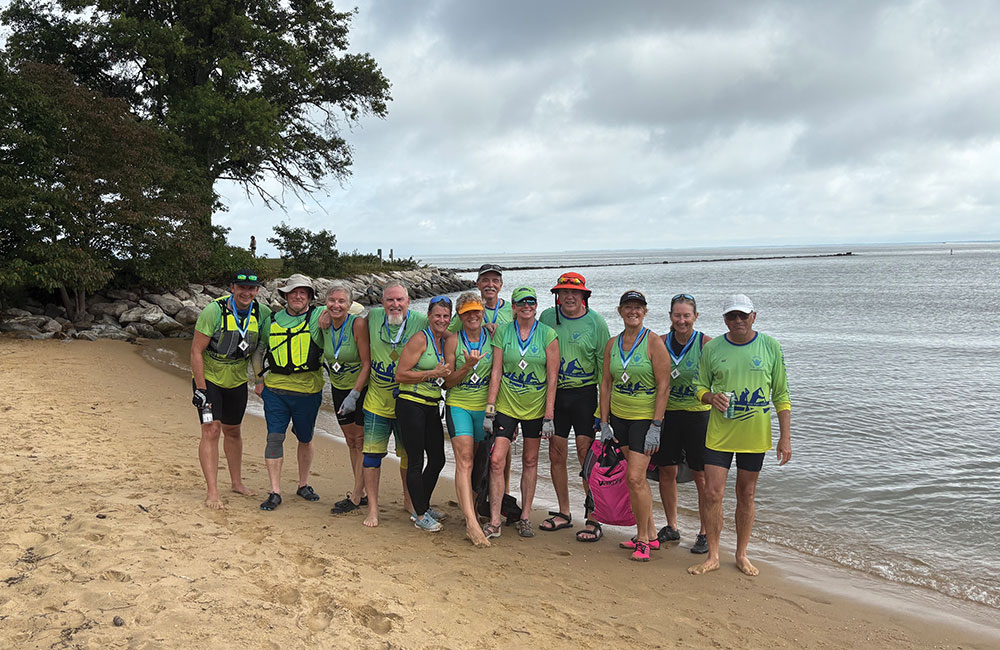
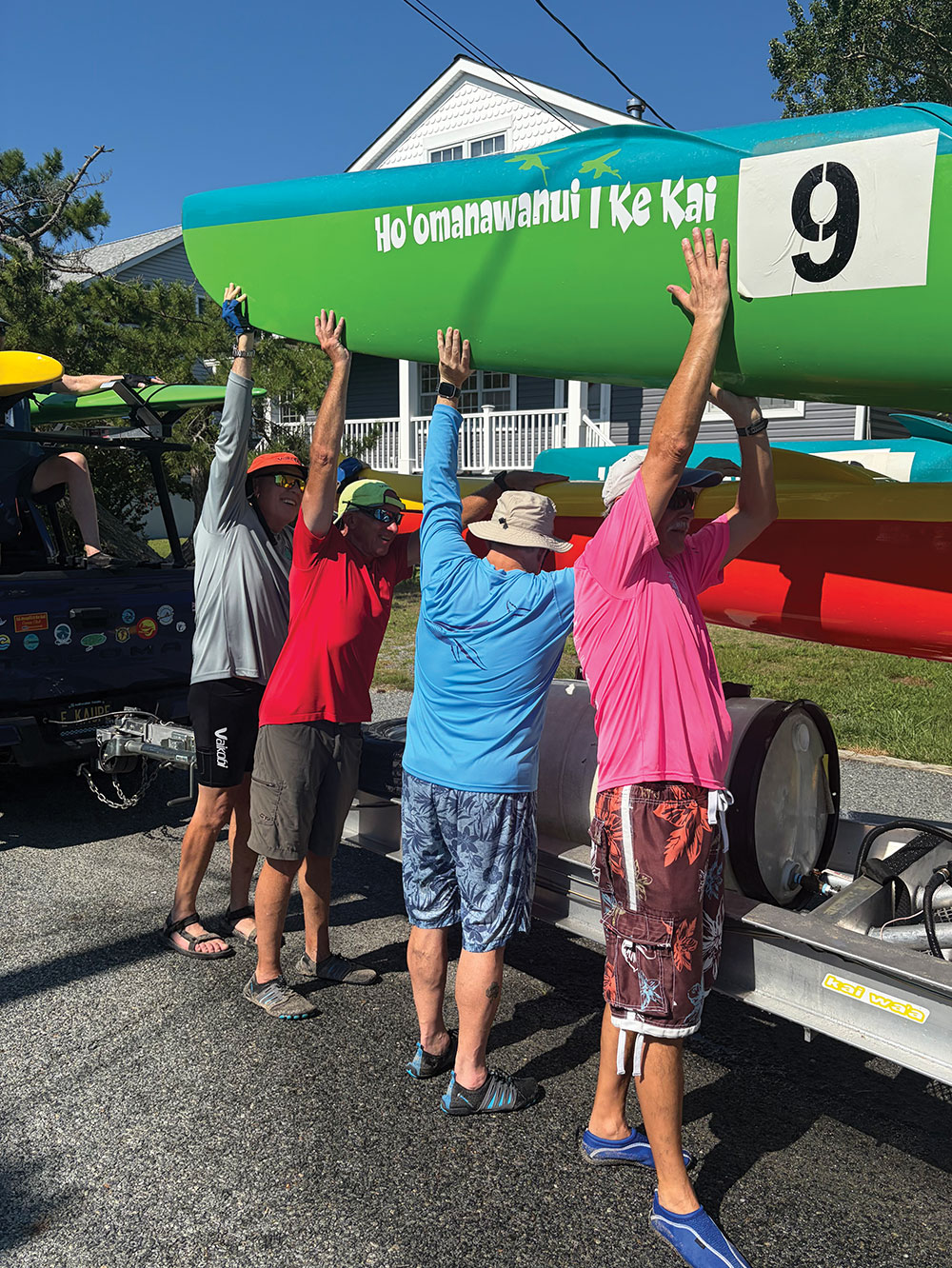
- Also, the name of the damaged ama was on our canoe, called the Ho’okupa’a, which ended up being able to race that Saturday.
- 4. Ho’okupa’a means ‘steadfast perseverance’.