WORDS:
MIKE DEVLIN
PHOTOS:
MARY JELLIFFE &
CHRIS HEANEY
Mike Devlin paddled with Chris Heaney and Mary Jelliffe. Local logistics, accommodation and general support provided by Rasmus Paulson of Tasiilaq Tours. https://eastgreenland.com/ providers/tasiilaq-tours/

Return to the land of the Greenlanders Kalaallit, Nunaat
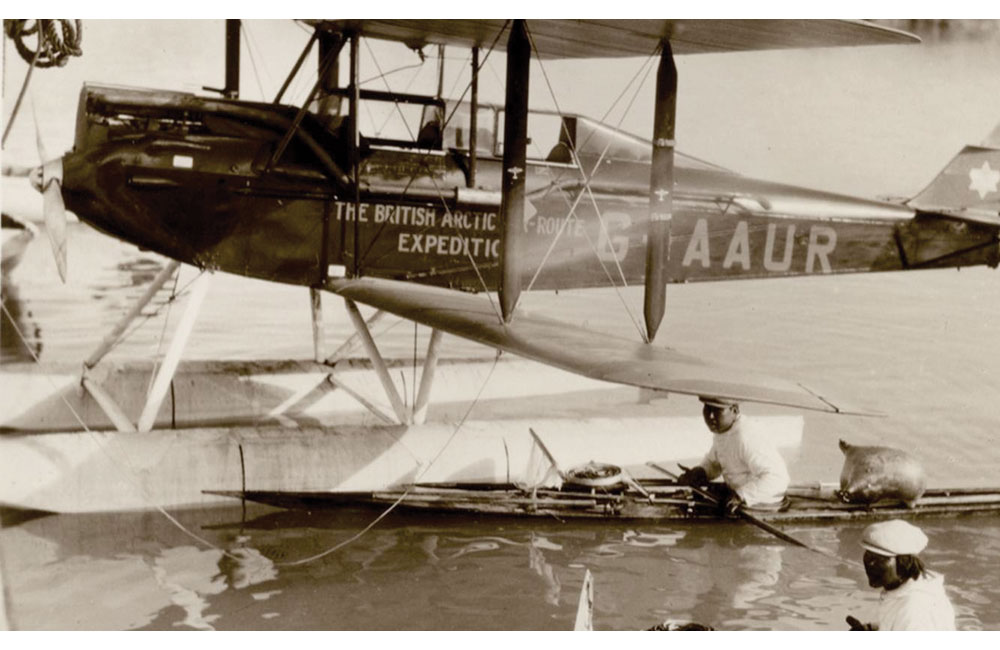
Following our 2025 explorations of Angmassilick, Johan Peterson Fjord and Sermilick (issue 87 – https://paddlerezine.com/sermilik-fjord-east-greenland), we return a year later to paddle to the remote Tugtulik/Lake Fjord. The chosen base location for Gino Watkins’ last expedition to East Greenland, 1931-32, a follow-up to the British Arctic Air Route Expedition 1930-31.
Our journey now, a tribute to Watkins and his team, a personal inspiration over 40-plus years.
66.2435N – 35.4904W – Sartamai Old Inuit Winter Settlement
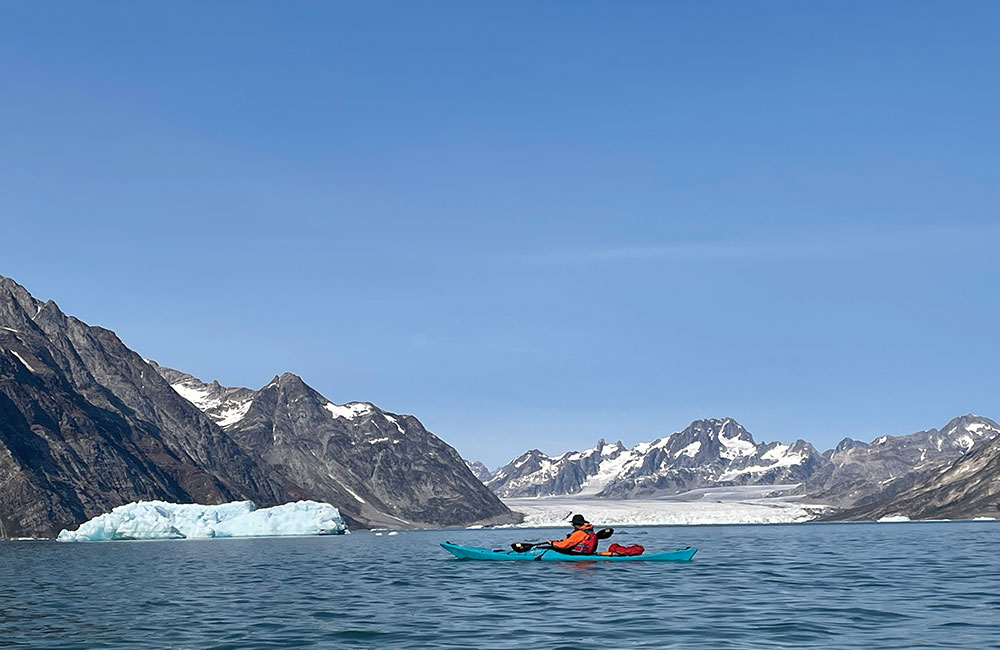
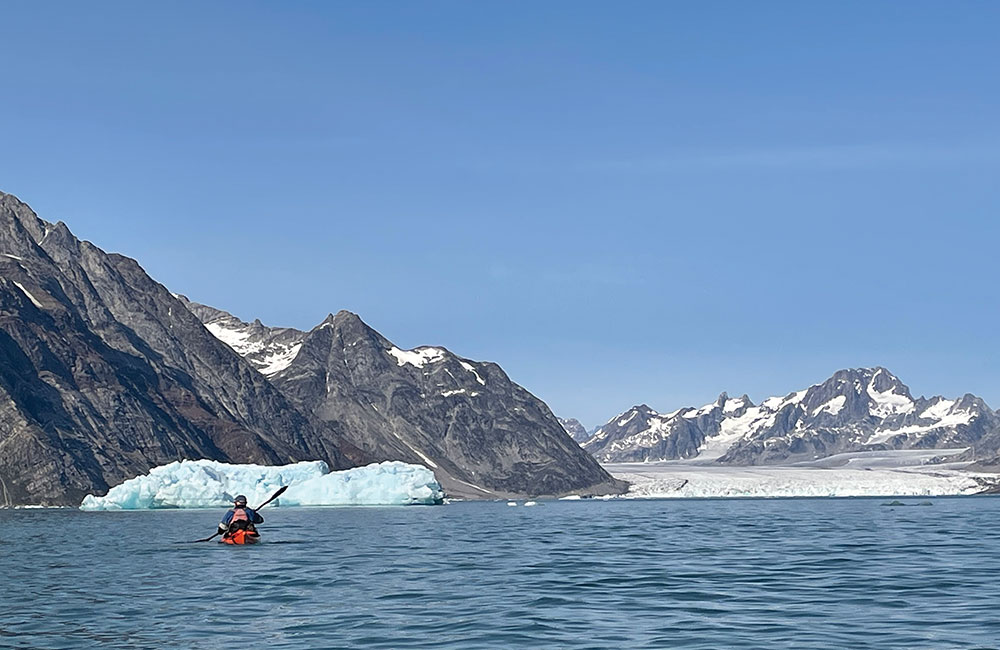
A year on from our last trip to this amazing place, it was a long day’s paddle on a classic Greenland summer’s day. Blue, cloudless skies, sunlight glinting off the sea and bergs, a light breeze on our backs allowing good progress towards our outward destination, ever more remote into the vastness and wild heart of East Greenland. Each day’s paddling is exciting and humbling, yet not without some degree of trepidation and a sense that we may be being seduced into a trap… a situation where weather and sea conditions turn hostile, suddenly slamming the exit door and making either forward progress and/or escape challenging at best or at worst impossible!
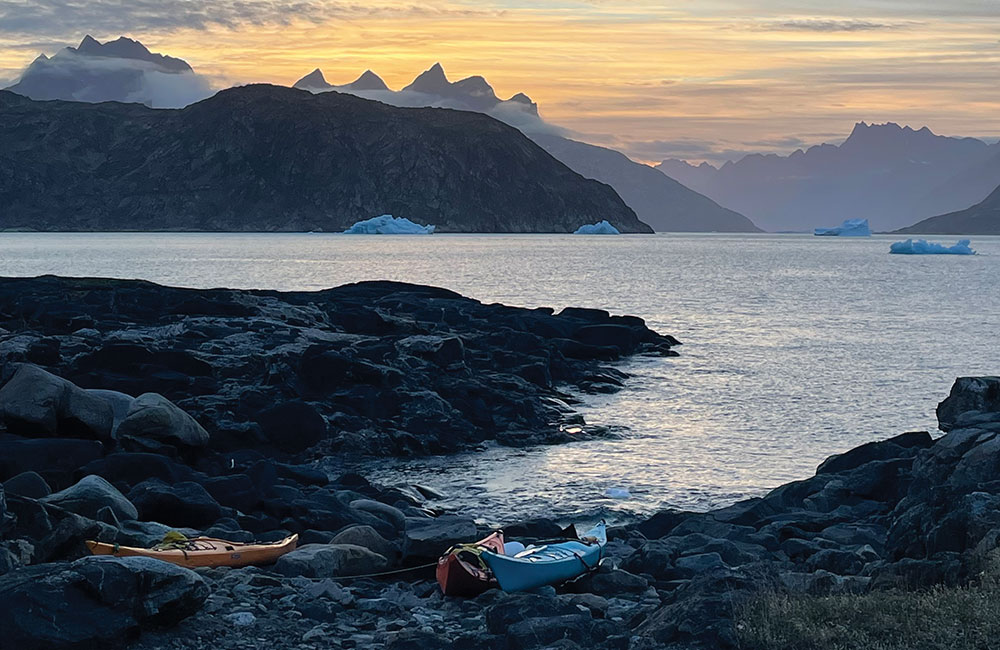
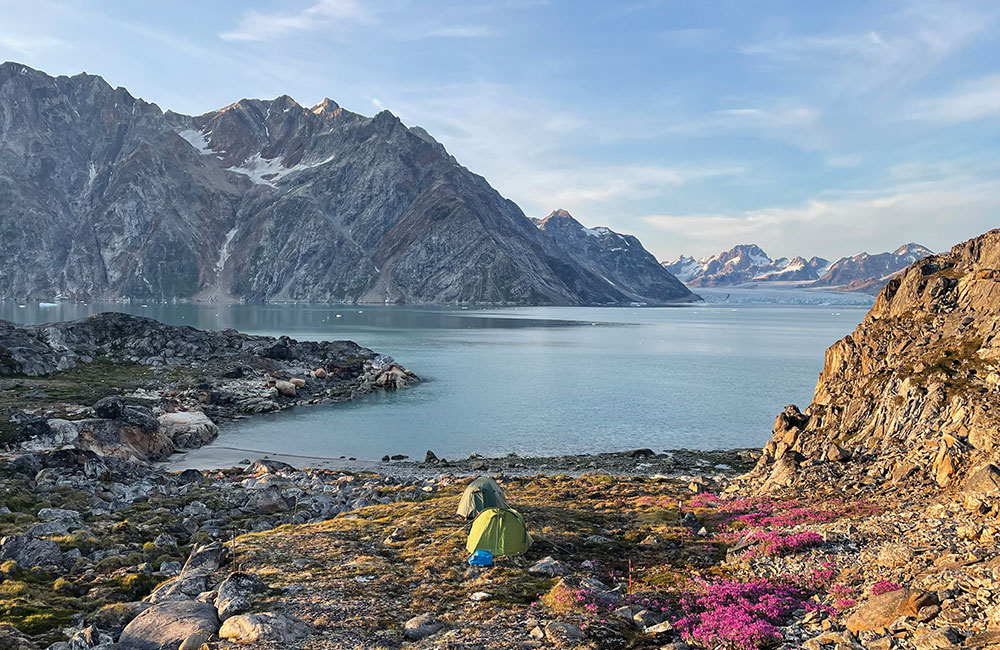
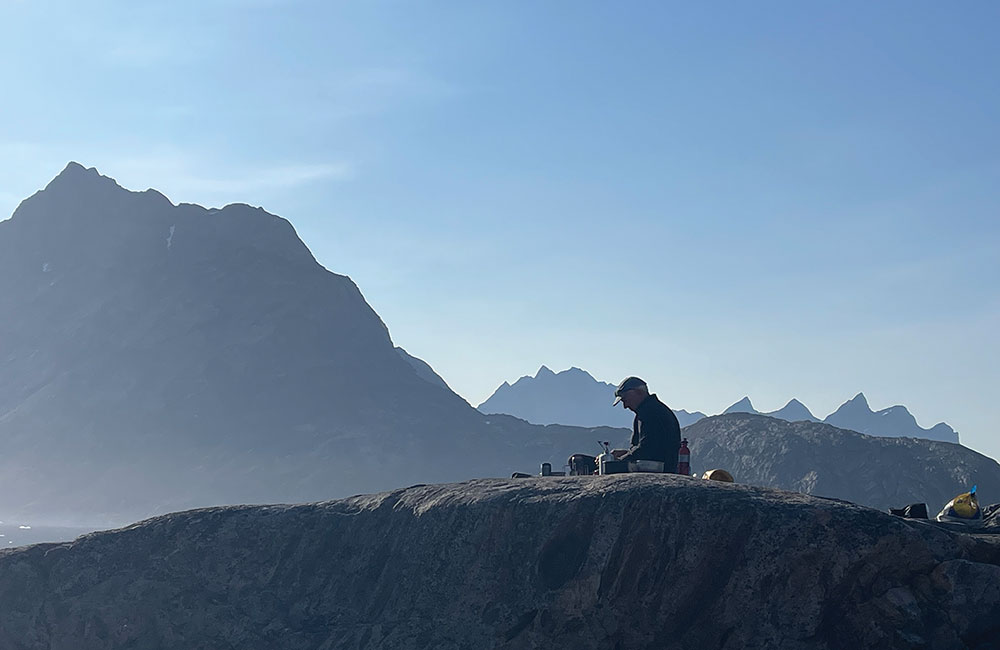
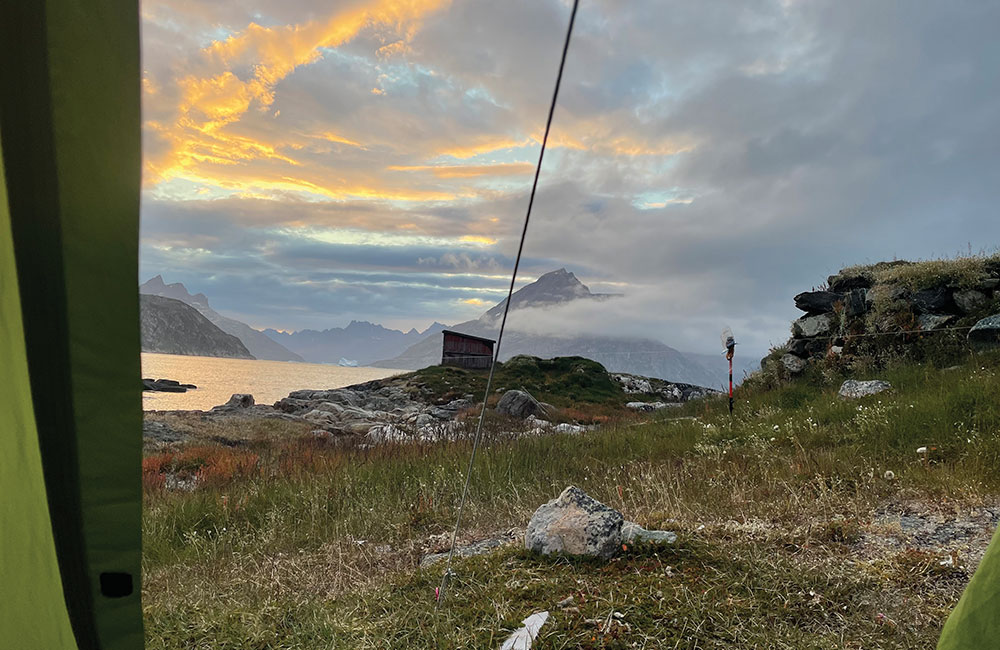
Amazing views in the evening’s low light
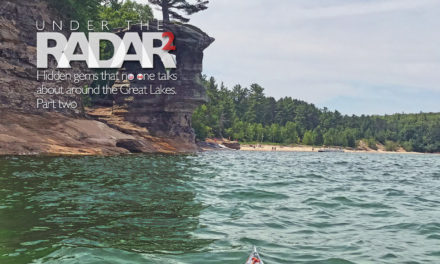
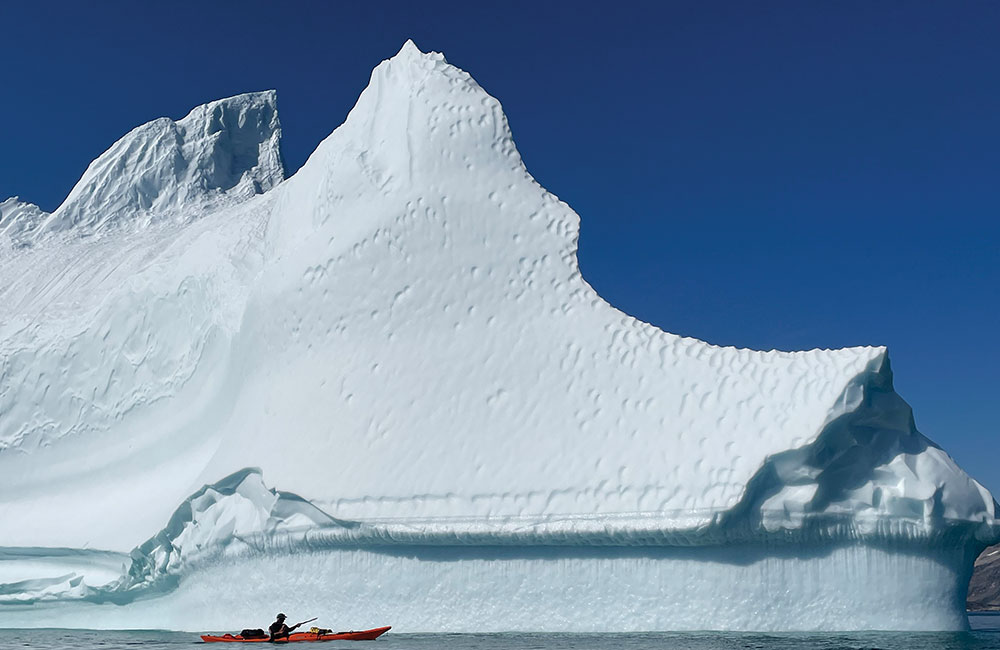
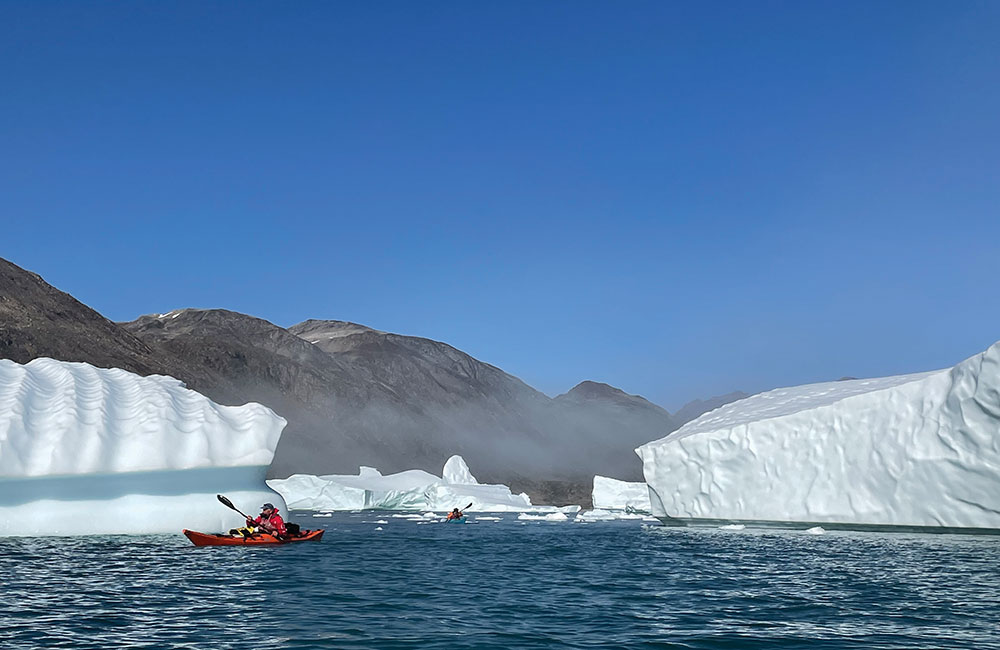
For the time being, however, settled into our camp at the old Inuit winter settlement of Sartamai, we feel satisfaction in a job, at least to this point, well done. The knowledge that just one more day of paddling should see us arrive at our destination gives rise to a sense of awe and privilege – amazing views in the evening’s low light as it casts long shadows across mountains, glaciers and water, soft, stretched and cinematic – identifying and highlighting jagged mountain peaks and the high ridge lines of myriad mountains and glaciers on a scale almost impossible to comprehend, while bergs, some grounded, some slowly drifting amidst a falling tide blocking the enticing entrance to Kangatititavag Fjord. At 7-8 km long, Kangatititavag Fjord. a seaward exit for the frozen waters of the Greenland Icecap as they make their imperceptible way down the somewhat surprisingly named Glacier de France.
The breeze of earlier in the day had calmed a little, and the sea was just a light ripple, azure blue and sparkling in the sunshine and reflective ice.
Sitting here in this perfect place, remote from the world of people and modern-day living, offered another chance to consider what life would have been like in this small Inuit winter settlement as recently as one hundred years ago.
The remains of several earth houses, graves, and marked camp areas betray its previous life and offer an opportunity to reflect on our purpose. Beyond experiencing the remote, wild, pristine coastal mountains of this vast world, our journey to Tugtilik/Lake Fjord is a tribute to Gino Watkins and his small team of four explorers- surveyors, an ornithologist, and a scientist – members of the 1931-32 expedition.
Fitting, therefore, that we pause here, as it was in this settlement that Freddie Spencer Chapman and Quinton Riley paused on their journey out of Lake Fjord in August 1932 to report the tragic death of their colleague and team leader, Gino Watkins, to the outside world. Lake Fjord, now our destination for the trip, was just a long day’s paddle away, a place we hoped to reach the following day.
In this amazing campsite, the history, scenery, and remoteness of this place, the reflection and contemplation of the past resilience of the Inuit culture (in this most extreme of places) and our own vulnerabilities, along with the negative effects of modern life on the world’s truly wild places, were almost overwhelming. Euphoria mixed with a tinge of apprehension… momentarily underlined by the distant, almost missed, superlative view of a breaching Humpback whale.
Mountains, Glaciers and Remote Fjords
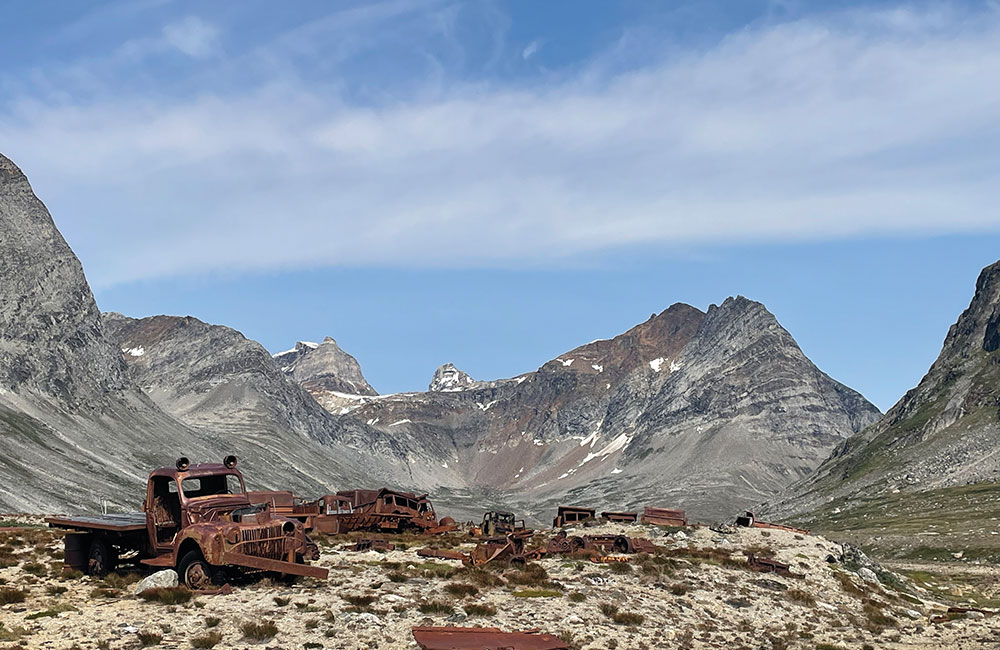
Departing Tasiilaq and the archipelago of Angmassilick via Angmasillick Fjord, Ikaseq, Ikateq and Bluie East, (American WWII air base) on to the Kaarale and Kund Rasmussen Glaciers in Sermillagaaq Fjord, our journey takes us to the settlement of Sermillagaaq and then venturing remotely via fjords, steep mountainous terrain (with limited camping options), iliartalik, ikaasakitsip, Depotfjord, Kangertittivatsiaq, to this, the old settlement of Sartarmai.
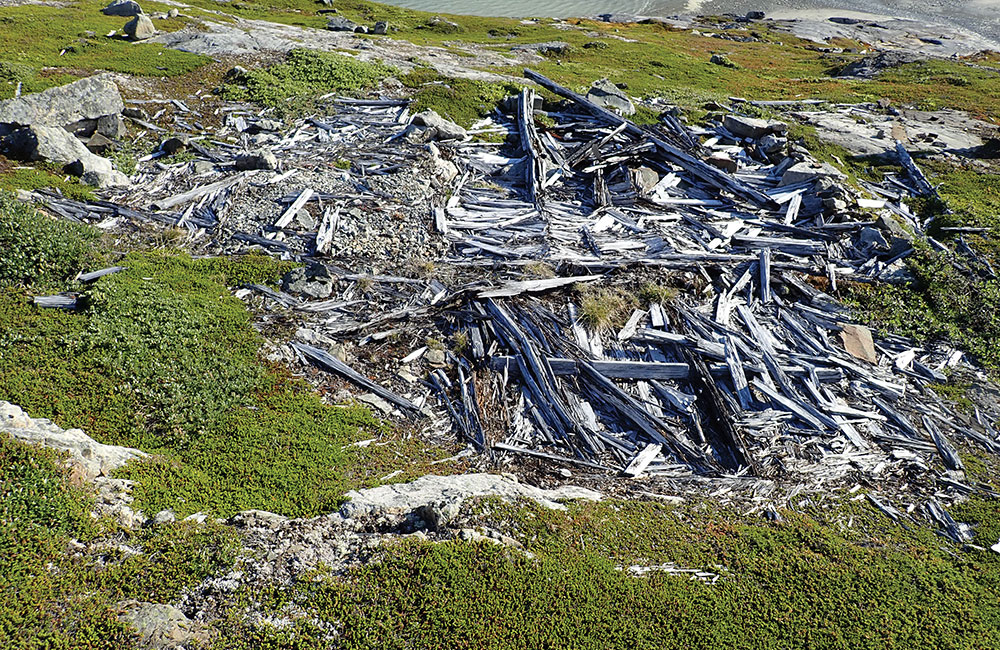
Finally, we will head onwards via Kap Japetus Steenstrup (christened Hell Corner on the 1931-32 expedition) and then into Tugtulik Fjord – Lake Fjord, as named by the Watkins Expedition, passing Ailsa Island (named after Ailsa Craig ) and into the Watkins Lake Fjord expedition hut site.
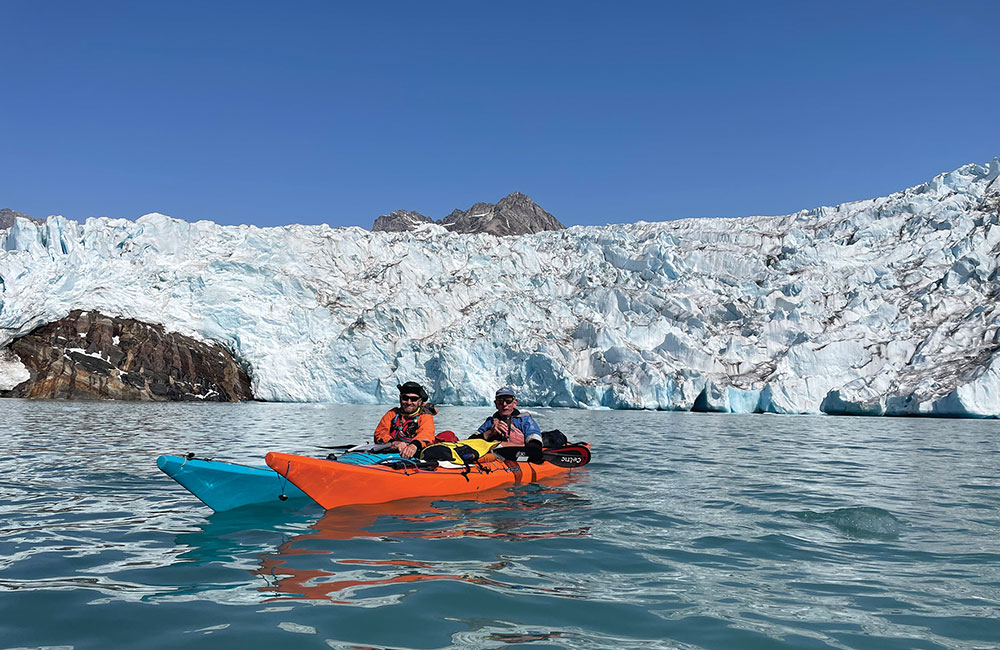
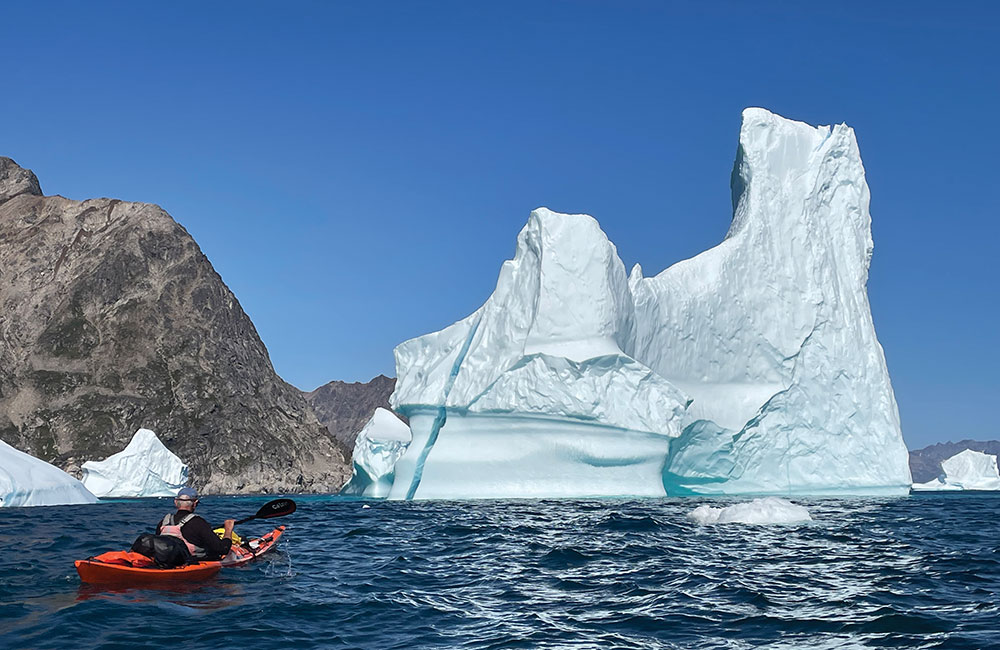
Blessed with mostly great weather and less ice than in previous years, this was an amazing paddling experience and a superb follow-on from our 2025 experiences in Sermillick and Johan Peterson Fjord. Breathtaking mountain vistas, stunning glaciers, although very much in retreat and continually discharging into the sea, still kilometres across, and at times with glacial snouts hundreds of feet high.
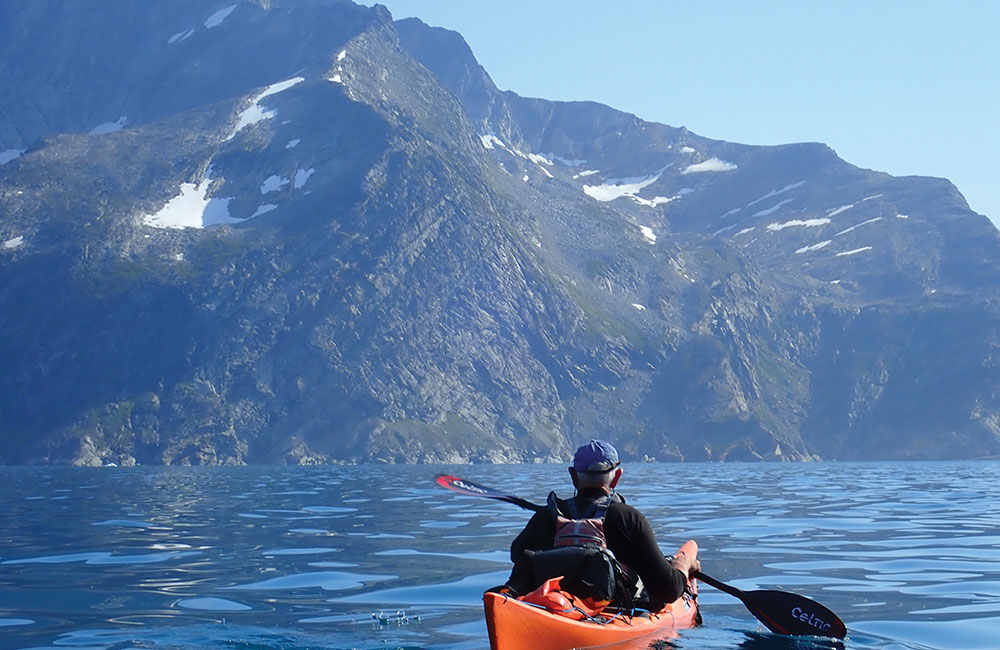
East Greenland’s coastal mountains and peaks, ice fields and glaciers, staggering and unrelenting on a scale almost impossible to comprehend, intimidating and appealing. Paddling here immerses the paddler in the usual tidal and weather challenges of sea paddling, while also offering active lessons in physical geography, Arctic weather systems, the effects of a warming climate, and wildlife.
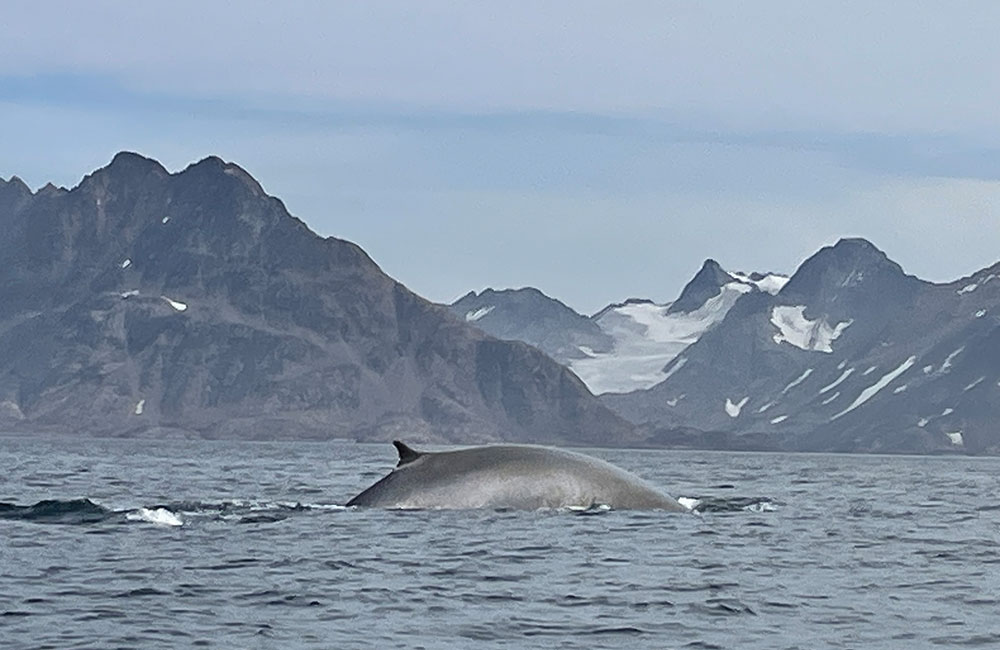
We had regular views of whales (Humpback, Fin, and Sei), Minke whales, Harp, or Greenland, Hooded and Bearded seals. We also saw Glaucous and Black-legged gulls, Kittiwakes, and Arctic Terns; Little Auks, Ringed Plover, Snow Bunting, and Ravens. We also saw Glaucous and Black-legged Gulls, Kittiwakes, and Arctic Terns.
Occasionally protected by off-lying islands but at times exposed to the open ocean, our paddling days were often long, giving us an uneasy feeling of paddling ourselves into something more intense. And as if to underline this, our final days paddling into Lake Fjord required us to paddle Kap Japetus Steenstrup, or Hell Corner, as Watkins Team christened it.
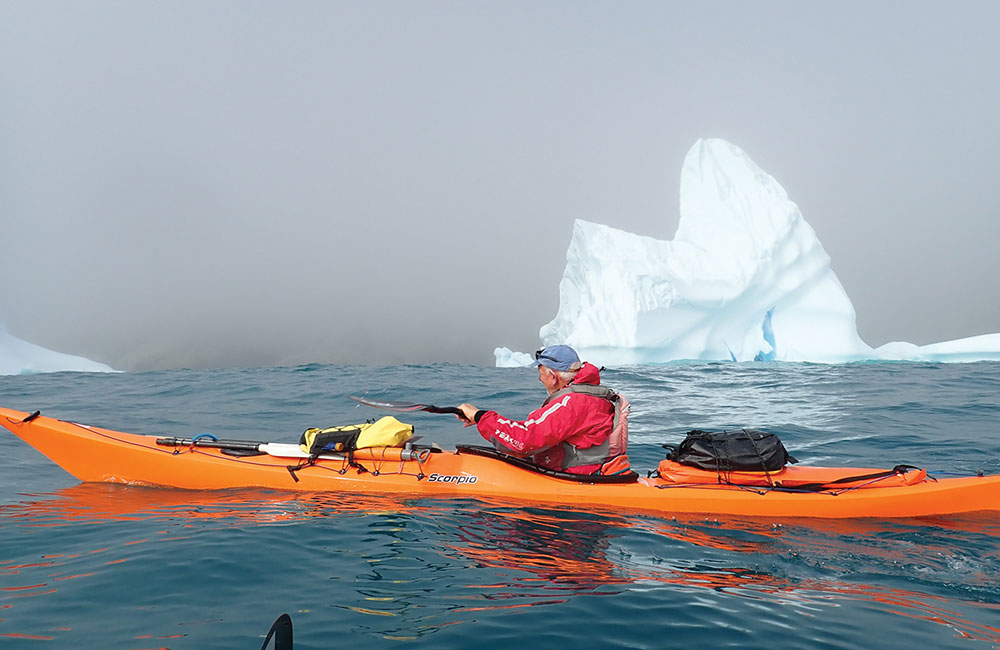
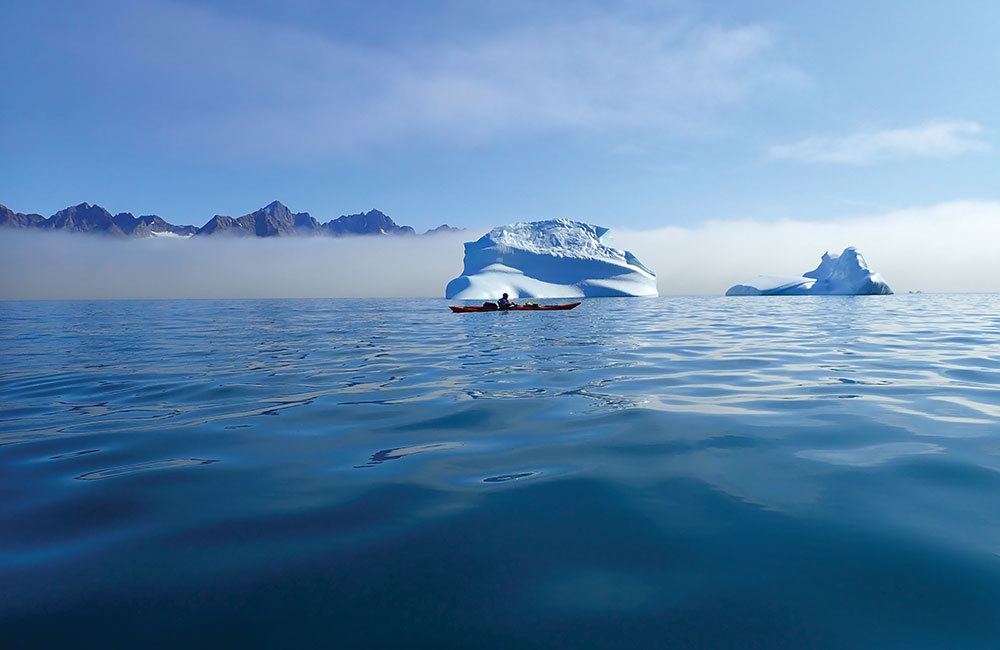
The most challenging part of our journey (on our outward journey, at least, we choose to refer to Hell’s Corner as the ‘big corner’ or ‘bend’ as this felt less of a psychological barrier!), we were completely engulfed in sea mist, a common summer phenomenon in the east coast fjords.
As Greenland experiences a burst of warm sunlight and rising temperatures, warmer air flows across the frigid, ice-choked coastal waters. Moisture in the air cools rapidly and condenses into a thick, low-lying blanket of fog, creating ghostly, dramatic landscapes that wholly or partially obscure giant floating icebergs and the base of coastal mountains, erase the horizon line, and make progress difficult to see.
Enter our own David ‘Captain Worsley’ Simpson. Cautious and vigilant, David guides us tensely onwards until the mist begins to clear and maps and GPS confirm our route.
Lake Fjord
Our journey now brought us into Tugtulik Fjord, or Lake Fjord, the base camp location for that last expedition.
“As we entered Lake Fjord, tranquil and lovely in the mellow sunshine of an August afternoon, we were full of expectation and joy.
“We could imagine what the first settlers in America must have felt. as their ships passed silently up the rivers through that new country in which they were going to make their homes”
(Freddie Spencer Chapman – Watkins last expedition)
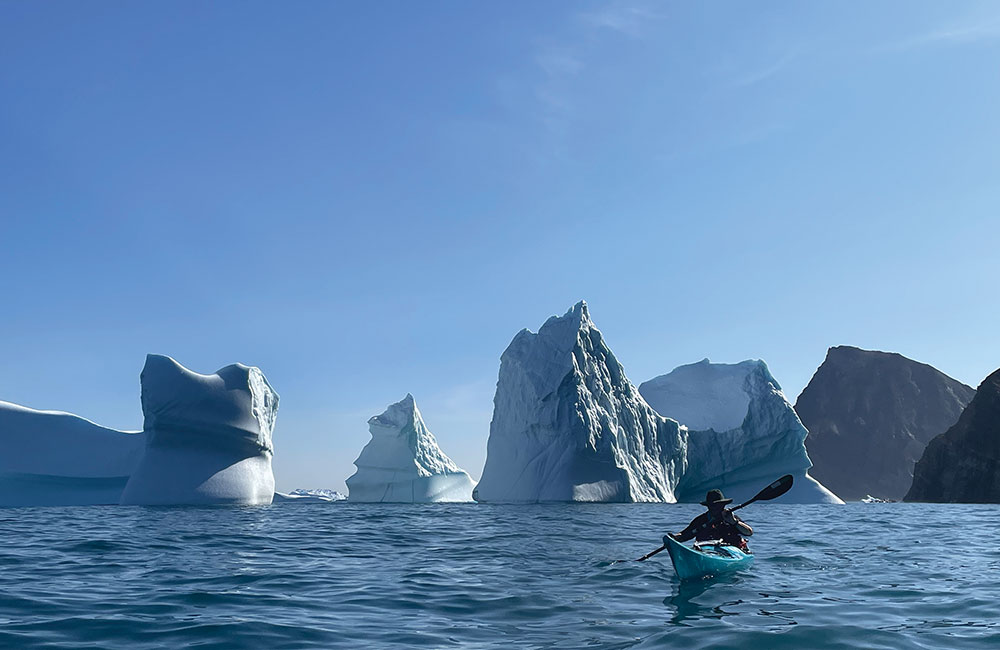
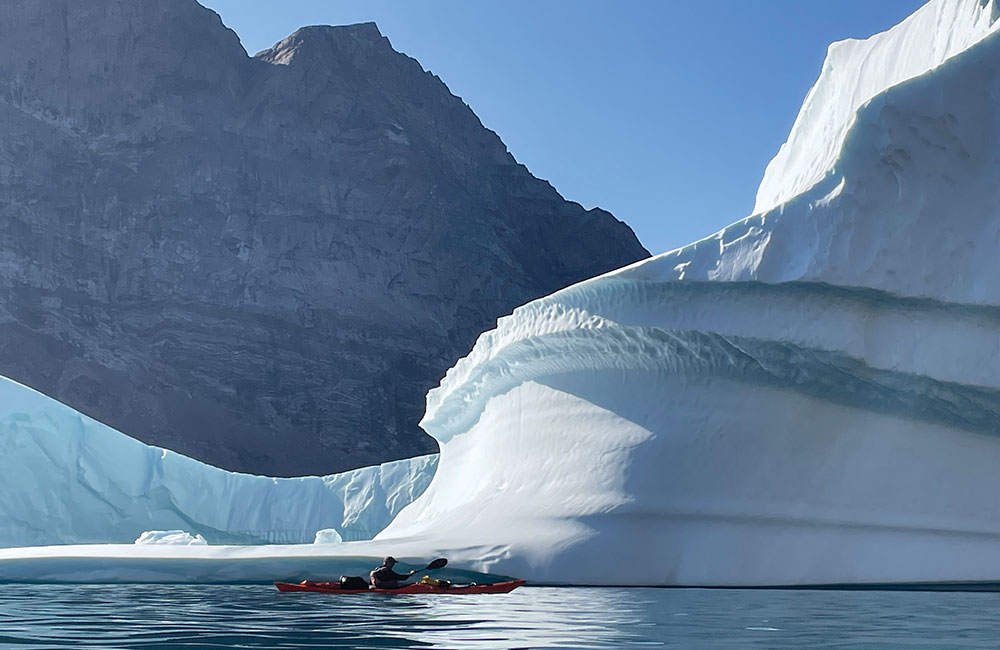
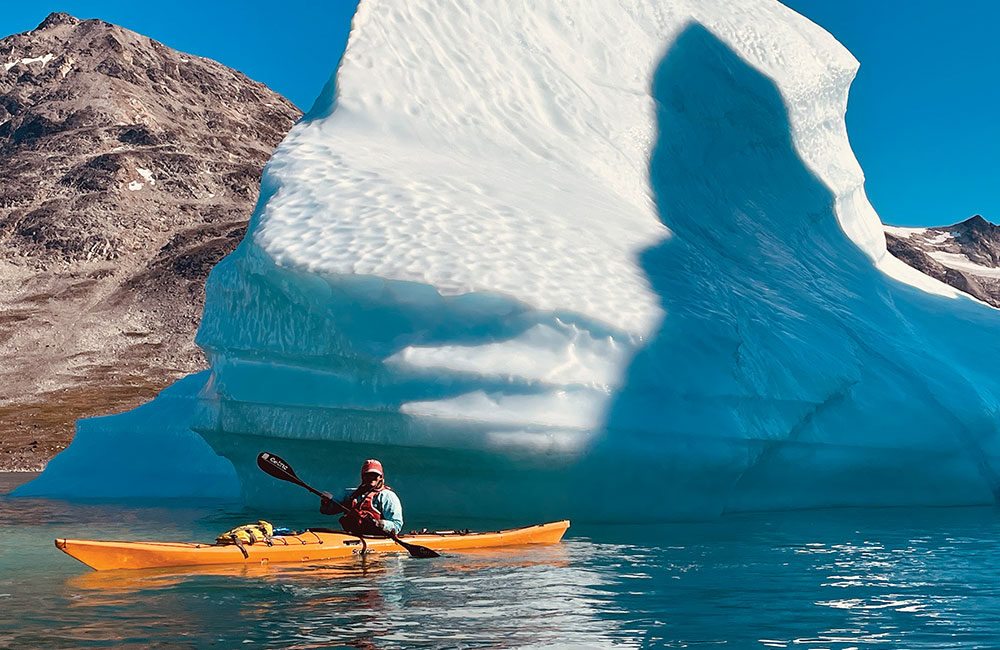
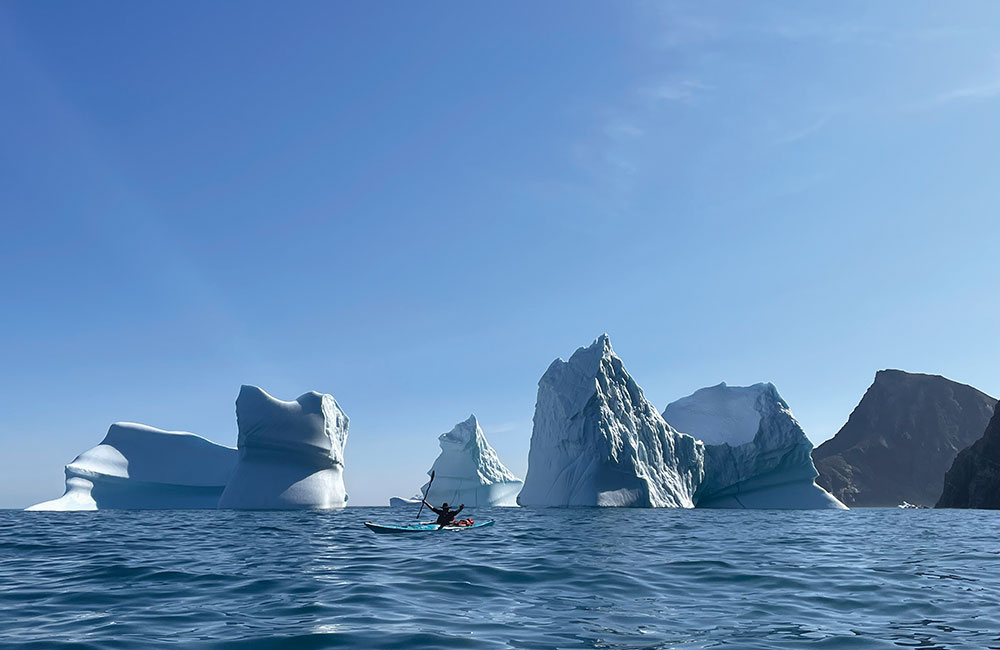
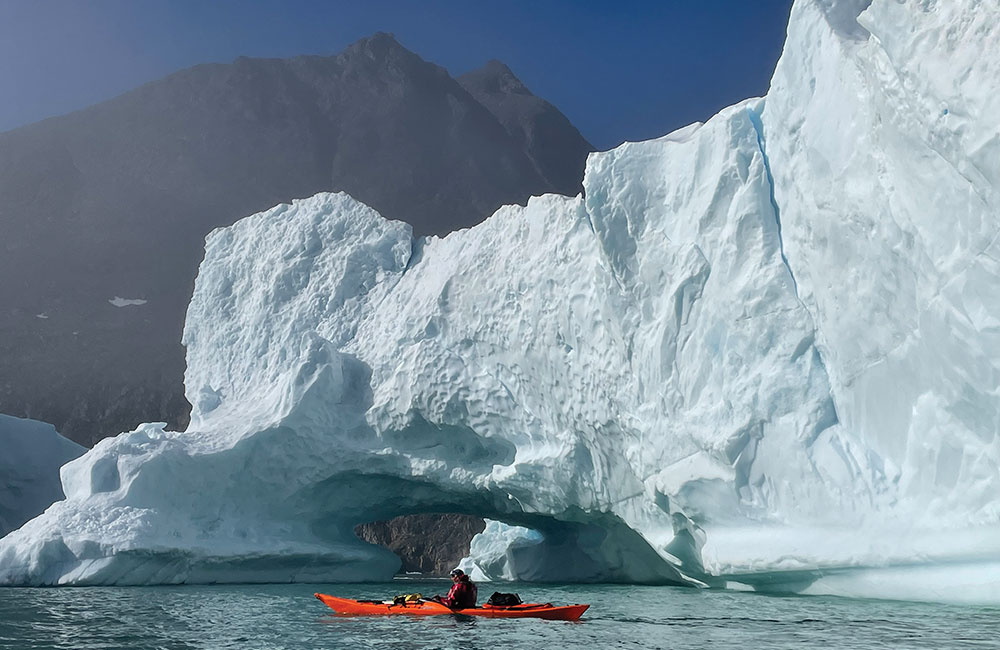
Approaching our destination via a ‘salute of giant bergs’ like royal icing as they shine from within in the reflective late afternoon sun, occasionally shrouded by sea fret and fog sweeping in from the open sea provided an atmospheric and emotional ‘arrival’ at this historic expedition location, and not at all dissimilar to the arrival of the Watkins team as described above.
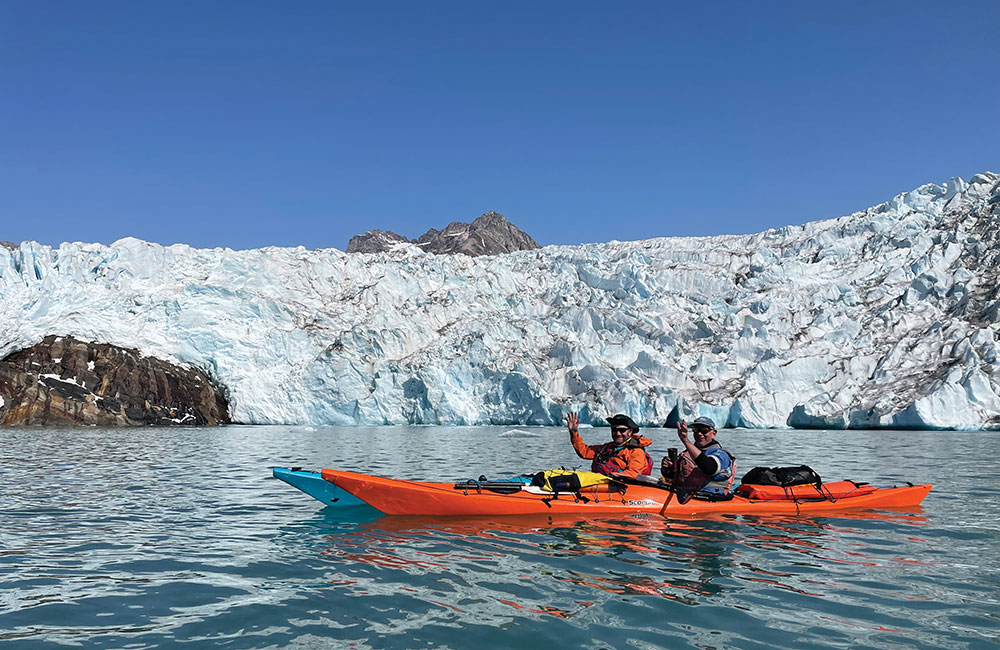
Relatively small and Y-shaped, Lake Fjord has two branches, both four miles from the open coast. The mouth of the fjord is guarded by a large conical island named by the Watkins team as Ailsa Island, as it reminded them of Scotland’s Ailsa Craig. The steep-sided north branch of the fjord terminates in a glacier wall nearly a 100 feet high, running the full width of the fjord.
The south branch of the fjord leads you through to a wide and fertile valley. This valley contains the lake, which gives the fjord its name, as well as a swift, winding river a mile or so in length, flowing from the lake and discharging silt and glacial moraine into the shallows of the immediate close inshore areas of the fjord.
“The Tugtulik Fjord has its name from reindeer, which are said to have been plentiful in those former days… Within the Fjord there is an inland lake in which there are salmon of such size that they have to be caught with seal-hunting implements.
“It is told they are just as large as sharks, and that a dog can satisfy his hunger on the stomach of a salmon.”
(Inuit 1884 conversation with Gustav Holm ‘discoverer’ of Angmagssalik)

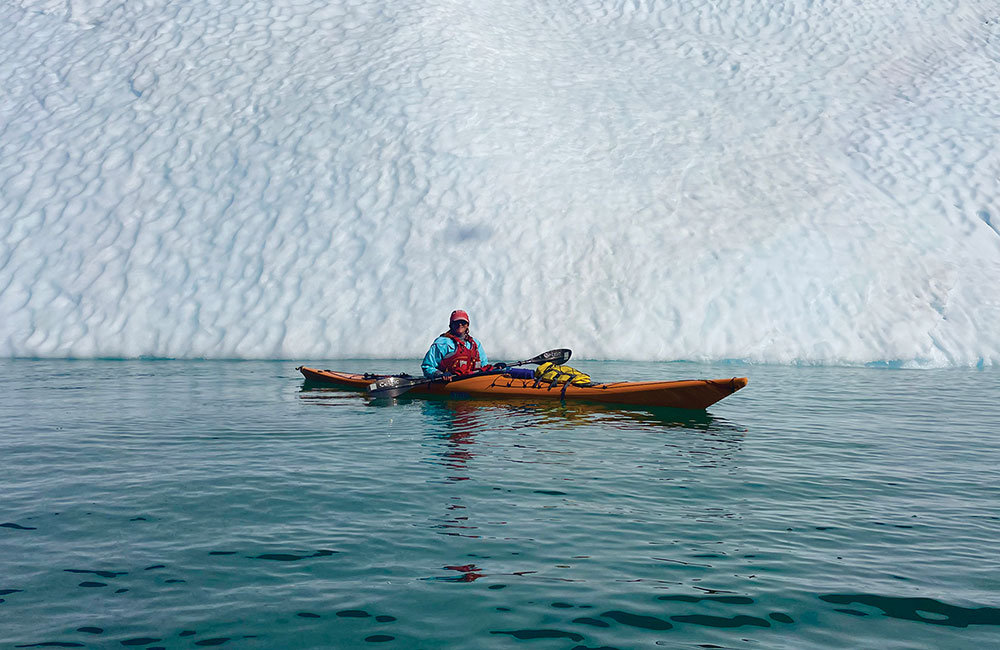
Lake Fjord Base Camp
Our stay at Watkins Lake fjord base camp would be brief. With the forecast set to bring bad weather within the next 48 hours, we planned a rest day, the opportunity to take in the history of this time capsule from the past and then to exit and make our way back out to Sermiligaaq and eventually Tasillaq.
For now, though, 24 plus hours in one of the world’s wildest, most spectacular places – a time of inspiration and reflection on life and the future.
Our paddling journey, to this point, is eight days long, each day more remote and more awe-inspiring than the last.
For me, this has been a journey of about 40 years, starting on summer canoe trips down the River Wye as it winds along the Welsh/English border. A journey that started in the world-famous Booths bookshop in Hay on Wye.
Breaking my journey there, I would spend evenings browsing the bookshelves for inspiration. I found inspiration in the journeys and experiences of early explorers and adventurers.
Cambridge graduates and socialites
In particular, I discovered the early exploits of a group of Cambridge graduates and socialites. Chief amongst them was Henry George ‘Gino’ Watkins. What struck me about these enterprising and compulsively adventurous ‘fellows’ was, I guess, their early inexperience and naivety. A background that did little to discourage their overall ambition.
Through a series of books I was to learn of remote canoe journeys in Labrador, explorations of Arctic islands and year-long survey and research expeditions in remote eastern Greenland, where, under the guidance of local Inuit hunters, they learnt to hunt and kayak (bringing their skills back to the UK – leading rolling sessions on the cam in 1932).
Whilst led by Gino, this particular band of brothers included Augustine Courtauld, J.M Scott, John R Rymill, Freddie Spencer Chapman, H. I Cozens, Quintin Riley, Martin Lindsay, L.R. Wager, N.H. D’Aeth, P.Lemon, A. Stephenson. Each one played a key role in the 1930-31 British Arctic Air-Route Expedition and then went on in their own way to greater adventures, either returning to Greenland in 1931-32 or exploring the Antarctic, climbing Himalayan Peaks, taking part in early Everest reconnaissance trips and then significantly supporting the WWII effort, sharing their expertise with emerging special force units and/or serving in the Malaysian jungle (Jungle Soldier – Brian Moynahan/Living Dangerously -F. S. Chapman). See Footnote.
All of them, that is, save for Gino himself, who was to tragically lose his life early in his second Greenland expedition (1931-32), while out alone hunting seals in his sea kayak. Right here in this amazing place.
Climate change
Approaching 100 years after Watkins’ last expedition, it’s easy to imagine them arriving in this remote place on that tranquil August afternoon. Just as they had experienced, we found a remote fjord, filled with icebergs and surrounded by savage mountains, the looming presence of the ice cap and glaciers.
A unique and truly wild atmosphere, probably as wild today as it was then… save, I guess, for the clear evidence of modern climate change, the cause of a retreat which is ever increasing – a slow burn towards potential global disaster. All in the name of ‘modern living’, advancement and a world of convenience.
Reflecting on how much glaciers and snow have regressed offers a striking and worrying view of how much and how quickly the massive Greenland ice cap is losing its ice, as well as the wider implications for sea-level rise, world geography, and politics.
The effects of global warming are now blindingly obvious to any traveller in the Arctic. Easier access to the region, along with the discovery of energy deposits and the development of technologies to extract them, could bring much-needed prosperity to the Inuit people. Equally, however, the race to access this energy and wealth could see them lose out to those with the resources and the infrastructure to take what they want, adding to the world’s environmental and climate dilemmas while doing little to add to the health and security of the legitimate custodians of the land or the wellbeing of our planet.
This juxtaposition worries those of us who recognise the importance and value of wild places and the crucial role they play in keeping the planet in balance. The responsibility to protect it and keep it healthy rests on all of us.
Witness to Change
Over many years, I have had the good fortune to paddle in many parts of the world, exploring mountains and their rivers, the seas and their Islands. Travels and adventures inspired by past explorers like those in whose footsteps we now tread, and steered by curiosity to experience and observe planet Earth.
In such a unique and truly wild place such as East Greenland, one can’t help but be concerned for the future of these pristine and remote places, and the peoples who live there.
Nor can we ignore the politics of greed. While such thoughts can weigh heavily, it’s important not to let them diminish the overall experience and insight kayak travel can offer. We may no longer need to hunt to feed ourselves to sustain life. We do, however, need to feed our souls, stretch ourselves, and aid personal growth. As witnesses to change, sharing our experiences with others can inspire future paddlers’ curiosity and frame the challenges of climate change and human environmental dynamics, so we can also promote responsibility.
Certainly our return to East Greenland achieved all of the above and more.
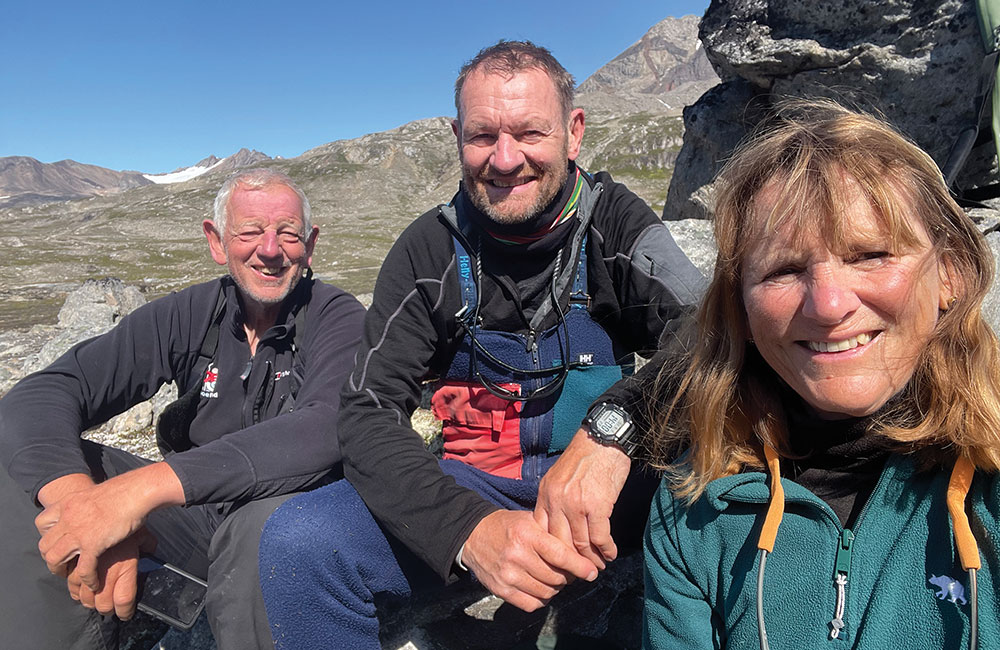
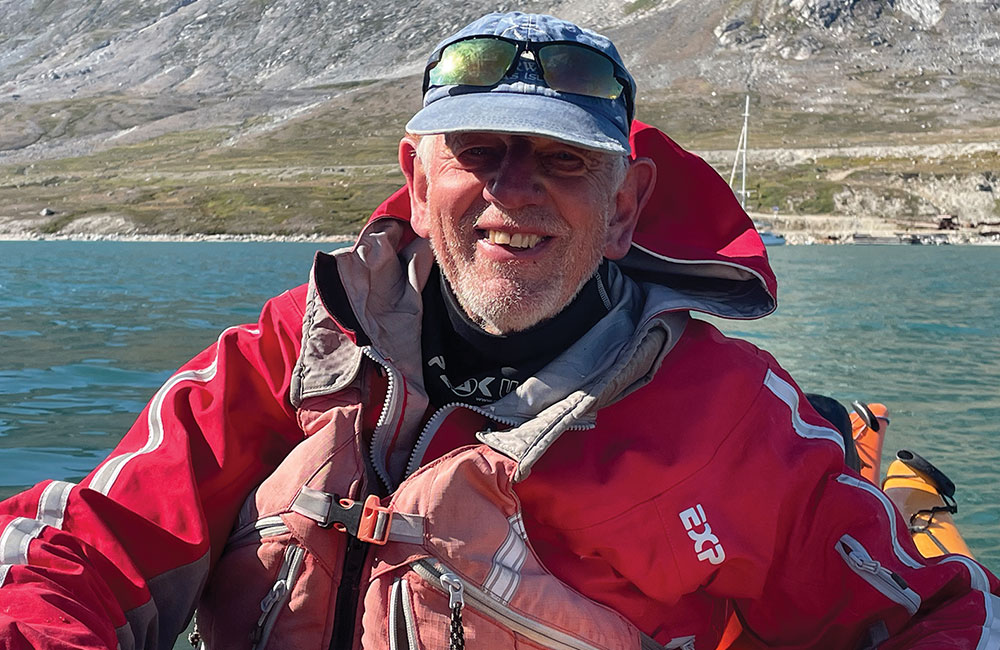
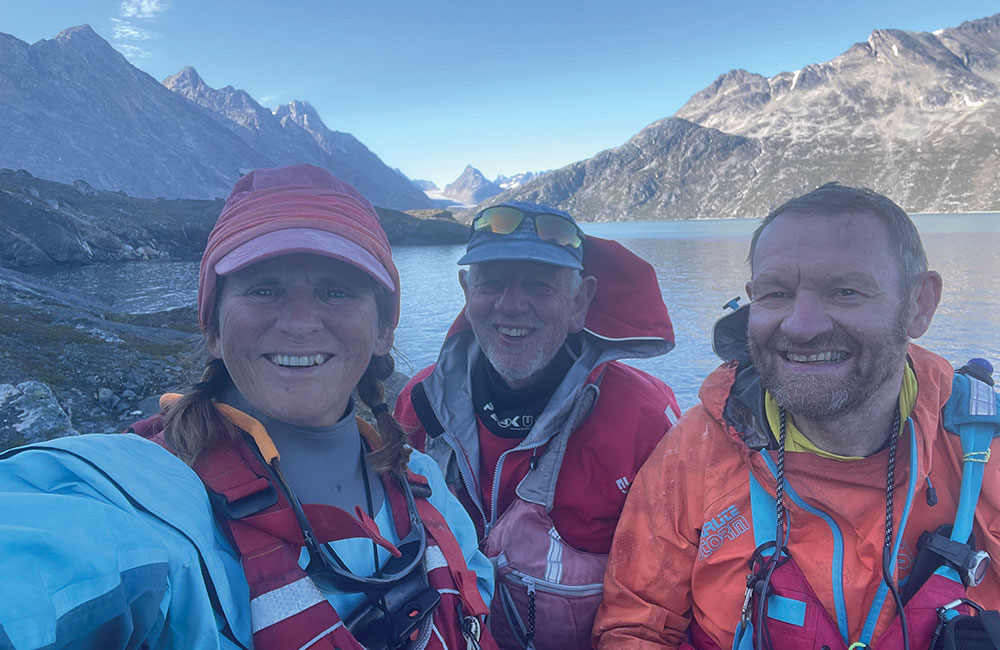
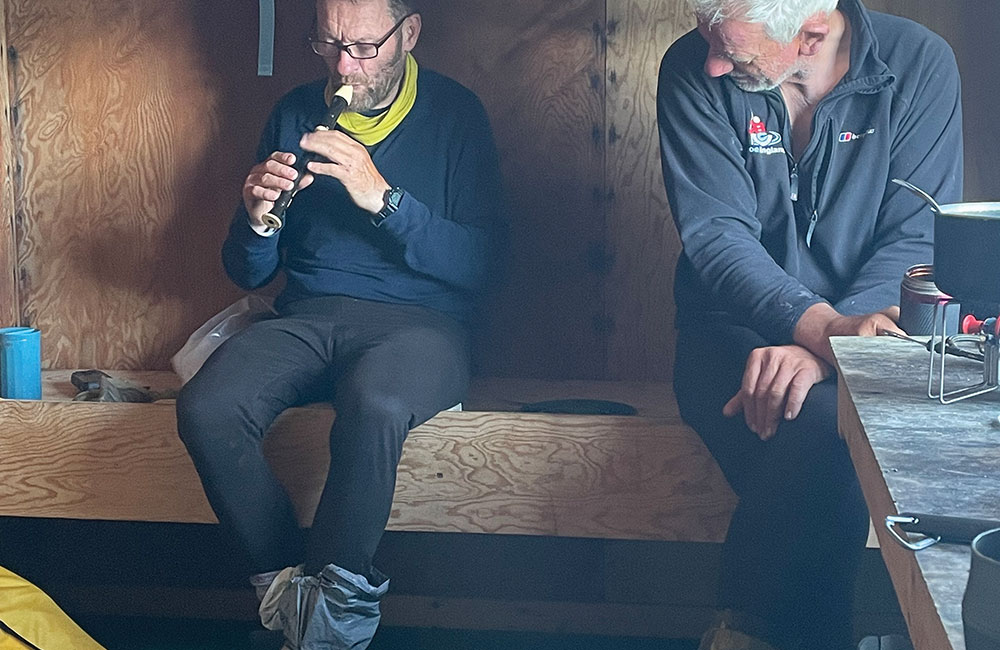
Not least, our journey reinforced the nature and importance of team dynamics. As a small team of three, I enjoyed the companionship, commitment, enthusiasm, and support my colleagues Mary and David offered throughout. Our achievement through shared experience and counsel.

Thanks
Thanks to both of you for your company, sharing, and commitment to this adventure. I look forward to our next adventure. Our thanks also to: Rasmus Paulson of Tasillaq Tours
Footnotes
Gino Watkins – J. M. Scott
Northern Lights – F.S. Chapman
Dancing on Ice – Jeremy Scott
Gino Watkins – John Ridgway
Watkins Last Expedition – F.S. Chapman.