Words & photos: 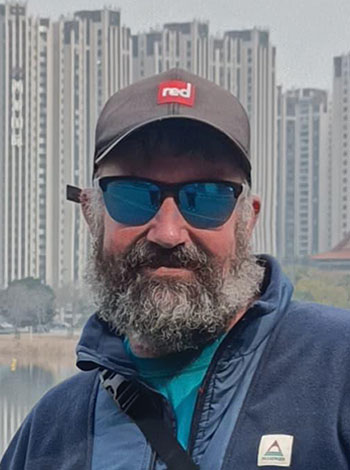
Paul Cooper
Paul Cooper
@adventure_kirkbylad
FB: Paul Cooper.
Admin of Sup Shropshire
Why China?
A lot of people ask me, “Why China?” To be honest, our original plan was to go to America, but a last-minute shift in direction changed everything. Looking back, I don’t regret it for a second – even with the logistical hurdles we faced navigating the waterways of the Far East.
Packing for three seasons in 20kg
Deciding what to pack for a 20kg luggage allowance was a big challenge. Our itinerary spanned Hainan Island (25°C+), Beijing (a brisk 4°C), and Malaysia (30°C+). While I’m not just a fair-weather paddler, the unpredictable winter conditions meant we had to be ready for anything.
Our kit included dry gear and thermals, but safety equipment proved the biggest challenge. We brought our Red Paddle Co PFD belts, thinking they’d be compact for travel. However, buying CO2 canisters in China is nearly impossible; sales are strictly regulated, and you aren’t allowed to carry them on trains. I tried buying a traditional buoyancy aid locally, but none of the retailers had my size in stock. Eventually, I found one online for the equivalent of £7 – shockingly cheap, but I suppose most things are made there. We also ordered a single-chamber manual pump, along with an electric pump, for ease in certain places. As we were moving so fast every couple of days at first, only one PDF arrived in time, forcing us to re-order another at our next stop.
For boards, Red Paddle Co kindly lent us two Compact models, for which we were extremely grateful. This was a game-changer, allowing us to ditch the usual heavy rucksacks. We packed our clothes in the SUP bags around the boards and paddles; those wheeled cases were lifesavers when going through Metro stations, especially since all train stations in China require you to put all your bags through x-ray machines, as we do at UK airports. That was a real eye-opener on how advanced and safe the country is.
Breaking through the ‘great firewall’
Making contacts before arrival was tough. Western apps like Facebook and Instagram don’t work without a VPN, and I relied heavily on WeChat to join local groups and message as many people as possible. China is very strict on rules, and I was terrified of accidentally paddling somewhere off-limits.
Hainan: setbacks and ‘super-flu’
We arrived on Hainan Island full of optimism, but the PFD gas issue stalled us immediately. Then, on day four, disaster struck. As we moved to the Shenzhou Peninsula, I felt like someone was stepping on my chest. I couldn’t breathe – the ‘super-flu’ had caught up with me.
For the next week, I was grounded. Even by the time we reached Sanya, I was too exhausted to paddle. I spent those days frustrated, watching the waves from the shore and scouring WeChat for local clubs.
The first ‘green light’ in Dongfang
In Dongfang, we finally got a break. I spotted our neighbour washing his Ford Transit camper (a fellow van-lifer!) and struck up a conversation via Google Translate. He then confirmed the China Sea was open for paddling.
The first launch was an eye-opener. As we pumped up the boards, we became the main attraction. A crowd of locals closed in, filming us and murmuring questions. Once we hit the water, the intrigue settled.
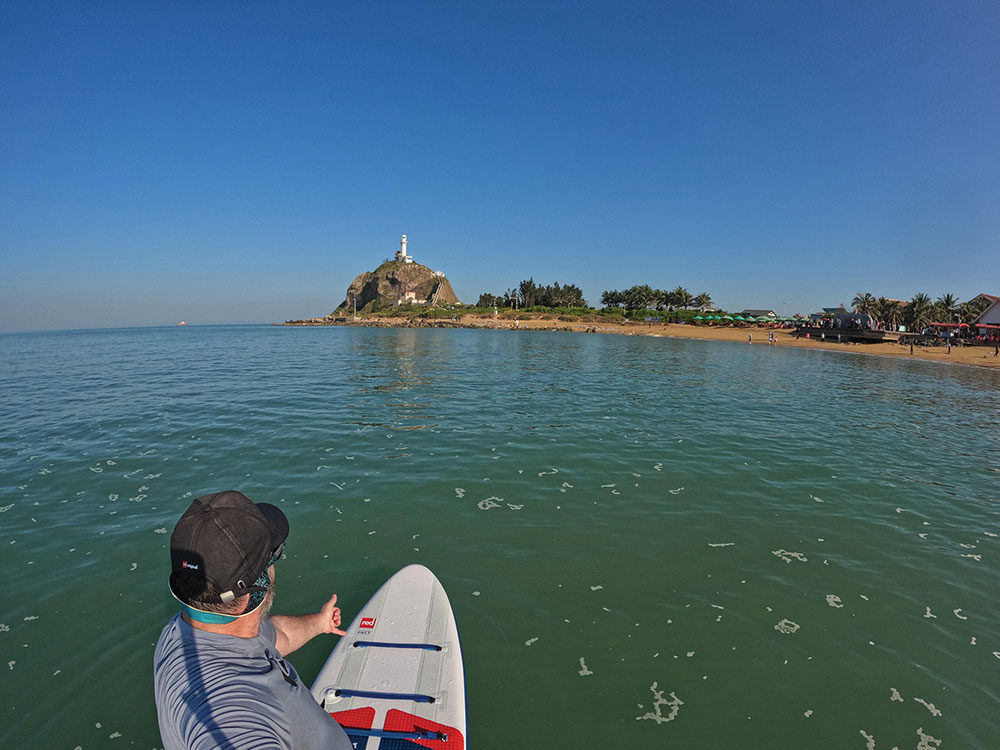
The South China Sea was calm, with small waves crashing against the shoreline. Though I wasn’t feeling 100%, I was engrossed in the surroundings, even paddling out to explore a small lighthouse on the peninsula. This experience finally gave me hope.
Navigating the rivers and reservoirs
Paddling in China isn’t as simple as ‘drop and go’. Many rivers are dammed for water purification, turning planned long-distance trips into loops of lakes. In some spots, I even had to pay for a guide to get permission to be on the water.
Guilin
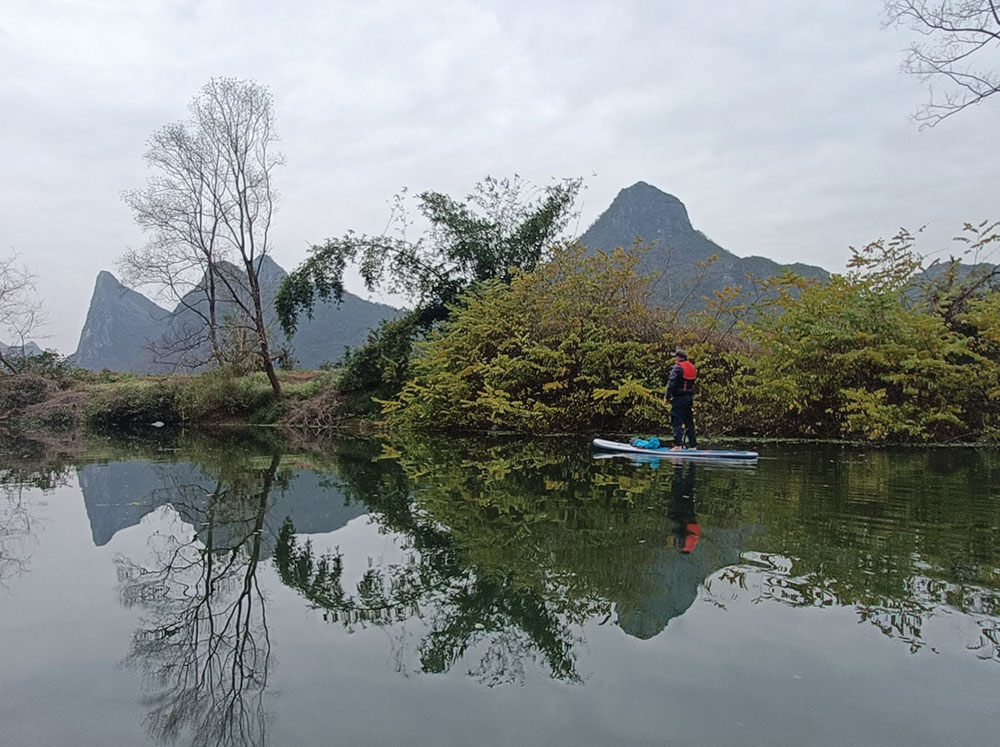
A magical place surrounded by limestone hills. Though advised against paddling in tourist hotspots in December, a local accommodation owner pointed us to a swim spot. The water was below 10°C – freezing to the locals, but ‘tropical’ for someone from the UK! Paddling past a village with the famous limestone mountains in the background was truly magical.
Guangzhou
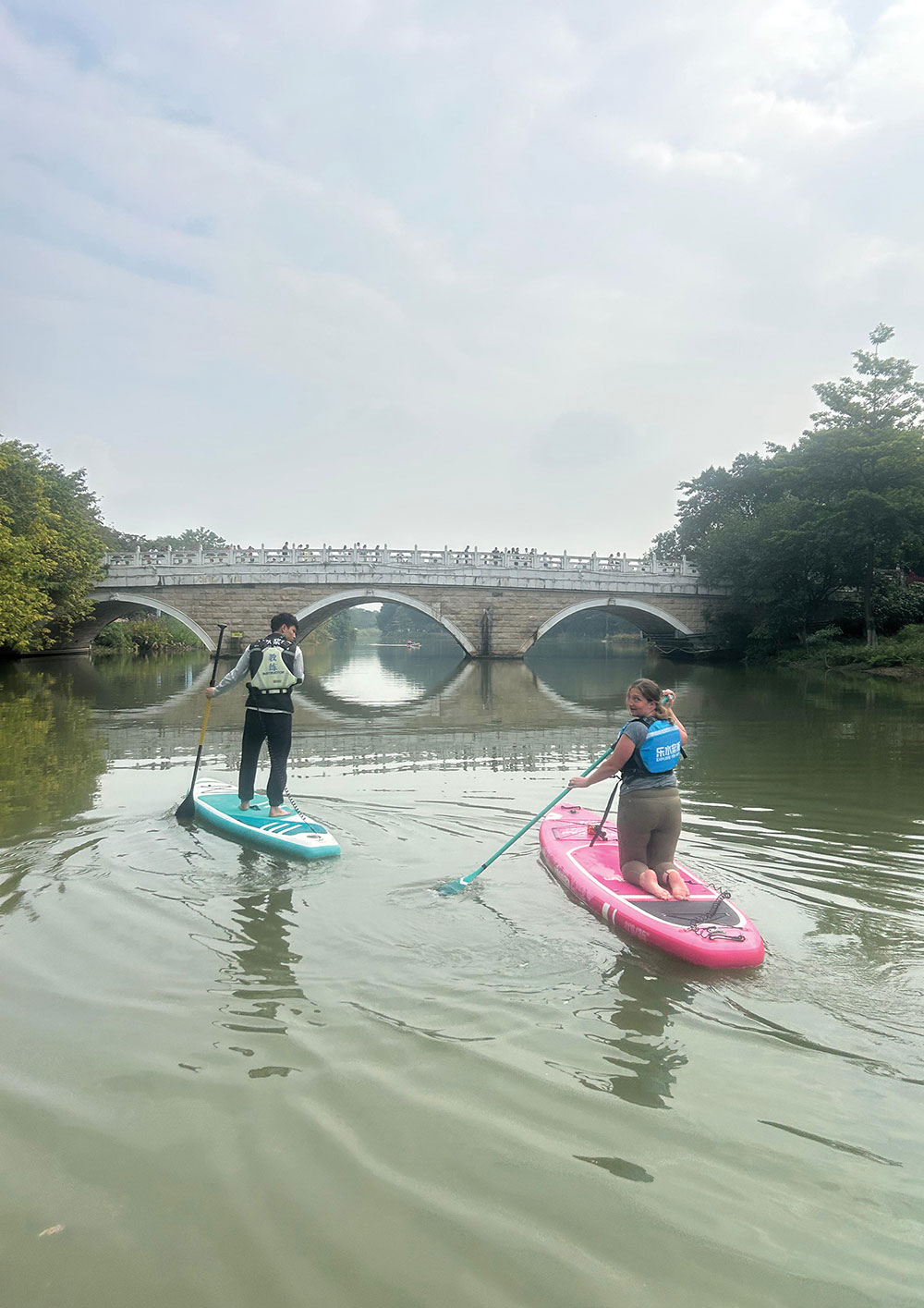
This was my first guided experience, delivered in a park within a nature reserve, which was pretty special, hidden in such a big city. We couldn’t use our own SUPs, so we were given some bright pink ones, not sure if the instructor was trying to be funny. We paddled about 4 km there and back. The instructor was new to water sports, learning as they studied. I was introducing him to different strokes. Once off the water, I spoke to the boss about paddling ourselves, but he explained that it wasn’t allowed under local regulations. I felt disheartened, but I knew I was beginning to talk to the right people on WeChat and that I’d make progress.
Guiyang
We had booked a local for a city tour, as I thought they could either help us or point us in the right direction. I later found out it was her first tour, so she was very eager to help us. Her name was Xiaodi. At Shi’ertan Reservoir, we found a local company on the city’s outskirts. Xiaodi had agreed to meet us at a metro station and drive us to the location, for which we were extremely thankful. Once we arrived, three young men agreed to let us paddle for a small fee, even coming out in a Canadian canoe as a safety precaution. They were so excited to see us during the off-season that they flew a drone to film us. I even enjoyed traditional Chinese tea while on the board!
Chengdu
Famous for pandas, Chengdu also offers Jincheng Lake. A contact suggested a water sports company called ‘Wavespeed’. The owner was so excited by our passion that he let me paddle for free. I managed several laps of the lake, even catching a smile from a passing policeman, all with the world’s largest building by floor area as my backdrop. While Claire answered the locals’ questions, the translator stood by.
Xi’an
During the Chinese New Year, we arranged a paddle in Xi’an through contacts I made in Guiyang. This was with the Xi’an rowing club. We had the honour of being guided by an Asian Rowing Champion and former Olympian, a truly nice bloke (Bai Jungi). We paddled as a small group because a few others wanted to join us. The paddle started on a river, passing an empty water park, and I was captivated by the pagodas on the banks. After the paddle, a few of them asked if I wanted to dress up and have a go on the hydrofoil. I politely declined, but in hindsight, I wish I had.
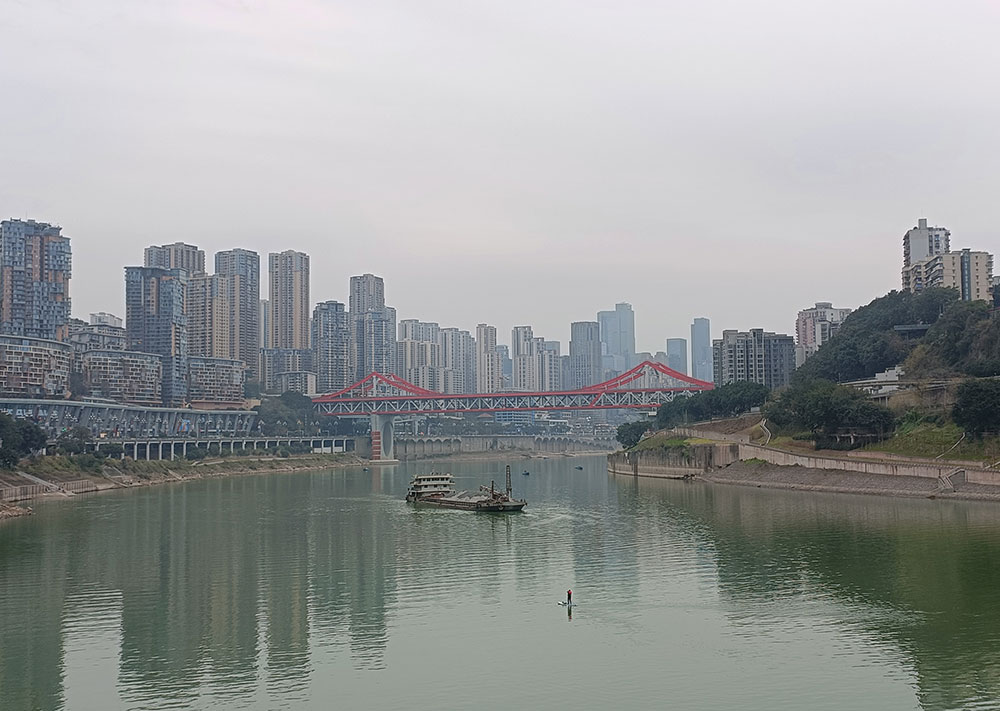
Chongqing: the 3D city
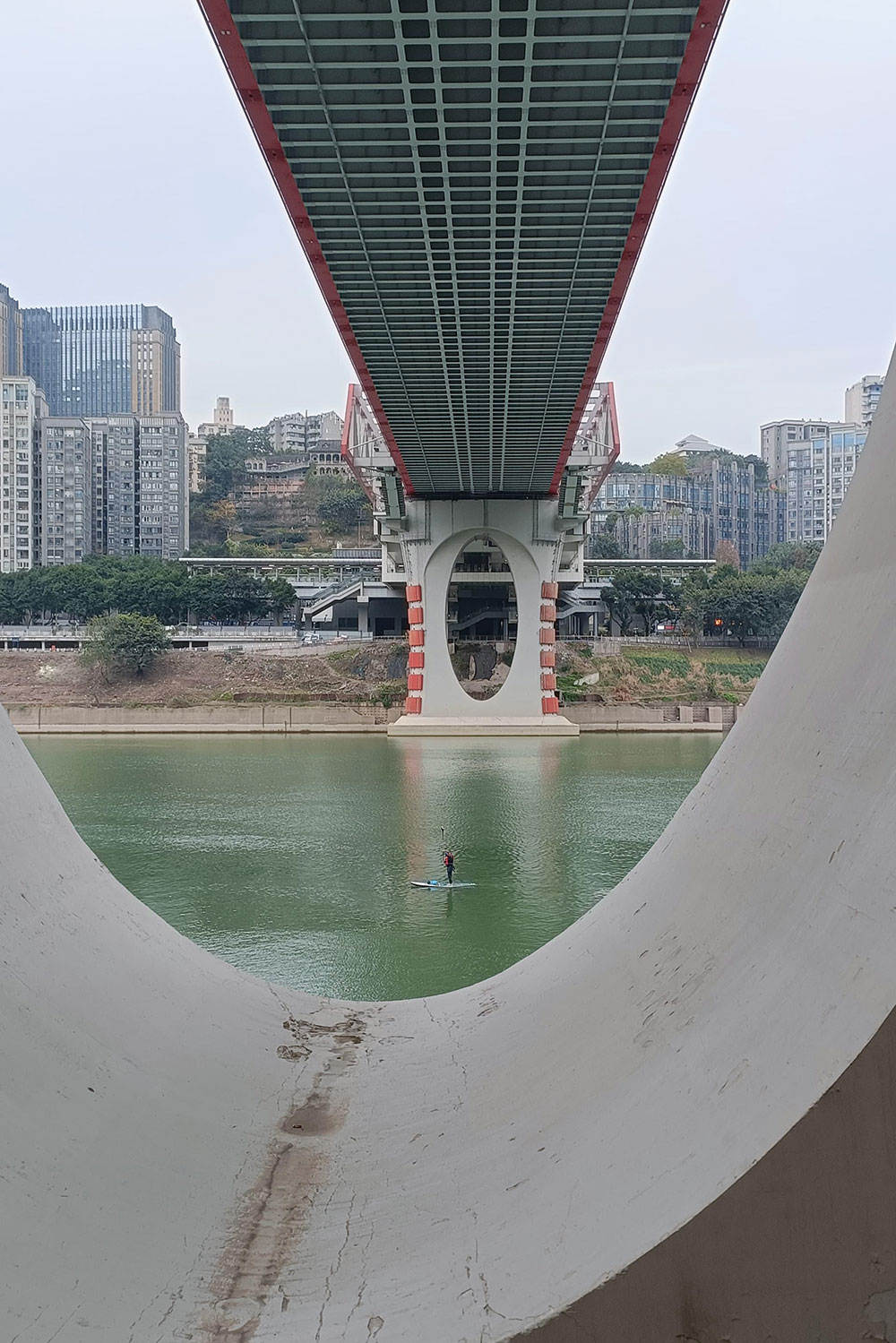
Chongqing was definitely my favourite inner-city paddle of the trip. I put in 5km north of the city on the Chang Jiang River. I found the information by speaking with local tour guides, who explained that it was out of season but gladly shared it with me. We took a (Didi) there version of Uber to the launch. Once there, I spoke to a father and his two children, who were doing speed drills on SUPs for a short time, since I knew I had only a short window to complete my trip.
When I started paddling through the city, it felt like being in a ‘land of giants’. Massive barges drifted by, planes roared overhead, and the monorail ran right alongside the river. Reaching the Hongyadong Caves just as the lights flickered on at dusk was epic. Claire was walking alongside, taking some pictures, and feeling unwell.
Suzhou the grand finale
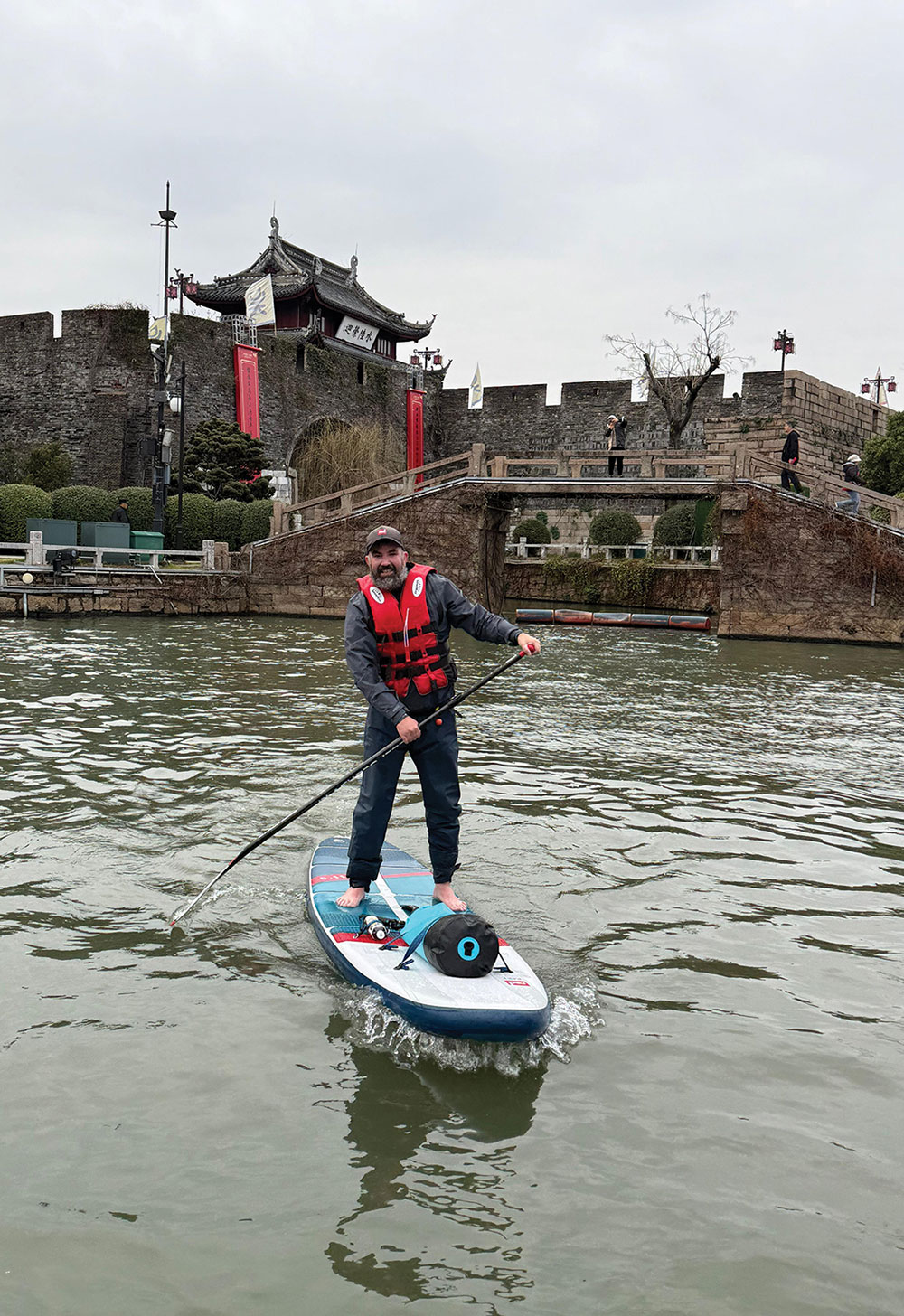
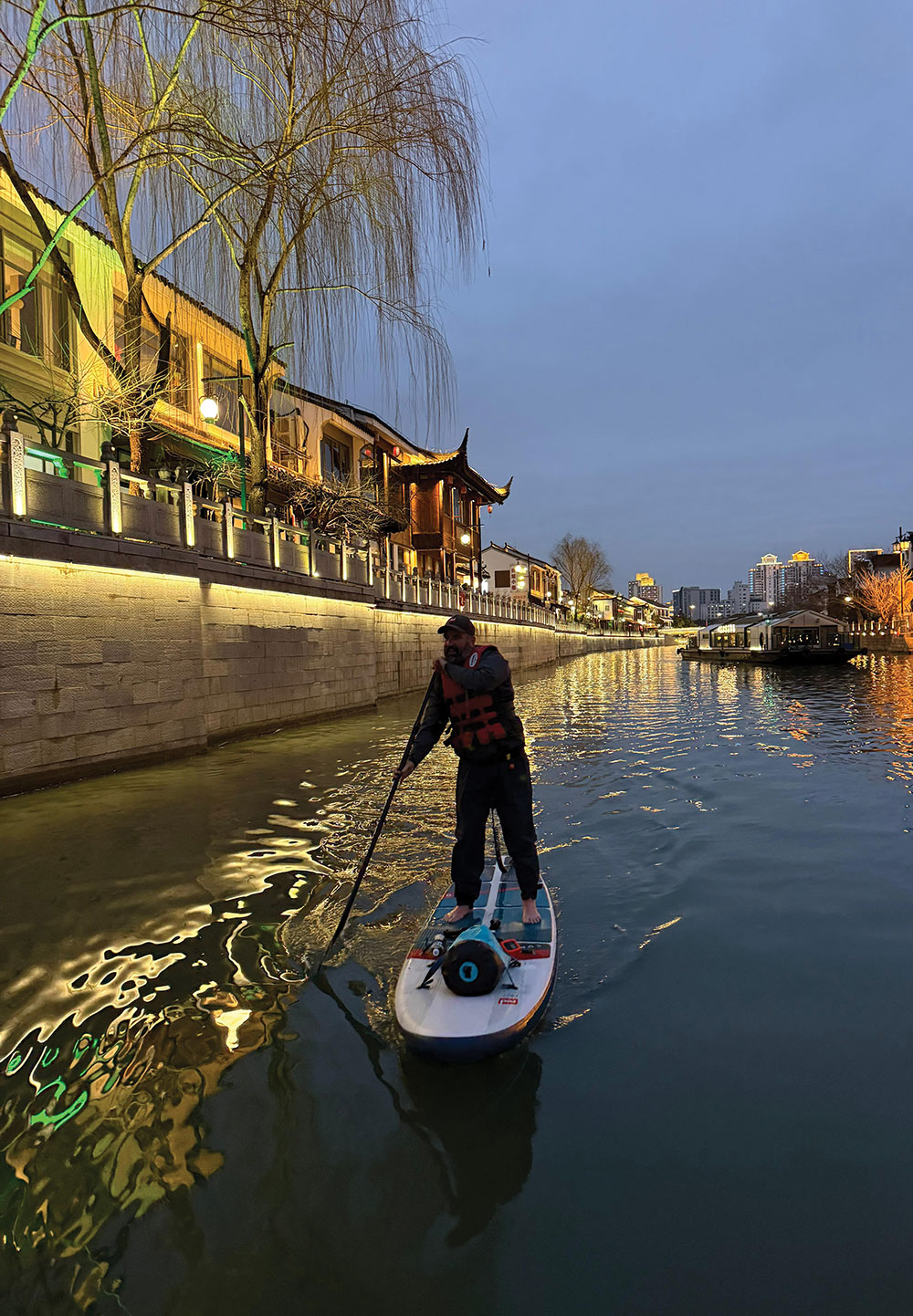
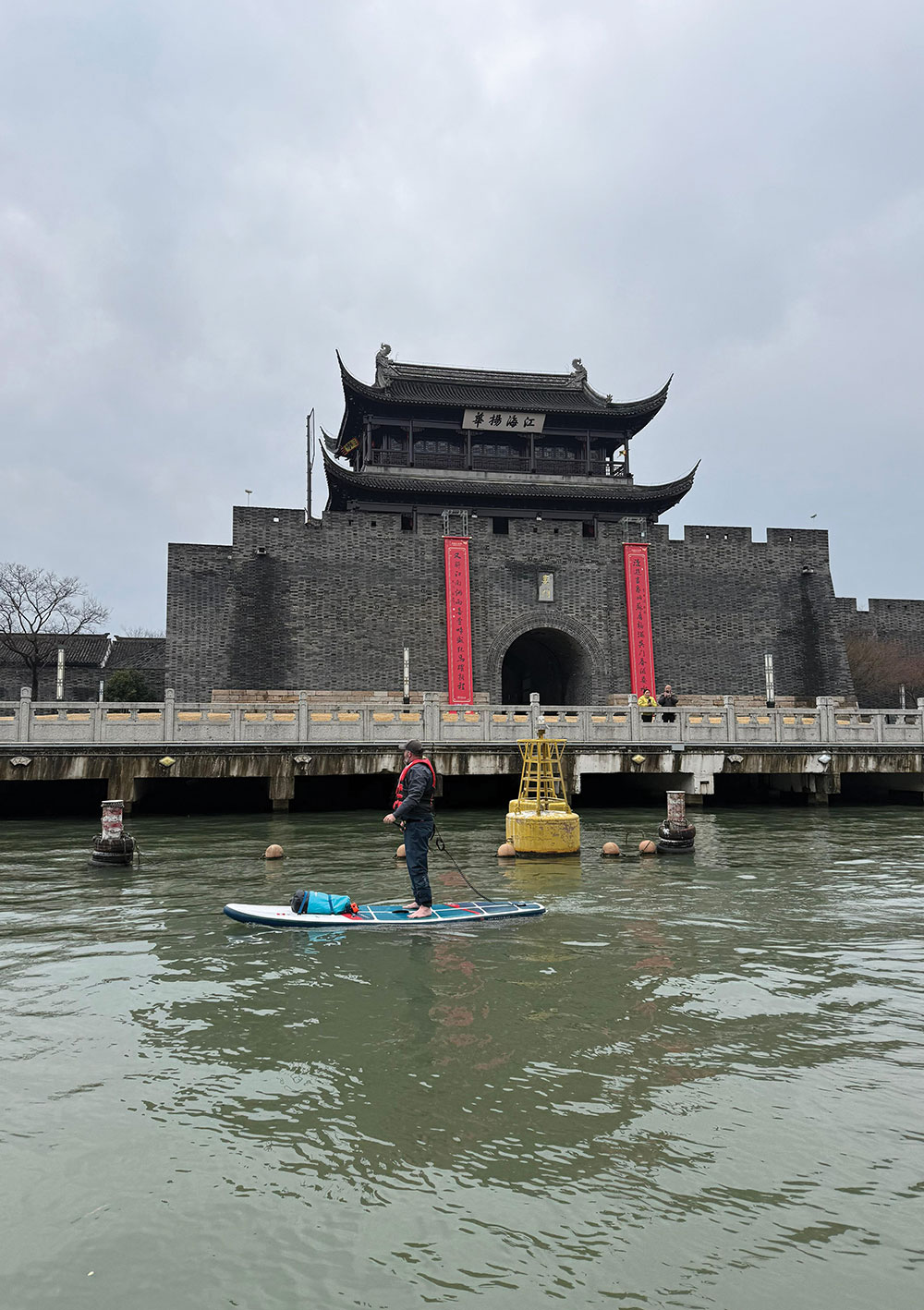
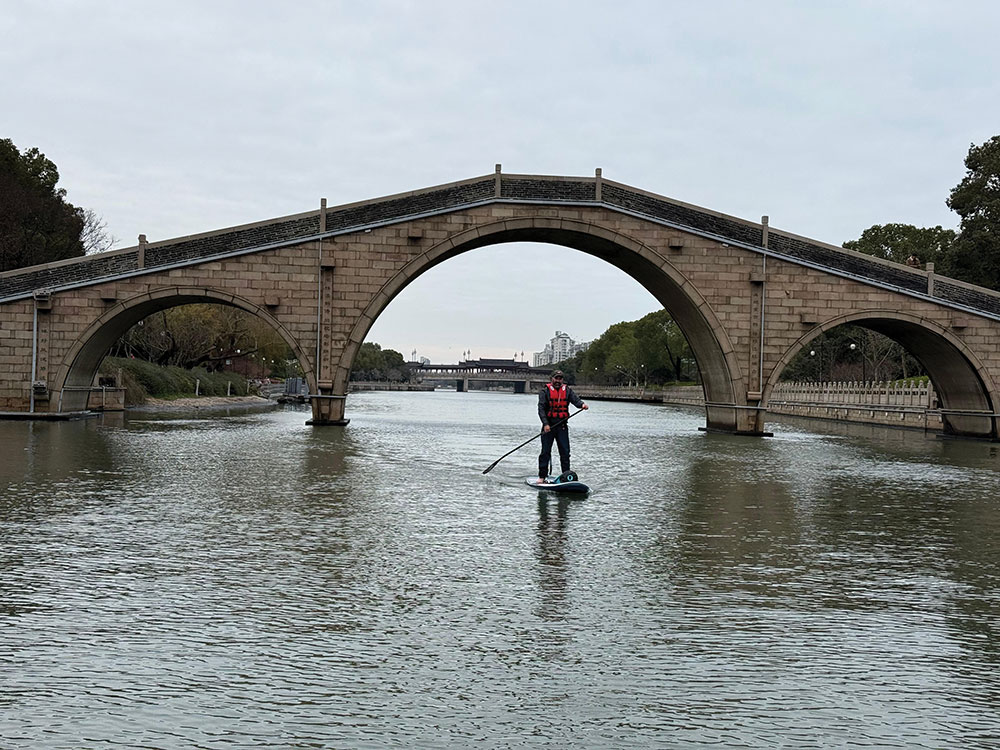
I saved the best for last: the ‘Venice of the East’. My contact, Rocky, met me after a long train journey and gave me a choice: the lake or the Old Town. We chose the Old Town, embarking on a 16km journey through 2,000-year-old canals. Seeing the ancient towers and bridges illuminated at sunset from the water was spectacular. I was so engrossed in the scenery I didn’t realise the time till the lights flickered on.
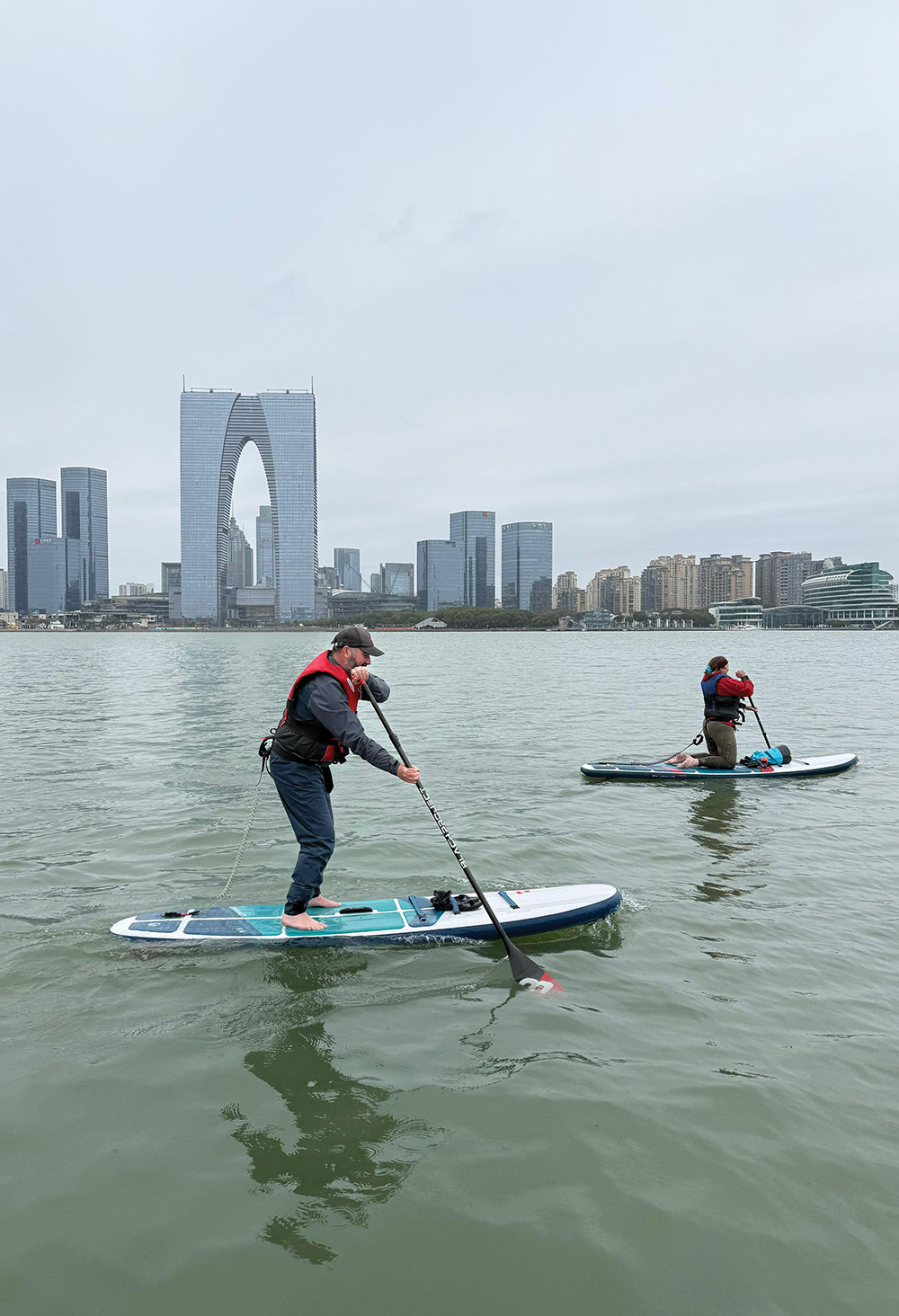
The next day, we explored Jinji Lake and the ‘Gate of the Orient’ (a building shaped like a pair of pants!) before the weather turned, as I’m constantly checking weather/wind forecasts wherever I am in the world, especially when we have paddleboards. Rocky told me he paddles year-round, and I explained that in Europe, we do the same as long as you have the right gear!
Final thoughts
China is a challenging place for a paddler, but the rewards are massive. We travelled to 13 cities using over 25 trains in an 85-day period. While I wish I could have paddled more, the experiences I did have were unforgettable. I’m already dreaming of returning with a group to explore the ancient waterways of Suzhou once again.
If anyone would like any contacts to paddle in China, I’d be happy to pass them on and hopefully introduce more people to paddleboarding over there.
Thanks
A big thanks to the Red Paddle Co team; without them, using the paddleboard wouldn’t have been possible. Also, a big shout-out to Guizhou Prepo Culture in Guiyang, our guide Xiaodi, who made it happen, and the Wavespeed team in Chengdu. A special mention goes to Rocky from Suzhou for showing us the best, truly amazing lakes and canals that China has to offer.
Finally, a mention to Claire for putting up with me being ill at the start, for wheeling both paddleboard bags in the first week, and for my trying to do lots of research about paddling and getting stressed along the way. Without you, this amazing trip wouldn’t have been possible.