WORDS:
DIMITRI VANDEPOELE
PHOTOS:
Sylvie Vandepoele
NORTHSEAKAYAK

@Northseakayak
CK/mer Symposium 2026
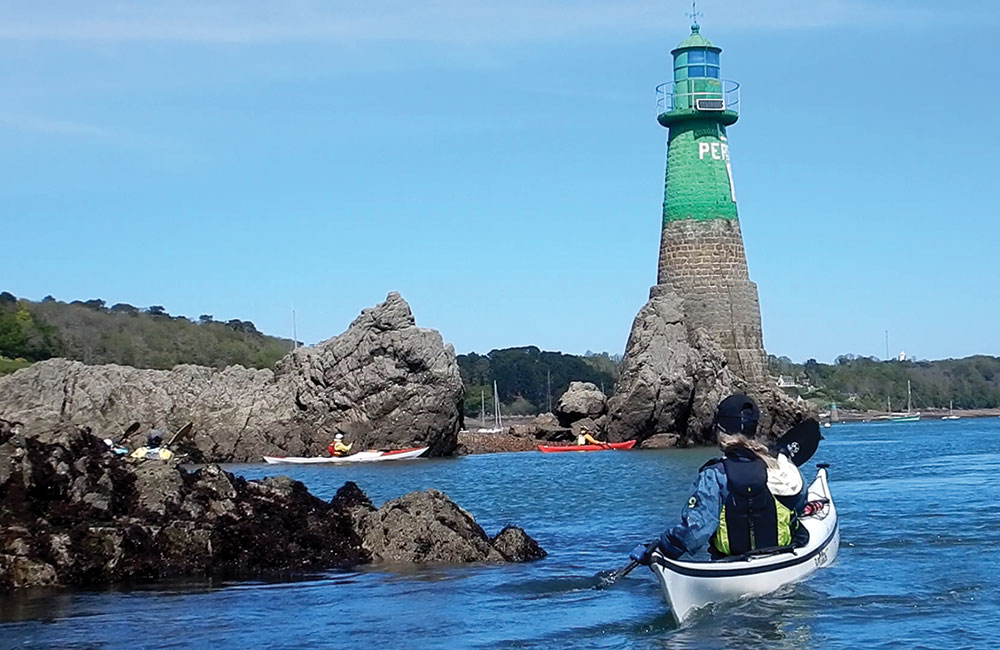
It is that time of the year again, when we are longing to meet other sea kayakers and train together in a fantastic setting! It has been two years since the last CK/mer symposium (2024), as it is only held every two years. About 200 sea kayakers are meeting there, plus a team of international coaches, and, certainly not to be forgotten, the small but effective team of volunteers who work behind the scenes to make this event another success!
The event starts the last week of April, with three days of workshops, followed by three days of touring. This edition, due to weather conditions, we could max out the workshops which was even better! The location is in Brittany, France, at Paimpol near the Bréhat archipelago. The event is organised by the French Sea Kayak association CK/mer.
Everyone gathers at Cruckin Campsite, literally near the water. Besides the tents and stands, there is a Village (where sponsors and brands can showcase their equipment) and a large marquee where briefings, lectures, and dinners are being held.
Participants can choose from different workshops every day by putting their name on the corresponding list at the marquee entrance. Depending on the request, the instructors are appointed to these workshops, and small groups are formed to work as closely as possible. Also, different venues are used to avoid overcrowding. This is CK/mer, from our perspective!
Workshop steering technique and boat control with Euro blade + rolling clinic
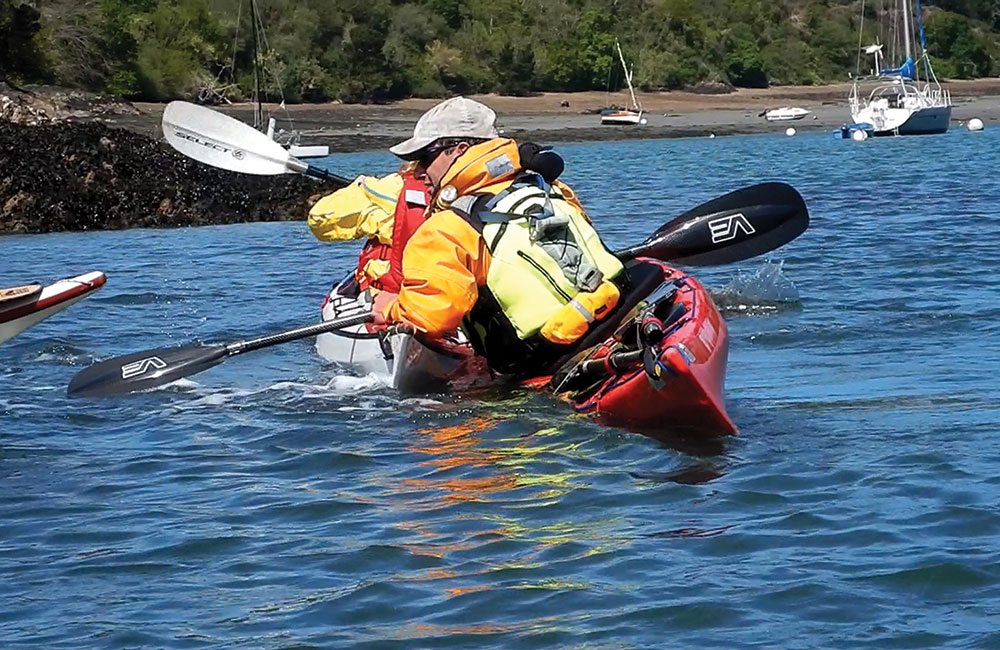
Together with a small team, we went off to a more sheltered area along the strongly tidal-affected river Trieux. Between the safety briefing and hitting the water, we gave some important information about leaning and edging a sea kayak, and the effects that come with them. We always ask about the level, but certainly about the expectations. Once on the water, we moved to the other side of the river, where many dinghies are moored. This proved the ideal spot for playing around the many small mooring buoys and boats.
It isn’t easy to manoeuvre a sea kayak like a pro in tight spaces, so we emphasised the importance of altering the hull shape and the length of the water line by edging and leaning to the maximum. Capsize, and you earn yourself applause was our motto! It means that you are pushing yourself! Yes, someone capsized, and yes, he got a well-deserved applause!
After performing all possible steering techniques (bow/stern rudder, draw/sweep strokes and variations), we went to the side for some rolling. Almost everyone in the group could roll, but they wanted to improve. After a dry run and a wet run, we made time to work one-on-one and give feedback after each performance.
Workshop incident management
This list on the second day proved quite popular, so we worked with four coaches. We divided into smaller teams and switched every hour. This allowed everyone to work with a different coach and a different aspect of incident management.
While some colleagues worked on towing and hypothermia treatment, we conducted a full scenario for each team. Everyone got the test before the lesson, in a safe environment. It was windy, with some tidal movement and no significant waves.
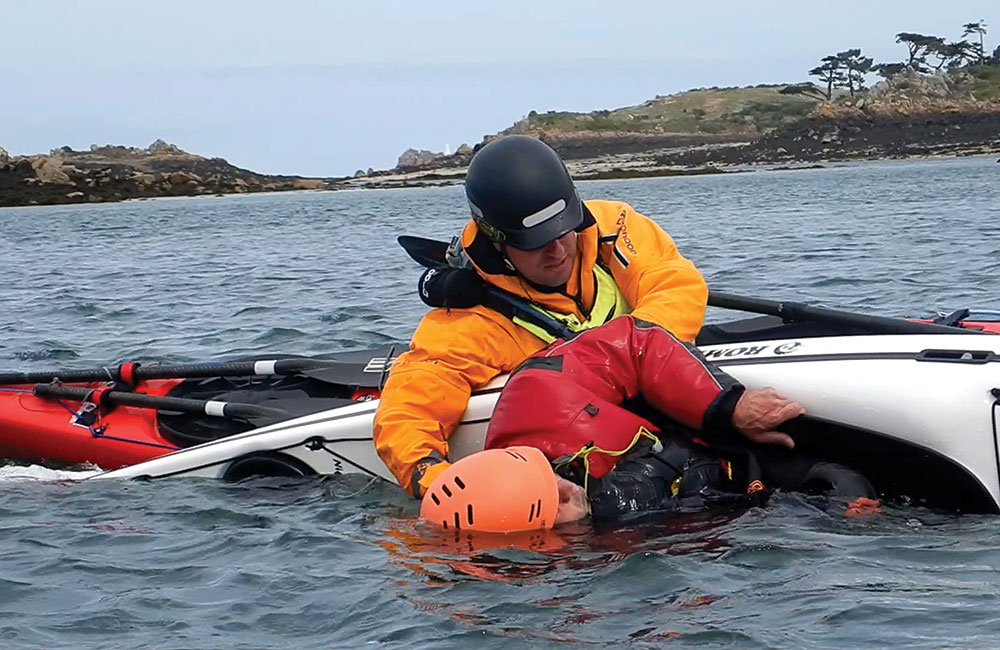
We assigned two actors to each team, who went out of sight with me. In our scenario, both actors capsized. One held his boat and could perform an assisted rescue. The other lost his boat due to the wind, was conscious but hypothermic, and could not perform a standard rescue. On a signal, the team moved in, evaluated the situation, and was assigned the task of regaining control.
During the rescue, the team did not know that the second casualty’s condition was deteriorating. Once the casualty was on board (scoop rescue), the team received this new information and a specific exit point to wait for help. A decent towing system and rafting up with the casualty had to be implemented quickly.
Upon arrival at the extraction point, the team needed to protect the victim from the elements, activate our (inert) Personal Locator Beacon, and make a proper Mayday call via VHF. For the other group, we tweaked scenarios so they would not be identical. On the way back with the last team, we offered a special extra.
As you already know, we went to recover a partially sunken kayak. Nobody on our team had tried this before, and we did it in an open area to add a challenge. We gave a demo, followed by one participant flooding his own kayak. Afterwards, there was nothing but smiles and a sense of pride!
Workshop steering technique and boat control in windy conditions
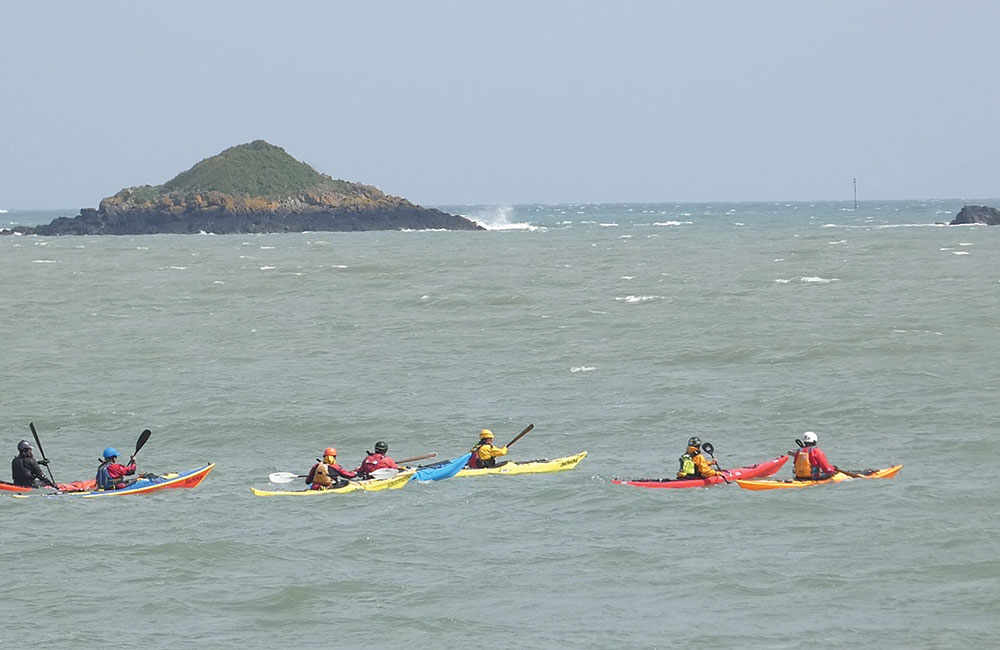
During this third workshop, the weather conditions reached Force 6, no less! So, this created perfect conditions for working in the bay of Port Blanc. Wave height was reasonable, but the wind had free play. As on the first day, we started with an explanation of when and how to use different strokes, the effect of wind on the kayak, and the proper use of a skeg.
After that, it’s going to get wet and windy! We went all the way upwind in Port Blanc, while manoeuvring around the moored boats and buoys. That way, everyone could feel the wind coming from different directions.
Edging and leaning proved interesting here, as well as manoeuvring on top of the waves when bow and stern are disengaged from the water. On the way back, we did some mild surfing and a specific exercise. We found shelter behind a rock formation and from there on, one had to paddle out to a small buoy in an unsheltered area, only a short distance… whilst paddling backwards!
Workshop self-rescues, rolling, and assisted rescues in windy conditions
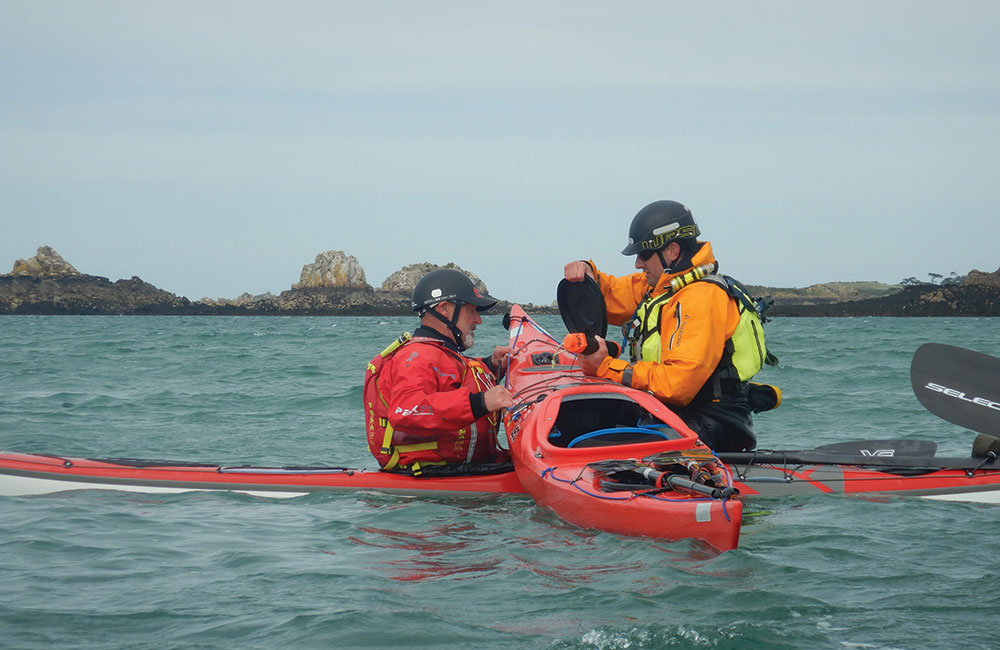
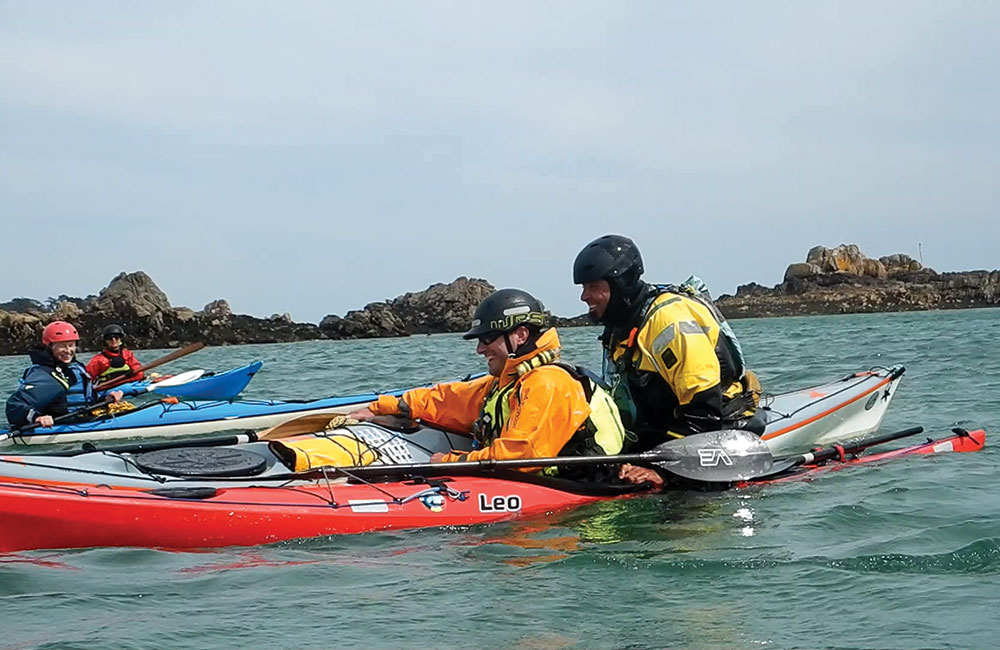
The first tour was cancelled due to strong winds (still Force 6), but luckily, we could do one more workshop! This time, applied rescues in realistic conditions! I had the pleasure of working together with a colleague specialised in Greenland rolling, as where my speciality lies in self and assisted rescues, so a perfect blend!
The team we coached was again a super-motivated and enthusiastic bunch! We started in a fully exposed bay near the campsite, fantastic if you can just use your small kayak cart to go to the water, isn’t it? We started with rolling and re-entry, in the wind and waves. After that, we built up towards assisted rescues. This worked, but it sometimes lacked important details.
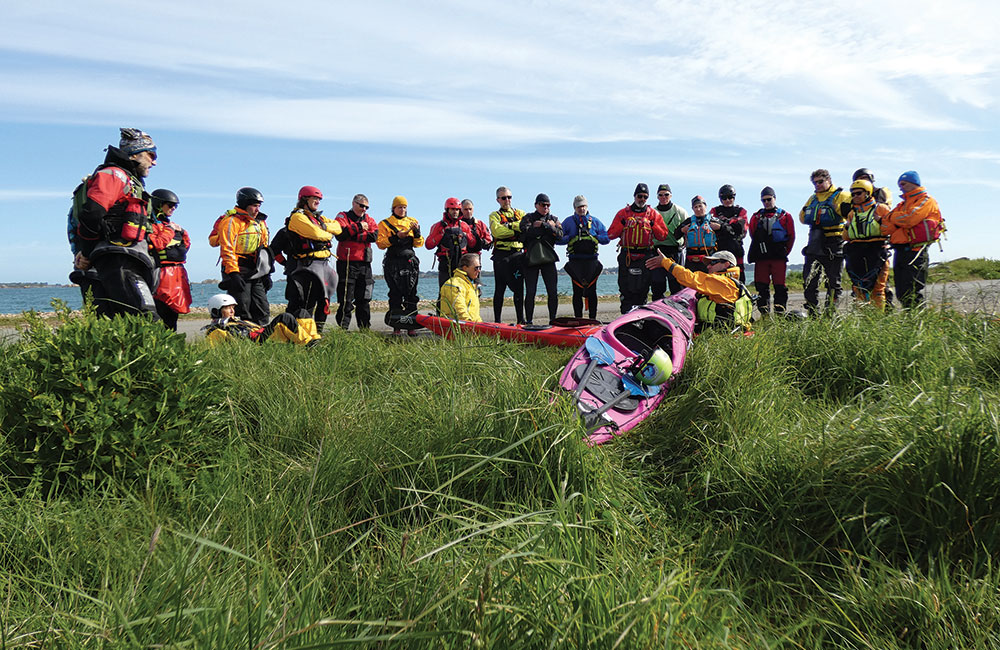
So, back on shore, we did a full demo and explanation of a correct, reliable assisted rescue. In the meantime, we could also provide proper feedback on the rolling, as communication on the water was nearly impossible. This time, every rescue was performed spotlessly! To end, and to reward the team’s commitment, we organised a complete rescue in these conditions, rafting up a non-ambulatory victim, deploying a safe towing system with one tower and someone behind it to slow the raft in incoming waves, enabling a safe exfil on the beach. Task completed, top notch!
Evening lecture on safety and safety equipment
To start with, we could manage to get help in advance from companies we’ve worked with for about a decade. Every participant received a rescue light from Daniamant, the company for whom we field-test the ODEO Distress Flare. The floating keychains from McMurdo that we are carrying went to everyone.
Last but not least, VE Paddles (Palm Equipment) provided a few PFDs and other small gear for the end-of-week raffle. I cannot thank them enough for their continuous support, trust, and the resources they offered for this event. Safety has always been our main priority. We explained how to use a full marquee, PLB, and flares; showed the audience what we carry on our person/PFD while paddling; and outlined our four rules.
- Always wear your PFD
- Dress for immersion
- Field-test your equipment regularly to learn how to use it.
- Imagine the worst that can happen, and prepare for this.
We could show our SeaKayakSafetyPass. We can also demonstrate how our NORTHSEAKAYAK system works, even in cooperation with other systems, clubs, and federations. All organisations involved are non-profit and aim to make our sport as safe as possible.
Touring and extra training on boat balance:
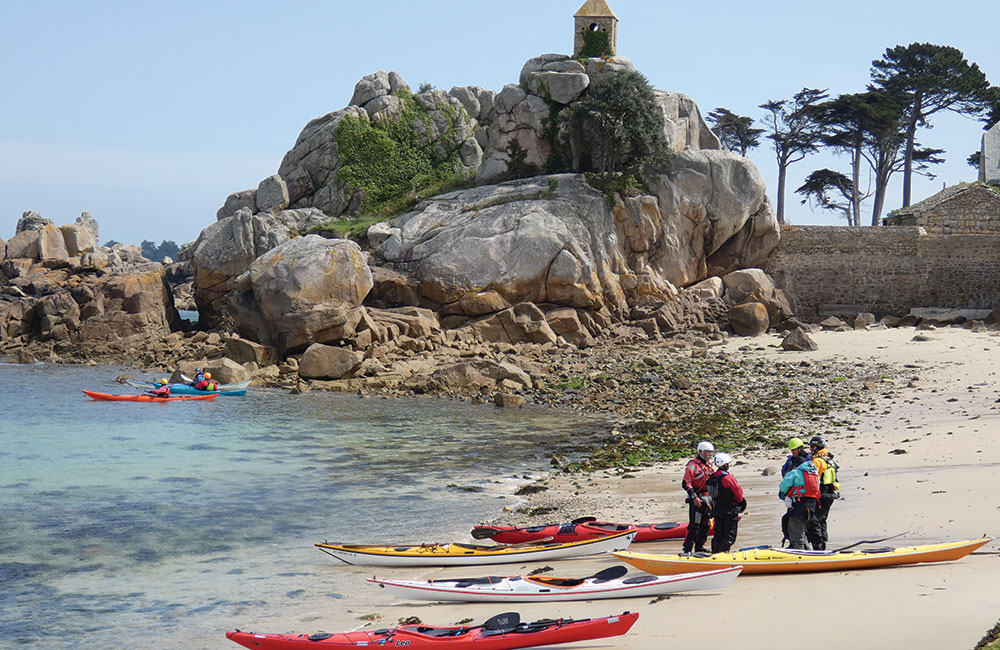
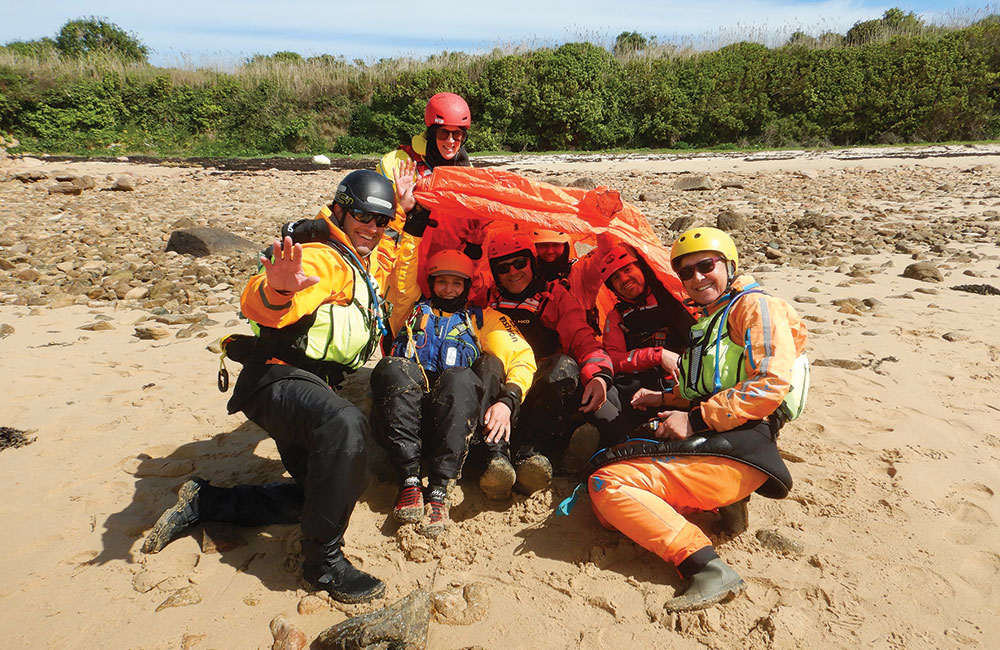
On our last day, the wind dropped to Force 4 again. We went out with a bigger group and some fellow coaches. We visited Ryon Island in the nearby bay and landed on what locals call Hawaï Beach. We could see why this secluded, sandy beach is set apart by rock formations. It was the perfect spot to train balance with a few very motivated people.
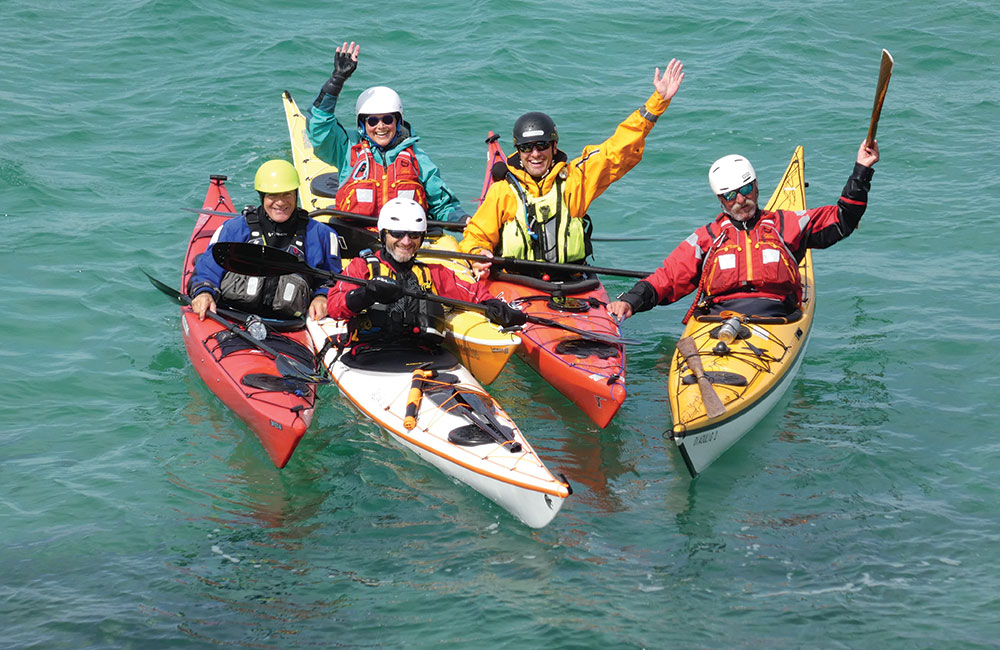
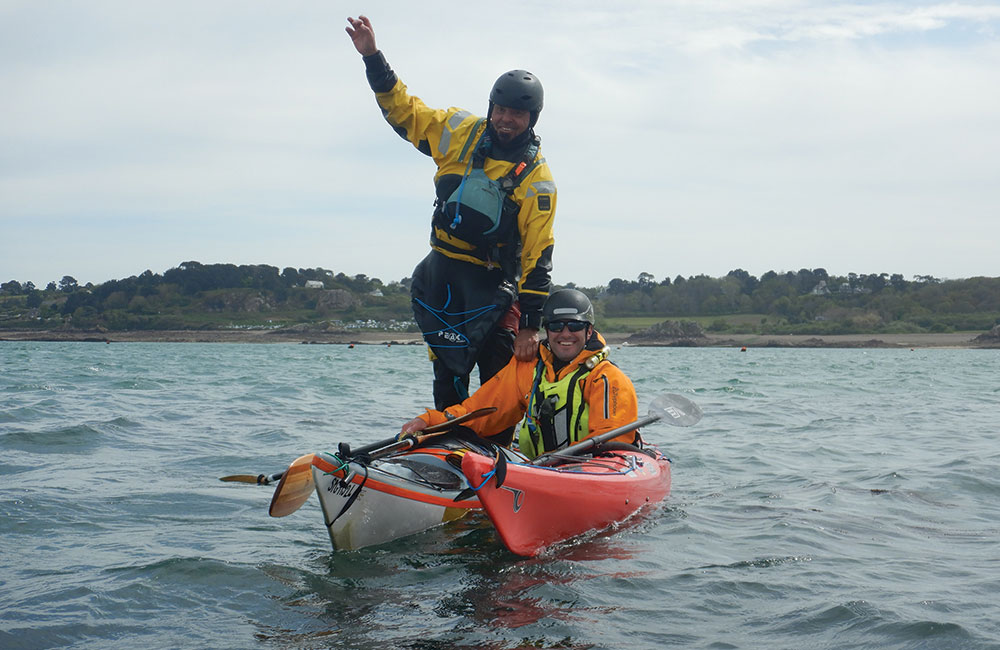
Balance exercises are ideal for improving boat control and rescues, as they help you better understand your kayak’s limits. We climbed to the front and back without capsizing, paddled without sitting in the cockpit, and even stood upright. There was plenty of fun and laughter, and one person even brought a birthday cake for the whole team! This small trip and training session helped us secure our participation as coaches for the CK/mer symposium 2026!
Wrapping it all up
We are grateful to Jerome (president of CK/mer) for inviting us to this symposium again, as well as to his team of volunteers for all their work! Without them, no symposium!
It is very satisfying and rewarding to work with different paddlers from different countries and backgrounds. We met some old friends and made some new ones. We got a lot of compliments, a lot of them about our specific approach to coaching. I must apologise for my first sentence, which I say during each safety briefing: “I hate groups!” I always leave a few seconds before continuing, and I see people looking at each other.
These looks change when I continue with: “I love teams!” And that is the most important thing in our sport: taking responsibility for yourself and your teammates, and sticking together no matter what. Even during the days when it was very windy, I didn’t have to yell once or use my whistle. This was only possible because of swift, clear communication in advance and splendid teamwork. To all the people we have trained with during the CK/mer symposium, we love you and hope to see you again!