WORDS:
STEVE BROOKS
PHOTOS:
STEVE BROOKS &
UTE HEPPKE
Steve Brooks
Steve Brooks
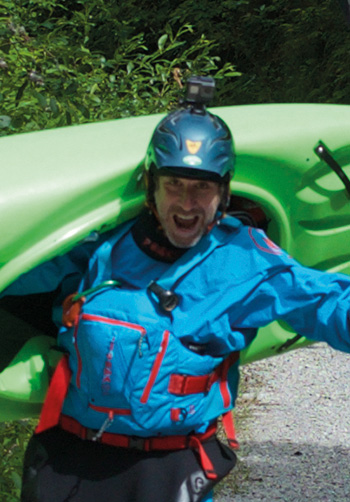
Steve has lived in Austria for over 28 years. It is a beautiful part of the world, with world-class rivers and stunning mountain scenery. In 2010, he set up, along with Ute, Kayak School Arlberg, where they run courses, coaching, and guiding kayakers through all whitewater grades on rivers such as the Sanna, Oetz, Lech, and Inn with his professional team. Since 2024, the Kayak School has been running British Canoeing whitewater leadership courses and Safety and Rescue courses in both Austria and Chile.
Steve and Ute have now built a stunning house in the mountains above the kayaking mecca that is Pucon, Chile. Along with their Chilean team, they offer trips and expeditions to Chile from November through to March. To find out more, check out their website: www.gokayaking.at
Incredible India
It has been a whirlwind start to the New Year. Ute and I got back home to Austria from Chile at the end of January. I had been running trips in and around Pucon, and Ute came out to join me. Together, we travelled down to Patagonia to kayak and explore a new area. I wrote an article about our Pure Patagonia trip that was featured in the last edition of The Paddler. After that adventure, we spent a month skiing at home in the Arlberg region of Austria. Then I prepared to leave for India to lead a couple of whitewater kayaking adventures in the Himalayas.
You really could not get two countries more different than Chile and India. After leaving the pristine waters of Patagonia and its calm, quiet landscapes, arriving in the sensory overload and vibrant chaos of India felt like a shock. The contrast between the two places is stunning – the madness that hits you in India, and the unique occurrences that could only happen on the subcontinent, are always a surprise.
Deep into the Himalayas
Since 1999, I have returned here many times, spending months kayaking the rivers of Himachal Pradesh, Uttarakhand, and Ladakh. Each kayaking mission and adventure is the start of a new chapter, and afterwards, Ute and I head deep into the Himalayas on our Royal Enfield Bullet motorcycle, searching for new rivers to kayak and explore. Along the way, we stumble across sights and situations that seem possible only in India. While there are too many to recount in detail, here are just three examples that give a taste of what makes Incredible India so unforgettable.
The family of five on a motorbike!
Why use a car when you can take a motorbike with your wife and three kids, navigating Indian roads together? This is a common sight throughout India. Watching from our jeep, we can only imagine the risks involved in such a journey!
Elephant road tripping!
Now, let me share another memorable scene: while European kayakers might set out for an adventure in a trusty van – often a modified white transit van, or for those seeking charm, a Mark 1 VW camper that chugs along reliably – in India, the road trip looks quite different. After returning from a trek in Himachal Pradesh with a group of UK schoolkids, we were staying in the lively town of Manali at the end of the Kullu Valley.
As we walked down to the mall, the town centre, something unusual caught our eye – a big old elephant waiting patiently at the start of the pedestrian street. At first, I couldn’t imagine what an elephant was doing so far up here at the end of the Kullu Valley, but soon the answer revealed itself. The owner explained that they were on a cross-country road trip and had just arrived in Manali to stock up on supplies before continuing on to Leh in Ladakh.
If you know the region, you realise that’s about 490 km from Manali to Leh, crossing three high-altitude passes: Rohtang Pass at 3978m, Baralacha La at 4890m, and finally the Tanglang La at 5325m! The idea of travelling this route with an elephant was incredible, but the owner was certain, and who could argue after his many travels across India? We later heard he set off the next day; whether they reached Leh remains a mystery, but the adventure itself is unforgettable!
The old Swiss guy sitting in a cave
One of the most bizarre personal stories happened while kayaking the Ganges with a local Austrian, Flo, during one trip. We put in at Kordiyala, planning a four-hour paddle down to Rishikesh. At the first major rapid, The Wall, we climbed river right to scout the best line. While discussing in our Tiroler dialect, we heard a voice from behind – a Swiss-accented shout of “Hey Austrians!”
To our surprise, we found an old Swiss man living in a cave in the rocky outcrops, tanned, with long hair and a beard, wearing only a loincloth. He showed us the cave he called home – a situation so unusual it could only happen in India. Ever since, whenever I pass The Wall, I recall our encounter with the Swiss Baba and glance up to see if anyone is in the cave.
The elephant road trip and meeting the old Swiss man in the cave remain among my most out-of-the-ordinary experiences while exploring the Indian Himalayas. Though I never took photos, these encounters are vivid memories I’ll never forget!
It was time to go back!
Spring kayaking
After such memorable adventures, it was time to move on. After spending a month at home skiing, avoiding avalanches, and catching up with friends, I turned my attention back to the Himalayas and Incredible India. I had planned to run a trip last autumn, but due to one of the heaviest monsoons on record, we decided to postpone it until this Spring.
It wasn’t just the high levels in the rivers we needed to be wary of, but also the landslides and road disruptions. We had experienced such issues before, exploring the Himalayan rivers and being rerouted by a major landslide, which delayed us by two days.
It was March; the Holy Festival of Colour had just ended, marking the start of Spring. I waited in Rishikesh for the team’s arrival, first kayaking with Kullu and Shivam to prepare. The next day, Chris, John, Tim, and Tony arrived from NZ and the UK. We settled in, and I outlined the plan for our twelve days ahead.
The Holy Ganges
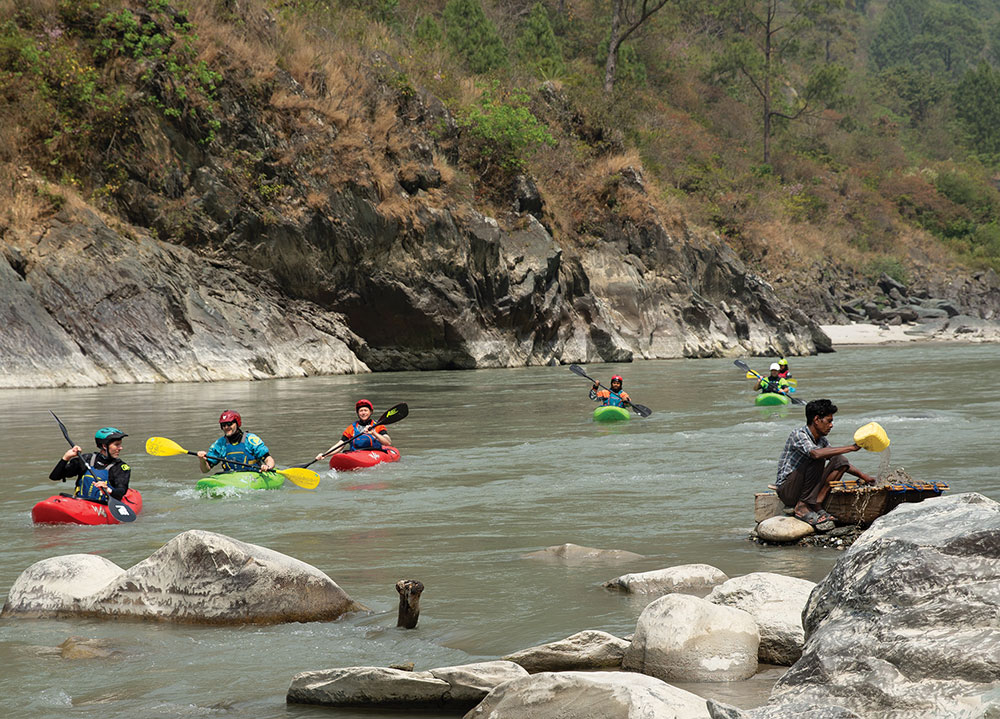
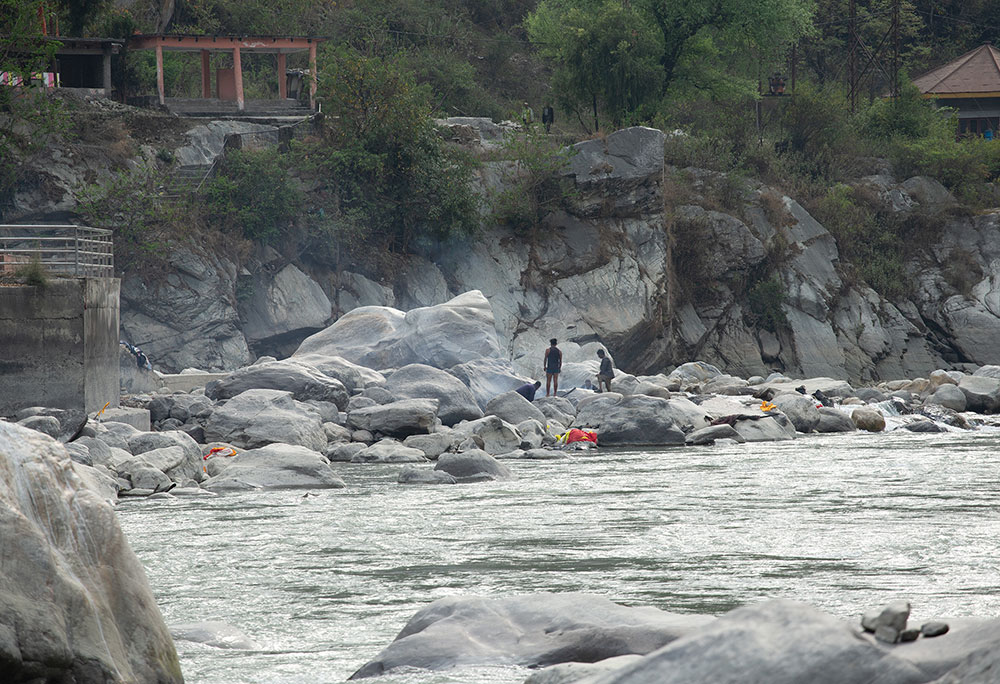
With spring underway, we spent a couple of days warming up, kayaking the big, warm water of the Ganges from Kordiyala and Marine Drive down to Rishikesh. This upper stretch of the Ganges is at its cleanest, with no major industries nearby, and a ban on riverside camping has led to wildlife returning. Regular sightings of musk deer, various monkeys, and even elephant footprints on the river’s left bank rewarded us.
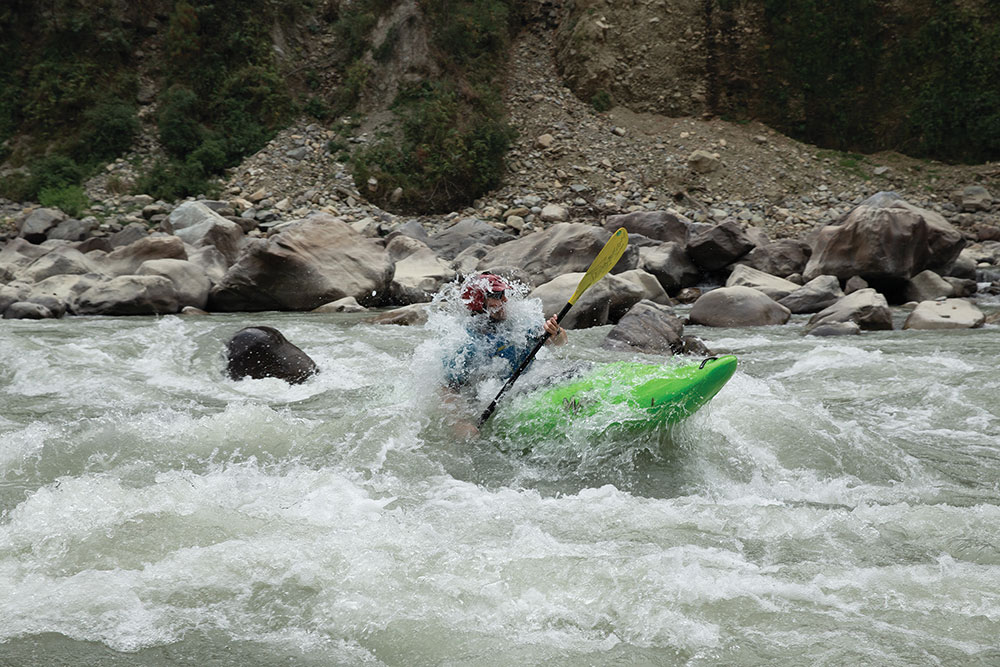
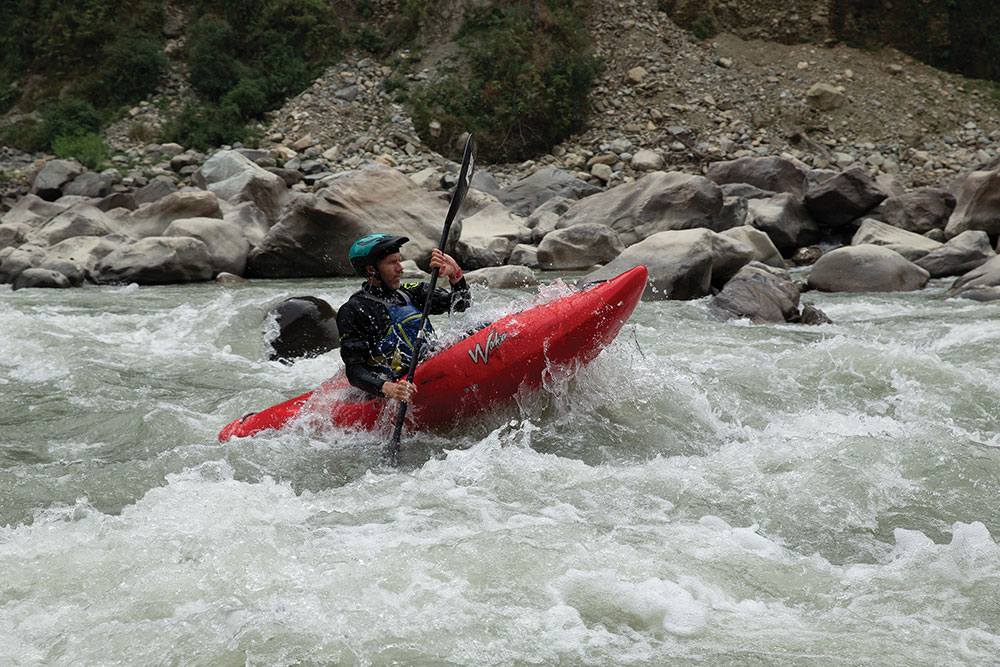
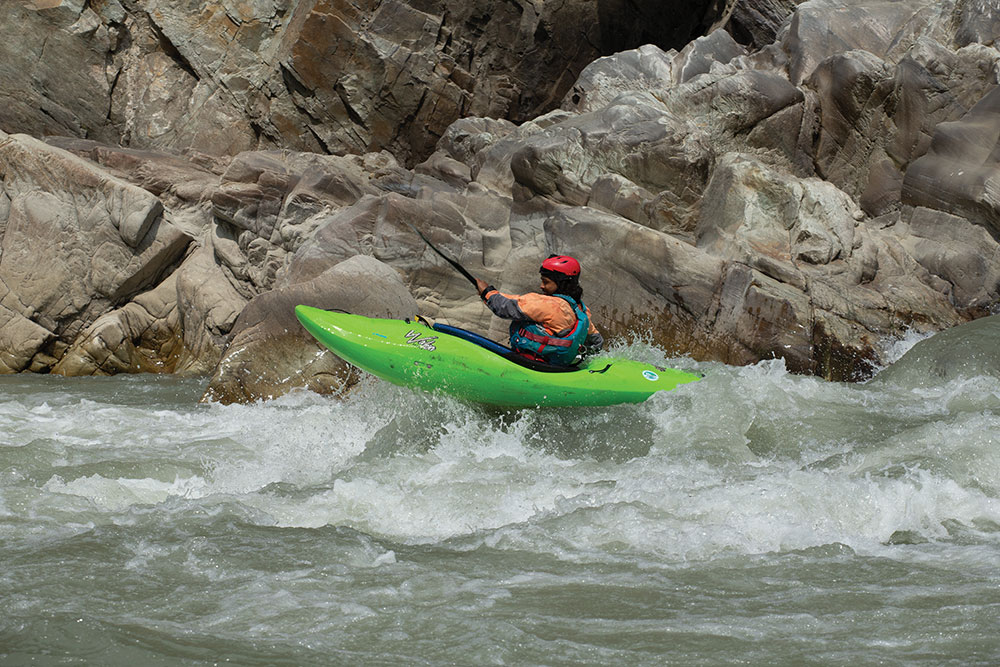
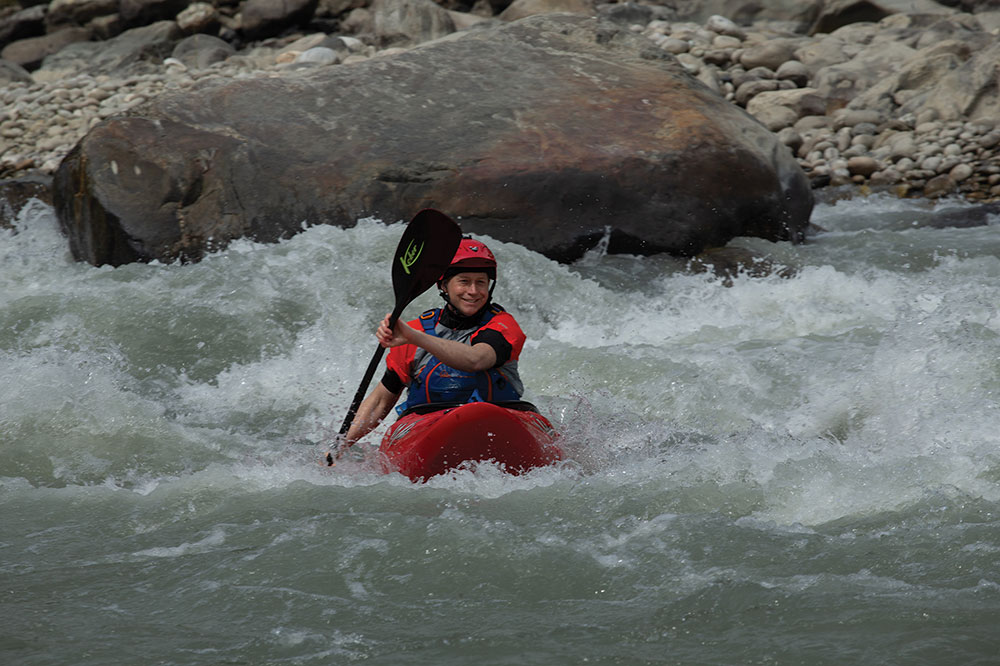
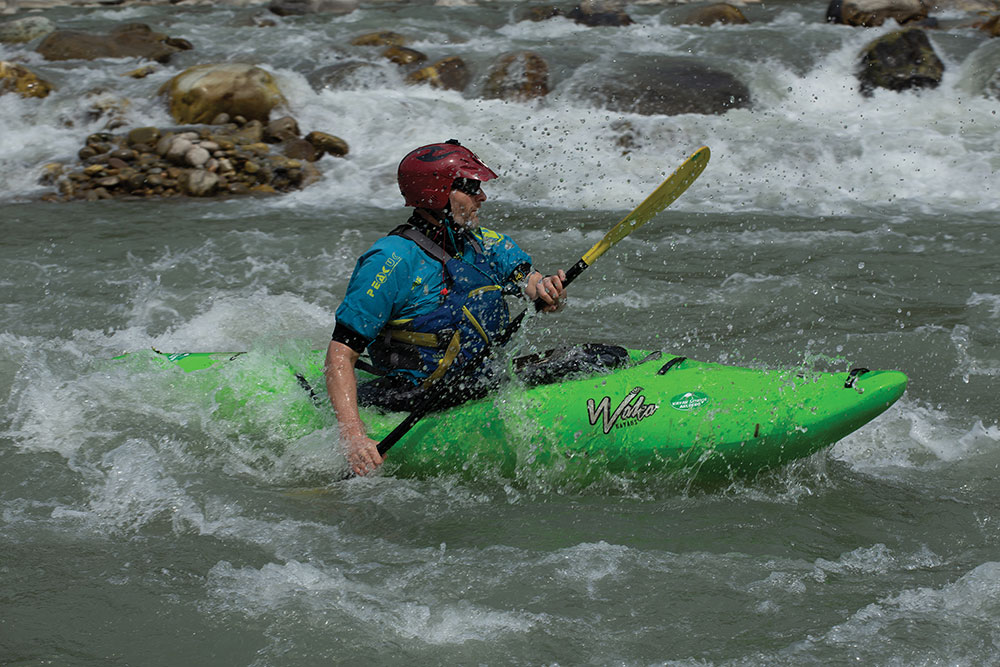
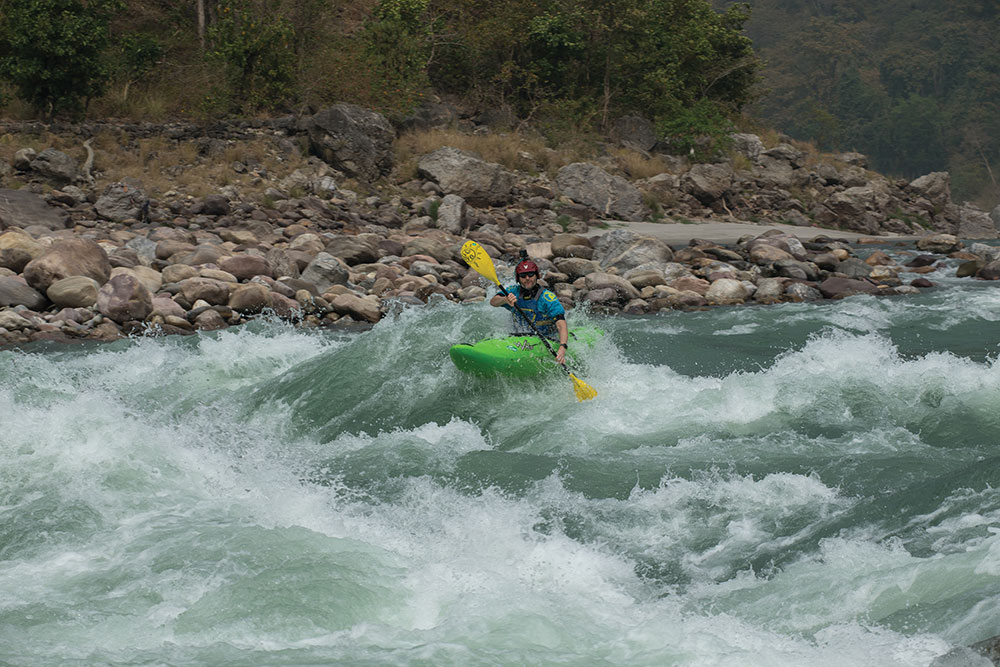
The Ganges is a pool-drop river: The Wall Rapid marks the start, followed by mellow rapids, before the river really comes alive after Marine Drive with big wave trains, huge boils, and Himalayan holes for the unwary. Running the big waves was nothing short of exhilarating – disappearing into troughs and catching glimpses of paddles punching through aerated foam, people catching air off the huge Himalayan crests.
Only when I brought my camera and observed from the riverbank did I truly appreciate the scale of these waves. It’s such a fun river to paddle, and these moments remind me why kayaking here is so special.

Alaknanda River
We drove five hours upstream to a riverside resort on the Alaknanda River, just below Nandaprayag. It has taken Ute and me two days to make this trip from Rishikesh before, so this drive felt quick by Indian standards. On the way, we crossed Devprayag, where the Bhagirathi and Alaknanda Rivers meet, marking the start of the Holy Ganges. Our plan was to kayak down the Bhagirathi on the way back to Rishikesh.
At Kaleshwar on the Alaknanda, we took a quick paddle down to Karnaprayag to adjust to the river and water temperature after the drive. The Alaknanda was colder than the Ganges, but some team members still wore short-sleeve cags. At home in Austria, we notice British kayakers brave the cold and just say, “Well, it is Summer!”
In Karnaprayag, we loaded the trucks and drove to our accommodation for the next five nights, Devali Bagar. The local Uttarakhand government set up this rafting resort, and nearby guides have leased it for five years. With little rafting happening, we had the camp to ourselves. The views over the Alaknanda were stunning, and evenings in the pavilion were even better.
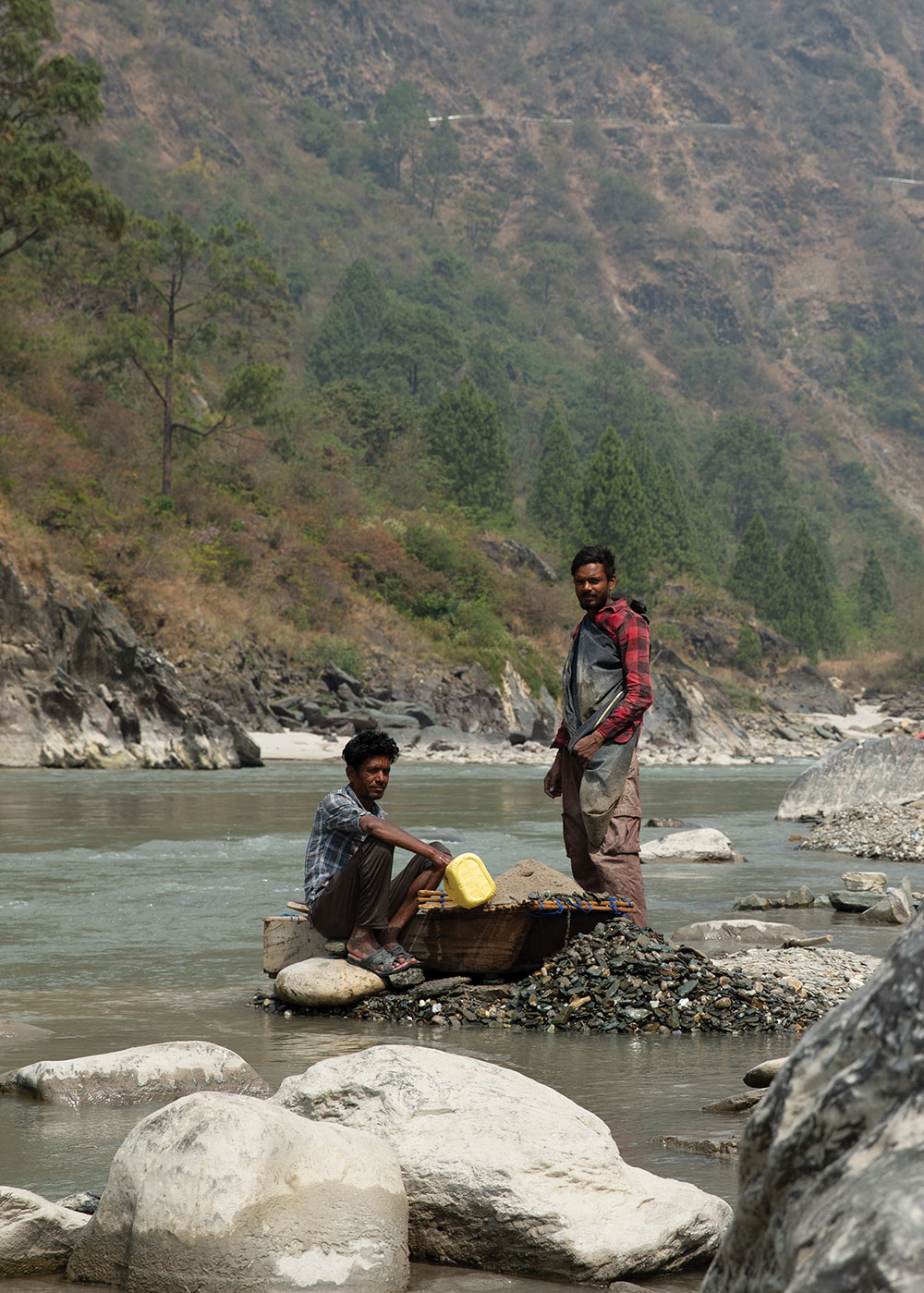
The next morning, we paddled from camp down to Gauchar. The start was mellow, leading into the section we kayaked the previous evening. That day, gold diggers had set up on the riverbank, panning for gold. When I ask if they’ve been lucky, I get the classic Indian head wobble – impossible to know if they’ve had good fortune or not!
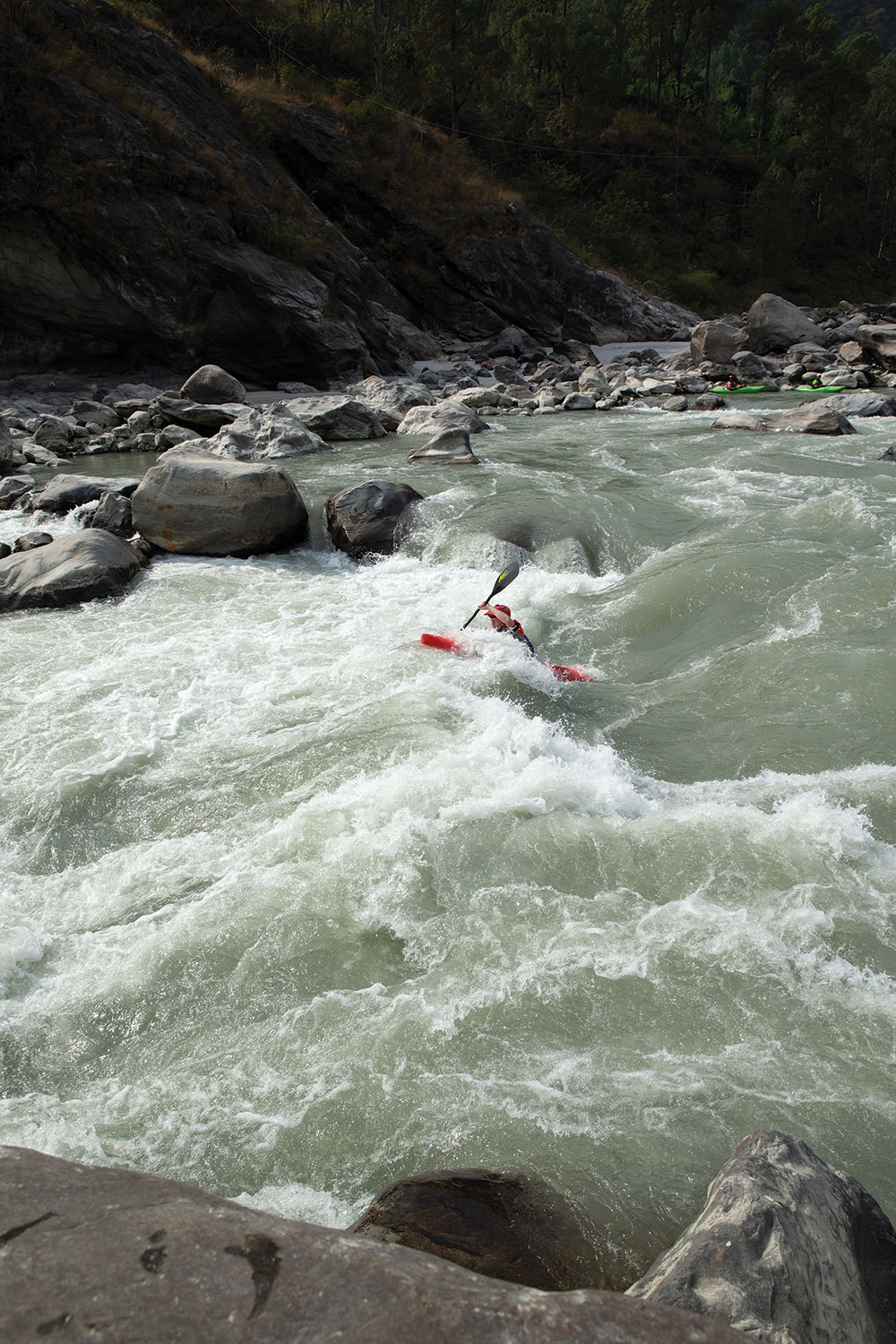
As the River Pindar joins the Alaknanda at Karnaprayag, there is a rapid that we needed to scout and plan our line through. There were remnants from last year’s monsoon, what was left of a mangled car, the chassis stuck in an eddy on the left-hand side. Karnaprayag, being a town at a confluence, is important to Hindus, so it becomes a place for cremations. Now, there are purpose-built ghats (open crematoriums) for the locals to cremate the bodies of loved ones and family members.
Karnaprayag
As we went to scout, we tiptoed through the hair that was still on the ground. When someone is cremated, the nearest male family members will shave their heads. We scouted the line, I set up my camera and photographed everyone kayaking down. I, on the other hand, was a bit too relaxed and got hit by a curling wave off a big rock and flipped over. I quickly rolled up and then started giving myself a stern word, not because I flipped over, but because I flipped over in the middle of Karnaprayag!
We continued down, scouting another rapid, running some big waves, surfing some sweet waves, and just taking it all in, kayaking in a beautiful part of the Himalayas. We finished at Gauchar, where major construction is underway. What used to be a bridge over the river, with hardly any traffic, has become a major infrastructure project: tunnel construction and a railway station that will take devotees farther up the valley to the Hindu temples. This was going to be something of a theme for the rest of the trip in Uttarakhand.
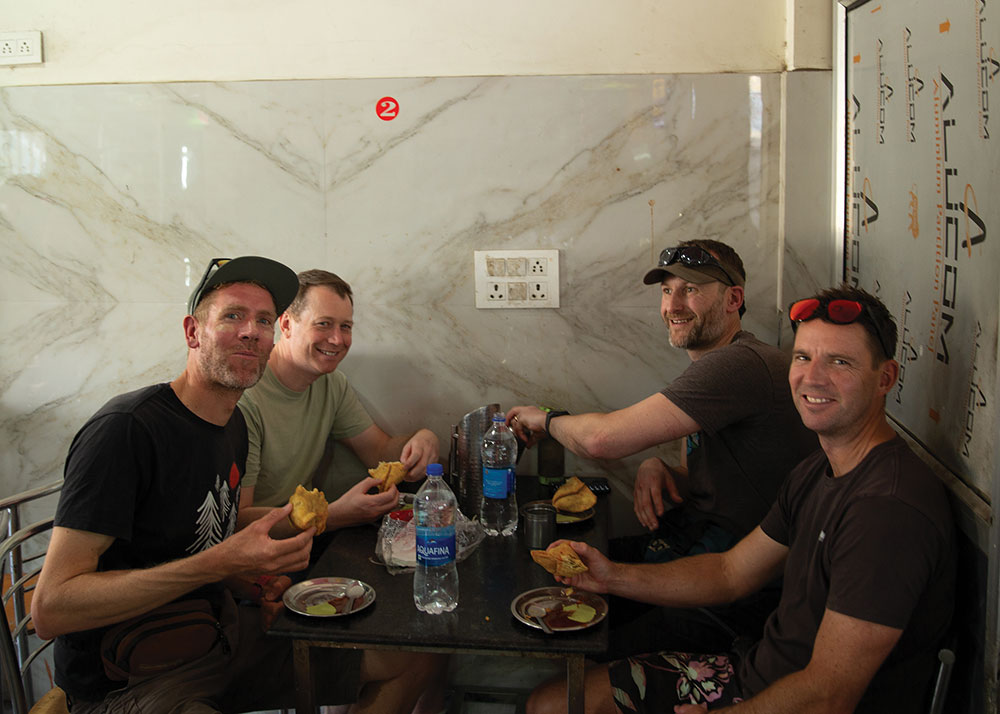
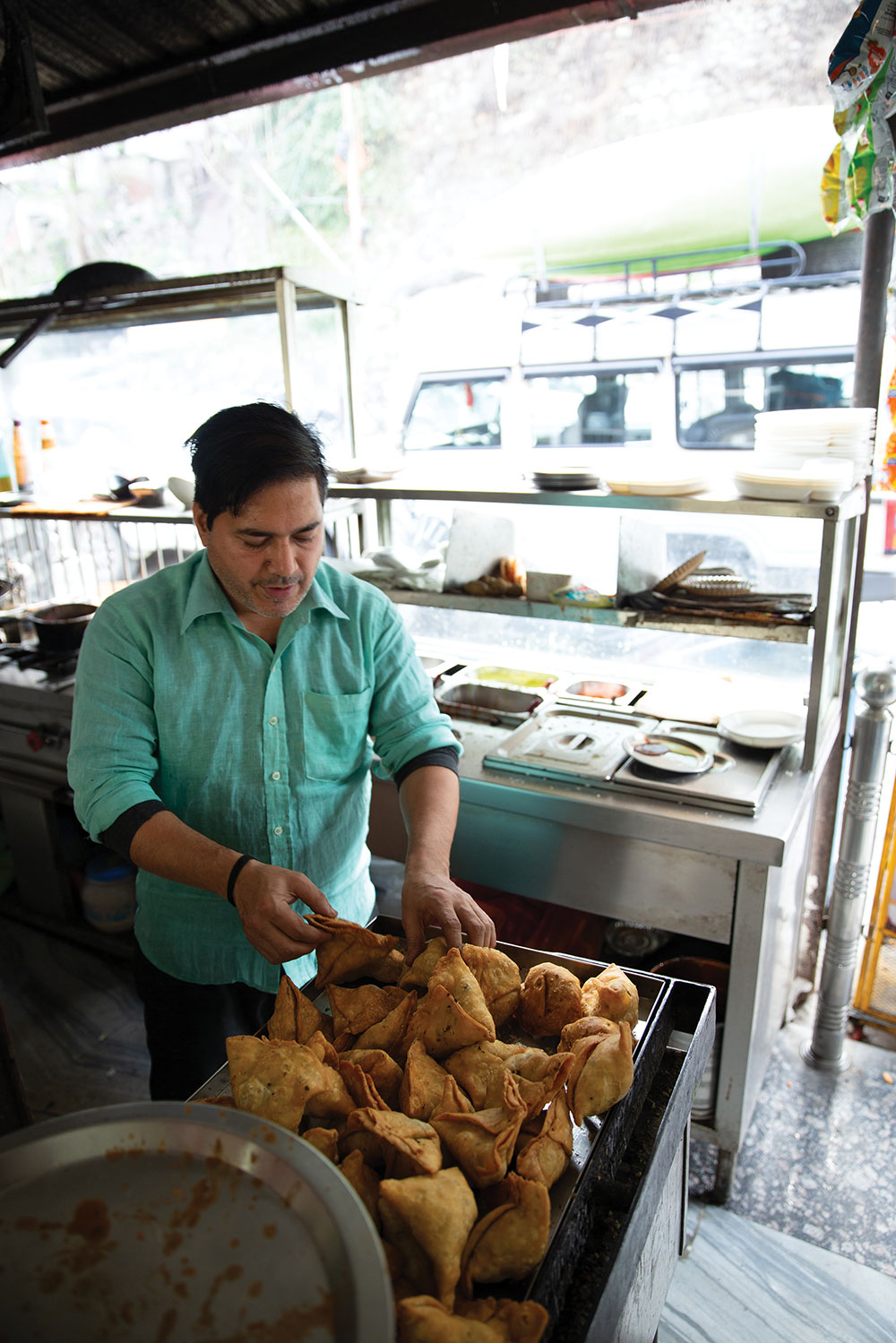
We headed back towards camp, stopping in Karnaprayag for samosas, chai, and sweets, and making a quick pit stop at the English Wine Shop for some of the team to buy dodgy 8% beer.
The Himalayas were affected again, this time with hardly any significant snowfall throughout the Winter. You could tell there wasn’t going to be much of a Spring melt this year.
Today we were kayaking further up the Alaknanda. Putting in at Birahi, which is located on the road towards one of the last major settlements, Joshimath. We were about to kayak some of the best whitewater the Alaknanda has to offer. Again, construction was happening everywhere, but it did give us good access to the river, though.
We were off and were soon in the rapids. We quickly scouted one rapid, as it had changed after a landslide during last year’s monsoon. The rapids kept coming; the Alaknanda is steeper and narrower here. By the time we kayaked through the town of Chamoli, we were all grinning at the quality of the whitewater we had just kayaked. It was a day of good whitewater as the rapids kept on coming; some required a couple of scouts, another a small portage for some of us.
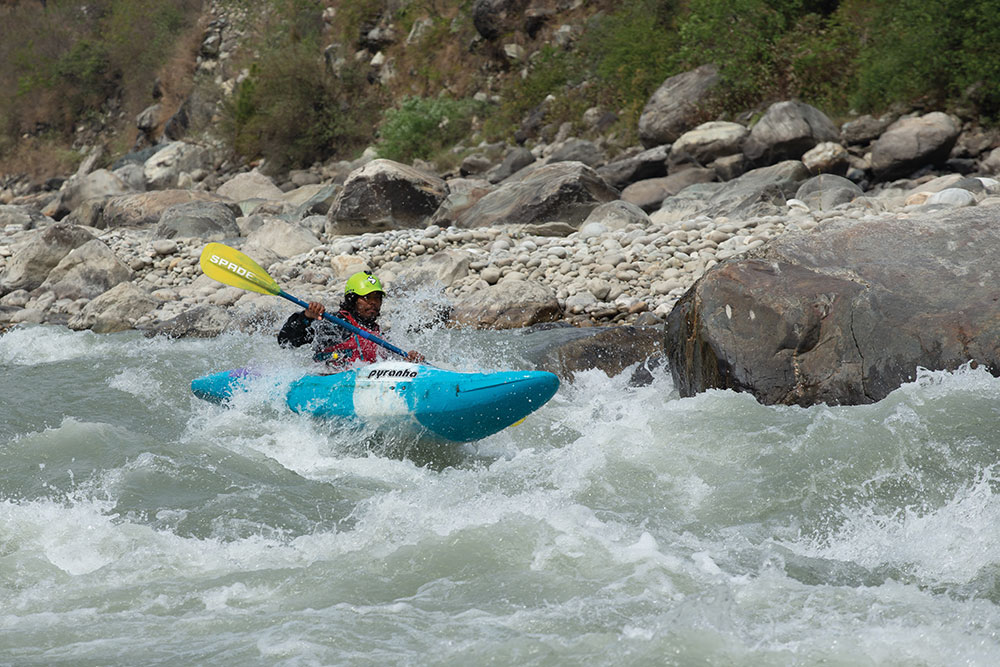
The feel of the Alaknanda up higher is completely different, and there were so many rapids throughout the day. Again, I had the camera with the boys, and I was all styling the drops and rapids! We arrived at Nandaprayag late in the afternoon, with smiles on our faces and that evening Tony summed the day up by saying, “That was a good day with whitewater kayaking.” I could not agree more!
That night it rained hard, and it was quite nice to listen to the rain from inside a cabin! The following morning, it was still raining, and the temperature had dropped! We headed to Nandaprayag to kayak the last bits of whitewater back to the rafting resort in Devali Bagar that we did not do yesterday. Though the temperature had dropped dramatically, we had plenty of whitewater ahead to keep us warm.
Again, long rapids with huge rocks and some sticky holes behind them kept us on our line. Halfway down, we passed a beach where I had camped with Ute, Kim and Annie many years ago. That was an amazing trip with three ladies. We kayaked the Chandra in Himachal Pradesh before driving for two days with Chris, the fisherman from Manali, to Rishikesh to kayak up the Alaknanda.
We were all currently enjoying our time up on the Alaknanda, including a low-water Pindar that was still fun. However, it was now time to leave for Rishikesh. It had snowed on the tops of the foothills just above us the night before, and we were also longing for some food other than rice, lentils, and chapatis. On the way back, we were going to kayak the Bhagirathi River.
Bhagirathi River
It was a three-hour drive to Devprayag, followed by just over an hour’s drive to the end of the road above the Bhagirathi River. It was now a 15-minute walk down to the Koteshwar Mahadev Temple by the side of the river. It was the perfect put-in; the temple was interesting, the local worshipers said hello, and Shivam and Kullu went for a blessing.
The temple is well-known for helping childless couples conceive. One of Shivam’s relatives came here, and within two years, they had had two kids! Apparently, you are supposed to stand in a sort of yoga pose on one foot for hours. I have no idea if it helps, but if someone is having trouble making a family, then why not try it!?
We were now on the beautiful, turquoise-blue water of the Bhagirathi. It is a stunning river, set within a gorge, and you do not see anyone by the side of the river. You have a feeling of remoteness. You do not see the road or hear any noise pollution; it is one of the most relaxing and natural places to be in this part of India. The river gets squished in by the gorge walls, and you get that BIG water feeling, with huge waves, big holes, and each rapid dropping in altitude significantly after the pools.
It was so fun to kayak. Kullu knows this river like the back of his hand, so rather than rubbernecking boat scout big water, we just followed Kullu into all sorts of wave trains and rollercoasters. The river was higher than on my previous runs, the dam was releasing more water than usual, and this just made it that bit more special!
As we paddled past Devprayag and the confluence, the devotees by the side were looking at us in amazement, with one Baba blessing us as we cruised on by. Thanking him for his blessings, we headed over to the river left to take out. Our jeeps were waiting for us, and the next thing I heard was someone shouting Steve! As I got closer, I could not believe it, there by the side of the river was an old friend from Manali, Himanshu.
He was bathing and taking a blessing in the Holy Ganges at the start with another friend. Not only was the Bhagirathi an amazing paddle, but meeting up with Himanshu after so long also made my day.
It was time to return to Rishikesh for a day’s rest, pizza, and to recharge the batteries before our drive over to what I believe is the best river in Uttarakhand, the Tons!
Tons River
After filling our bellies with pizza, recharging our batteries, and going to the Rishikesh market for a Pappu Lassi, we were now on the ring road around Dehradun. We had managed to avoid much of the traffic through the big city, and now it was about negotiating the hill town of Mussoorie.
We were rerouted through the hill station, and as we headed to Kemptey Waterfalls, we quickly stopped for an Indian breakfast of Aloo Parantha (a flatbread with mashed potatoes) and a sweet, hot chai. We then cruised down to the Yamuna River, and for the next four hours, we would follow it upstream.
Then we head up another valley, cross the pass, and enter the Tons Valley. What was usually a stunning drive along the Yamuna River became a stop-start, bumpy, dusty track as another huge infrastructure project was underway. They were widening the road, then trying (unsuccessfully) to stabilise the mountainside above it to prevent landslides and blockages, so that more devotees could head up to this valley, which had a temple at the end. It was a hard drive that was taking its toll on all of us, and especially the patience of one of our drivers!
We made it to Naugoan and could finally come off the Yamuna valley road works and have a little bit of tarmac with no works trucks, diggers and the like. We stopped for chai at Purola, and then it was a windy drive down through the forest and rhododendron trees to the village of Mori in the Tons Valley.

Bone dry
When we got to Mori, there was absolutely no water in the river; it was bone dry. I could not believe it. Had we just driven seven hours to get to a dry river? We continued downstream to Hanol, where we based ourselves for the next couple of nights.
We showed everyone their rooms, then Shivam, Kullu, and I went further downstream to the border town of Tiuni to see what the river looked like and whether the Pabbar River, a major tributary of the Tons, had any water. Nothing, both rivers were pretty much dry! We found out that the dam upstream of Mori had been completed and now releases water every morning for 4-5 hours. We had a plan!
It was an eventful evening; the dreaded Delhi belly paid a visit, and I was ill all night. Chris had it too, and Tony was not looking too colourful the following morning. I was in no fit state; I did not want to see or smell any food. Kullu and Shivam stepped up with me still curled up on my bed and led the team through the middle Tons. Chris got to Hanol and decided to call it a day, while everyone else kayaked down to Tiuni.
That night, we all slept better, and with the rain hammering down all night, the river was up! I was back on the river today, leading and guiding everyone down the Lower Tons. I was feeling a lot better, and so was the rest of the team. As we drove to Tiuni, the Pabbar River was stonking. It was big and brown, bringing the Tons up considerably.
We put in at Tiuni and kayaked off. The river was certainly up, and it was great to kayak the Tons with such a good level. The Tons is my favourite river in Uttarakhand, and I always make a point of kayaking it. I took Lakhsman down his home river for the very first time some 12 years ago, and I have spent many good times kayaking with Stanzin on the Tons. The river has an Alpine feel, with longer rapids, a good gradient, and, again, it often gorges up.
The Tons River is less populated than the other rivers in Uttarakhand. We saw a few people, but we were generally on our own throughout the day. We were working really well as a team, taking eddies above the rapids if we could not see the line straight away. I would head down to another eddy to get a glimpse of the line. If everything was good, I would bring down Kullu with two of the team, then Shivam with the other two, keeping everything nice and safe.
The weather had also brightened up a bit, and we were making the most of kayaking this special river. The last few gorges had unbelievable scenery and rock formations, and with John, our team geologist, we gained valuable insight into how each gorge formed. We finally arrived at the take-out in Minus in the early afternoon. The rain had returned, and the temperature was dropping. We met the jeeps, loaded the kayaks and kit and headed back towards Rishikesh.
It was a five-hour drive to Rishikesh. We arrived late in the evening, but with a smile and greetings from Lalit, we all agreed the Tons was well worth the drive. It is a spectacular river that seldom gets kayaked, with hardly any tourism, both foreign and domestic!
A truly special region of India
The trip was now at an end, considering we were supposed to have kayaked at the end of September last year, it was certainly worth the wait, and I was really happy to show a great bunch of kayakers a truly special region of India.
Next, Maria was coming for 10 days to kayak with Kullu and me. Then it was back to Austria to ski for the last 10 days of the season, checking out the snowpack for the Summer kayaking season, and, of course, eating some apfelstrudel to replace everything I lost from the Delhi Belly!
This was my second adventure of the year, and I am now looking forward to Austria’s kayaking season. The snowpack is looking good after heavy March snowfall. Here is to a great season!