WORDS:
GUY BAKER
PHOTOS:
GUY BAKER &
ESTHER DANIEL
Guy Baker
Bio
Guy now lives in New Zealand, where he continues planning trips worldwide. He can be contacted at: guy@catalystglobal.com
Uttarakhand – A Himalayan river journey that goes deeper
Nepal’s reputation for multi-day kayaking is well-earned, but the reality is that true multi-day class 3+ expedition options are now limited. The Karnali offers a friendly Class III+ wilderness float, while the Tamur delivers a more serious Class IV–IV+ commitment with complex logistics. Both are excellent rivers – but they’re also well known, well-travelled, and increasingly familiar, although doubtlessly with great merits.
In contrast to Nepal’s well-known rivers, Uttarakhand offers something different.
This journey isn’t about dropping into a single river. Instead, it’s about crossing a landscape and tracing rivers from their sources, as confidence grows daily. Eventually, you commit to a remote multi-day expedition that remains exploratory.
Paddling the Ganga
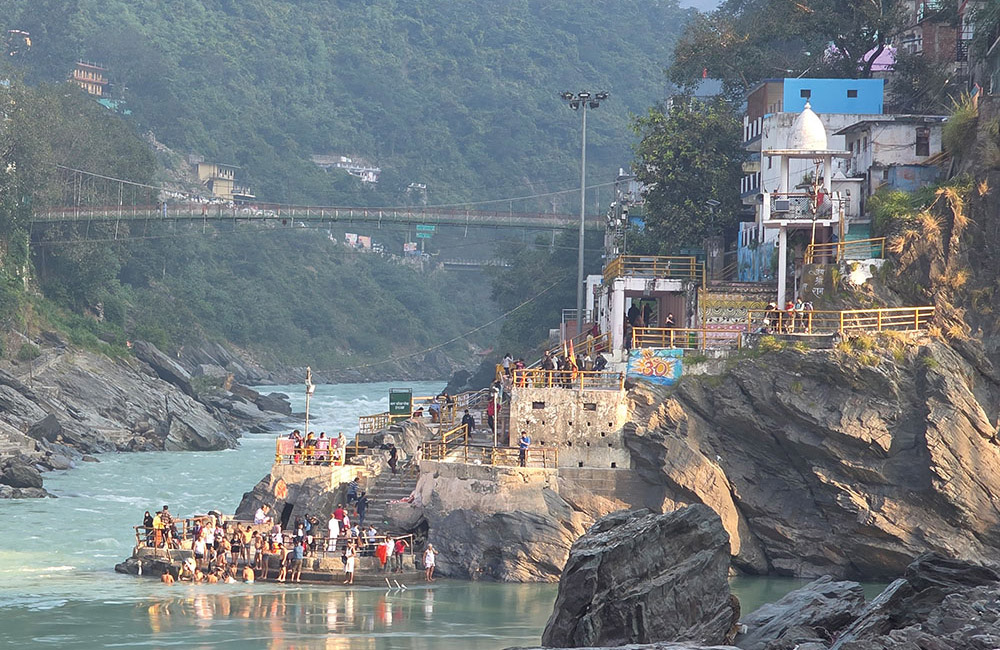
The trip begins in Rishikesh, the whitewater and spiritual heart of northern India. We spend our first days paddling the Ganga, easing in on forgiving Class II–III big-volume water. It’s a perfect warm-up: long wave trains, clean lines, and the chance to dial in group dynamics without pressure.
Evenings are spent wandering the ghats and watching the Ganga Aarti, firelight flickering across the river as chanting fills the air. It’s impossible not to feel the significance of being here, paddling a river that is both waterway and living symbol. If you want a class 4 run, jump on the Bhagirathi for a full day of classic whitewater.
From Rishikesh, we head upstream into the Garhwal region, following the Ganga’s major tributary, the Alaknanda. There are 70 km of 3+ to 4+, with over 85 rapids. Kakkar Falls is a solid class 5. Here, the river tightens, the valleys deepen, and the river becomes more technical – still approachable, but engaging. Over several days, we explore Class II–III+ sections, creeky in character with playful features and clear green water.
Nights are spent at the Shivanandi Riverside lodge, gear drying on railings, plans made over strong tea and generous meals and the dents in the duty-free.
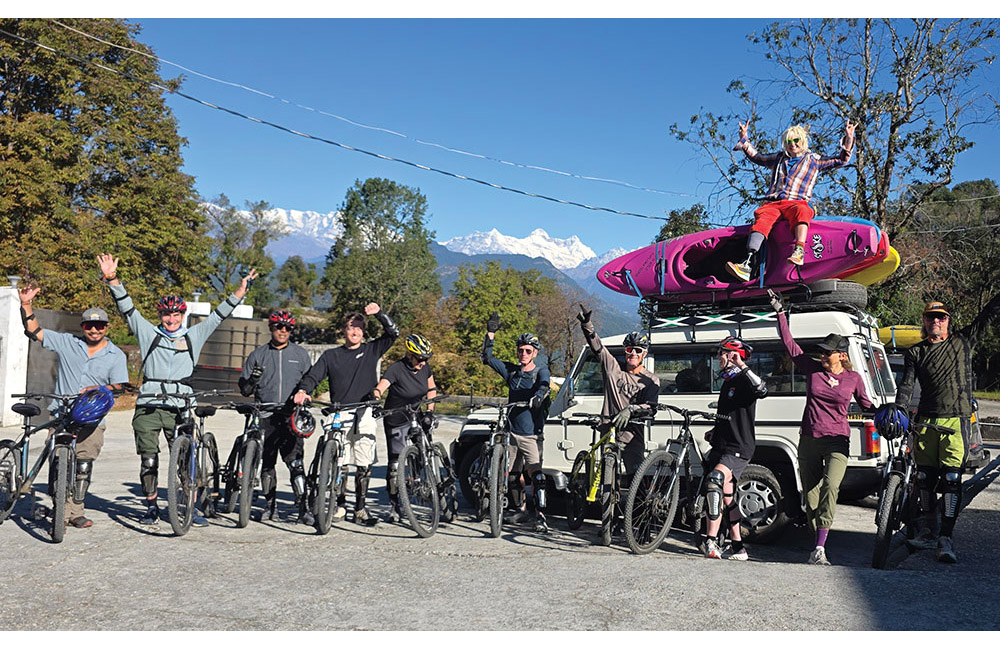
One quiet masterstroke of this journey is how travel days are handled. Instead of endless Himalayan road miles, long drives are broken with downhill biking. As vehicles leapfrog ahead, we ride through side valleys, dropping thousands of metres to the rivers below. So-called dead time becomes a highlight – flowing trails, open views, and a true sense of travelling through terrain, not just being transported across it.
The expedition truly begins
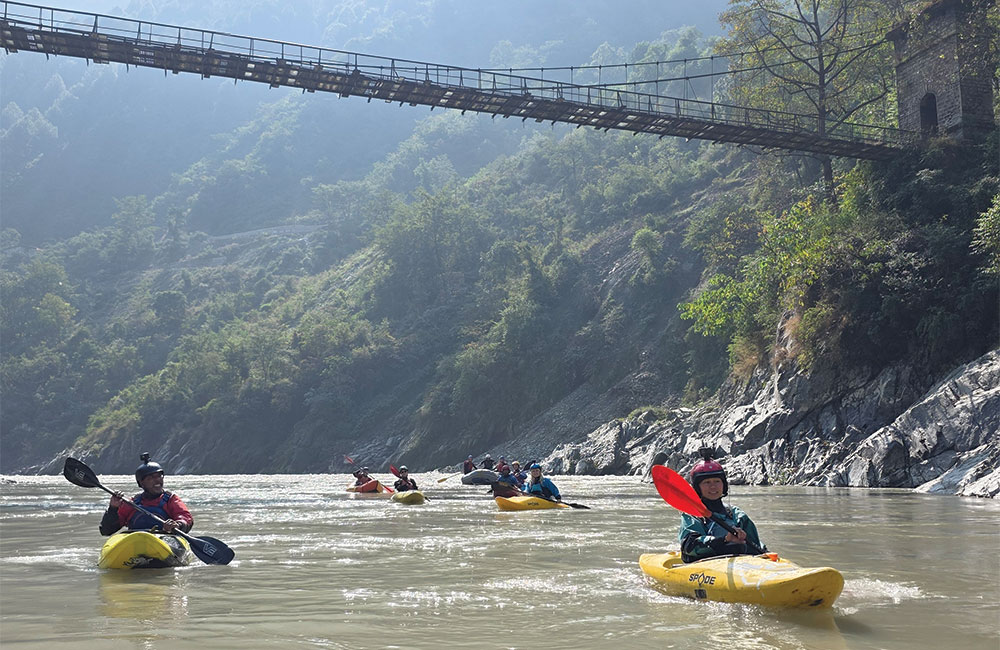
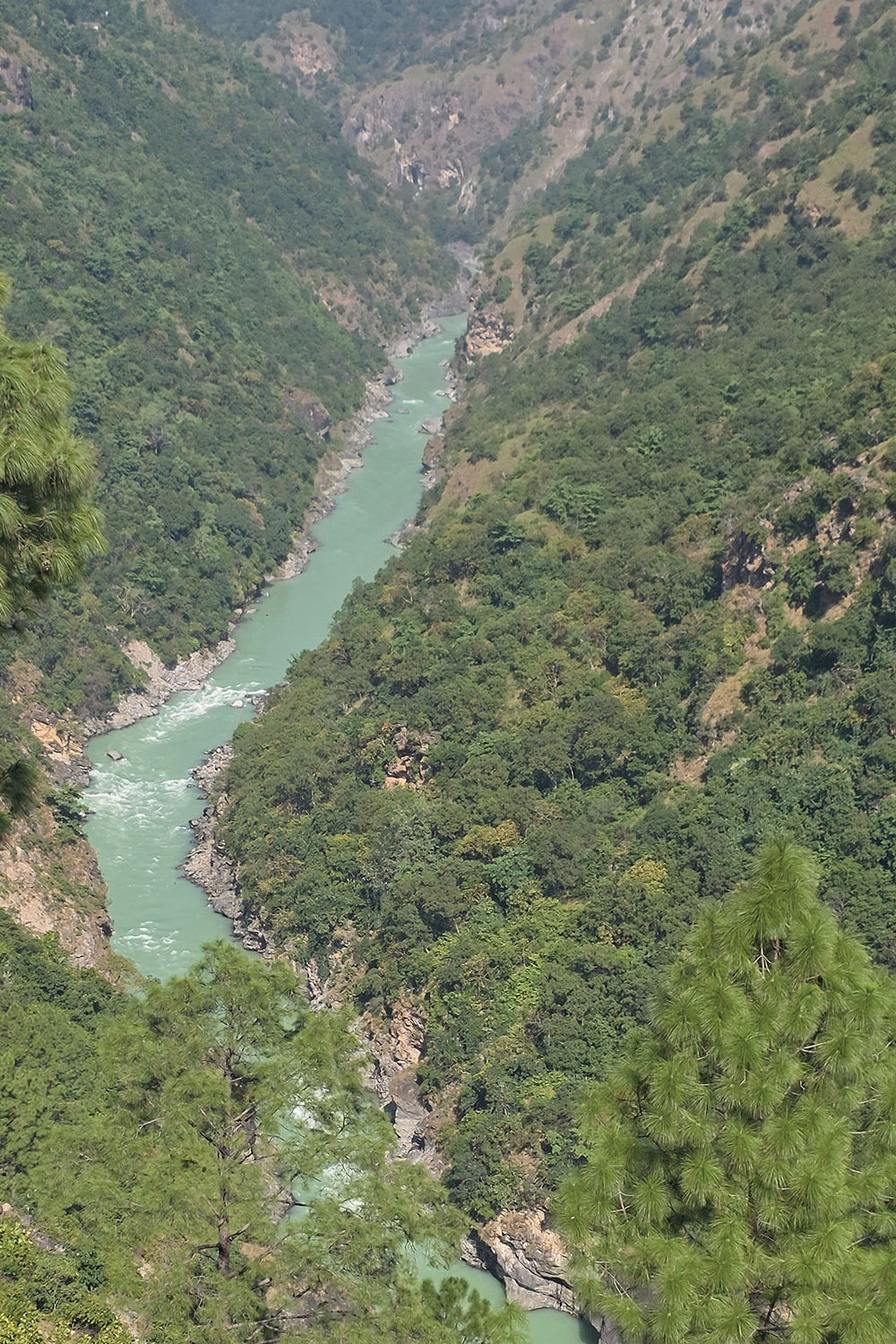
Gradually, we cross into Kumaun, where the mountains feel bigger and the roads thinner. At Jauljibi, the Kali-Sarda meets the Goriganga, and the expedition truly begins. From camp, there are clear views toward Nanda Devi, at 7816m, standing watch over the valley. Boats are rigged, the support raft is loaded, and the tone shifts from journey to commitment.
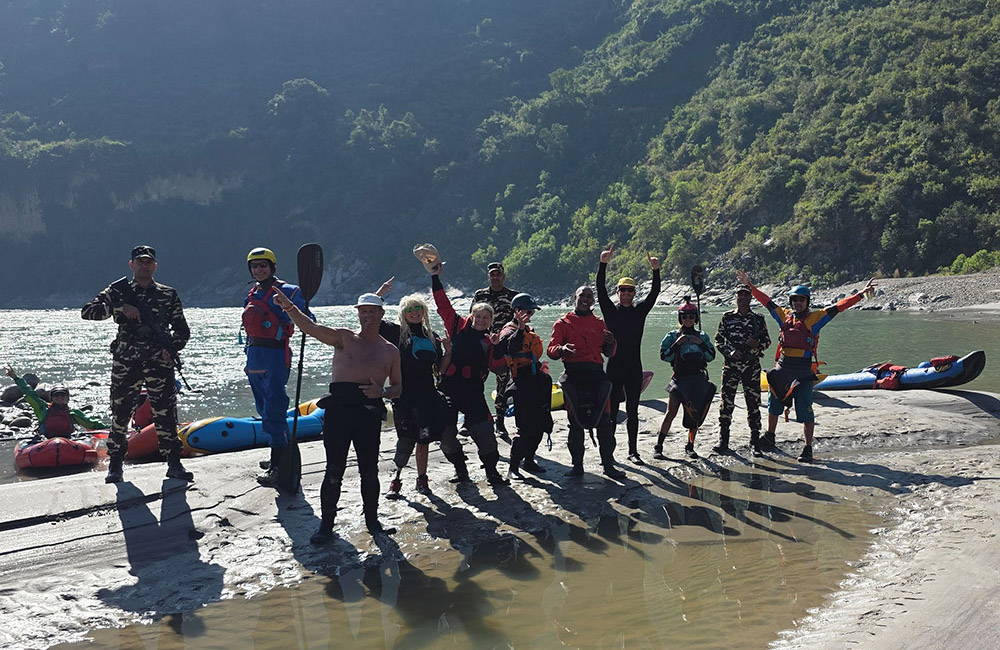
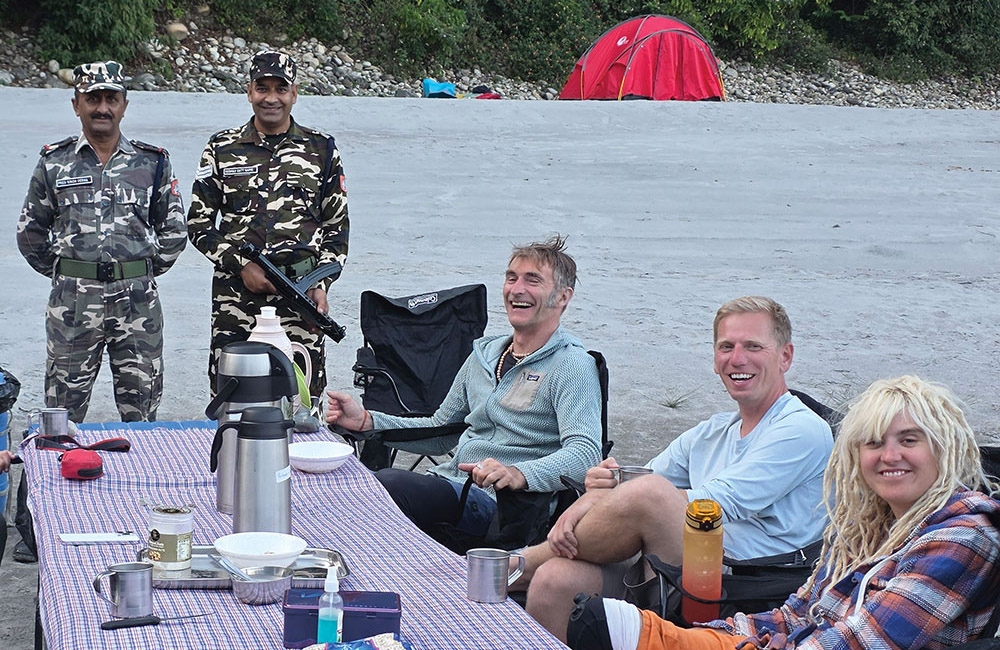
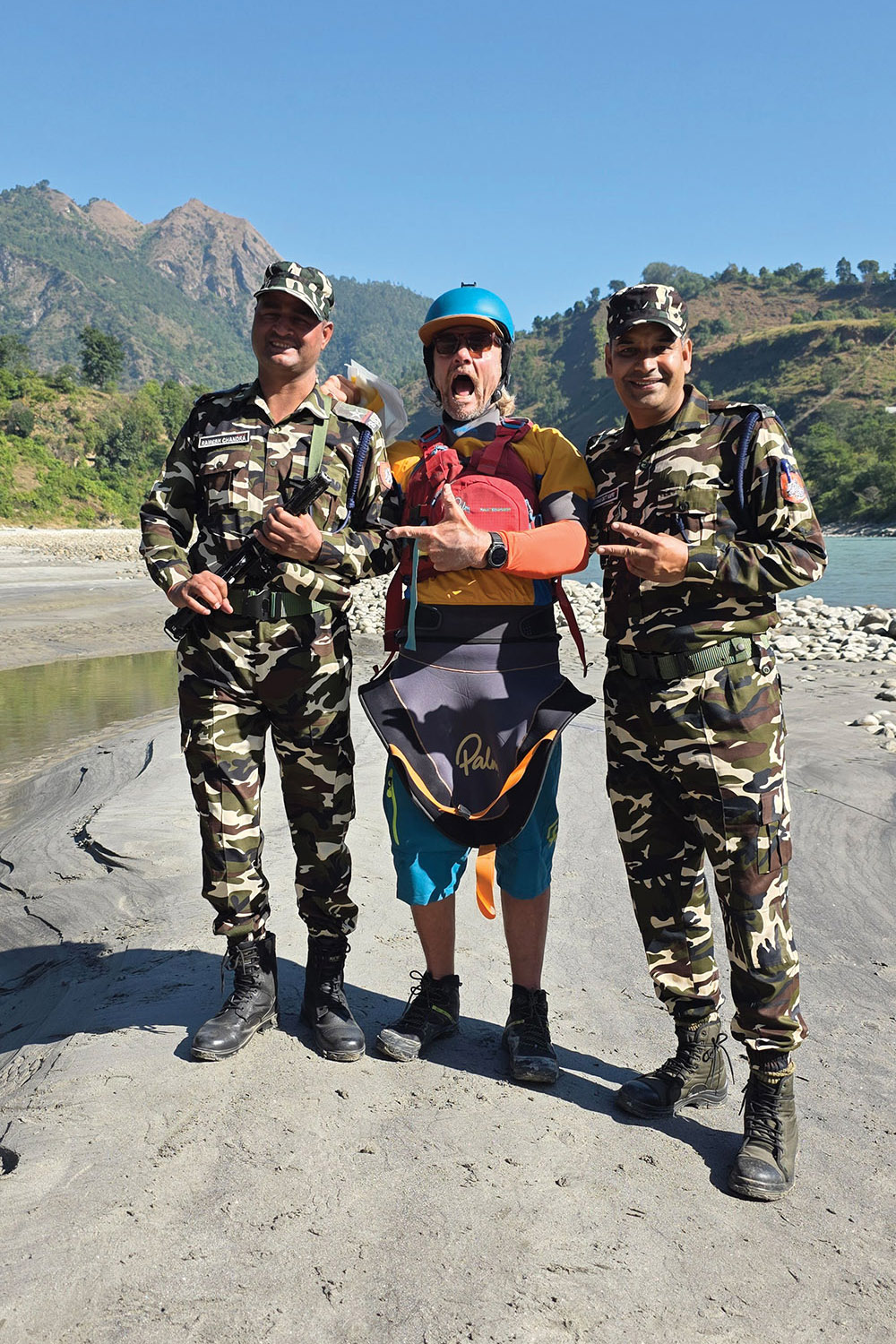
The Kali-Sarda forms the natural border between India and Nepal, and that reality is ever-present. On the Indian bank, we regularly encounter soldiers stationed roughly every ten kilometres, five at a time, calmly waiting, watching, and counting us through. It never feels intrusive – just quietly official – and it underlines how rarely this river sees travelling paddlers.
Over the entire multi-day descent, we encounter no other kayakers or travellers. No traffic noise. No villages. No sense of being on a well-trodden route. It feels like a real expedition – and in truth, because of its remoteness and logistics, it genuinely is one.
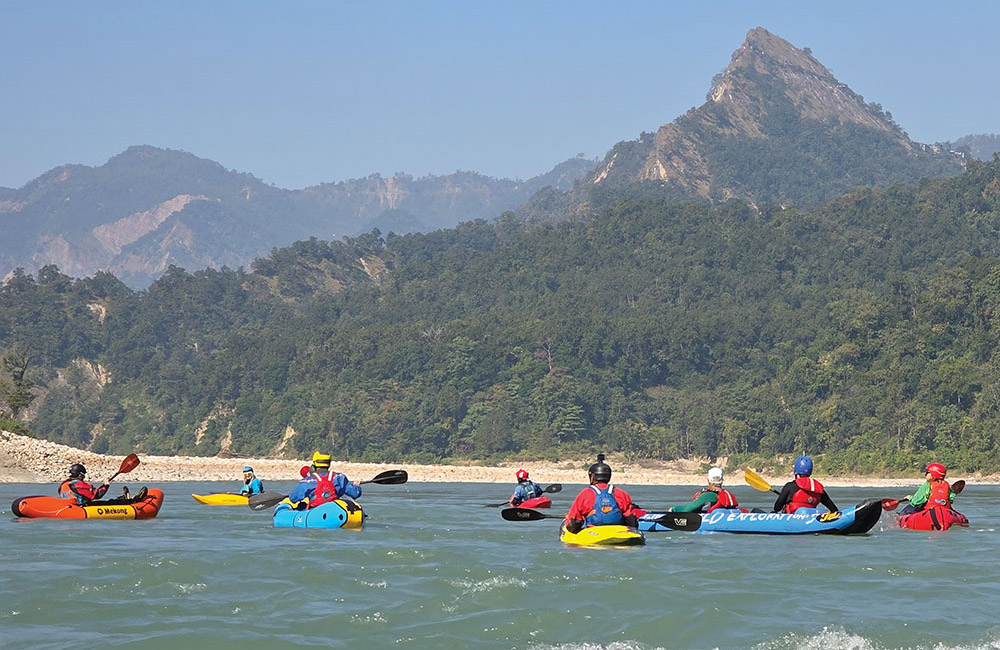
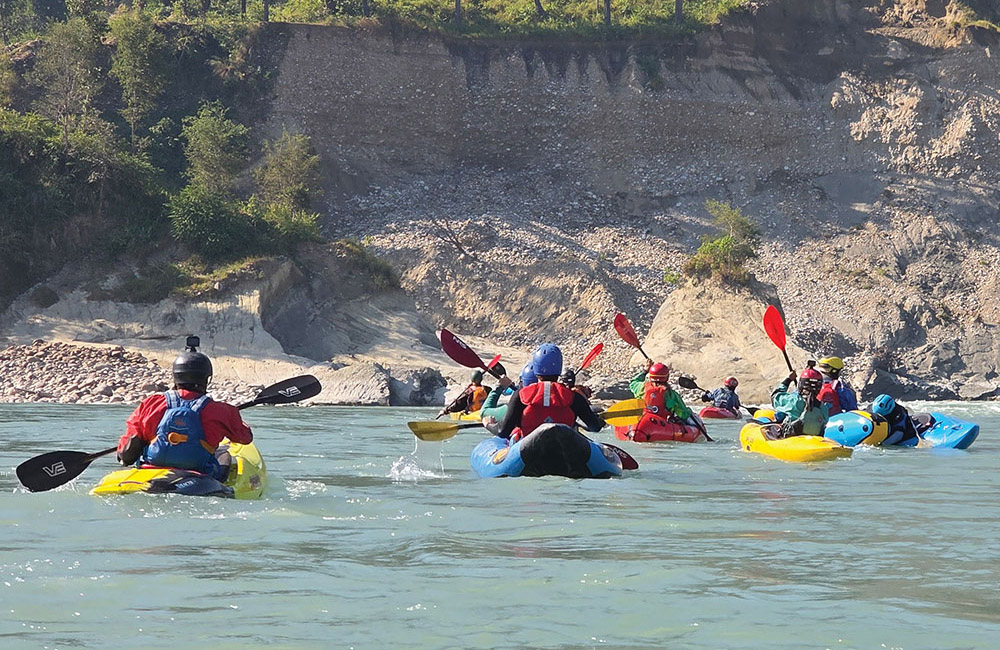
We paddle a wide mix of craft: a couple of pack rafts, a two-person inflatable ducky, several kayaks, and, of course, the raft support boat. The Kali’s big-volume 330 cu mecs Class II–III+ whitewater suits this variety perfectly – long days on forgiving water, the chance to swap boats, experiment, and simply enjoy moving downstream.
This is where the value of travelling with an experienced local outfitter becomes clear. Camp spots aren’t improvised – they’re known. Days are paced carefully, allowing time to explore side streams, rest when needed, or stop early when a camp is too good to pass up. By the time the boats are unloaded, tents are going up, and food is underway. The kit is first class, the camps are comfortable, and the meals are consistently excellent.
A well-earned holiday
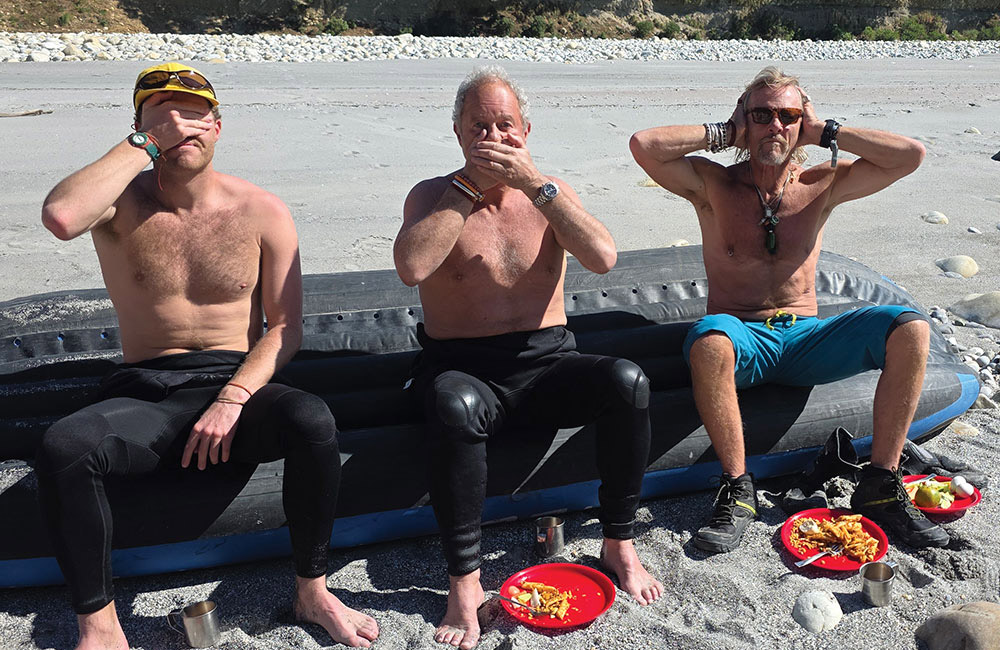
It leaves you free to do very little – watch the river slide past, wander the bank, or disappear into a book and call it a well-earned holiday. Fortunately, the younger members of the team will still have the energy to collect firewood, so every evening will have the classic beach fire and rum and chocolate.
A rest day should be built into the schedule to provide flexibility. There are options to hike to hilltop temples, practise rolls and rescue skills in calm eddies, or simply do nothing at all. The rhythm becomes slow, satisfying, and deeply absorbing – the essence of what multi-day river travel should be.
Most of us were outfitted by Palm UK, which was once again generous in its support. On a trip like this, reliability matters more than anything. Dry suits are a luxury rather than a necessity – the water isn’t especially cold – and several of us paddled comfortably in quality short-sleeved dry tops, enjoying the warmth of the valley without sacrificing protection.
However, the pack rafters and duckie paddlers were pleased to be well kitted out, as they spent a lot more time in the water than the more proficient kayakers, which provided heaps of entertainment for both swimmers and rescuers.
When the river finally opens out, and we take out at Boom, the transition is deliberate. From expedition to recovery, we drive south to Jim Corbett National Park, swapping paddles for early-morning jungle safaris. After weeks of movement and water, the stillness of the forest feels like the perfect full stop – elephants in the mist, fresh coffee, and time to let the journey settle.
Final word
If you want to experience Uttarakhand properly – without rushing, without compromise – give yourself around 16 days to link the Ganga, Alaknanda, and Kali-Sarda into a single, coherent journey. And do it with an experienced outfitter such as Wet N Wild, who understands the rivers, safety, logistics, and the pace required to let this landscape fully reveal itself. If you have more time, arrive early and get over jet lag with a three-day tour on an Enfield motorcycle – so much fun. Chotak from Wet and Wild can organise it all with a smile.
Of course, Nepal may still be the obvious choice for river expeditions, and is the one you’ll still be talking about years later. It could be the precursor to your more advanced Nepal trip.
Thanks
Thanks as always to Andy Knight at Palm and Chotak at Wet N Wild, both based in Ladakh.