WORDS:
DIMITRI VANDEPOELE
PHOTOS:
SYLVIE VANDEPOELE
NORTHSEAKAYAK

@Northseakayak
Shetland Sea Kayak Symposium 2026
Shetland… Well, for us it speaks to our imagination! Amongst all fantastic kayak places in the world, this one stands out and not just a bit! We’ve known Frank from the Shetland Canoe Club for several years, but only on social media. And last year, to our greatest surprise, an invite to coach at the Shetland Sea Kayak Symposium 2026 came in. An opportunity that we couldn’t turn down. First, to meet Frank and his team in person, and second… Well: Shetland!
So we set off for the (very) long drive up north, taking the Shuttle from France to Folkestone, followed by driving all the way up to Aberdeen. In Aberdeen we took the North Link overnight ferry to Lerwick, Shetland! Hospitality was splendid; we received a message from Frank to have breakfast and a first informal meeting just after getting off the ferry! Just driving through the landscape was an experience in itself! We also probably saw more sheep roaming around than people.
Shetland Canoe Club
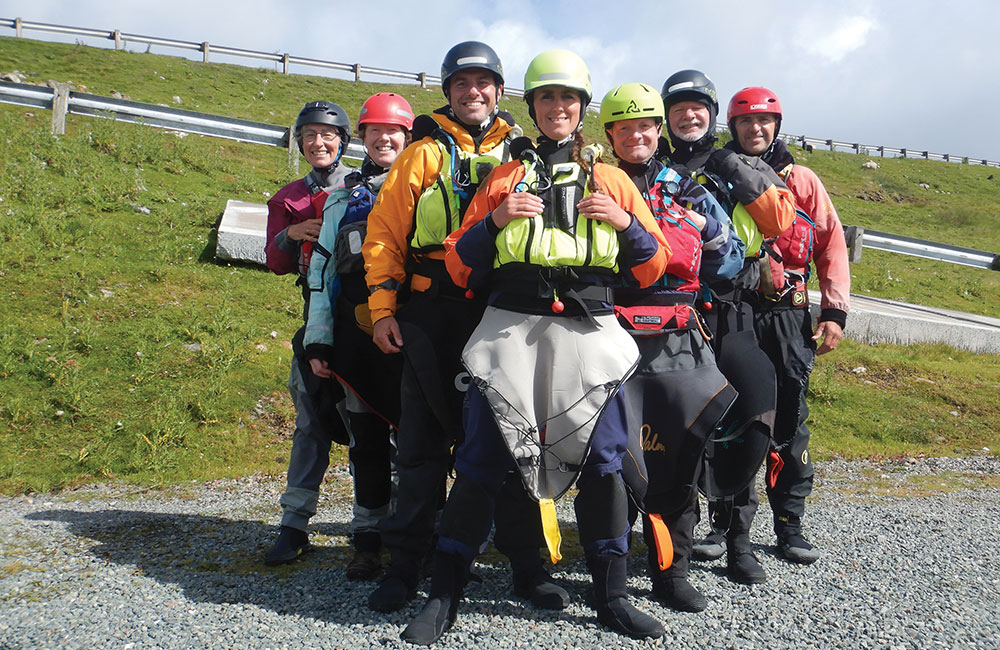
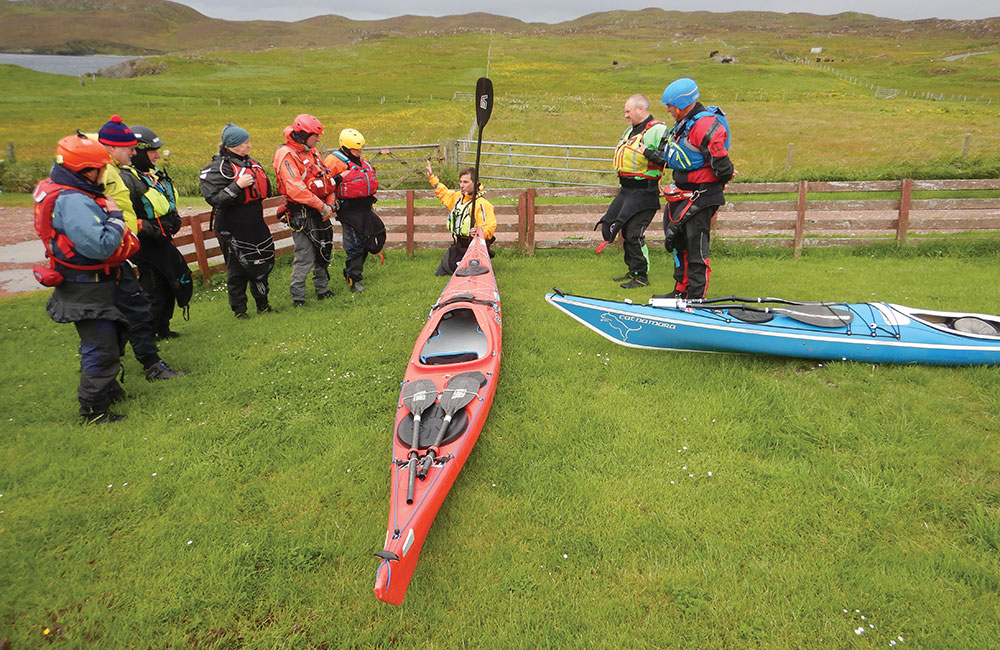
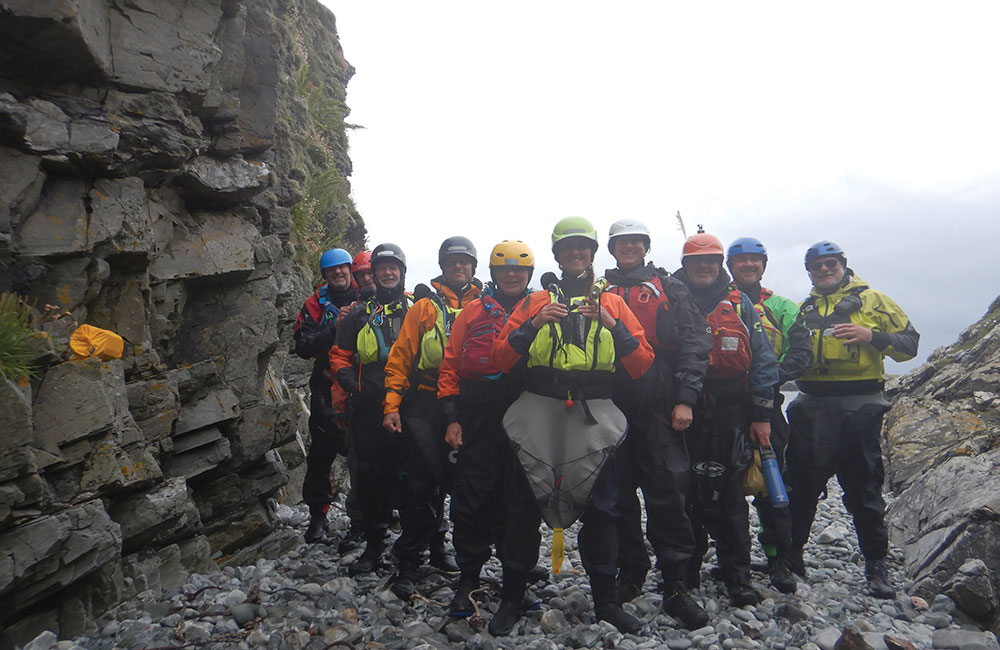
Before the kick-off, we met Rachel, president of the Shetland Canoe Club, and the top-notch crew of volunteers who did a great job helping everyone out! Since the weather forecast predicted strong winds, the first day of touring was replaced by workshops, as were the other days. Briefings were calm and clear, as we like it!
As a foreign instructor, I was paired with a local instructor/guide, which made things go very smoothly. I could focus completely on coaching while my wingman picked the best venue for the occasion. What a luxury! We could choose what to coach, so we did what we do best! Swimming! Oh, sorry; incident management! The latter covers a lot of stuff, but we adjusted our program to the venue, conditions and the team we worked with.
Our base of operations was Brea Hall, where we held a general briefing each morning before leaving in smaller teams for different workshops and venues. Every evening, volunteers provided a hot meal for all hungry kayakers!
Day one: Ronas Voe (north of Da Blade)
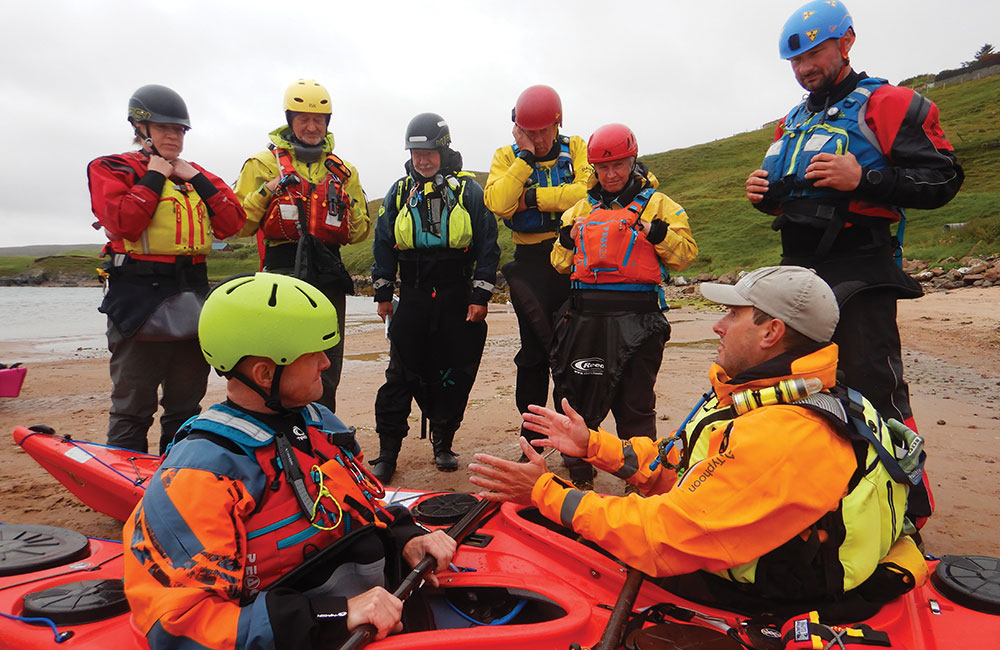
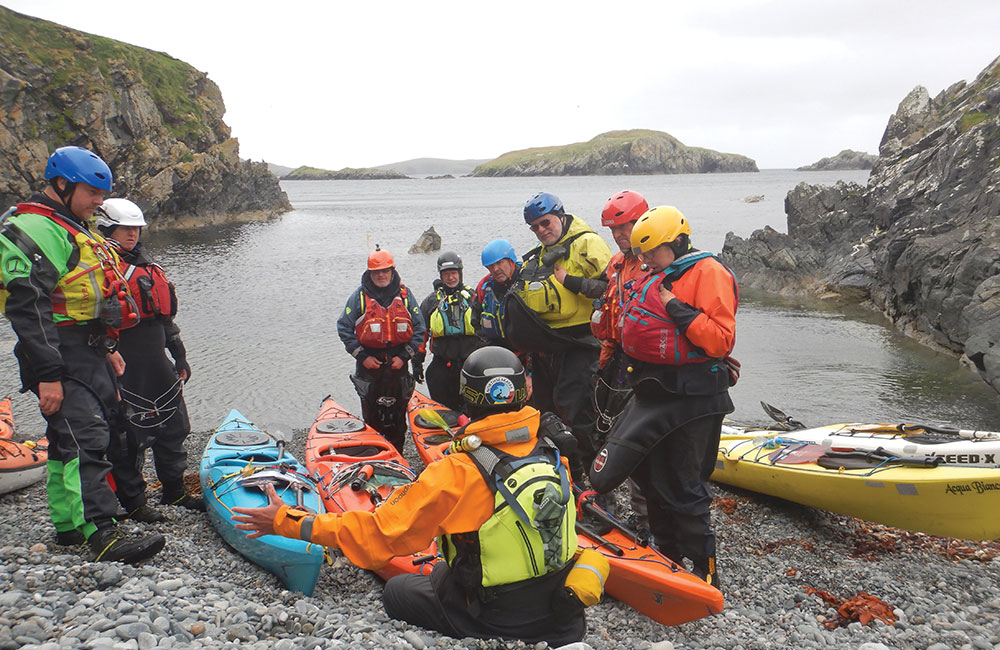
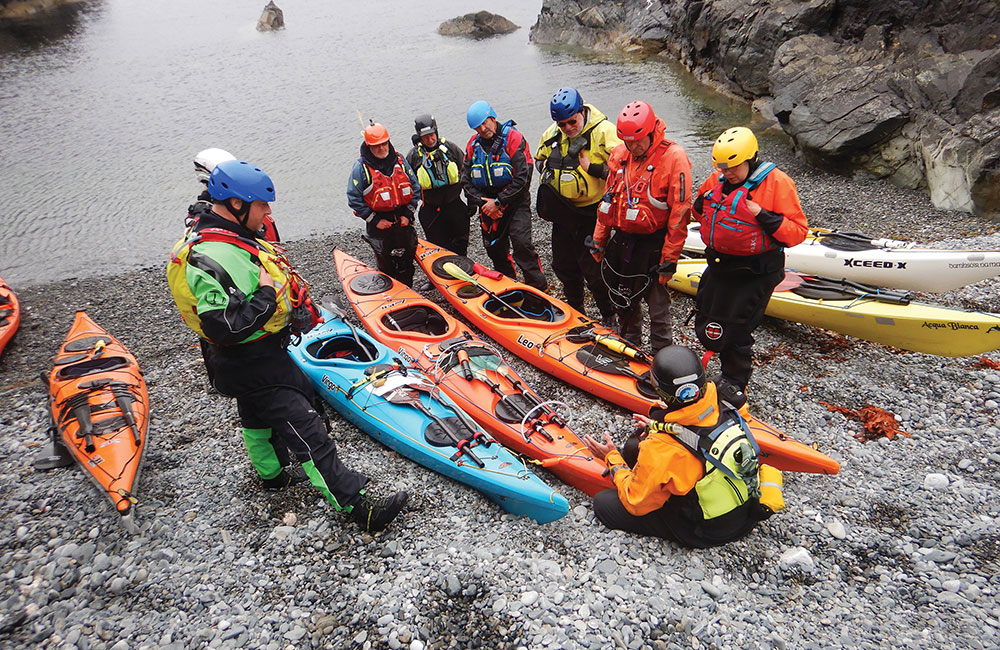
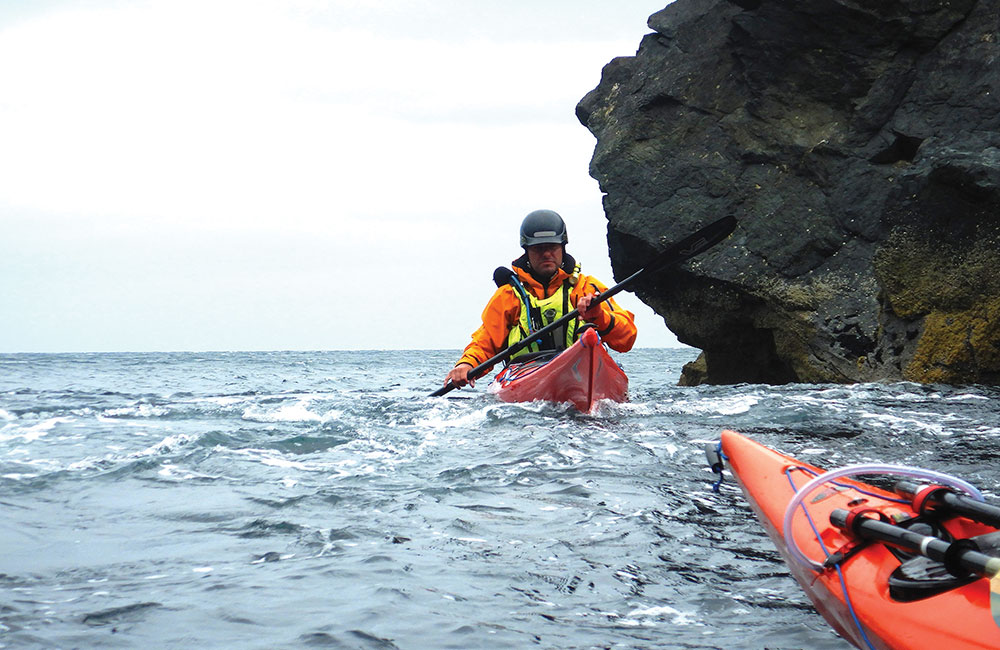
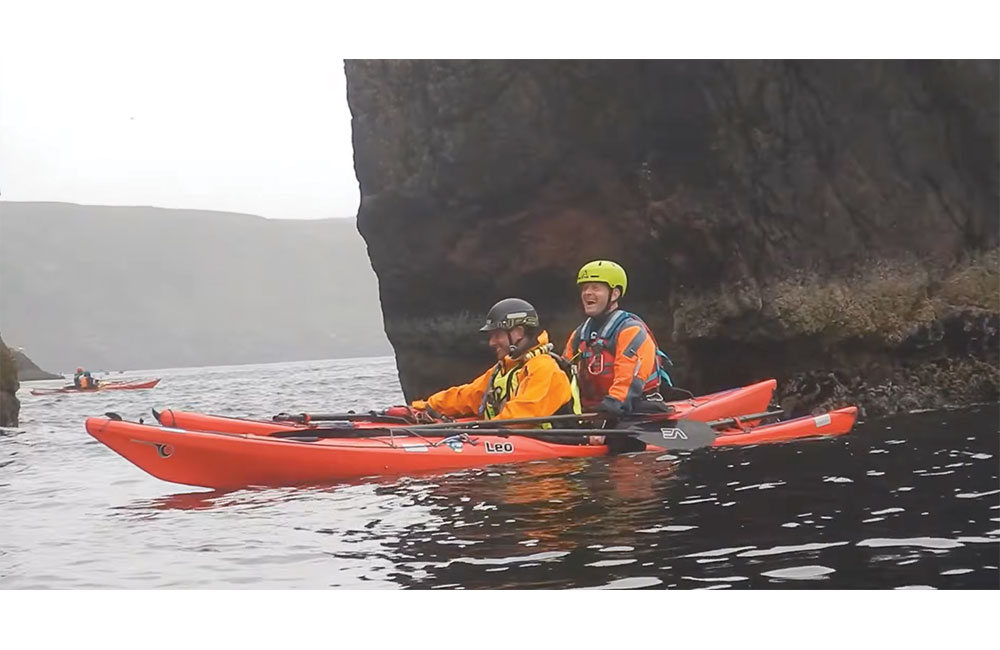
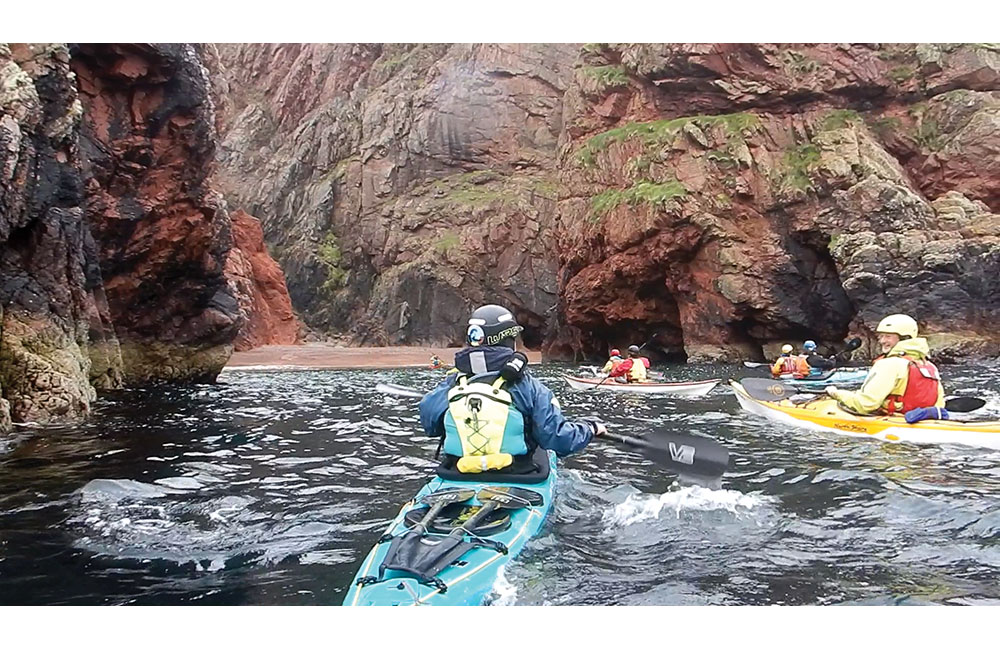
This venue is like a fjord that cuts through the land, providing shelter from the wind and giving us plenty of space to combine our workshop with some rock gardening. As we often do, to make sure everyone is on the same page on the absolute basics, we started with a demo of a solid assisted rescue on the beach. During the briefing, we emphasised that we hate groups, and we love seeing people work together as a team.
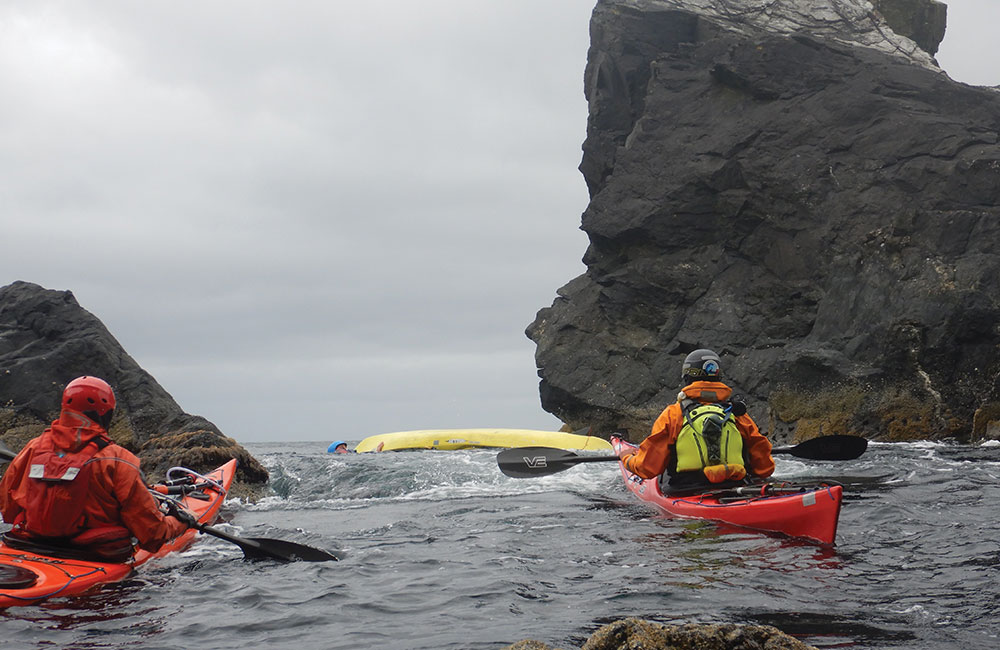
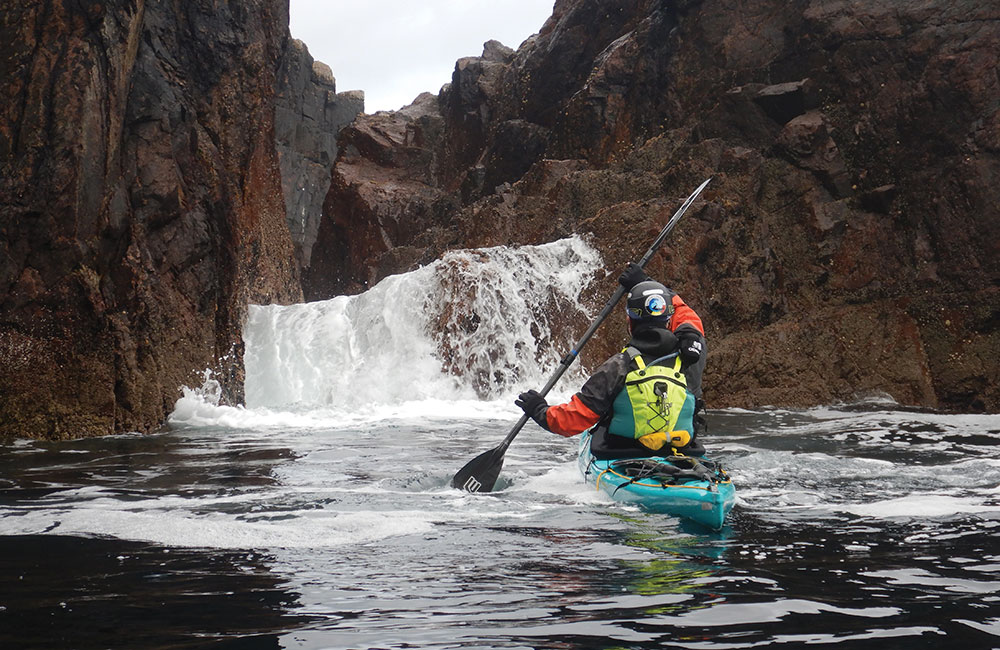
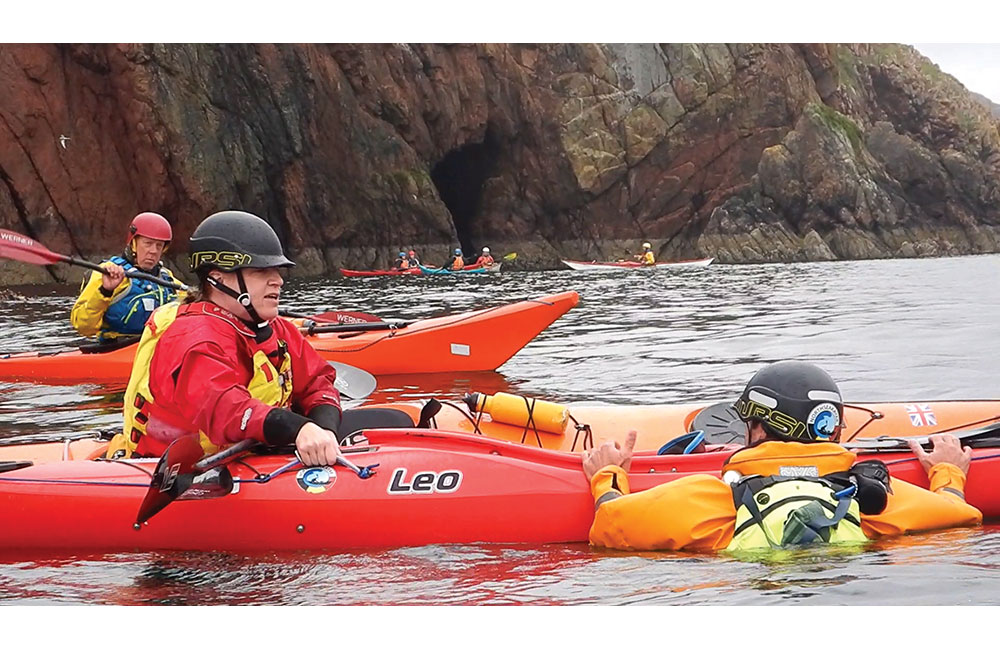
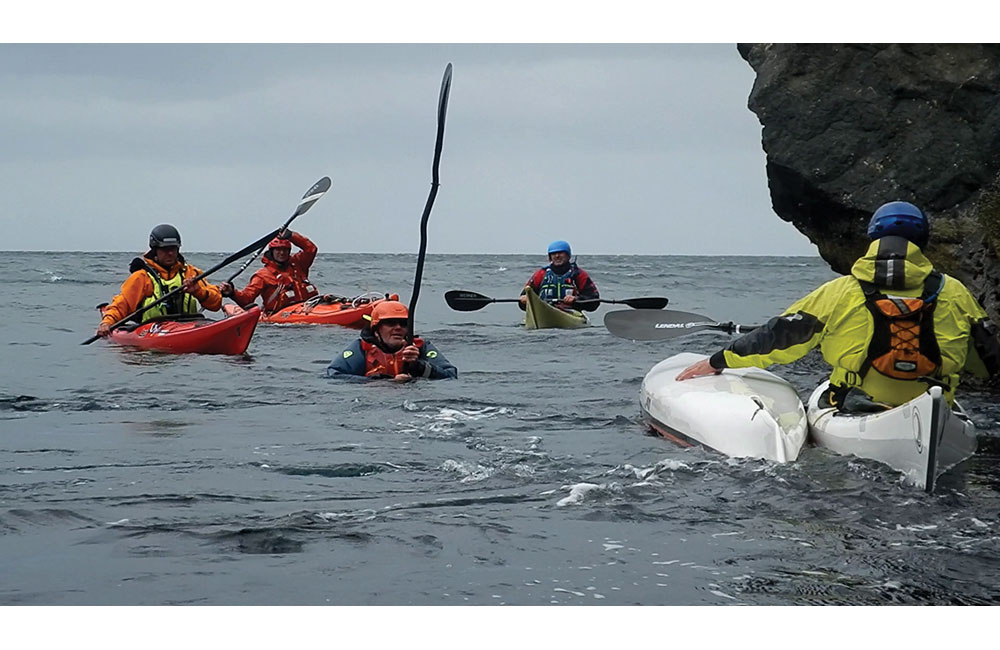
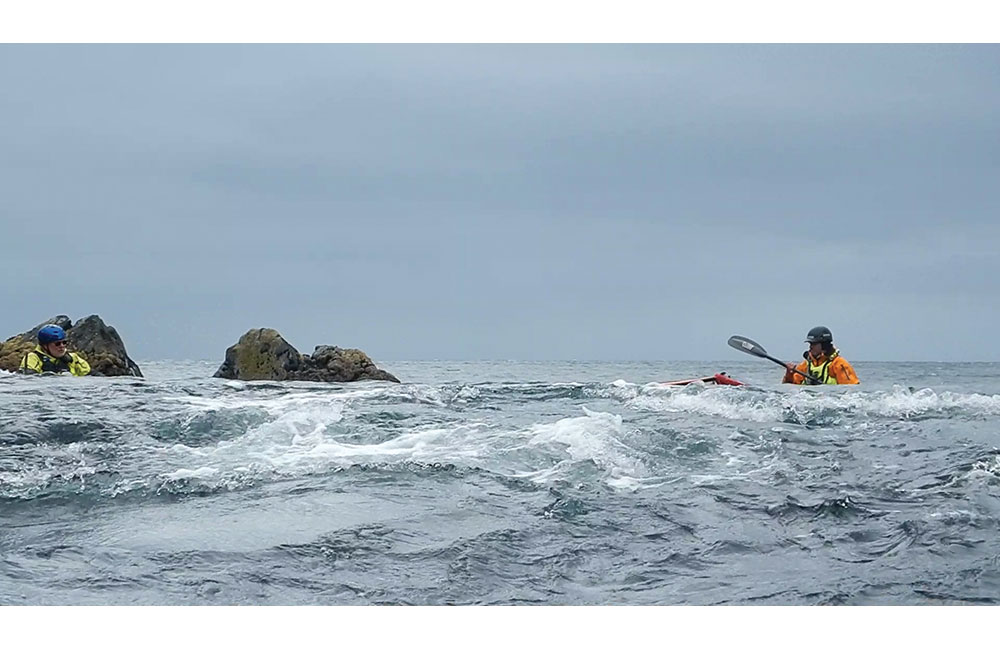
Everybody needs to take care of their fellow paddlers at all times, whether it is during training or for real. Once we’re off, the scenery unfolds in front of our eyes! Cliffs, rock formations, gaps and arches. During the first hour, and with Frank as my backup, I spent a lot of time in the water. That way, I could see if everyone was ready for immediate rescue – also, it was the perfect moment to point out details.
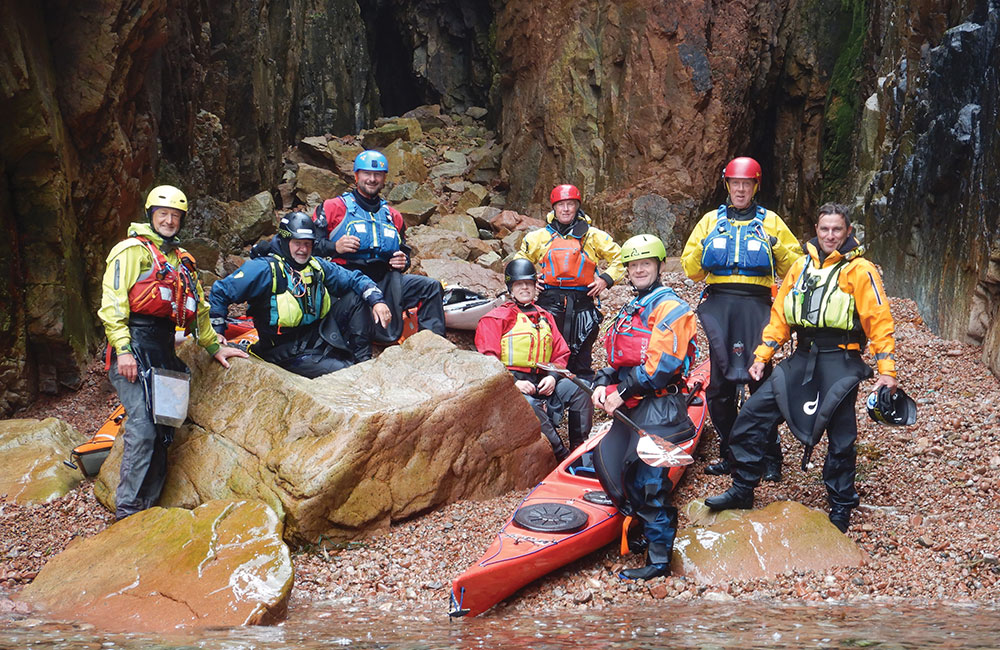
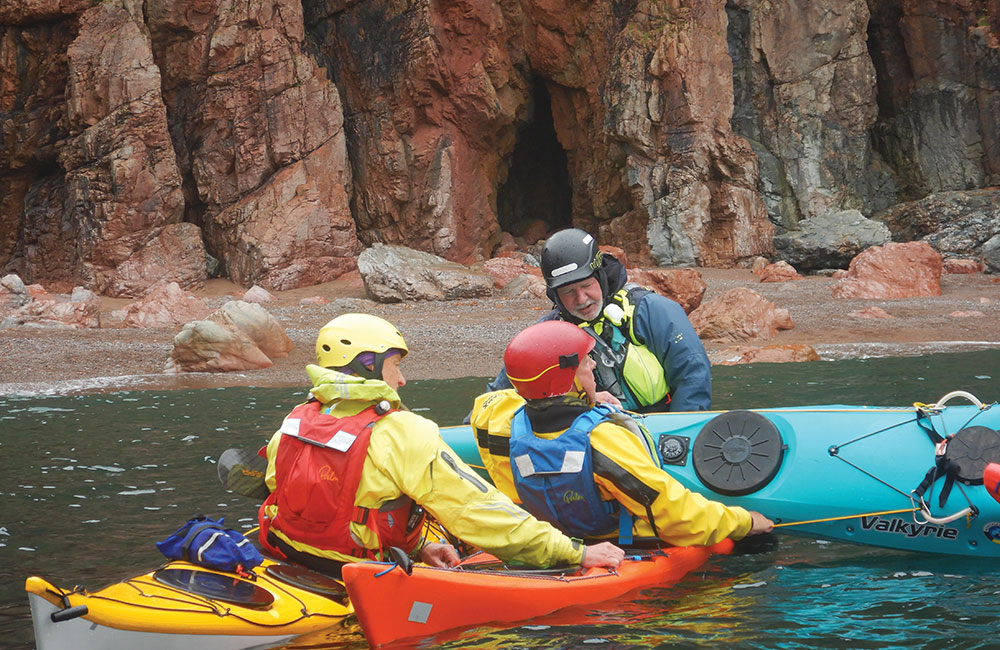
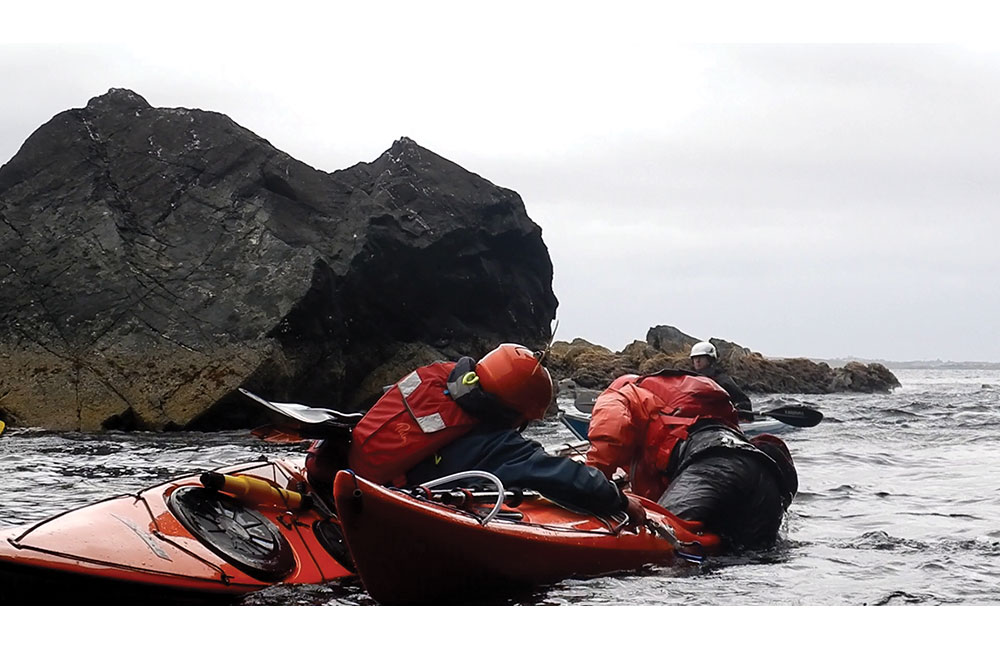
We got to know our team, and we started building combos of short towing, rescues, manoeuvring towards swimmers, and bringing back empty kayaks. Add some balance exercises to that and the fun started rising! After a lunch break on a secluded pebble beach, we went for more complex scenarios. The conditions were flat calm, so we could easily point out important details. We ended this training with a capsized, injured paddler in a small cave, with his kayak lost.
The goal was simple: get the victim out of the cave without putting yourself in danger, get the victim as soon as possible out of the water to prevent hypothermia and seek shelter on the nearest beach. These things are always neat to see, especially if you want to know whether you are working with a bunch of individuals or a team. And a team it was! With clear communication and a focus on the best solution on the spot, our team managed to complete all set goals! Day one just flew by!
Day two: Collafirth Pier
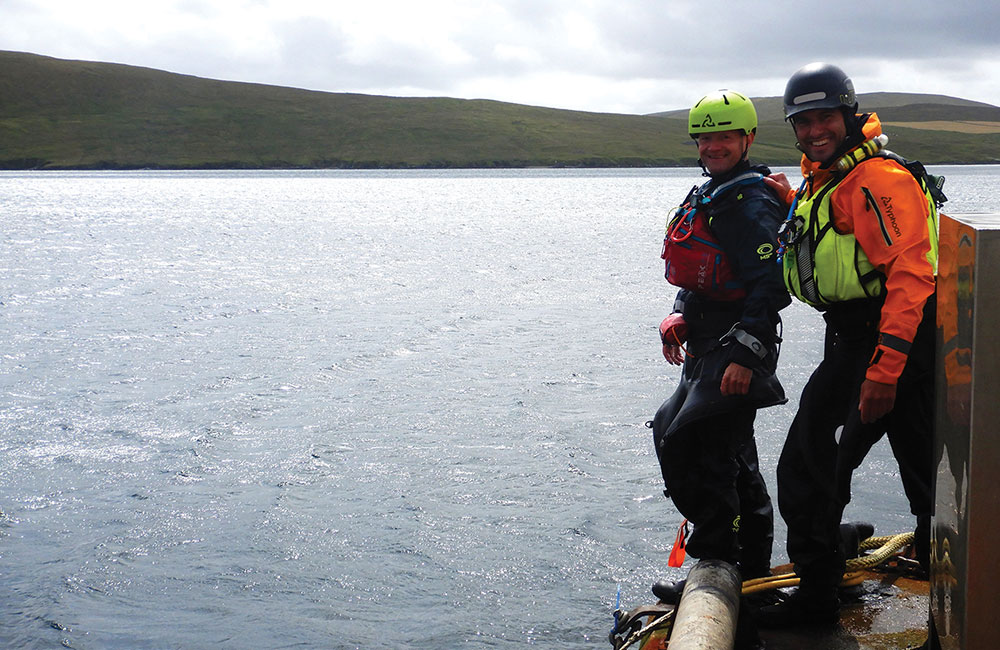
The wind was howling that day! Some people just skipped their workshop and went for cake and coffee! We left Brea Hall with Frank and a small team assigned to us. We drove all the way up north as we wanted to paddle along some seemingly sheltered cliffs. Once we arrived, the doors of our cars were almost ripped off when we exited; one team member came over immediately, saying she’d already decided not to come along on the water. We could easily say, “See you tonight!” But teamwork is something we value enormously in our small NORTHSEAKAYAK team.
We decided to go for plan B, including everyone! Frank guided us back to Collafirth Pier, a tiny harbour, where we parked our cars. Still howling wind and limited shelter, but it did the job! After scouting the area, I informed the team that I could ‘entertain’ them for about two hours. Despite the weather, everyone smiled and was grateful for plan B. The two hours quickly became three hours….
We started sheltered from the pier with assisted rescues and explained the difference between a good swimmer who aids the rescue and a swimmer separated from the kayak. We let everyone practice a couple of times before increasing the stakes. We added timing: the rescue needed to be complete within 60 seconds of physical contact between rescuer and swimmer, again to prevent hypothermia.
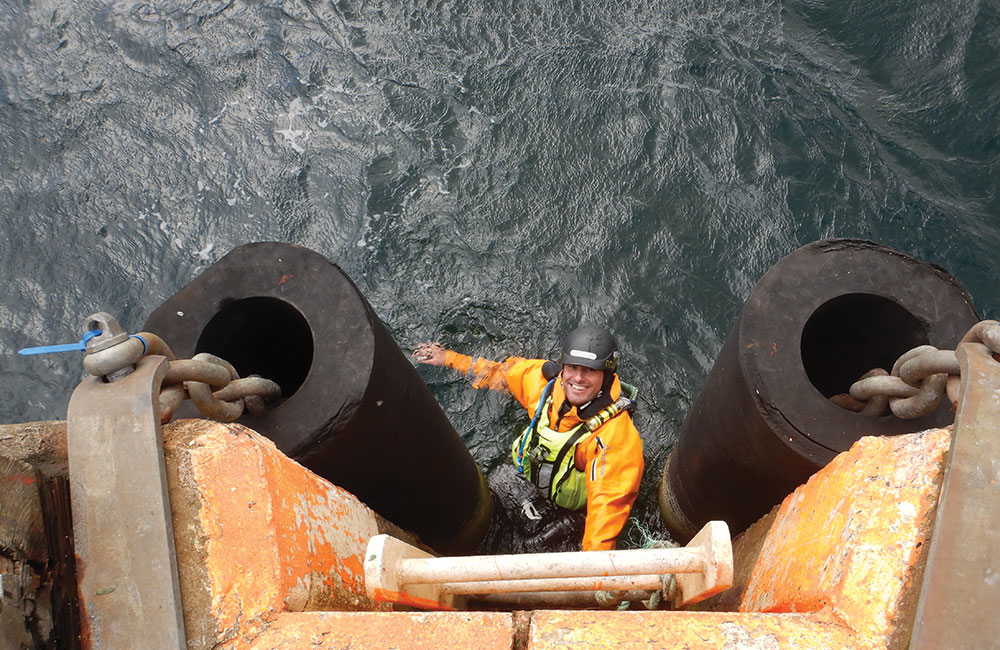
After this, I asked if anyone was afraid of heights; you should have seen the looks on the team’s faces! They paired up on my request. I took ‘the swimmers’ up with me on the pier. The height of the waterline up to the pier was about three metres. Too high to perform a lifeguard jump/entry! I explained and demonstrated how to do a solid deep-water/high-altitude jump without risking injury.
Back in Belgium, this is part of our training for technical launch (with kayak) when working together with professional shipping (where the freeboard can go up to six metres). Everyone was super excited to do this, and some even had the tickles in their belly! Their partner’s job on the water was to manoeuvre their kayak with a short tow back into position to perform an immediate assisted rescue after the jump. We switched to everyone having the chance to do this safely and responsibly.
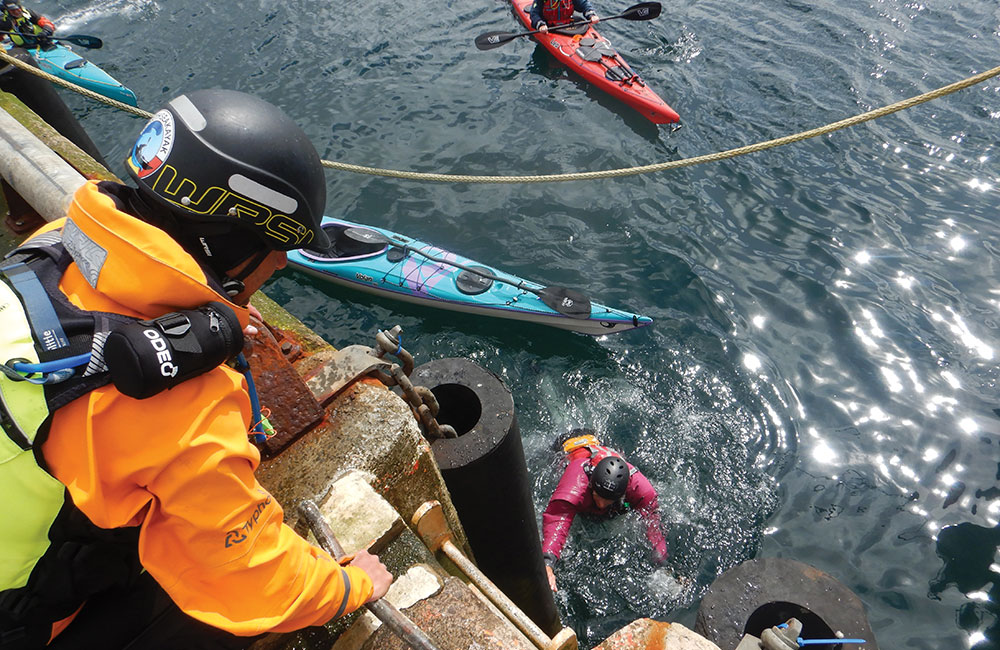
To end this training, I asked who wanted to be the team leader for the last exercise. My kayak was already brought on land. I told the team leader the goal privately, so he needed to instruct the rest of his team once we started. I told him that I was about to jump off the pier (my kayak was imaginary damaged and lost). I was ambulatory and not injured, but I had a leak in my drysuit exposing me to the cold water. After I hit the water, the team had no more than 60 seconds to get me out.
After that, they needed to bring me upwind to the nearest slipway for drop-off. Frank was again my back-up to intervene if necessary. I jumped off the pier sooner than I told and on purpose! The team reacted even quicker than I hoped for, and I was brought on board a solid raft (very solid; I could even stand upright – something we test often). A long tow brought us in, and the team brought me to that slipway.
Communication was limited to the bare minimum because of the wind. After a few minutes, I felt ground under my feet again. Mission accomplished! Despite the sun and rain playing hide and seek, we had lunch in the harbour, and one of the team even brought a homemade cake! Day two, despite the wind and cheers to our back-up plan, check!
Main video of the symposium:
https://www.youtube.com/watch?v=XOgI2NswB9I
Main video of the day trip Muckle Roe:
https://www.youtube.com/watch?v=lbvamZuLzh8

Day three: Gletness & South Gletness Island
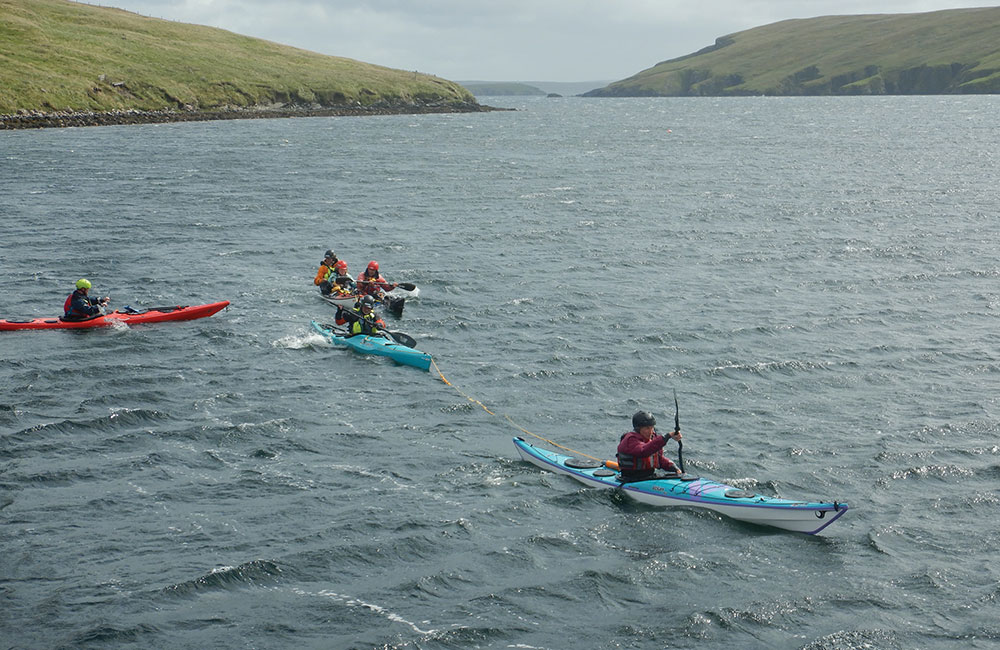
The strong wind was an issue again, but Hamish, who was my back-up, came up with an excellent venue! Our playground was an entry and exit point at a pebble beach; the target area was two small nearby islands. On the way up to the island, we even saw a sea otter diving from the rocks into the water! As a new team, we started with standard rescues to gauge the team’s level and warm up (or cool down, if you wish).
We invested some time in towing in close quarters. The aim was to form a solid raft, make a logical attachment with the long tow and manoeuvre around a few designated rock formations. This showed the team that the length of the tow system determines how far they need to stay away from obstacles before starting to turn around.
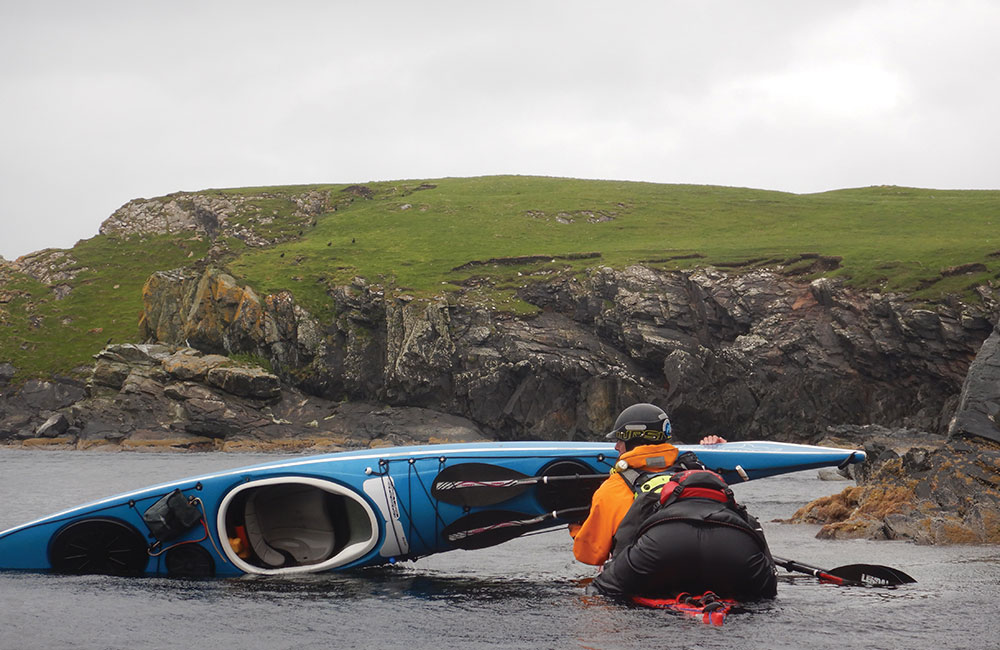
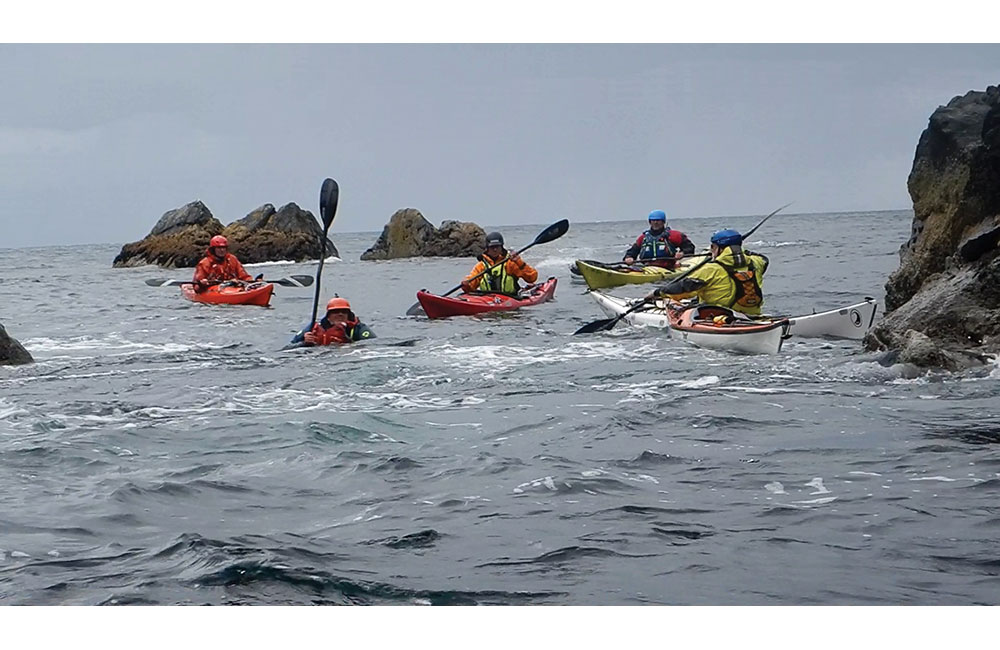
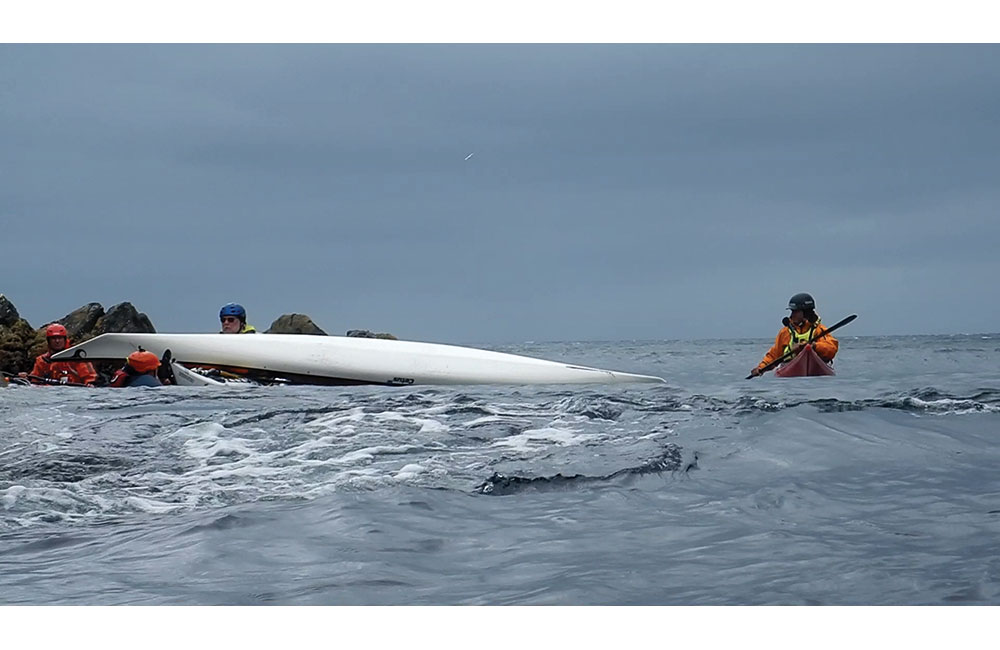
After the break, we continued to the sheltered part of that small island where we had a few features to train in. A small gap where the swell rose and fell proved the perfect place for assisted rescues with a lost kayak and for performing some self-rescues in slightly dynamic conditions. We split the team; Hamish took care of the first part, where he trained on towing paddlers away from danger using the short tow. I worked on effective rescues. Once conditions start to get dynamic, you see people go for it more focused.
Bringing back an empty kayak towards a swimmer through a gap also needs a bit of timing. After a demonstration of a self-rescue in that specific gap, it was time for the team to try it out for themselves. Some performed a swift, solid self-rescue without help. Others used a paddle float and even did a re-entry and roll. And for the people for whom it didn’t work that smoothly, well, another reason to add more rescue training into their touring. So, this was a true learning moment for all. To avoid breaking tradition, we added one last full-scale scenario to end with. Hamish volunteered to be our victim.
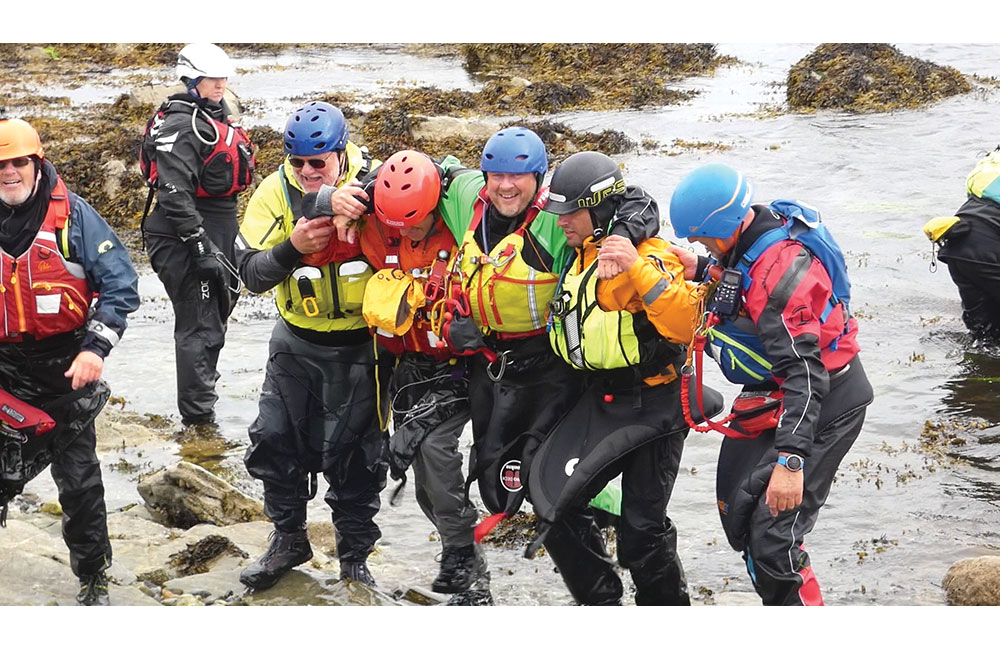
We appointed a team leader and were off, back to shore. In a non-sheltered part, where the wind had free play, Hamish capsized near rocks and hurt his leg so badly that he became non-ambulatory. The team leader had to divide tasks immediately before hypothermia kicked in. Aside from a few details, I didn’t intervene. The team worked as it should, as we love to see! Hamish was brought to land on a towed raft.
A few paddlers moved ahead to receive the raft with the victim at the designated landing place. This went really smoothly. Once our victim was brought carefully to land and protected against hypothermia, the team thought that the exercise was over. I pointed out that for this kind of injury, external help is needed.
I let someone simulate a distress call with his VHF radio, and I demonstrated the correct use of a Personal Locator Beacon, as I carry an inert unit with me. The whole situation looked so realistic that a local inhabitant rushed from his house towards us to offer help. We thanked the gentleman and explained what we were doing, and he could only encourage us. After this, end of exercise! Nothing but smiles and praise for each other’s performance.
Final evening at Brea Hall
We all went one last time to the familiar Brea Hall for our last meeting and meal! Food never tasted that good after three days of being outdoors in this weather. Thanks again to all the volunteers who made us feel at home! We could have a final chat with fellow paddlers.
There was interest in our recently published SeaKayakSafetyPass, so we were glad we brought some; thank you to the people who asked for one! And to end the evening, tables and chairs were shifted away from the middle and a local band was getting ready for the final blast!
We can now correctly pronounce the word ‘Ceilidh’, or at least we hope so! We also experienced it firsthand, as Rachel (president of Shetland Canoe Club) just grabbed us from our seats and forced us onto the dance floor!
Saying no to dancing at the Ceilidh isn’t an option here! Sylvie and I couldn’t stop laughing as we weren’t the only ones who couldn’t dance properly! But great to see the people who can actually dance as well!
Aftermath
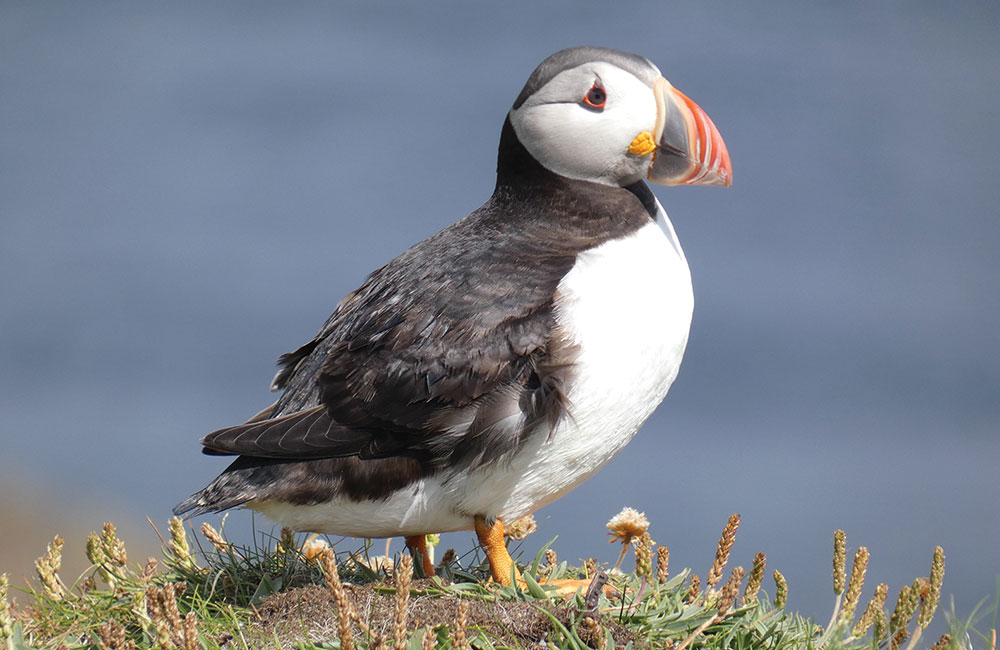
We spent a few more days on Shetland before returning home. We took a couple of days to explore the area without kayaks. Sumburgh Head is a splendid place to visit, certainly if you wish to see the puffins. It has a lighthouse and spectacular viewpoints, plus a cosy place for coffee and cake.
Speaking of cake, The Original Cake Fridge is worth a visit (or two in our case), as they offer, well, delicious cake, of course! We went twice because we couldn’t get enough of the different flavours. A beautiful waterfall is nearby and within walking distance.
And we couldn’t just leave without getting wet one final time. Frank pointed us toward the island Muckle Roe for a day trip with plenty of options. So we spent another day on the water, enjoying the unrivalled scenery, wildlife and the endless play of the water against the rocks and cliffs. We explored caves so deep we needed a headlight. We had lunch on a beach with a view, and we were seemingly the only humans around for miles.
We had one last dinner to say our goodbyes to Frank and Hamish from the Shetland Canoe Club. We hope to see them again at our Sea Kayak Training Camp in Croatia, as they said they were interested in joining us there. And from our side, we hope to come back to Shetland once more in the future.
On the way back on the North Link Ferry, as the cherry on the cake, we got a full tour of the bridge with a detailed explanation of all the equipment, panels and controls by the captain and her crew. This couldn’t get any better!
Shetland, until next time!