WORDS:
DEL CLARE
Photos:
Tom Clare,
Jack Grace,
Liv & Jake

Del Clare
https://delkayaks.co.uk
@del_likes_kayaking
How to plan a whitewater kayaking trip to the Alps
Every time I come back from a kayaking trip, I hear the same message, “I’d love to go on a trip like that, but I wouldn’t know where to start.” After recent adventures in Valsesia, I put together this clear, friendly guide to planning your first white water kayaking trip to the Alps.
At a glance: Quick planning checklist
I’ll go through a checklist of things to consider, each in its own section. You can skip to each section if you wish.
1. Choose your paddling crew
2. Pick dates and research locations
3. Set expectations as a group
4. Decide whether to drive or fly
5. Book accommodation
6. Pack for variable weather
7. Plan your paddling days
1. Choose your paddling crew
This might sound obvious, but you need somebody to go kayaking with. Some paddlers may be able to turn up in a new location and join a group, but unless you are exceptionally good at kayaking, I’d recommend finding friends before you go out there.
You must find people who are on the same wavelength as you. The Alps are incredible for kayaking, but they also mean committing to paddling every day, paddling a very different style of river than everyone is used to, and sorting out the daily logistics of a trip.
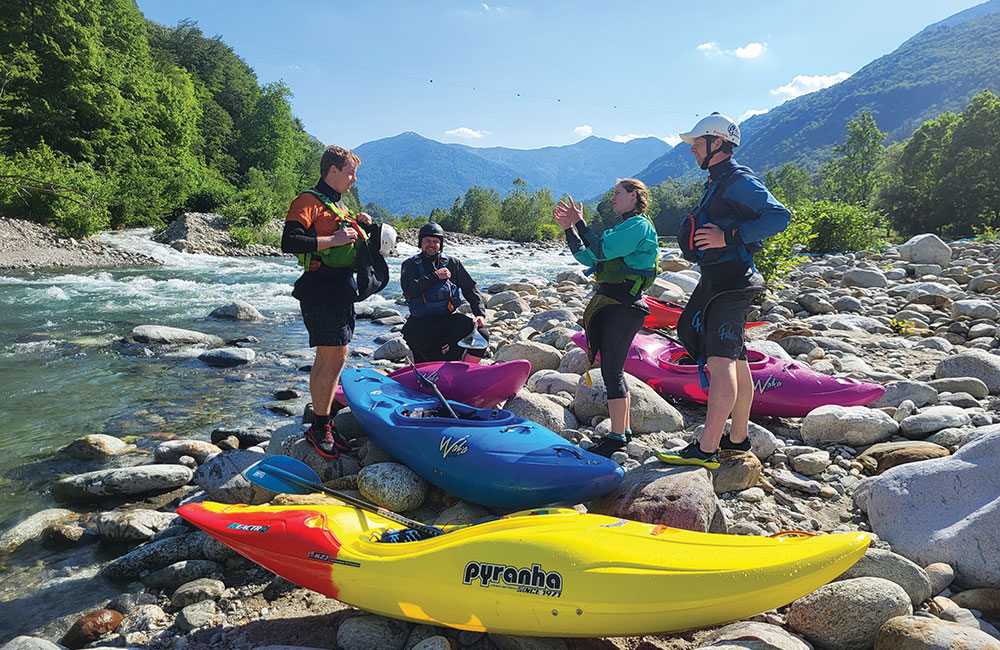
A lot of people paddle in canoe clubs, so this is likely your crew. Some people float between groups of friends, but you still need to ask and get those friends to commit to a trip away! A good group doesn’t mean identical skill levels, but instead it means shared expectations, kindness, and the ability to work as a team for the week. The bottom line is you will be spending a lot of time together, so you need people whose paddling style, pace, goals, and approach to the trip fit well with yours.
Ask yourself:
- Who paddles at a similar level to you, and wants a similar trip experience?
- Who do you trust to make good decisions when they are tired and potentially struggling a bit with being hot and overly sunned?
- Who’s happy to be a team player for the week and share the driving, cooking, and decision-making?
2. Pick dates and research locations
The Alps aren’t just one place – they are a whole playground stretching across France, Italy, Austria, Switzerland, Slovenia and more. Not to mention the countless other incredible kayaking destinations across Europe, including Norway and Iceland. Each destination has its own character, water levels, and best seasons for paddling.
Alpine kayaking depends heavily on snowmelt, so trip timing should match the water you want. If it has been a good winter for skiing, it is likely to be a good summer for kayaking. Rivers will always spike with rain, but it helps to know how different areas are affected by snowmelt over the summer months. For example, the classic Valsesia (Italy) time to paddle would be earlier in the season, such as in May. In contrast, places like Austria can still provide reliable levels well into August and September.
I suggest picking rough dates when everyone is available, then researching your options for those dates based on what the group wants. Being flexible about where you are based, by camping for example, will help you pivot if necessary. Your original choice of area may have no water, or even too much, while other places better match your preferences.
3. Set expectations as a group
Once you have found your people and are discussing where to go, it is worth setting expectations for the trip in advance. Having these conversations beforehand reduces potential frustrations and can save friendships. It also helps the group stay clear on what matters most for the week.
Be honest about what you want to get from the trip, but also be willing to compromise! Points to consider include who is coming and what matters most to the group:
- What rivers or type of rivers are you hoping to paddle during the trip? Are you looking for more leisurely, gentle whitewater, or are you hoping for a harder trip to push yourself?
- If it is a mixed group, is everyone happy to paddle the same things, or are people happy if there are some rivers where only some members of the group paddle?
- What does your daily plan look like? Is this a holiday and therefore a mix of kayaking, later mornings and plenty of chances for ice cream and cafe stops? Or is the expectation for early starts and full days of boating?
- Are you happy to stay in one place, or is the expectation that you will be flexible and move to chase the water?
This is not a full list of considerations, but a few example points. Setting expectations early is always better. That way, no one is surprised if half the group wants to lap the Lower Öetz all day while the other half wants a single lap followed by coffee and Austrian pastries!
4. Decide whether to drive or fly
There are two main options for getting to another country: drive or fly.
FLYING: WHAT TO CONSIDER
Since a kayaking trip requires access to a vehicle and room for your kayaks and gear, I have always preferred driving. You can fly, but you’ll need to choose an airline that will take your kayak or rent a kayak once you’re there, and rent a vehicle on the other side with roof bars to transport the kayak and more. You might save time, but with flight prices these days, I don’t know how much money you save. If you do need to rent a kayak, I’d recommend sourcing one before you commit to that option.
Driving, on the other hand, gives you flexibility. You can take your own kayak, gear and belongings with ease. Four people in a car for an Alps trip does require careful packing, but it is quite workable.
Driving will require you to book either a ferry (cheaper but slower) or a space on LeShuttle (faster but more expensive). I booked this the day before going, but it is worth booking once you’ve decided on your trip.
It is a long trip out there, with some locations being further than others, but driving through Europe is pretty chilled compared to driving in the UK. Six hours on the French highways feels a lot easier than six hours on the UK motorways.
TOLLS AND MAKING THE JOURNEY FUN
If you drive, note that you’ll pay a lot of tolls. In some countries, like France, they are numerous but easy to pay because they are almost all pay-at-the-booth tolls. Other countries require you to stop at a service station and get special stickers. Researching beforehand is a good idea.
It may sound obvious, but different countries also have different driving rules. Check them before you leave if you would like to avoid unexpected fines!
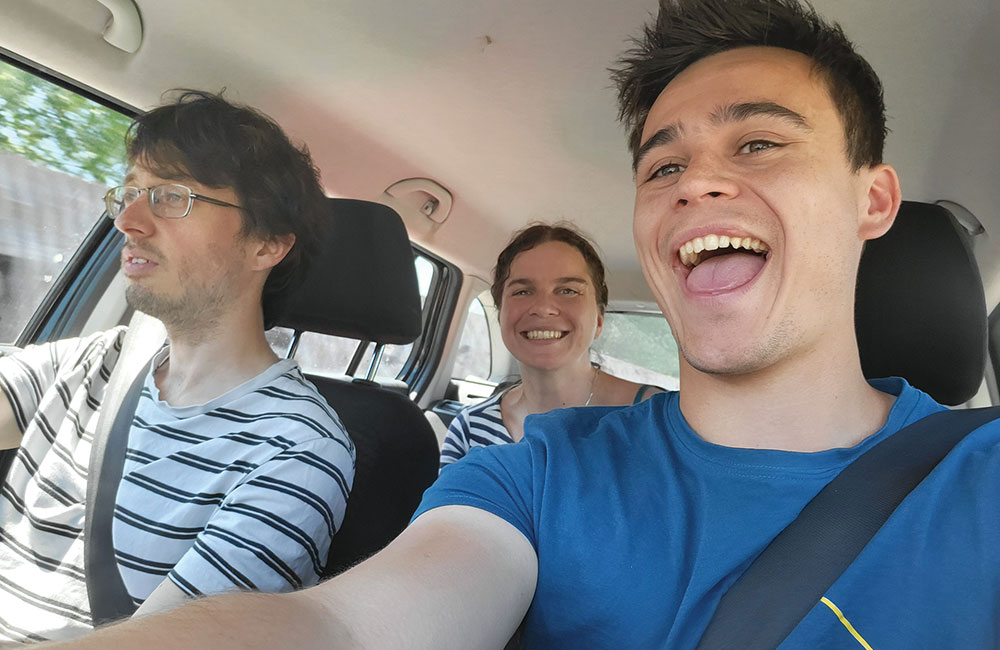
It will always feel like a long journey, but with snacks, good music playlists, good company, and a front-seat passenger who can work the toll booth machines, it is surprisingly fun. If you are not driving on your own, you can add your passengers to the insurance too and therefore share the driving, which helps spread the load.
I have always enjoyed these car trips, but I really like talking and organised fun, like games. It’s a lovely way to bond with your friends, and I do think some of my best conversations with people have been on the road to a kayaking trip. Take it as an opportunity to connect with your friends and enjoy the journey together.
Your options for accommodation:
- Campsites (cheap, sociable, occasionally chaotic in a charming way).
- Rental houses (great for drying kit and having a proper base for the week. Showers and beds feel luxurious too!).
- Hostels (budget‑friendly and often full of paddlers if it is the paddlers hostel in a kayaking area. This means it is a good way to meet people!).
I prefer to have a base for a trip. I value a bed and am not a massive fan of camping. It reduces flexibility if the water levels aren’t ideal, but that’s never been a problem for me.
In the summer, all the accommodation options rented out during the ski season tend to be pretty cheap. Quite often, it is actually the same price to rent a house as to camp, which makes it an easy decision for me!
When deciding on where to stay, consider:
- Proximity to the rivers you want to paddle?
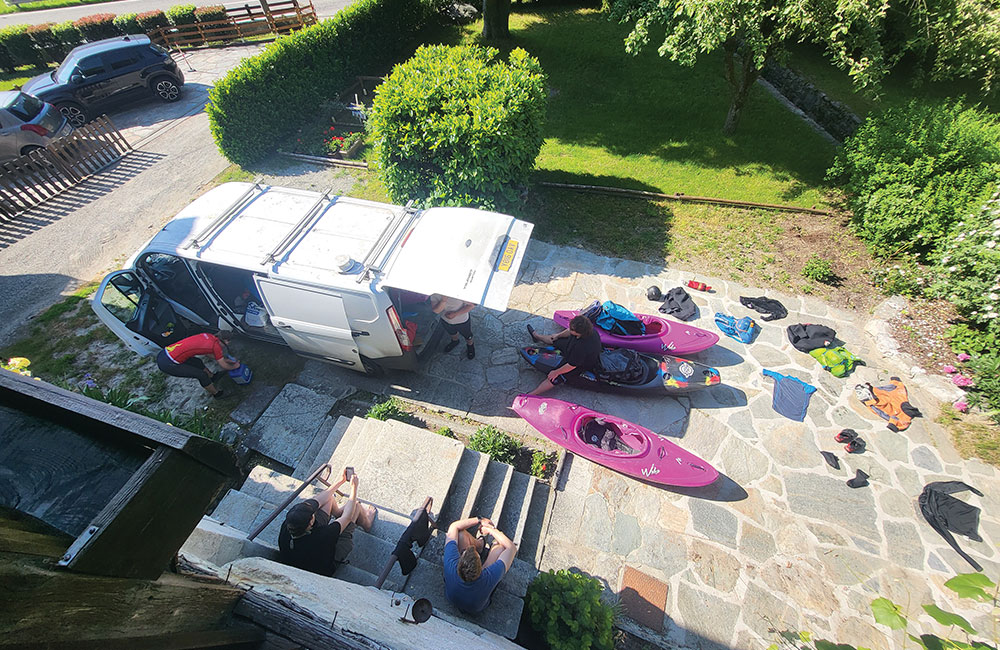
- Is there space to dry gear at the end of each day?
- Do you want to cook or eat out each day, and what are the local options? If the nearest shop is 45 minutes away, then you need to plan your week well.
- How much is this trip a holiday versus a paddling trip? If it is a holiday, booking a house so you can cook and eat as a group and enjoy the summer evenings together is worth it.
You are not always guaranteed good weather, and camping in the rain is a lot less social than having a house.
5. Pack for variable weather
WEATHER AND TEMPERATURE SWINGS
Once the accommodation and transport are booked in, you can start to get excited! You will obviously need to pack for your trip, and it is worth checking that you have got everything you need before you leave in case you need to buy anything ahead of time. The Alps can often be quite variable. In the same week in France, I got on at a river where it was 6 degrees at the start of the day, then later in the week it was 32 degrees at the get-off. That difference is huge!
In the Alps, I have worn my drysuit and multiple thermals, as well as shorty cags and shorts. Having options is ideal. The water is pretty cold, so a cag is recommended, but you also want to be able to strip off quickly if it is hot! Dress for the swim, as they always say, but I also advise being able to dress for the shuttle wait after!
ESSENTIAL PADDLING KIT & SPARE ITEMS
When you are out there, it will probably be difficult to source missing items, so having spare paddles and double-checking your key items is a good idea. You might already want to take multiple kayak options with you, but I would recommend taking an extra boat if you have room… just in case!
When it comes to packing, I tend to put bulky items (BAs, for example) into my kayak to save a bit of car room. I am notoriously bad at packing unless it is very last minute.
TRAVEL ADMIN: CHECK YOU HAVE YOUR PASSPORT!
Double-check your passport just before you leave. Everything else you can probably work out… but not that one!
Other things to consider: make sure you have travel insurance (that covers kayaking), European breakdown cover for the car, a phone plan whilst you are away, and don’t forget to pack an adaptor!
Passport check!
6. Plan your paddling days
This is the good bit! The reason you have driven for 1-2 days – to go kayaking! Enjoy it!
A DIFFERENT STYLE OF KAYAKING
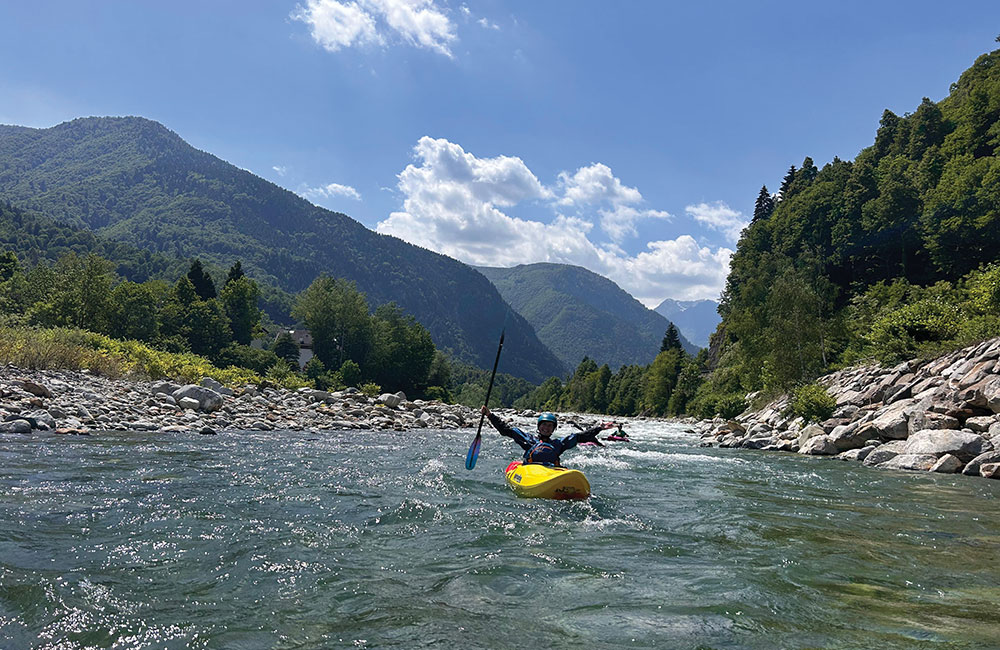
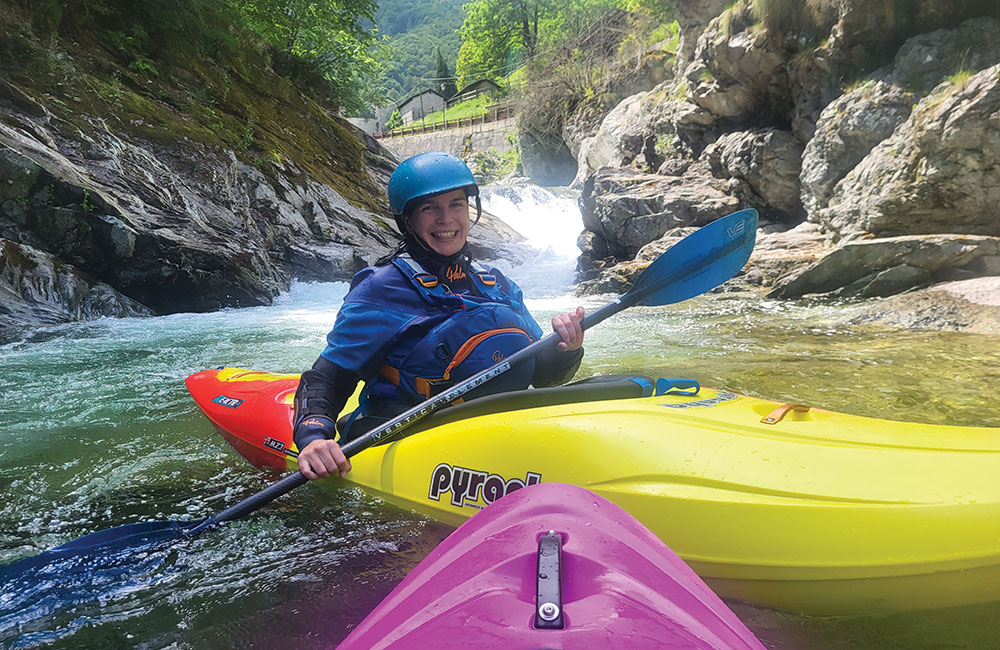
Kayaking in the Alps is very different from most UK rivers, and each area, and even each river in that area, can feel very different to each other as well. It takes a little while to get used to.
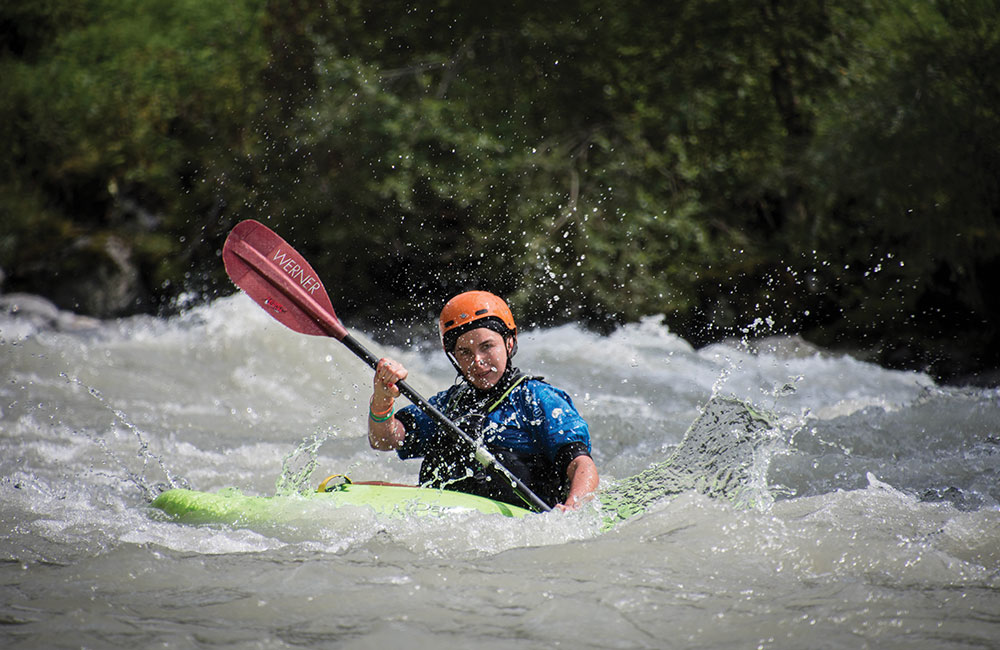
My first trip to Austria was my first real taste of paddling on big-volume water, where you need to really consider how to move yourself around the river and use the water features to help you get there. It felt like a steep learning curve, but now it is my favourite kind of kayaking.
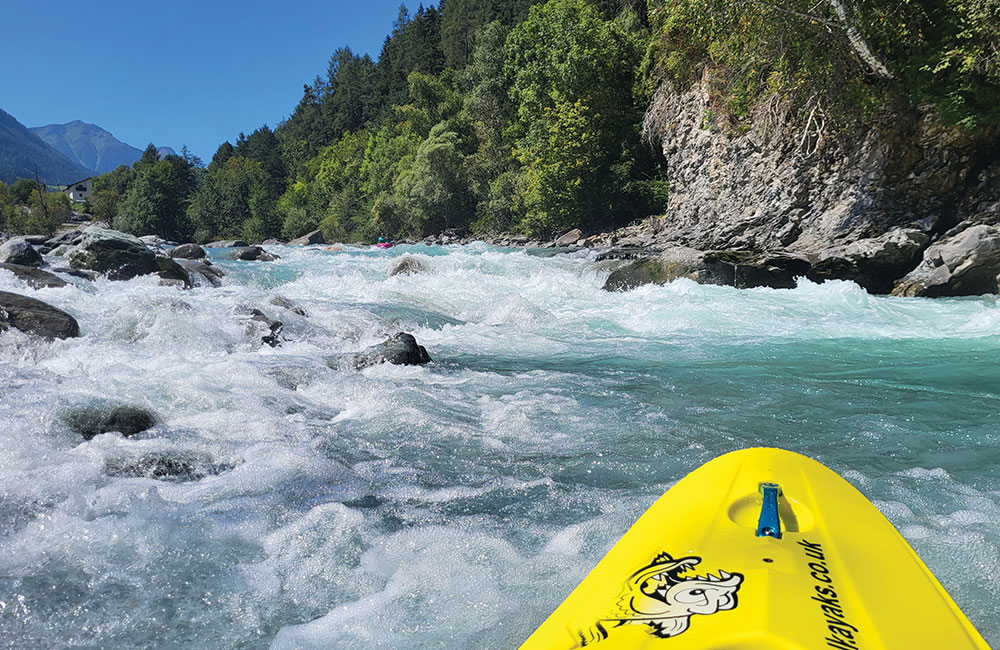
Paddling in France for the first time, I was super surprised by just how fast the water flows. Many French rivers feel like absolute boulder-garden heaven, but the water has so much speed! This means that you have less time to think and less time to react, which can take some getting used to.
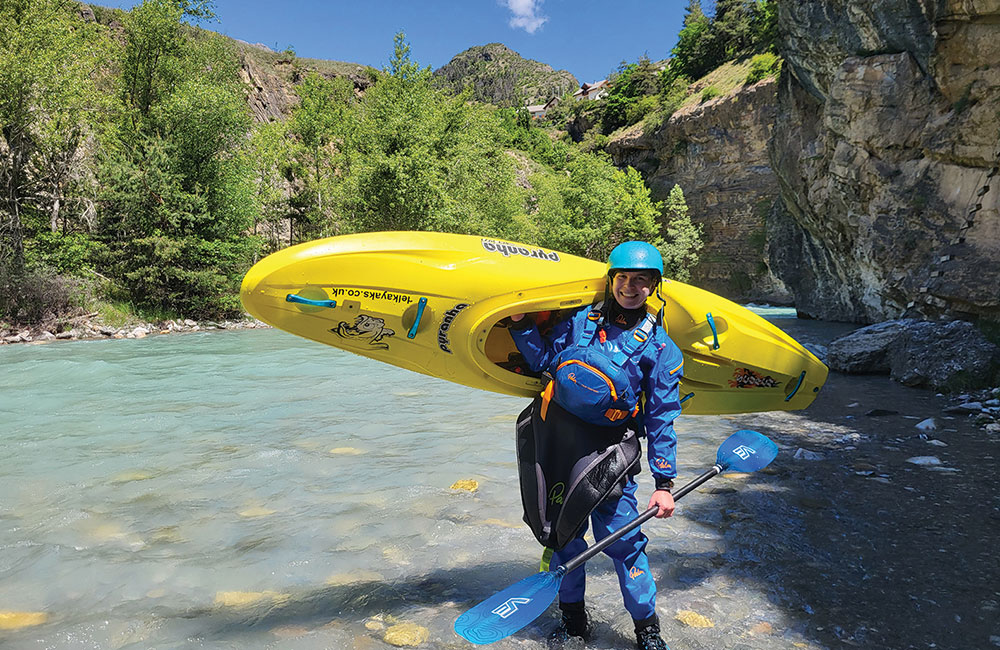
Even in Valsesia I felt I needed a little time to get used to the gradient. It felt like it had features of French Alpine rivers but steeper! The slides there are also very distinctively different from other parts of the Alps.
START GENTLE AND BUILD UP
On each trip, it is worth starting with something friendly and gentle to warm up. You will be tired from the travelling, and it is worth having a gentle day or two to ease into the paddling. You can then build it up throughout the week.
CONSIDER HIRING A GUIDE
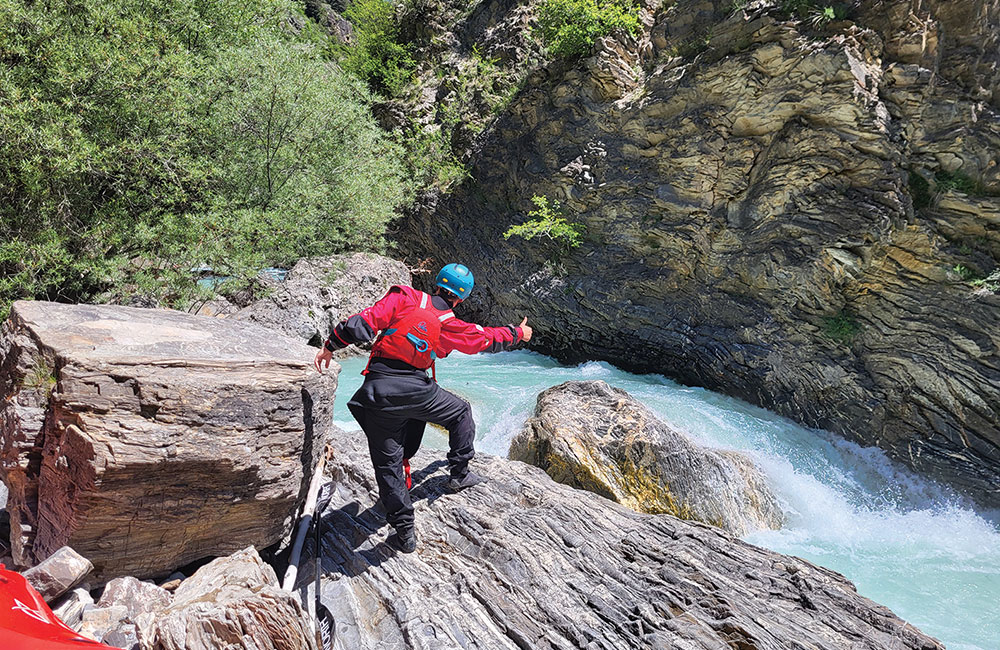
Knowing what to paddle can feel like a big decision if you have never been somewhere. If you and your entire group are new to the area, consider booking a couple of days with a guide. Many providers will offer guided or coached trips in the Alps. Spending time with someone who knows the area and can advise on what would suit your group is very sensible!
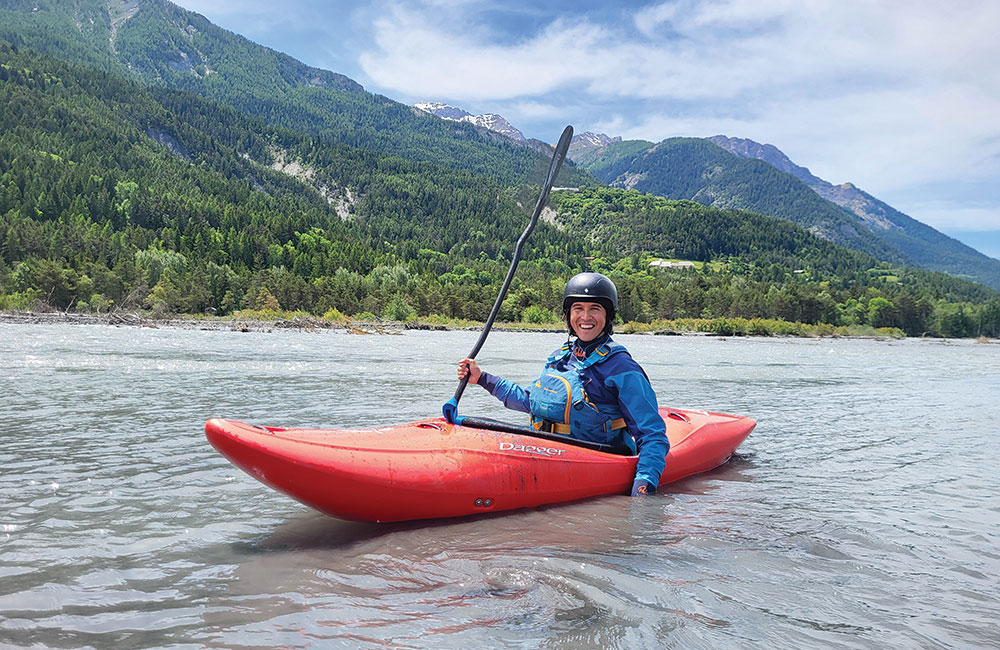
Book on with the legend Chris Brain if you want the best experience! Lovely to see Chris for a quick paddle in France last summer. Photo: Del
CHECK WATER LEVELS AND KNOW HOW THE WEATHER WILL CHANGE THOSE
Whether you go alone or with a guide, it is worth keeping an eye on weather and water levels. Apps such as Whitewater Guide are a good place to start. It is worth noting daily trends as well as what the weather is doing. If the river is dependent on snowmelt, a hot, sunny day will obviously cause more of a spike than a cooler, cloudy day. Chatting to other paddlers you meet along the way is also a great way to learn about the local area and its rivers.
IF IT IS FUN – DO MORE OF THAT!
I recommend lapping the fun stuff! Alpine boulder gardens are so different from UK-style rivers, and they are excellent for learning on! A class 2-3 boulder garden has so much potential for developing your skill set, and that is fun. The beautiful 6ft drop that is easy to lap? Perfect for practising your boof stroke! The section you all love – do it again and again! It doesn’t matter if you ‘did it’ earlier in the week; if you are having fun on it, then you should go back to it!
REST IF YOU NEED TO AND ENJOY THE TRIP!
Take breaks if you need to. It is a lot to paddle every day if you are not used to it, and tiredness can make you worse at paddling. Many groups take a rest day midweek or rest in the afternoons. The Alps are a beautiful place – it is okay to enjoy it not from a kayak sometimes!
Finally, remember that kayaking in the Alps is very different from kayaking in the UK. The water is surprisingly cold, and the environment is different. Enjoy it but remember to respect it!
Final Thoughts
Hopefully this has given you insight into what to consider if you wish to go on an Alpine kayaking adventure. This is quite a broad article, aimed at people who have no idea where to start when planning a kayaking trip to the Alps.
If you’ve done an Alps trip and have tips of your own, drop them in the comments; it helps other paddlers so much. And if you’re planning your first adventure, feel free to ask questions. I love helping people get started.
Anyone reading this – I hope you have a very happy future Alpine kayaking adventure!