WORDS & PHOTOS:
KRISTOFFER VANDBAKK
WWW.NORWEGIANSEAKAYAKING.COM

About Kristoffer Vandbakk
Kristoffer Vandbakk leads sea kayaking trips and courses. He offers everything from introductory to advanced courses through the Norwegian Paddle Federation (NPF) and all ISKGA courses. He also guides trips across various locations in Norway.
Norwegian Sea Kayaking, the company he operates, specialises in high-quality sea kayaking instruction and guided expeditions. With a focus on safety, skill development, and adventure, the company provides courses and trips that showcase Norway’s stunning coastal landscapes.

Sea Kayak Guiding
How sea kayak guides actually decide
And why the leadership theory that most textbooks teach has been answering the wrong question.
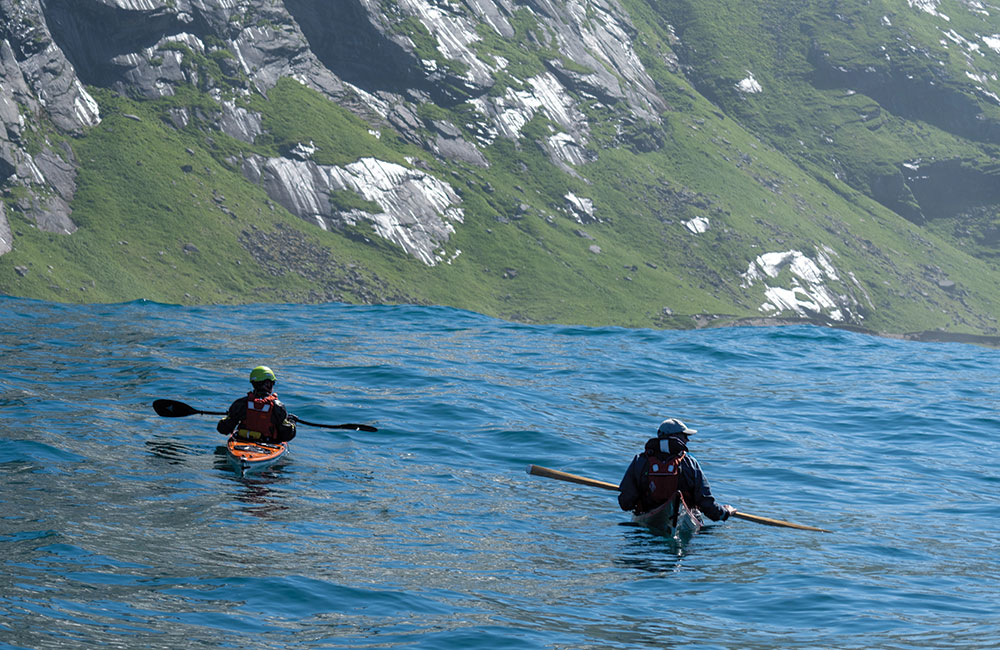
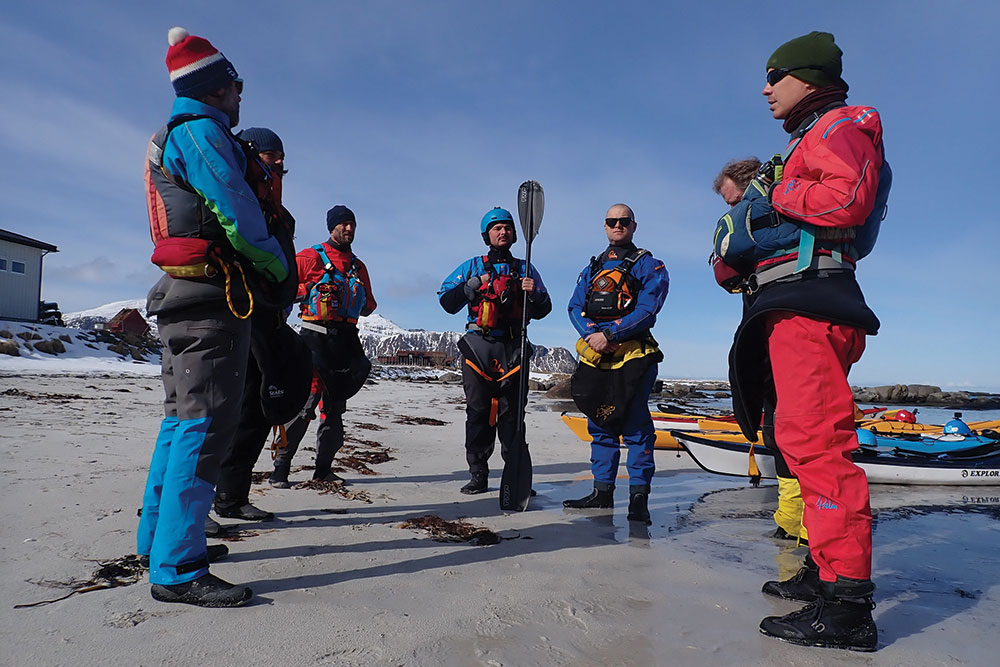
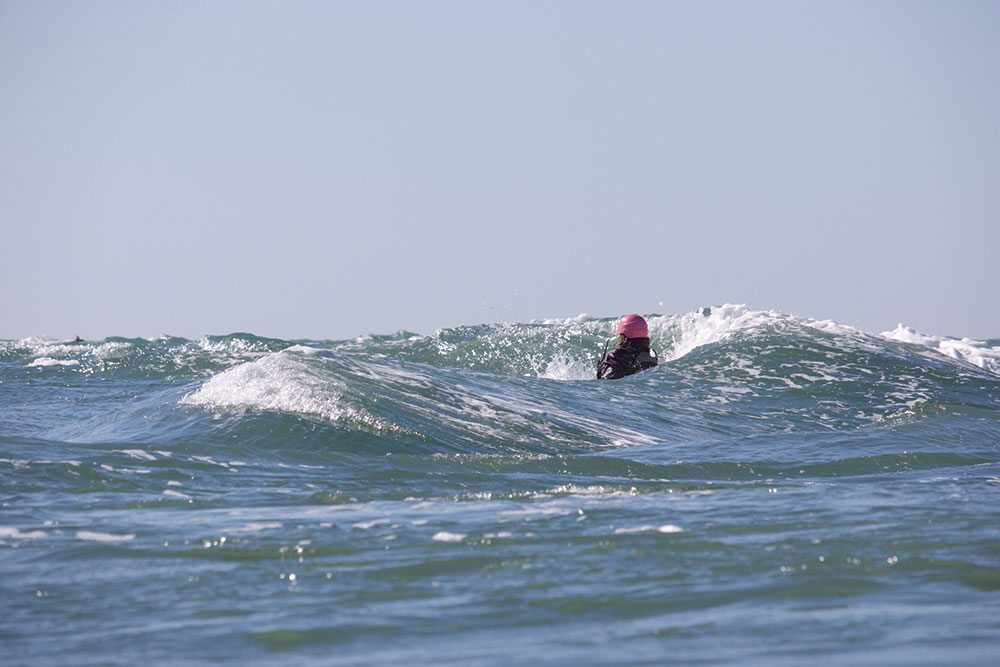
You are sitting 50 metres off the beach and have chosen to camp tonight. The swell is bigger than the forecast suggested. Sets of three or four steeper waves arrive with quieter water between them, breaking on the sand in a dumping wave that runs almost to the high-water line. Your group of six has been on the water for seven hours; the next sheltered beach is fourteen kilometres further on, the light is going, and behind the dunes, you can see the flat ground where the tents will go.
You call the order
You did not, in those ten minutes, compare three options against six criteria. You did not consider whether the moment called for transformational leadership or for servant leadership. You looked at the water, recognised what kind of beach this was, and acted.
This is not a failure of method. It is the method, and a research literature that began in the 1980s describes it precisely. The trouble is that the literature is mostly read by aviation safety researchers, naval officers, and decision scientists, and is largely absent from the books that working sea kayak guides read.
What the textbooks teach
The dominant tradition in adventure leadership writing comes from general management theory. Its central claim is that leaders work in styles – situational, transactional, transformational, servant – and that the skill of leadership is choosing which style fits which situation. The model has been useful in business schools for half a century, and outdoor leadership writing has inherited it largely intact.
The standard outdoor leadership textbook on most reading lists, Priest and Gass’s Effective Leadership in Adventure Programming, asks the outdoor leader to read the situation and choose the appropriate style. Other widely used texts sit in the same tradition. Leadership is a toolkit of approaches; the leader’s task is to pick the one that fits the moment.
The sea kayak literature, meanwhile, has mostly avoided leadership theory altogether and stayed technical. The canonical texts, from Derek Hutchinson’s onwards, cover strokes, rescues, navigation, and conditions. Where leadership appears, it usually appears as a chapter on group management or trip-leading procedure rather than as a model of how guides actually decide.
The technical and the leadership traditions, between them, leave a gap. The working guide who reads them all comes away with a careful training in the substrate of guiding, and a leadership-style model that does not describe the ten-minute beach landing they just made. The existing books are not wrong about what they cover. They are answering a different question from the one a working guide most needs answered: how do I decide, on this water, in front of these people, in the next ten minutes?
A different research tradition
In the early 1980s, an American psychologist named Gary Klein went to a fire department to study how fireground commanders made decisions in the field. The classical decision theory of the period held that experts evaluated multiple options against multiple criteria and chose the best one. Klein expected to document this process and write up the result.
The commanders, when interviewed, said they did nothing of the sort. They did not compare options. They did not weigh alternatives. They looked at the fire, and they knew what to do. Klein initially did not believe them and probed harder. Eventually, he realised they were telling the truth.
Faced with a burning building, the experienced commanders recognised the situation as similar to fires they had seen before, retrieved a course of action that had worked in those previous fires, and acted. In the rare cases where the first action did not seem right when they mentally rehearsed it, they discarded it and tried the next one. They almost never compared.
Recognition-Primed Decision-making
Klein called this Recognition-Primed Decision-making, and the broader research field that grew up around it is now called naturalistic decision-making. Over four decades, the framework has been validated across domain after domain – aviation, the military, anaesthesia and emergency medicine, firefighting, naval operations. The pattern is consistent. In time-pressured, information-poor, high-stakes domains, experts do not deliberate. They recognise.
The model has three levels. At the simplest, the situation is recognised, the action retrieved, and executed. This accounts for the majority of expert decisions. When the situation is less clear, the expert investigates further before recognising and acting. When an action has been retrieved but is uncertain, the expert mentally rehearses it before committing to it and modifies or abandons it if the rehearsal goes badly. What experts almost never do, except in the slow, low-stakes parts of their work, is generate multiple options and compare them.
The finding has consequences. If the work of an expert is pattern recognition, then expertise is built by the slow accumulation of patterns. The path to becoming an expert is varied practice, with feedback, over time. Techniques are useful – they are the building blocks of patterns – but they are not the work.

Why does this fit sea kayaking
Sea kayaking sits squarely within the domain Klein’s research was designed to describe. The decisions are time-pressured: the wind shifts now, not in twenty minutes when you have finished comparing options. The information is incomplete: you cannot see the back of the surf zone from the seaward side, you cannot see what the next set will be like, and you cannot read every participant’s inner state from the outside. The conditions change while you are deciding. The stakes are real.
A few examples make the case…
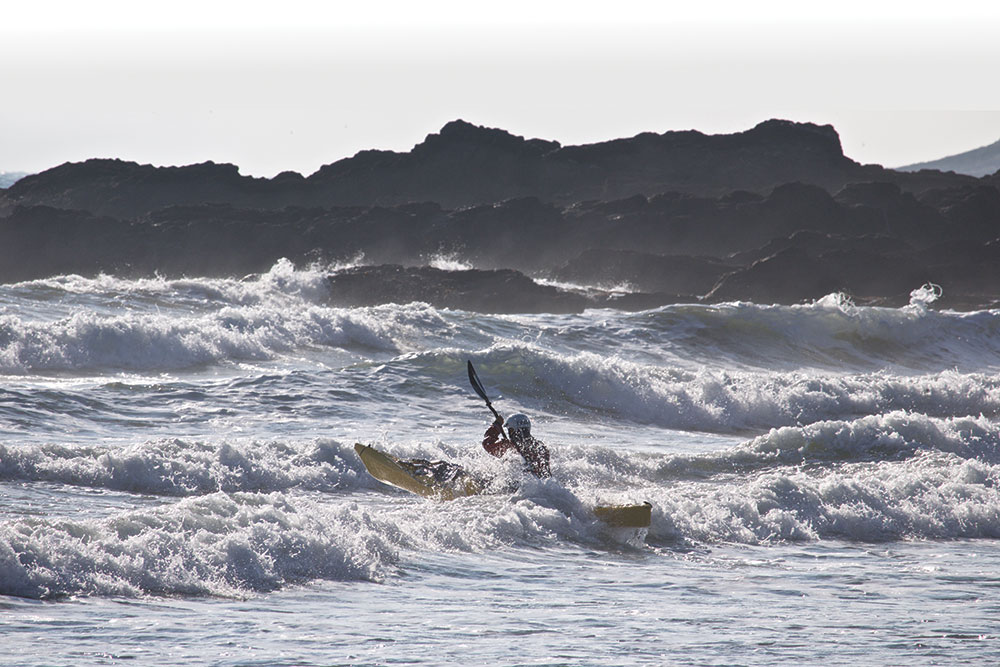
The surf lands on a camping beach. The opening scene of this article. The leader who tries to compare three options on six criteria is still in the impact zone when the next set arrives. The leader who recognises the kind of beach they are looking at – a familiar pattern of swell and run-up, a familiar group composition, a familiar pressure of fading light – calls the order and acts.
The tide race. The flow is at full ebb. Standing waves run through the gap, steep but not breaking, the line through the green water visible if you know where to look. Your group is in the eddy behind a headland; the slack will end in 20 minutes, and you cannot loiter on the far side. There is no time to compare strategies. There is time to recognise the kind of race you are looking at, retrieve the kind of plan that has worked before, and execute.
The capsize on a lee shore. Cold water, a swimmer, the rest of the group exposed, the rocks downwind. The question of whether you are being transformational or servant-style at this moment is, charitably, beside the point. You have seen this pattern, or close enough variants of it, before. You know what gets prioritised first, what second, what third. You do not deliberate. You act.
The brief on the beach. The time pressure is gentler here, and there might seem to be room for deliberation. Experienced guides, however, deliver briefs the way fireground commanders fight fires. They have done this before. They recognise the kind of group they have, retrieve the appropriate brief, and deliver. The brief is a pattern; the guide who has briefed five hundred groups is selecting from a library, not generating options.
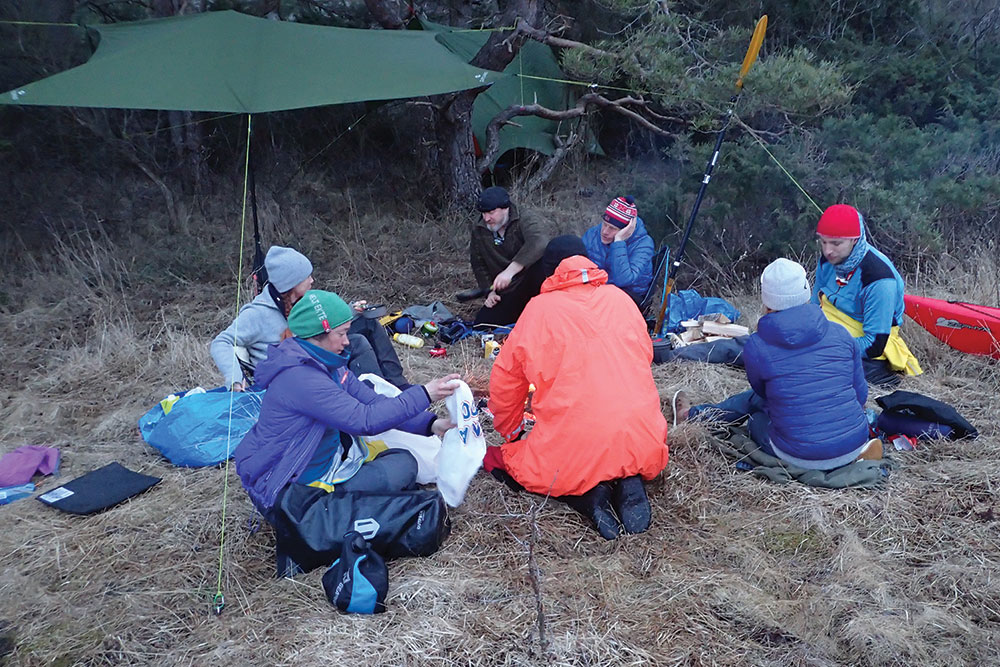
Day three of a five-day trip. The arc of a multi-day expedition has its own physiology and its own psychology. The fatigue accumulated by day three is not the fatigue of day one. The argument that has been simmering between two participants since the launch will surface today or in two days. The participant who has been holding it together will release some of what they were holding, often at dinner. None of this is a crisis; it is the arc. The experienced guide recognises which aspects of what they are seeing are features of the arc and which are problems to address. The novice cannot tell.
In none of these examples is the question What kind of leader should I be? In every example, the question is what is happening, and what do I do? The first is the question that style theory is built to answer. The second is what Klein’s framework is built to answer. Sea kayaking decisions are mostly the second kind.
What this changes
If guiding is pattern recognition under fatigue, several things follow about how we should train and develop guides.
Practice produces expertise – but only practice that varies enough to build pattern variety. Fifty repetitions of the same Sunday afternoon trip teach the guide less than ten varied ones across different coasts, conditions, and group compositions. Variety is the substrate of pattern recognition; without it, the recognition that is built is narrow and brittle.
Reflection is essential. Pattern recognition without feedback tends to drift toward confidence rather than accuracy. The patterns the guide builds will be wrong in some places, and only honest, structured reflection surfaces the wrongness. The After-Action Review developed by the U.S. Army is the cleanest debrief structure I have encountered, and it works because it asks the questions that pattern correction requires.
The premortem is a real tool. Klein’s later research produced a planning technique that derives directly from this framework. Imagine the trip has already gone badly. What specifically went wrong? At what hour of which day?
What did we miss? The exercise surfaces around 30% more failure modes than the standard prospective question because the prospective frame engages the optimistic part of the planner’s mind, while the retrospective frame engages the part that has actually seen things go wrong. Done in 15 minutes before a trip, it catches things no checklist will.
Apprenticeship is not optional. Style-based training can be done in a classroom; pattern-based training cannot. The guide who has paddled four hundred days alongside more experienced guides has a pattern library of a different order from the guide who has read 400 pages about leadership styles.
Reflective practice is a career-long discipline rather than an exam to pass for certification. A striking finding in the wider research is that poor leaders consistently rate themselves as effective. The same self-assessment failure operates among sleep-deprived leaders, leaders whose technical edge has begun to slip, and leaders who have stopped asking for feedback. The defence is structural – peers who will tell you the truth, debriefs that ask hard questions, and a practice of returning to one’s own decisions long after the trip is over.
The ten minutes
Back to the beach. The ten minutes in which the order is called, and the group lands clear of the surf, is, in a sense, the whole working life in compressed form. Everything that has happened up to that moment – the years of varied practice, the debriefs after trips that went badly, the day spent paddling with a more experienced guide who pointed out something you had not seen before, the deliberate pattern-building that has turned a hundred shore-breaks into a single recognisable category – is what makes the ten minutes possible. The classical decision-theory model would have you generating options and comparing them; the water would not wait for you. Klein’s framework tells you why you do not need to.
It also tells you what to do next. After the trip, while the patterns are still fresh, you sit down and ask yourself the questions that turn experience into expertise. “What did I read correctly? What did I read wrong? What did I learn that I could not have learned by reading?” Over the years, this practice produces a guide of a different kind – not one who has more techniques, but one who sees more.
The work, on this account, is not a kit of styles. It is the slow accumulation of pattern, the honest examination of what worked, and the quiet acceptance that you will be a better guide in five years, not because you will have learnt more techniques, but because you will have seen more water.