Words:
Jess Philip
@dipper_paddle_boarding &
@jessphip
Photos:
Raju,
Jess,
Rich,
Louise &
Kristýna
Jess Philip
Whitewater SUP in the land of giants
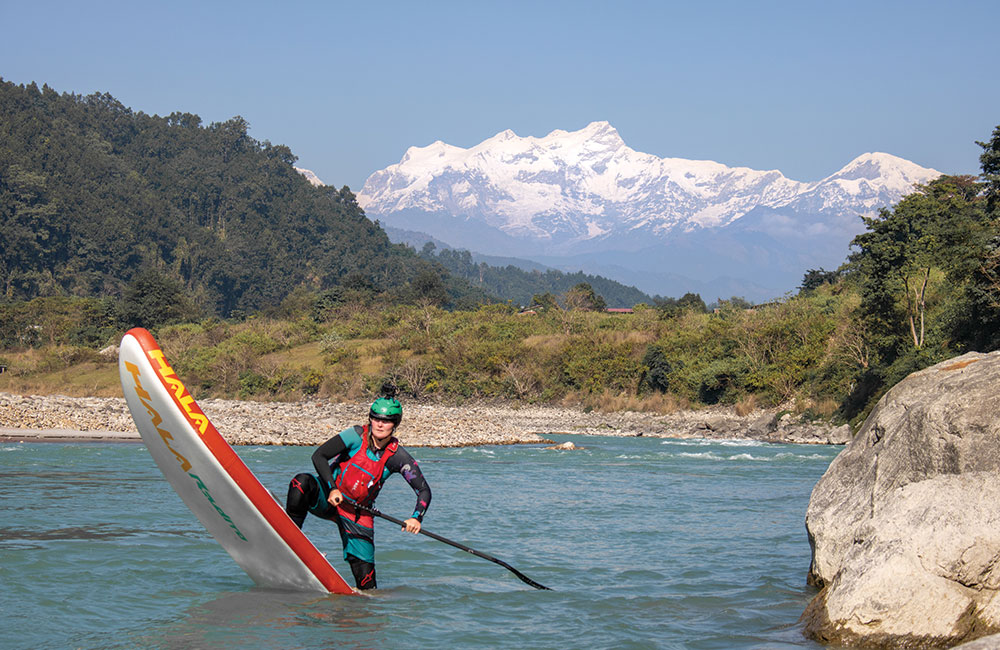
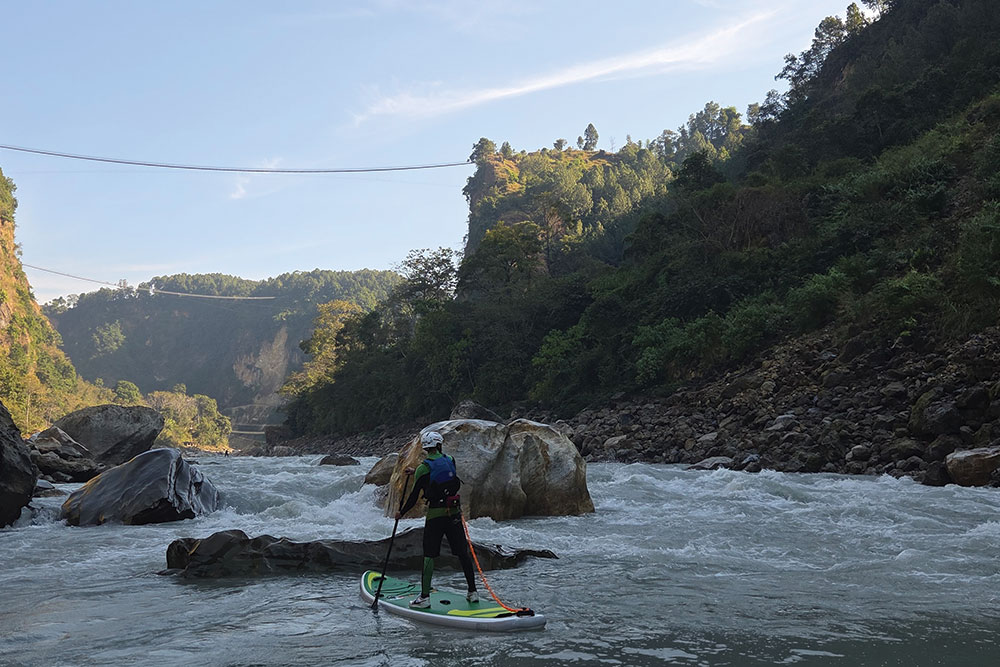
Before the trip, people would bring up Nepal. “So I hear you are going to Nepal? That sounds so cool. What are you doing out there? SUP? What really?” Nepal is well known as the land of giants. Massive mountains, impressive views and big raging white water, hardly somewhere you would think is SUP friendly, but here we are, a motley crew of paddleboarders ready to see if we can survive what Nepal has to offer!
Nepal is well known as a mountain and trekking destination, but it is also a bucket-list trip for whitewater kayakers and rafters seeking big volume and remote expeditions.
A few years ago, I joined a group of kayakers on a 10-day trip. I had an amazing time and couldn’t get the idea out of my head that these rivers would be amazing to SUP.
Two years later
It almost didn’t happen, but two years later, I managed to convince enough people to come along. “No, you’re not going to die.” “Yes, it’s good for SUP.” “I know it feels expensive, but it’s going to be such a great trip.” Day one on the Trisuli, I was grinning from ear to ear; it was actually happening!
The crew
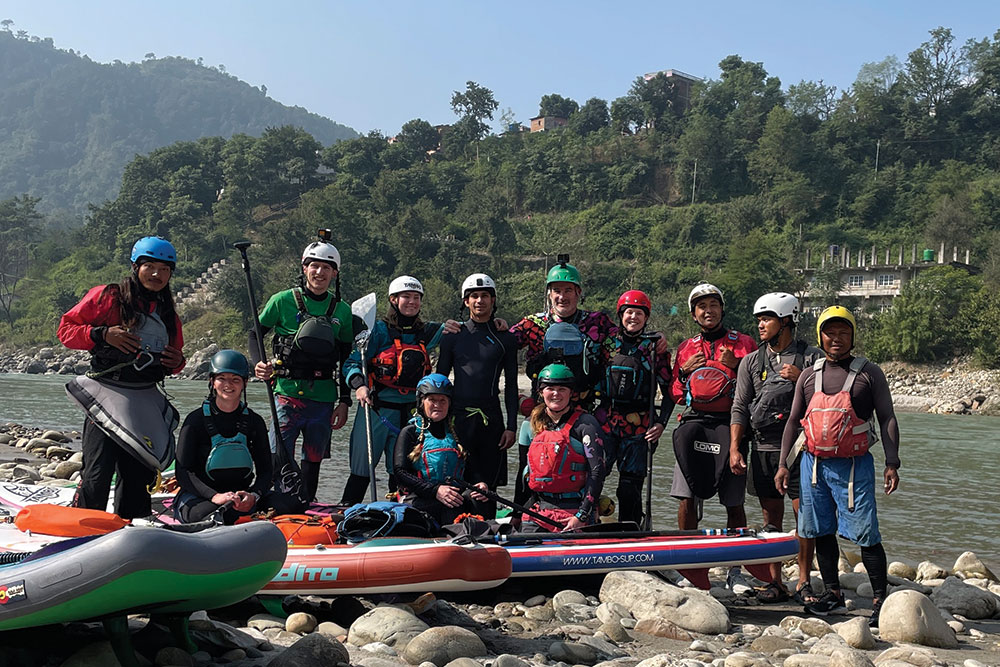
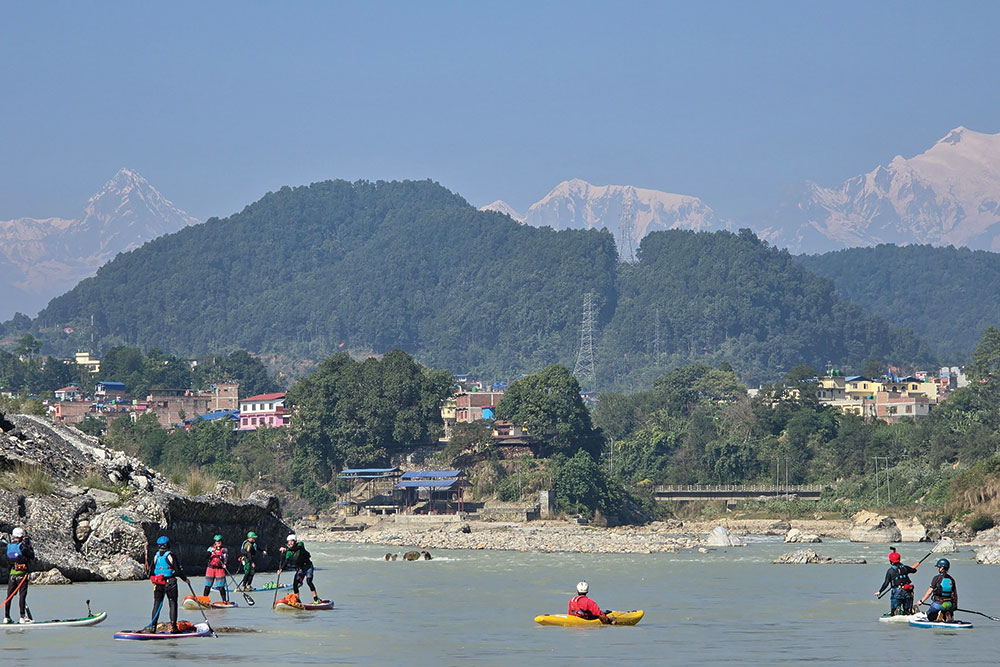
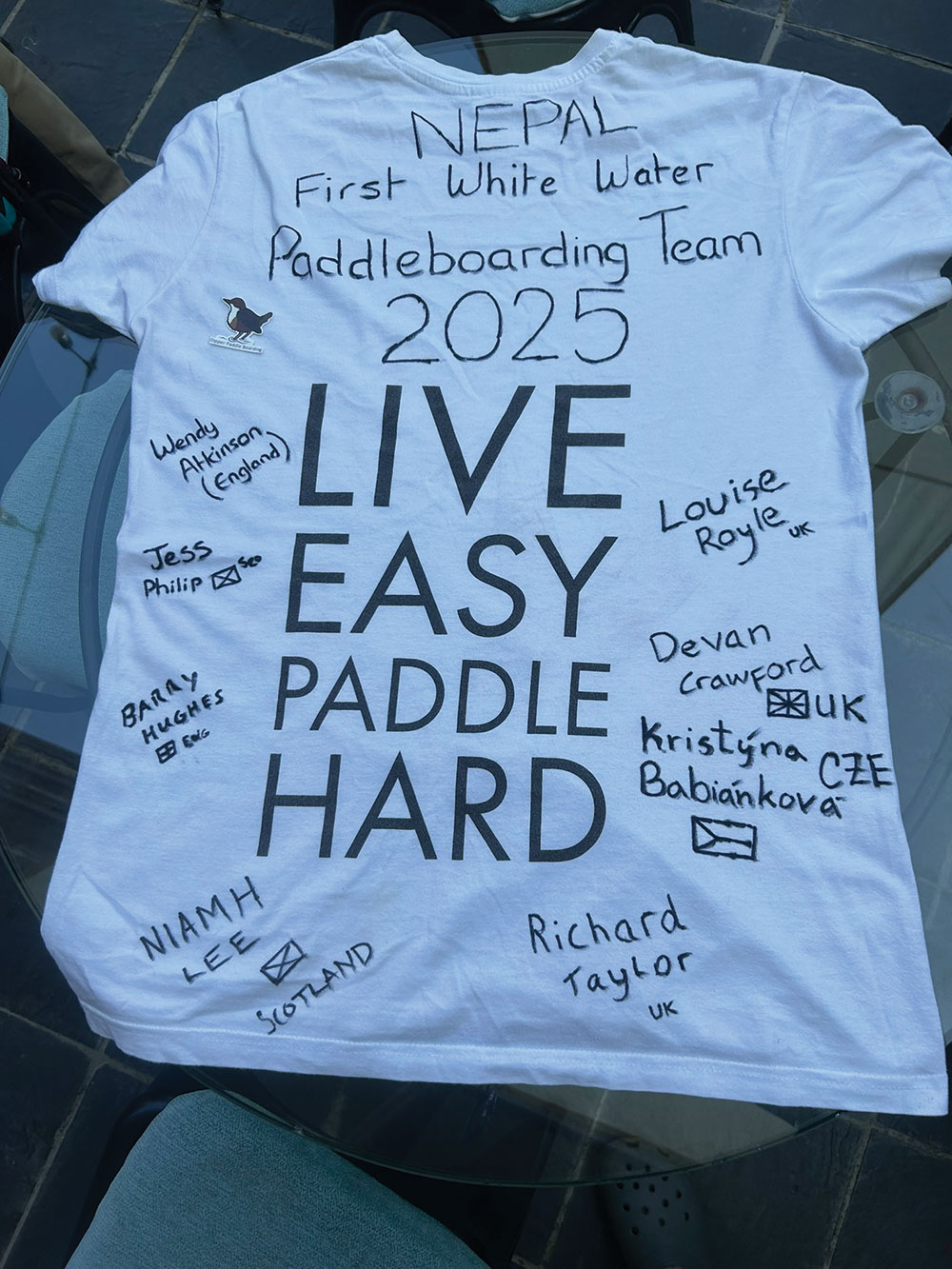
We had eight paddlers from all over the UK and the Czech Republic.
There was a wide range of abilities and ages, with each person bringing different things to the team. This is one of the things I really enjoy about paddle sport. You may be paddling as an individual with your own aims and aspirations, but you’re also part of a team or river family, providing support and keeping each other safe.
We were also joined by local guides from Paddle Nepal, who provided safety and guidance.
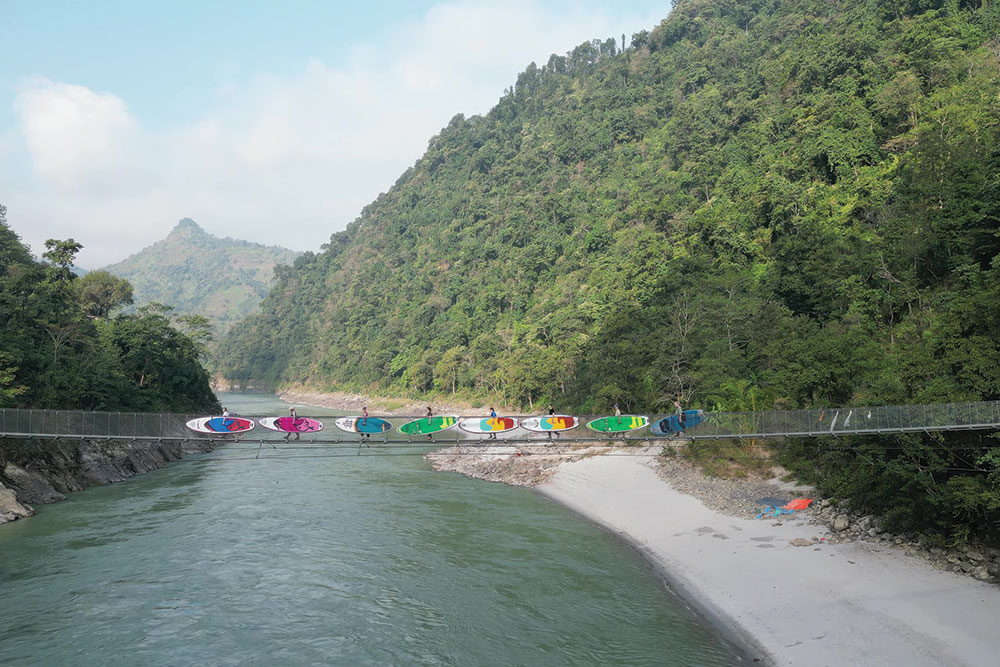
During the trip, we paddled four different rivers in the Bagmati and Gandaki regions of the country. These rivers were close to the city of Kathmandu and the town of Pokhara. So not that remote by Nepal standards, but they still had a wild feel, with many of them off the main roads.
Trishuli
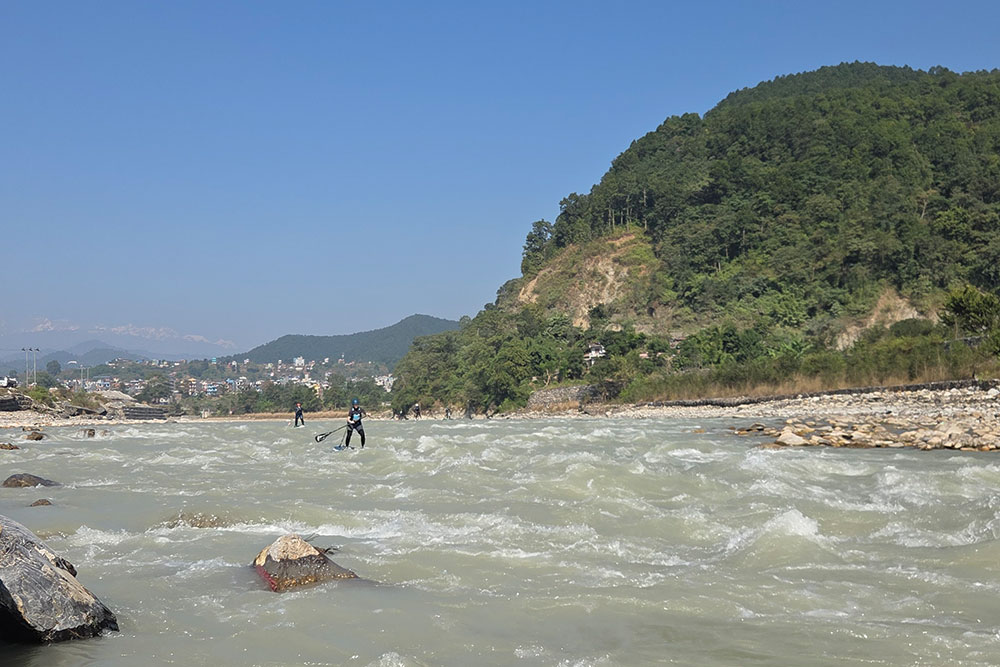
The Trishuli is a big-volume, wave-train river, with most of it being grade 2/3, with a few harder rapids at 3+. Raju, our guide, would say Nepali 2+! This river is often used to acclimatise paddlers to the nature of Nepali rivers.
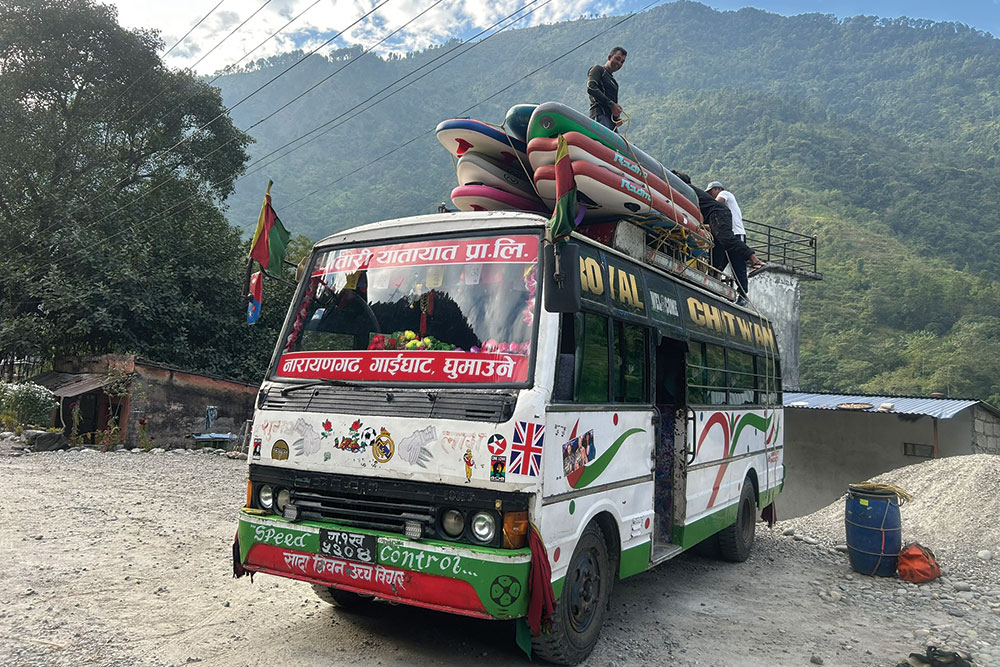
After a two-hour bus ride, which wound and bounced its way down from Kathmandu. We were all ready to get paddling. We had spent the previous two days resting and exploring Kathmandu, so we were all raring to go. After packing our kit for the next five days into the raft, we were off.
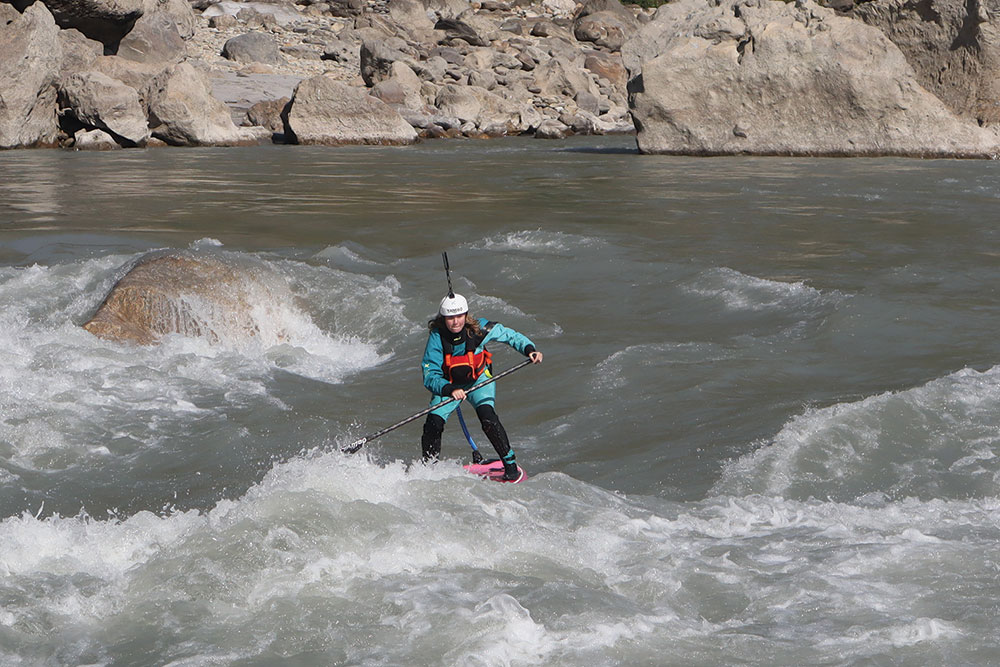
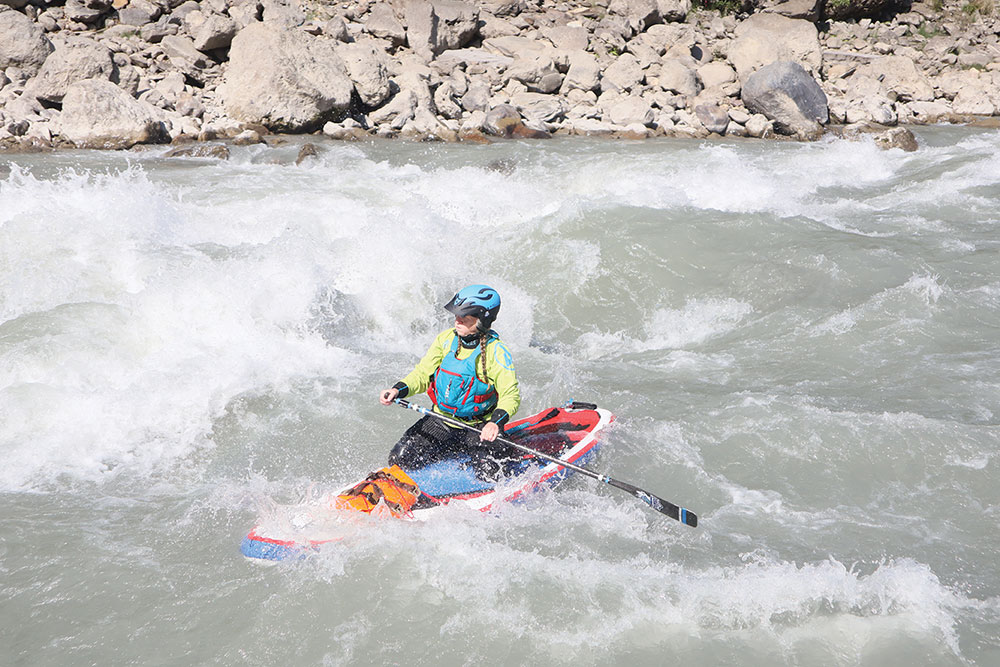
Day one on the Trishuli was a lot of fun, with a wave train to paddle, which let us warm up and play. That first day, I spent the whole day with a big grin across my face: “It’s actually happening!” There were a couple of swimmers in the team. From taking in the scenery and forgetting that there was a large wave coming!
That first night, we were camped on a large sandy beach opposite the main Kathmandu-to-India Highway. Rather than the continuous roar we would have expected, there was only the steady grumble of colourful lorries on the dirt road and occasional tuneful beeps from them passing one another.
Three larger rapids
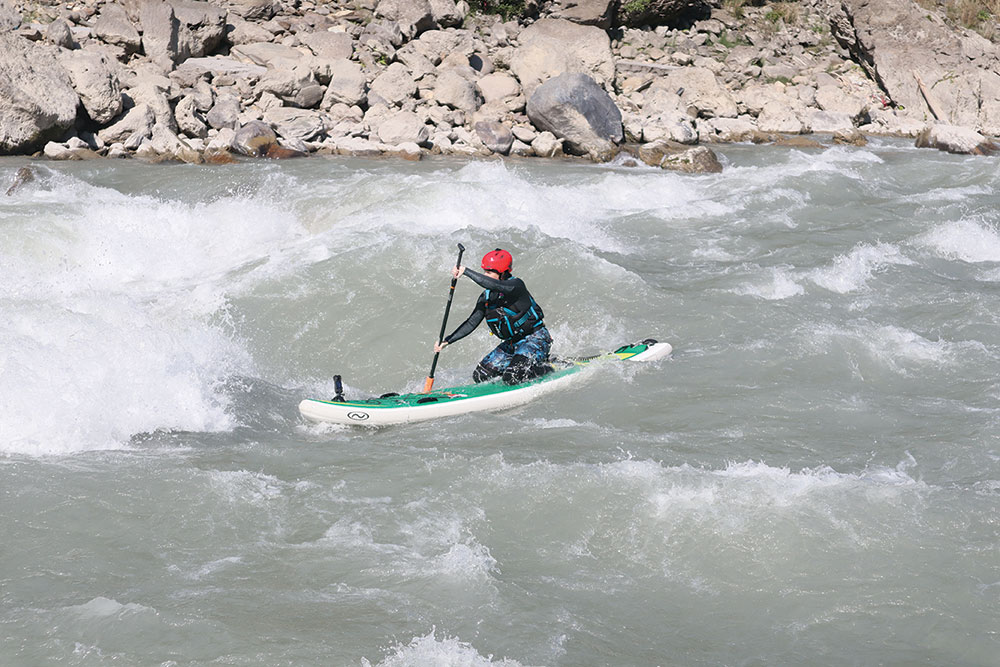
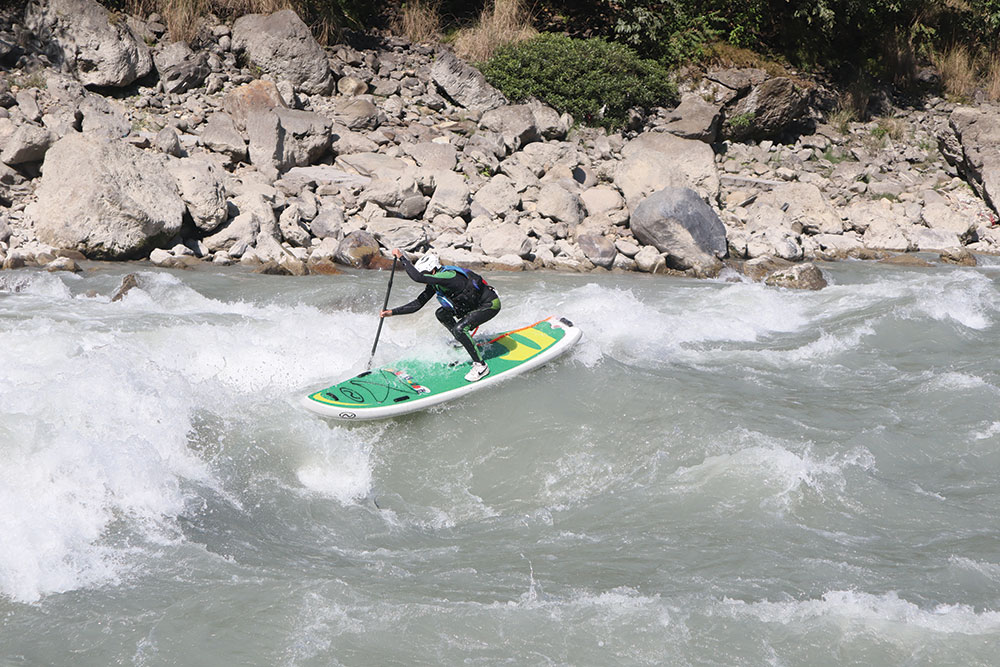
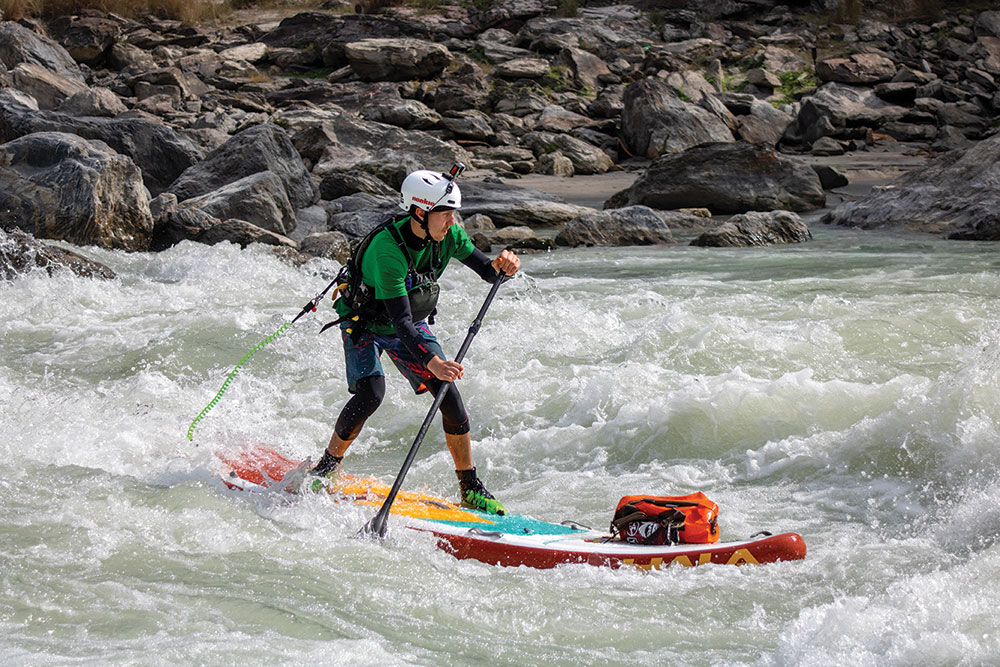
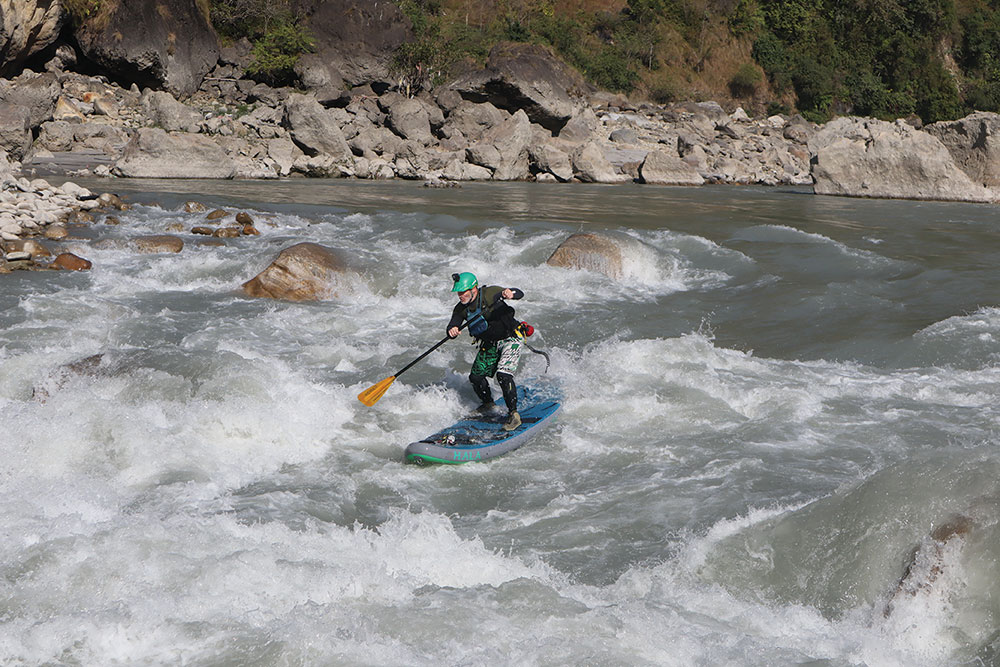
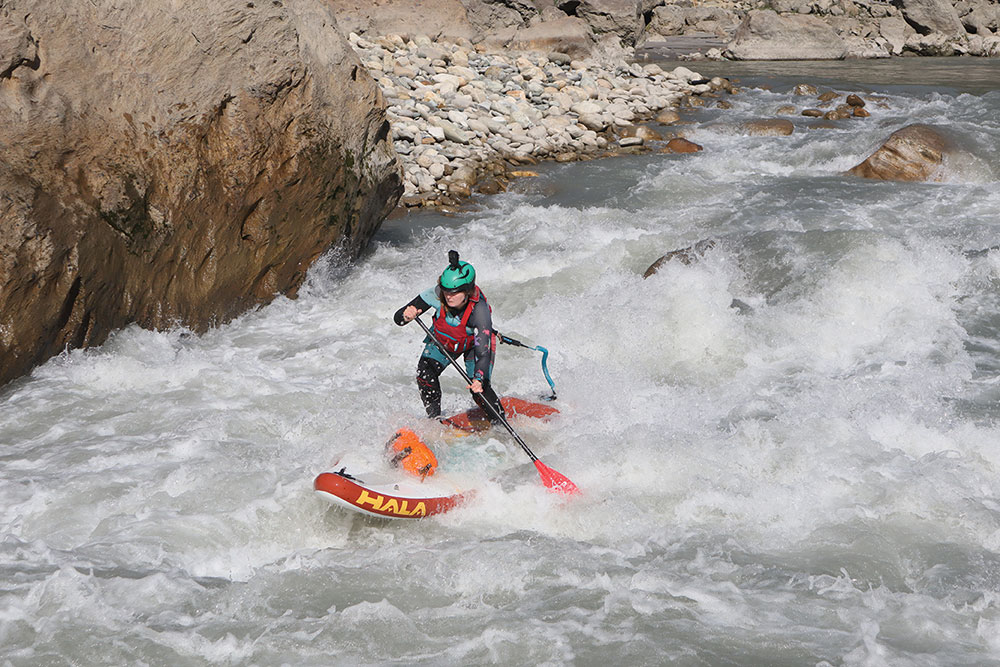
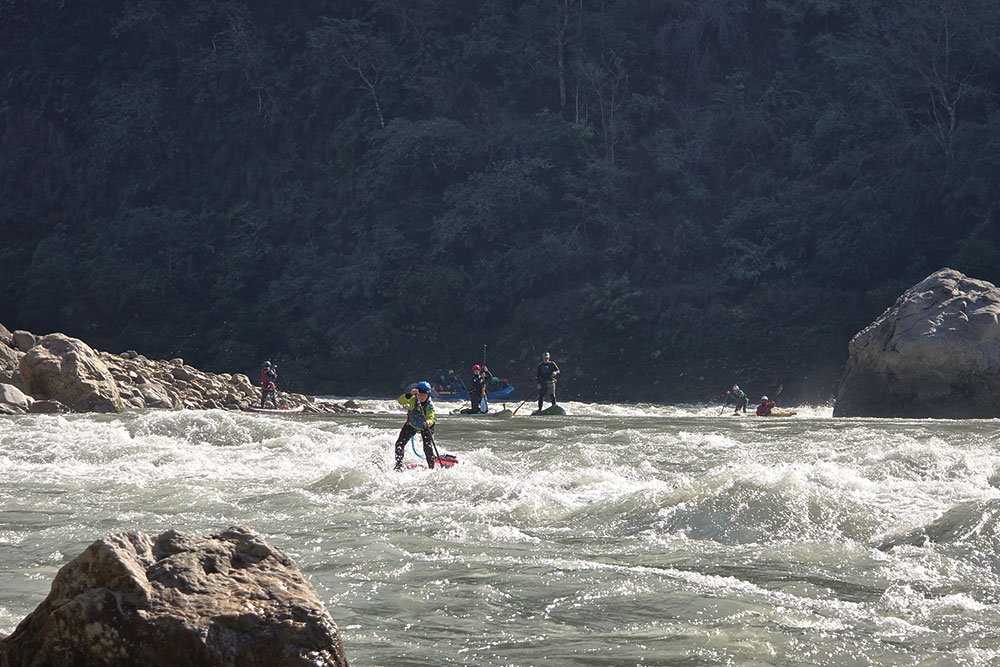
Day two stepped up with three larger rapids and more continuous wave trains. These three rapids were Upset, Surprise, and Mugling. Upset was a short but powerful rapid with large holes framing a fast-flowing tongue of water. This one we inspected and lapped. With Kristyna and me getting clean lines through. Surprise and mugling were long-wave-train rapids with some large holes dotted around. These were read and run with most of the team making it through Surprise, and only Rich with a clean line through Mugling after the edge of a large hole caught a few of us.
Dam project
Between Surprise and Mugling, there was a beautiful, calm float through a deep gorge before rounding a corner where a dam project is underway; the large concrete structure created an imposing gate, foreboding an uncertain future for this section of the river. Two years ago, the guides sounded hopeful that the project would be rejected, but now they seem resigned to the fact that big money has overruled the local community’s wishes.
That night, the camp was on a large sandy beach next to Paddle Nepal’s permanent camp. We had a surprise visit from a flock of goats and their shepherd, who resembled a walking bush, covered in vegetation.
Lower Seti
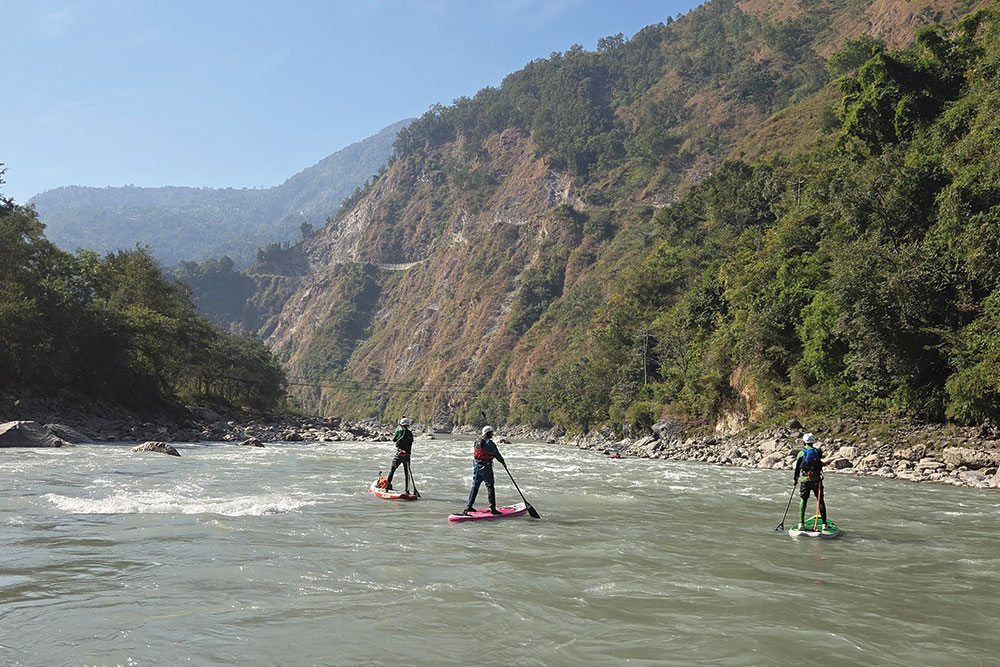
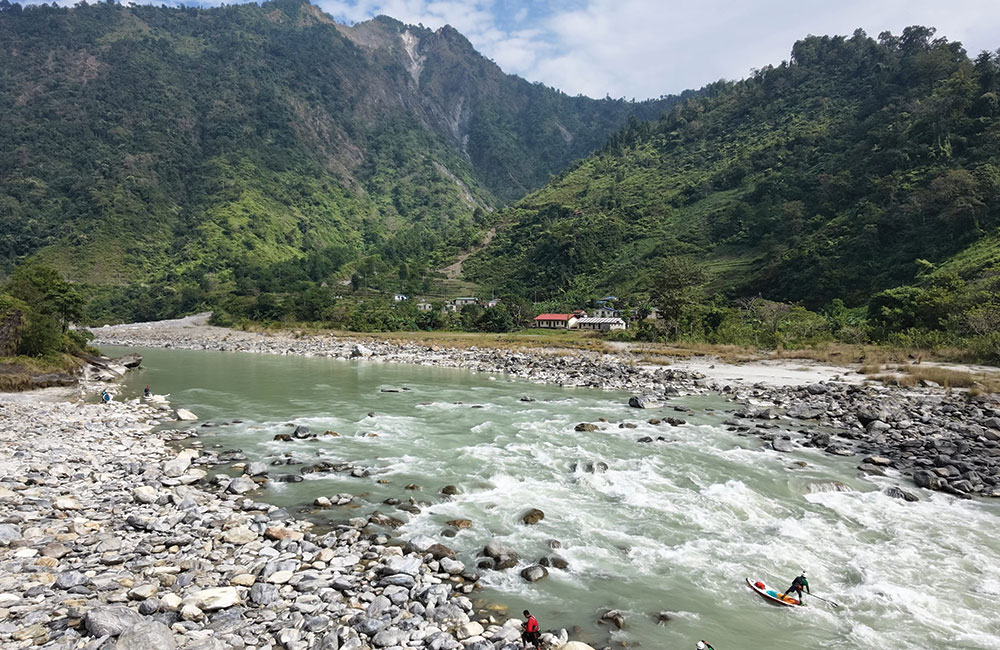
The next two days were spent on the lower section of the River Seti. This was much more familiar, with a lower-volume feel and easier-graded rapids. Once we left the get-on, the river felt more remote than the Trishuli, with much more wildlife and jungle vegetation lining the riverbank. A highlight was the meeting of the chalky-white Seti Gandaki with the crystal-blue Madi Khola.
Day One of the Seti, we were back to playing and messing around with lots of eddies to catch and plenty of rocks to jump or splat, while we enjoyed the mountain views.
Day two started with vultures circling the river; I never realised how large they were until seeing them in person.
The flow steadily picked up with more technical boulder garden (three) rapids, finally finishing back on the river Trishuli with the infamous swirly coffee pot rapid.
Lower Marsyandi
This river was our rest day, with some of the team choosing to explore Nepal’s largest cave instead. Last time I was out, we paddled a more challenging section that was great fun. I had thought we were doing this one again, so I had briefed the team to be ready for a challenging run, only to realise halfway through that it was a different, much more relaxing section. At the time, I was a bit disappointed as it was my favourite section of the last trip, but looking back, it was a lovely rest day with some playful rapids. The group needed to recover before the last expedition of the trip.
Before our last river, we had a night in Pokohara with a chance to reset, explore the busy streets, and eat some dodgy pizza.
Kali Gandaki
We paddled the river over three days from Sahasra Dhara to the dam at Mirmee. The river was a mix of all the rivers we had done before, with a higher volume than the Seti, but with some technical features thrown in.
Day one included the two biggest rapids, Little Brother and Big Brother. Little brother was a grade 3+ rapid with a grade 4 swim consequence due to the chicken farm sewage entering the top of the rapid! A lot of us walked it due to this, but Kristyna and Devan went for it. I think it is the fastest I’ve seen Devan get back on his board after a fall. We portaged Big Brother. Below the Brothers, the river was a fairly continuous grade of 2/3 all the way to camp. Sadly, Niamh had a bad fall on one of the shallow rapids, so she had a ride in the raft.
We were all happy that a raft travelled with us; it allowed us to paddle unhindered by heavy expedition kit, particularly in the more challenging sections. This also allowed the Paddle Nepal team to pack and prepare some very tasty dinners each night. Dhal Bhat and Pasta with chips were some of the team’s favourite meals. It was lovely not to be the person responsible for preparing food. It gave us time to explore and bask in the sun at camp, which is a weird feeling, as I am often a guide on trips, so I had to remind myself a few times that I’m on holiday!
Day two brought the longest day of the trip, with 30km of fairly continuous grade 2/3 water.
This was one of my favourite days of paddling, with lots of interest from the rapids and time to enjoy the impressive scenery. That day, we all finished tired and ready for a rest at Camp. It was sad, though, that this would be our last night on the river. The trip had flown past so fast.
Day three on the Kali Gandaki was a calm float out to the dam. On the last day, we messed around, encouraged some of the Paddle Nepal team to have a go on the SUPs, and tried rowing the rafts. They did really well, with Som showing us his step-back turn skills.
What board to choose?
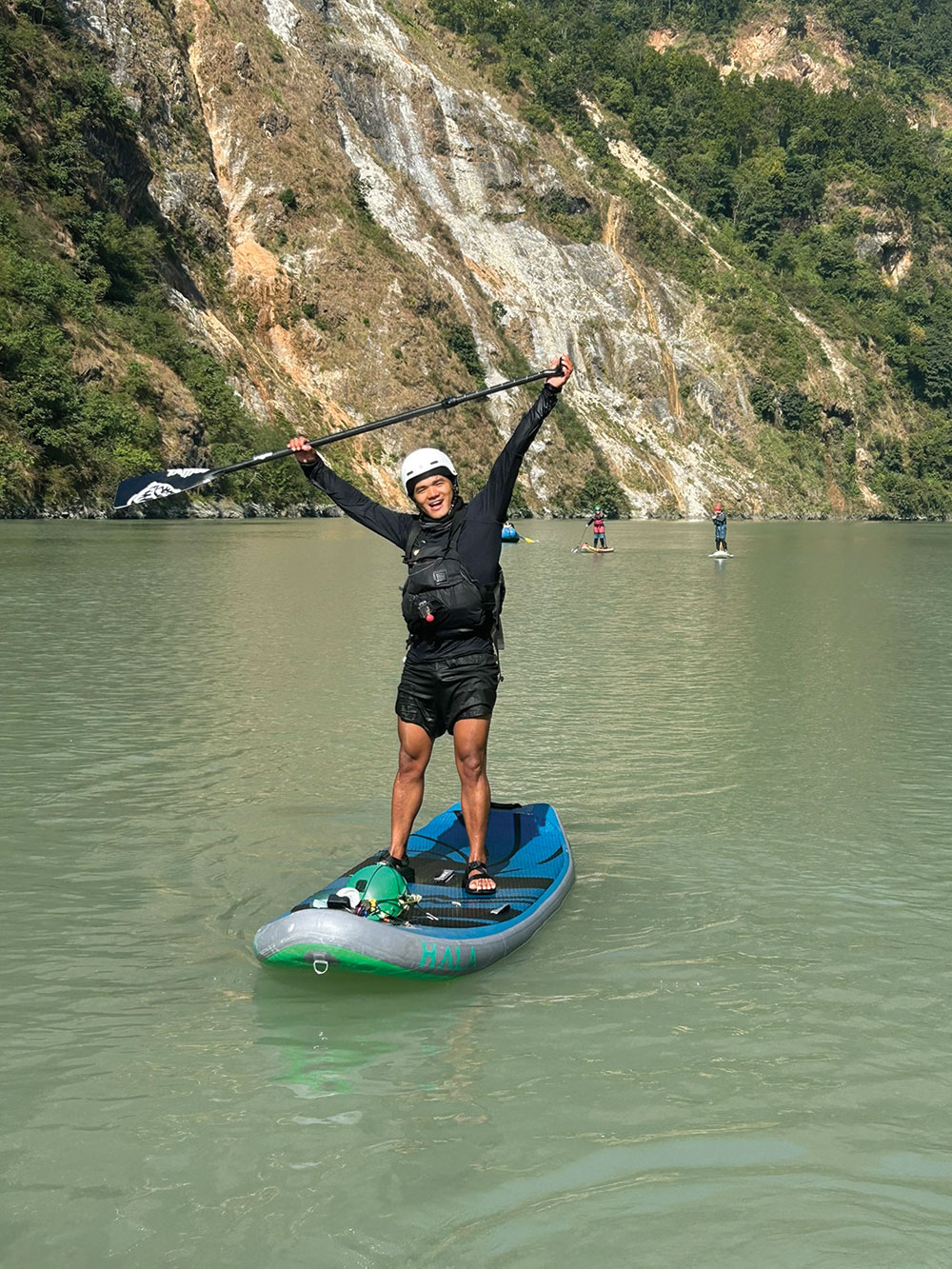
For this trip, I was looking for a board that would carry some speed and enough rocker to lift over large waves, yet still be responsive to quick changes in direction. Last trip I took the Hala Acha 8”6, which did well but lacked speed in the big volume rapids. Hala very kindly sent me their Hala Radito for the trip, and I was very pleased with how it responded to the environment. If you ever go out to Nepal, I would definitely recommend this type of board.
Last adventure
After the river, we spent one last night in Pokhara. Here we parted ways with Devan and Kristyna, who spent another week trekking to the Anaperna base camp. The rest of us had a very long 10-hour van ride back to Kathmandu, which should have taken six! We think the driver had just got a new van and was driving very slowly as he was still very protective of it. By the end, we were getting stir crazy and giggling at the most random things.
If anyone is thinking of heading to Nepal to SUP, I would highly recommend it. It is a place that suits a range of abilities, but you definitely need to be open to a different culture and camping by the river. The experience on and off the water is an adventure worth exploring. Feel free to get in touch if you want any information.
Supporters and sponsors
Hala gear SUP
Ainsworth Paddles
Nova SUP
Tambo SUP
Nookie
Supported by Paddle Nepal
The Team
@barryhugespaddlesport
@dolomite_training
@dev_sups
@the_supsessed_paddler
@rich_ontheroad
@supkristynab
@louise.royal.paddler