First Light at Caleta Maria, Patagonia
We loaded the kayaks in silence and pushed off from Caleta Maria at first light. The wind was already in our faces. It was a steady, stubborn headwind. This wind would define the first hours of our Patagonia expedition.
The bow of each kayak lifted and slapped as we worked our way out of the bay. Soon, we settled into that early-morning rhythm. Conversation gave way to breathing and blade work. This was day one – no easing in. Patagonia had made that clear from the outset.
High above the shoreline, condors watched from their rocky perches. As we cleared the cove’s shelter, they launched. Vast wings caught the same wind we were fighting. Their movement looked effortless. While we drove forward stroke by stroke, they barely moved, simply tilting into invisible currents and rising.
For the first couple of hours, the headwind stayed with us – testing trim, patience and resolve. Then, as abruptly as it had arrived, it disappeared. The water settled. The resistance softened. And just like that, Patagonia shifted mood.
It was a reminder of what we already suspected: nothing here stays the same for long.
Into the Fjords
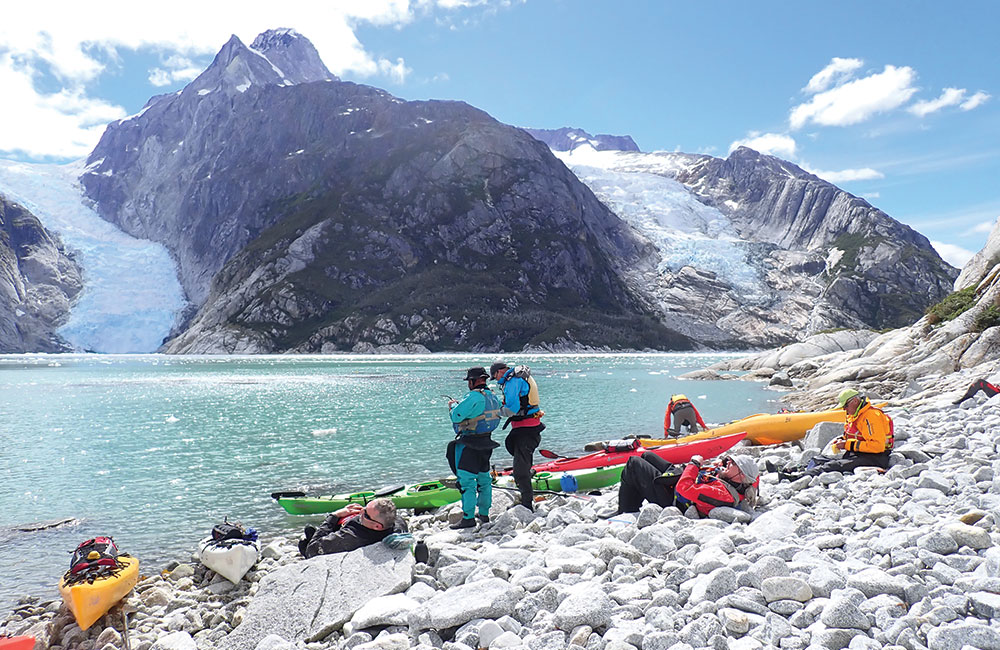
The outline for the expedition was simple on paper, ambitious in reality: explore the fjords of Tierra del Fuego in southern Chile and, over ten days, work our way toward the glaciers that surround the Parry Fjord region.
On a map, it looks clean – long fingers of water cutting deep into mountainous wilderness. In reality, it is one of the most remote paddling environments on the planet.
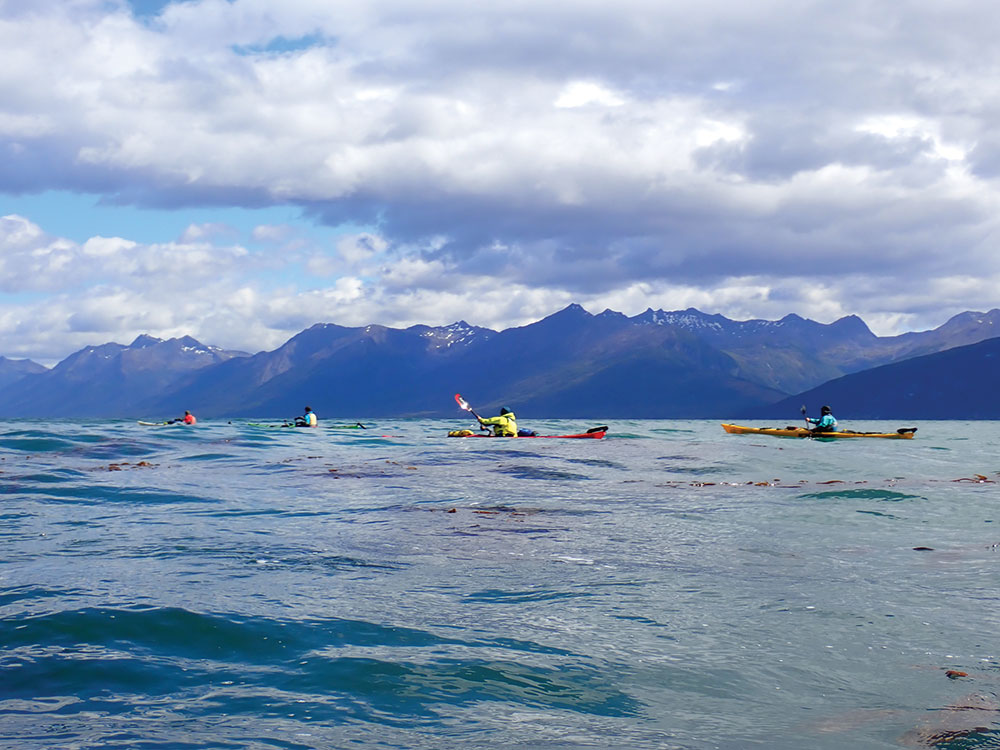
Weather systems sweep in unchecked from the Southern Ocean. Katabatic winds pour off the icefields. Tide races funnel through narrow channels. There are no easy exits.
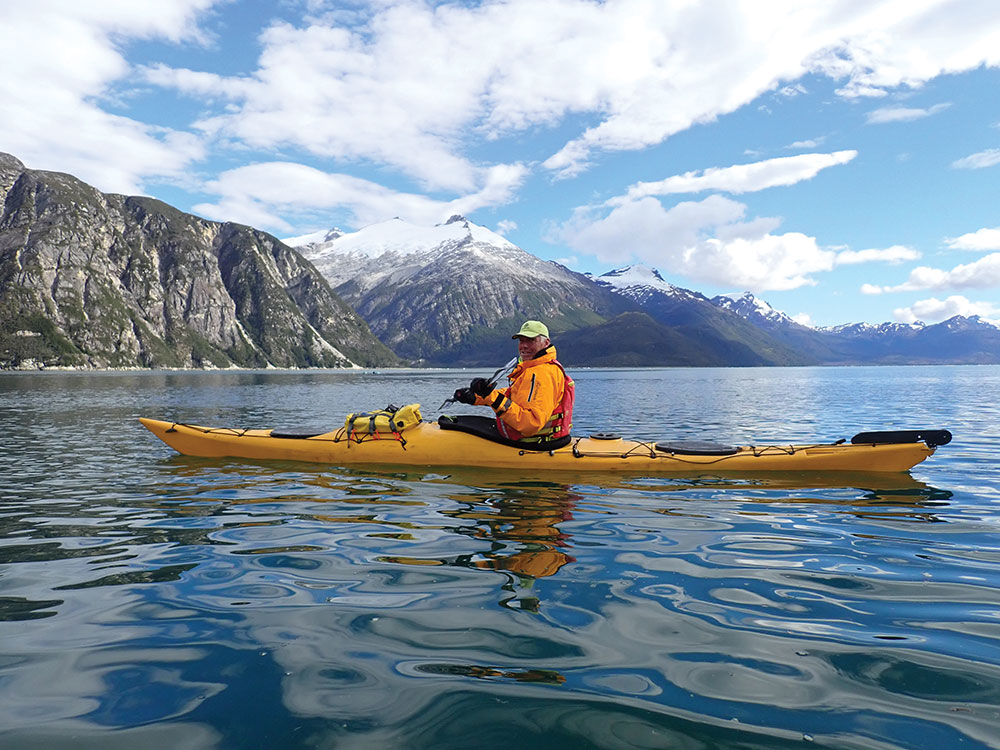
From Caleta Maria, we would travel north and east, threading through steep-sided fjords where the mountains rise abruptly from the sea. Waterfalls streaked down dark rock faces, fed by snowmelt high above the tree line. Even in the relative calm after the morning headwind faded, the landscape felt immense and indifferent.
The aim was not to cover the most ground, but to reach and experience places rarely seen from sea level – unlocking access to these untouched wilderness areas and understanding the region’s unique blend of ocean, mountain, and glacier.
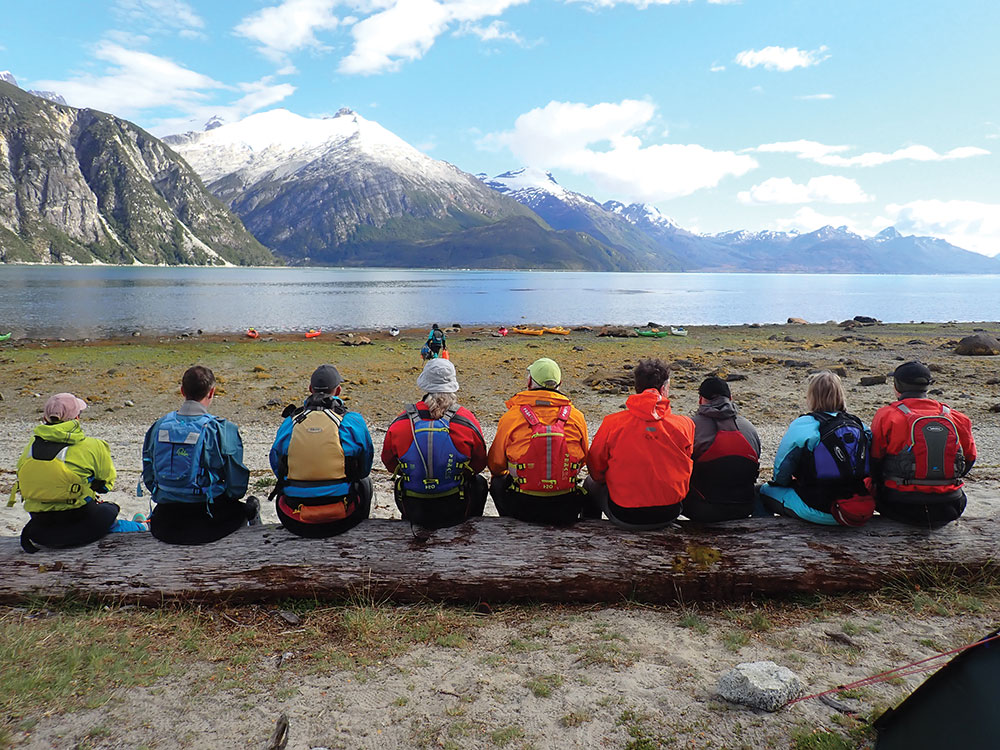
Each day had a rhythm: paddle, assess, adjust. Camps were chosen carefully. Wind direction and tidal flow dictated more than comfort. Some beaches were nothing more than narrow shelves of kelp and rounded stone, exposed only at certain states of tide. Timing mattered.
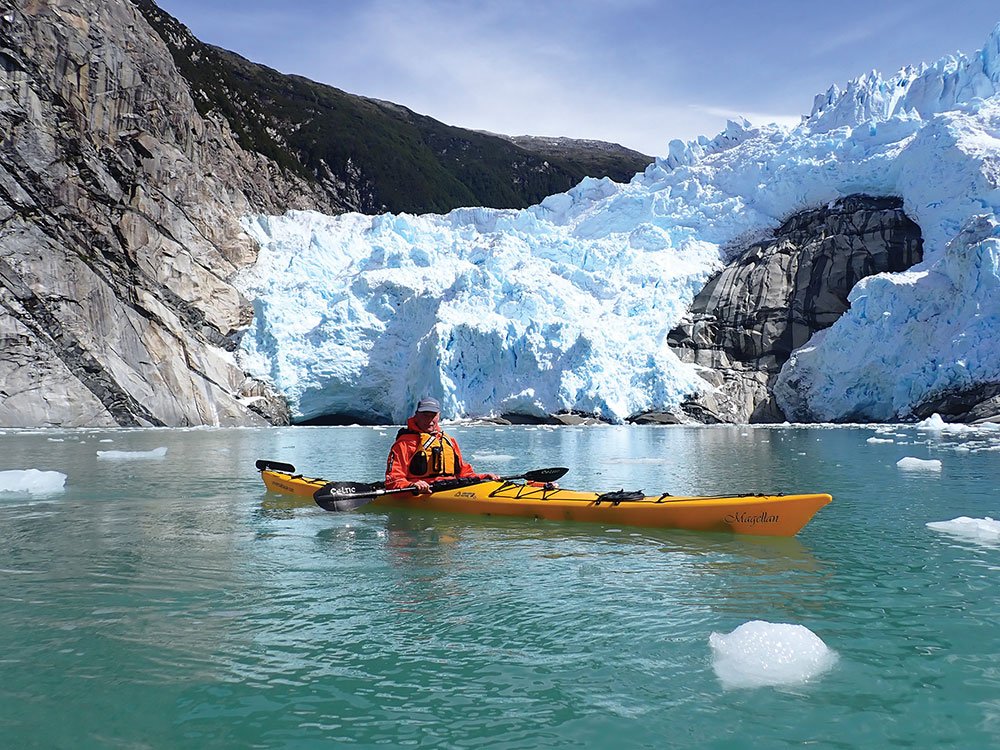
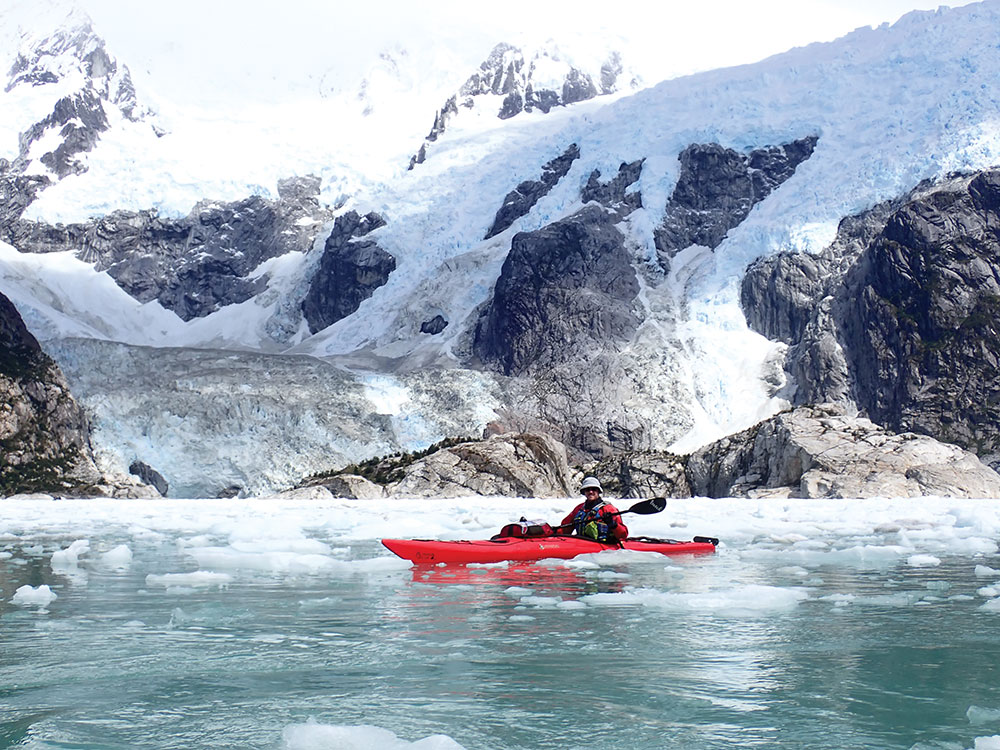
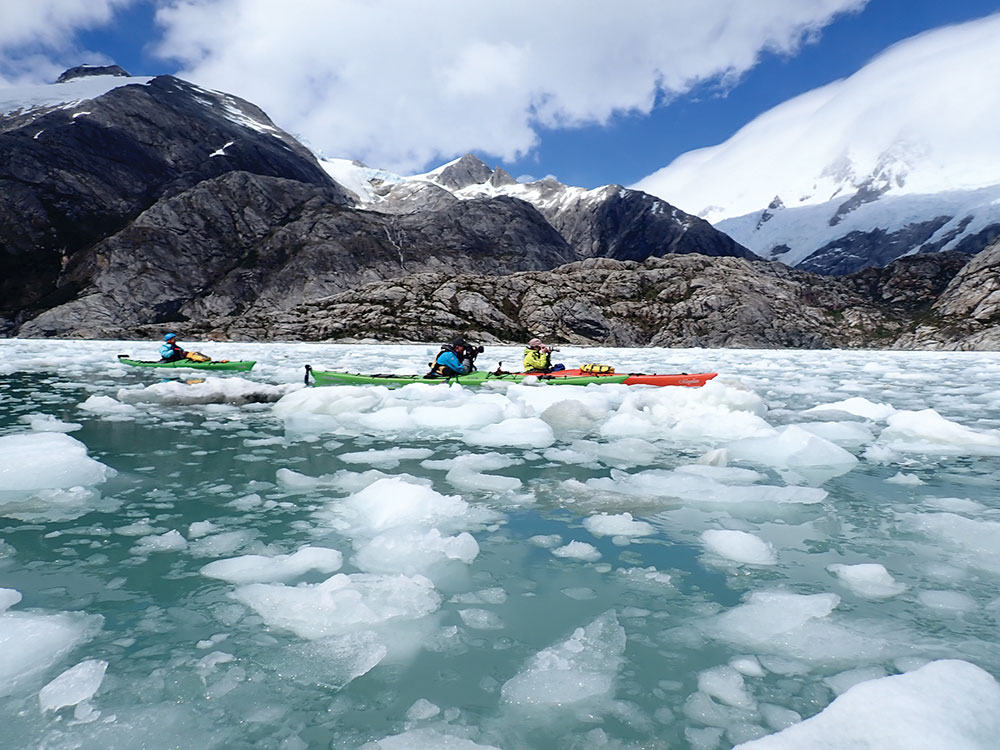
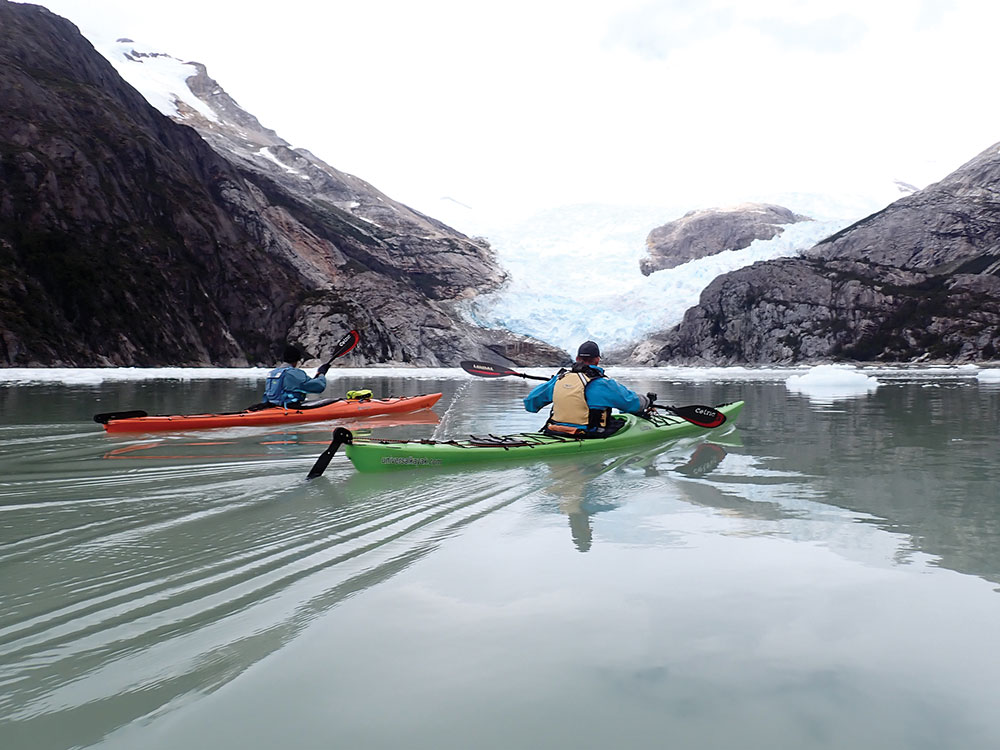
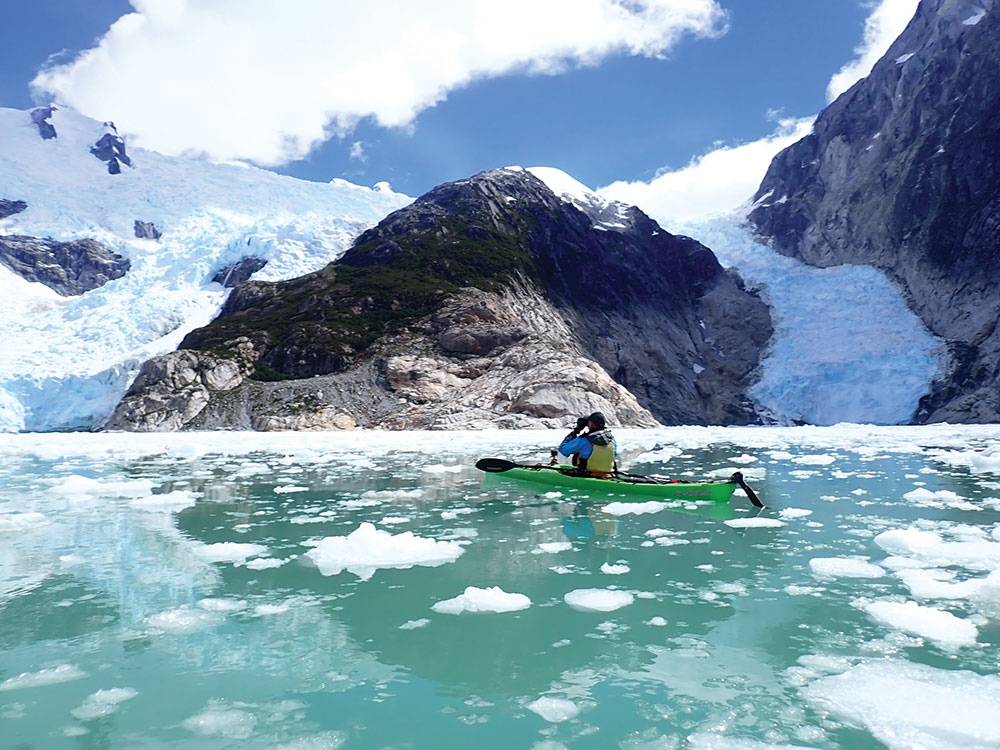
As we pushed deeper into the fjord system, the signs of glacial influence became unmistakable. The water shifted colour, turning from deep ocean green to a cloudy, mineral-rich blue. Small fragments of ice drifted silently past, clicking softly against hulls. The air felt colder, sharper.
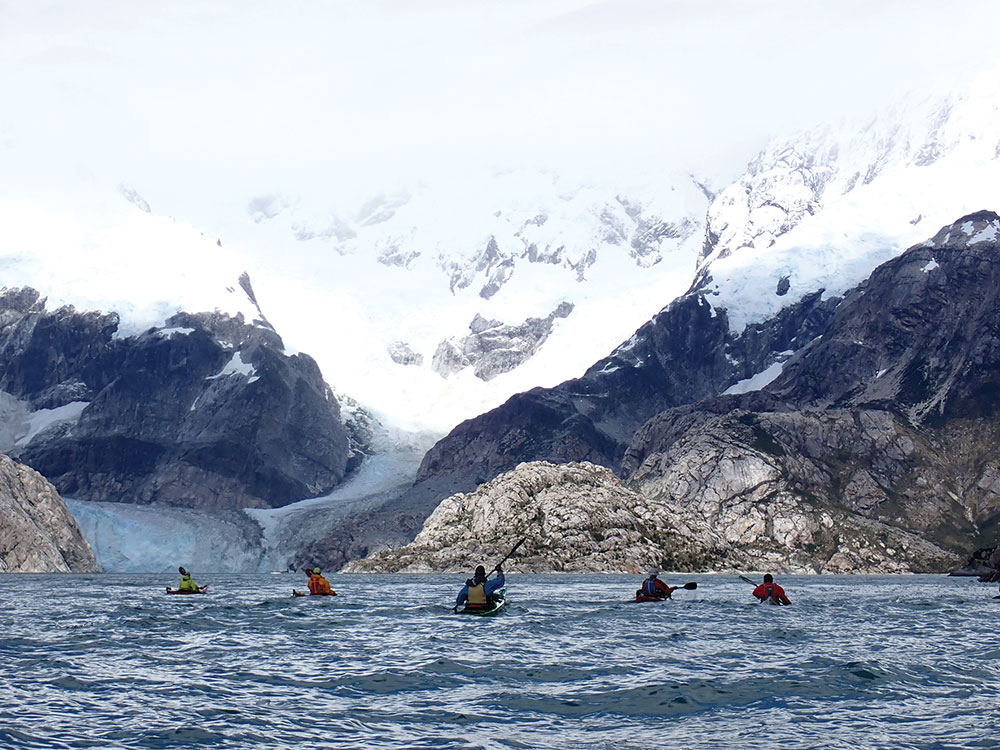
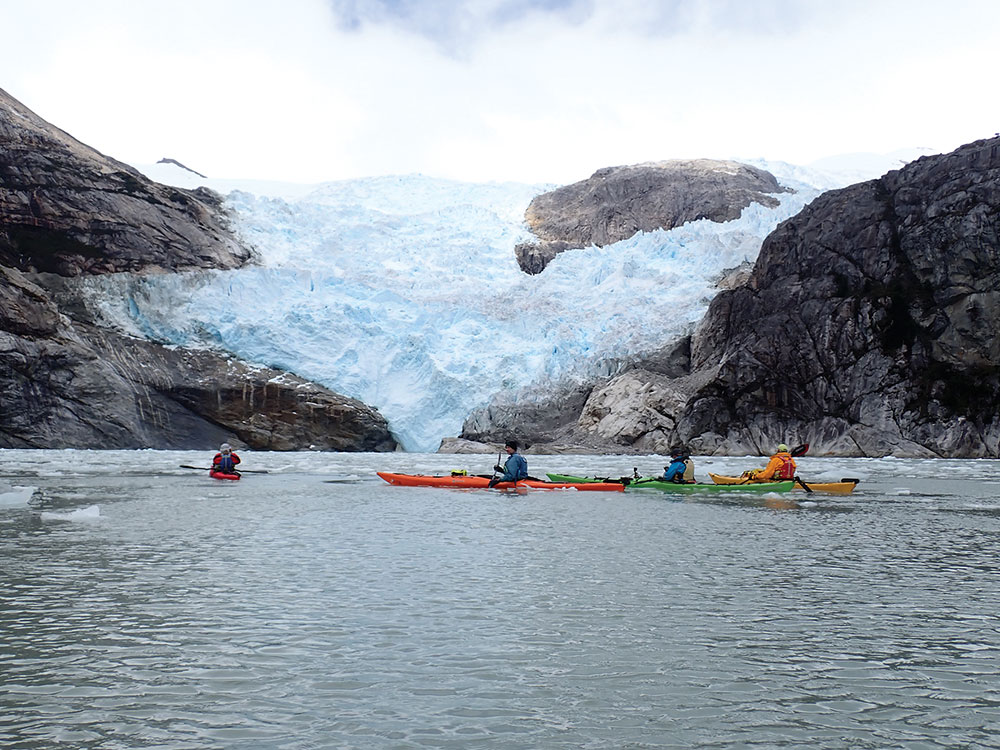
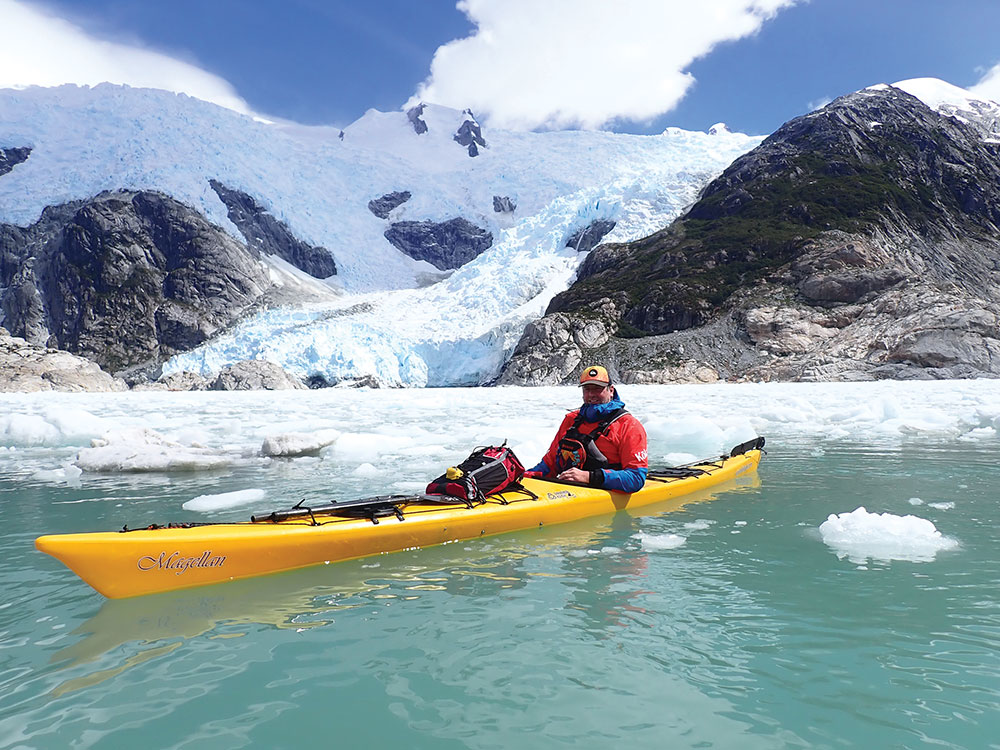
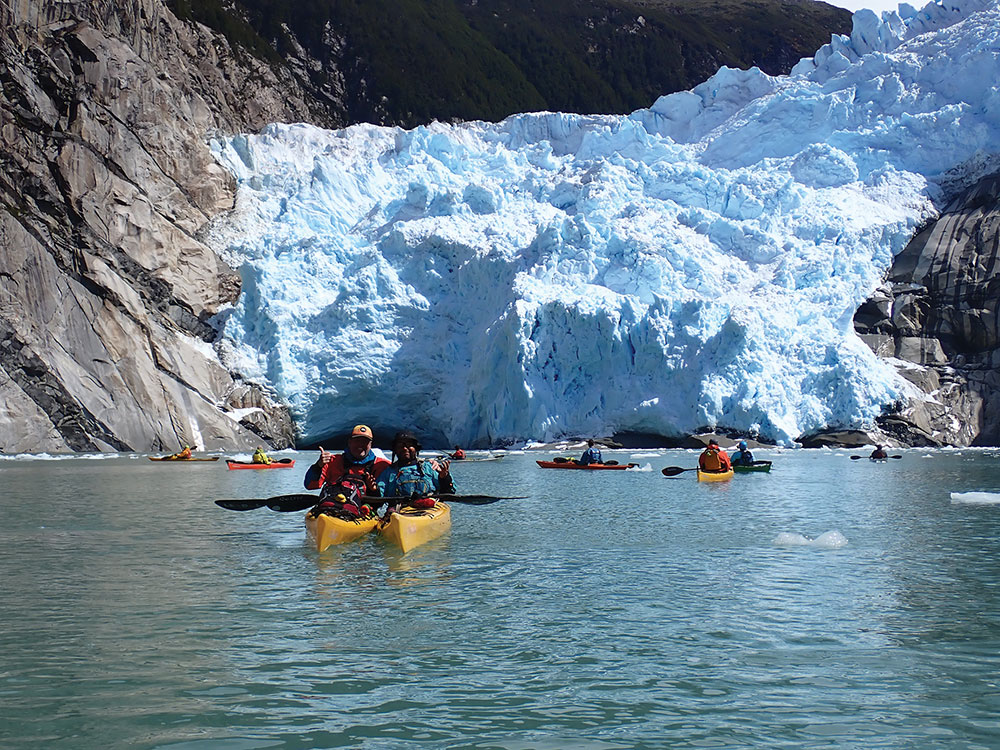
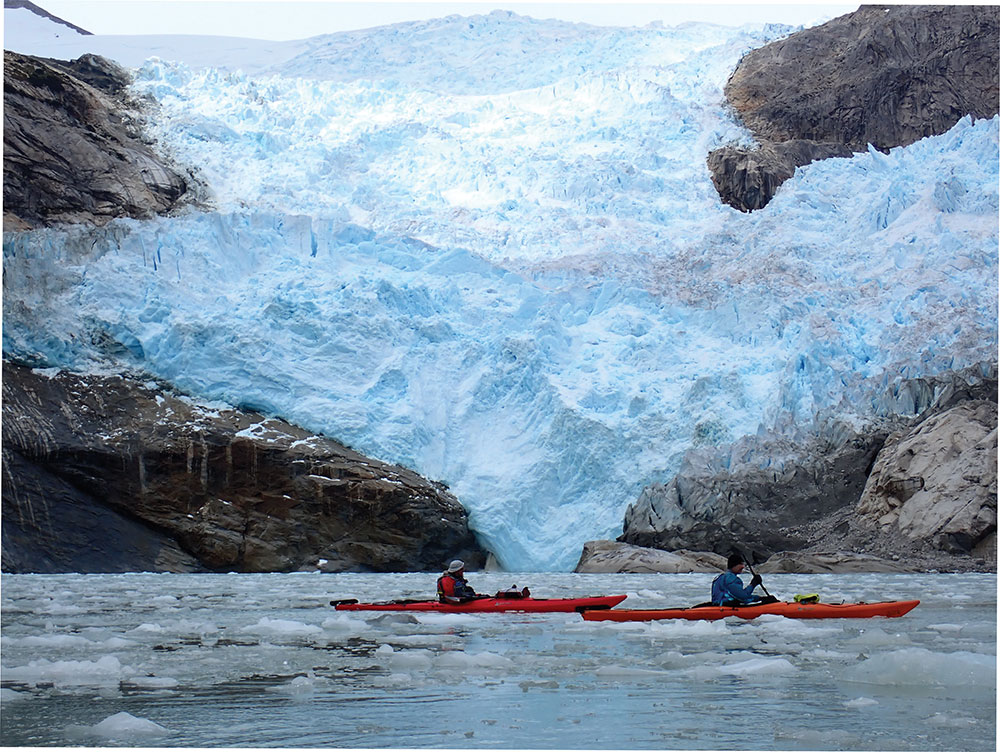
Parry Fjord lay ahead – guarded by steep peaks and active glaciers spilling down from the Darwin Ice Field. Reaching it would mean threading through unpredictable wind funnels and committing to long stretches without shelter. But it also meant paddling beneath living ice – walls that creak, fracture and calve into the sea without warning.
This was the goal: not just to arrive, but to experience the glaciers from the waterline – to feel their scale, to understand their movement, and to travel through a landscape still shaped by ice.
And in Tierra del Fuego, the ice is never far away.

Wildlife Encounters
Each day brought its own challenges, most of them delivered by the unpredictable Patagonian winds. Forecasts shifted without warning, and much of the technology we carried – satellite devices, downloaded models, carefully checked updates – failed to inspire real confidence.
In Tierra del Fuego, weather is not something you read; it is something you feel building in the air, sea forming on the horizon, a sense in the pressure drop before the gust hits. But while the wind tested us, the wildlife rewarded us.
One morning, unzipping the tent revealed an unexpected visitor. A lone Magallanic penguin had stationed itself just outside our camp, settled comfortably among the kelp and stones as if it had every right to be there.
For several hours, it remained, occasionally shifting position but largely uninterested in us. When the sun finally crested the ridgeline and warmed the shoreline, the penguin seemed to come alive – stretching, preening, then slipping quietly back into the water without ceremony.
Out on the fjords, albatross skimmed low over the surface.
Their wings stretched impossibly wide. They barely moved as they traced the wind lines around our kayaks. They would pass within metres, tilting an eye in our direction as if inspecting these slow, brightly coloured intruders in their territory.
Elephant seals lie draped across beaches in the morning sun, immense and prehistoric in appearance, occasionally lifting their heads to acknowledge our presence before settling back into stillness. Above it all, condors circled on thermals rising from the cliffs – vast, deliberate, unhurried.
Seeing them from sea level gave a true sense of their scale. They weren’t just large birds; they were airborne shadows. Perhaps the most memorable encounter came in the colder, ice-laced waters nearer to the glaciers.
Resting on a small drifting slab was a leopard seal, sprawled lazily as though asleep. We kept our distance, drifting quietly, aware of both its beauty and its power. Every so often, a single eye would open – just enough to remind us that while it appeared relaxed, it was entirely aware of us.
In these moments, the fjords felt less like wilderness to conquer and more like a living system we were temporarily allowed to move through.
Local Delights
We stumbled upon a hidden gem – a local fisherman’s camp tucked deep in the fjords, a place he had fished for decades. He spoke no English, but his presence alone told you everything you needed to know: a rugged man, shaped by the sea, whose life was spent beneath the waves.
By day, he dove to the ocean floor, collecting scallops by hand, and hunting spider crabs with the patience and precision of someone who had done it a thousand times before. By evening, we were humbled to receive some of his harvest – plump scallops and a giant spider crab – to cook for dinner. The taste was unforgettable, fresh from the fjord itself.
And then, as if that wasn’t enough, he handed us warm, fragrant bread he had baked on his fishing boat. Simple, honest, and extraordinary – an experience that felt like stepping into another world.
A complete legend
Epic Finale
We had been enjoying an incredible expedition – stunning camp spots, unforgettable wildlife encounters, and weather that kept us on our toes. Our team of paddlers was strong and cohesive; what could possibly go wrong?
Then the message came. Our minibus driver wouldn’t be returning to pick us up at the end of the trip. And this was no ordinary location – getting out would mean a 9–11 hour drive, each way. Stress started creeping in. As the lead guide, I was thinking, how on earth are we going to get out of this one?
Then, inspiration struck. What if we asked our local fisherman if he was heading back to Punta Arenas soon? As luck would have it, he was. A few dollars exchanged, and a plan was born: he would take all 11 of us, plus our gear, back to Punta Arenas.
On the last day, we met him and his boat at Caleta María. We set off around 17:00, only to learn the journey would take around 15 hours. Space was limited – just 4–5 beds available – so some of us found makeshift rest in the storage area, while others braved sleeping on the deck.
Morning came with the captain’s voice calling us to breakfast, and the news that the wind had picked up, so we wouldn’t be moving until the afternoon.
The Strait of Magellan
Finally, he asked if we were brave enough to attempt the final stretch – crossing the Strait of Magellan. Off we went. Within an hour, it was clear the sea would not be gentle. Some were seasick; fear flickered in their eyes. For many, it was their first time on a small fishing boat in heavy waters.
I, however, trusted our fisherman completely. You could sense he had done this journey a hundred times before.
Hours later, the lights of Punta Arenas appeared on the horizon, and the seas began to calm. After 32 hours aboard a small fishing boat, we had made it. Exhausted, exhilarated, and full of stories, we stepped onto solid ground.
An absolutely epic ending.
Final Thoughts
Our experience in Chile was nothing short of unforgettable – an expedition that will stay with us forever. We faced lost luggage. There were logistical hiccups. Not even bed bugs in the local hostel stopped us. We stayed calm, adapted, and made the most of every moment. The challenges only made the adventure more memorable. The people we met along the way made it extraordinary.
A special thanks to my incredible guides, JP & Martin – without you, none of this would have been possible. Your skill, patience, and leadership made the journey not just achievable but truly remarkable.
We also want to thank our sponsors for helping make this adventure a reality:
- Whetman Equipment
- Kokatat
- Celtic Paddles
- ZOLEO Communications
- FirePot Foods
To everyone who played a part in this journey – thank you. Chile, your fjords, your seas, and your people have left a lasting mark on all of us.