By Martin Trahan
@martin_trahan_canoeist
Photos:
Julien Bilodeau &
Valérie Jolicoeur
Paddlers:
Martin Trahan,
Julien Bilodeau,
Valérie Jolicoeur,
Annik Shamlian,
Pénélope Germain Chartrand,
Jérémie Bélair,
Simon Nadeau &
Frédéric Dufresne
Martin Trahan
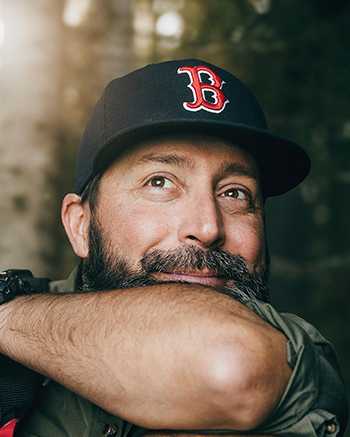
Martin is an adventurer, ultra-long distance canoeist from Montreal, Canada, and Banff Mountain Film Festival ambassador/Quebec Tour. Catch up with him on Instagram: @martin_trahan_canoeist
Across Canada by canoe: ten-year anniversary
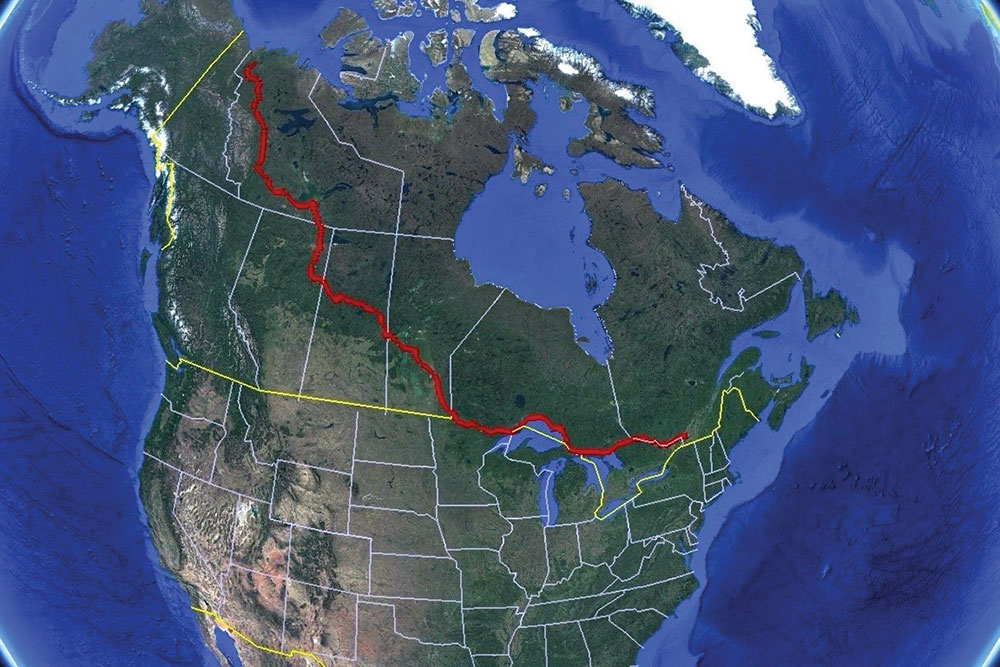
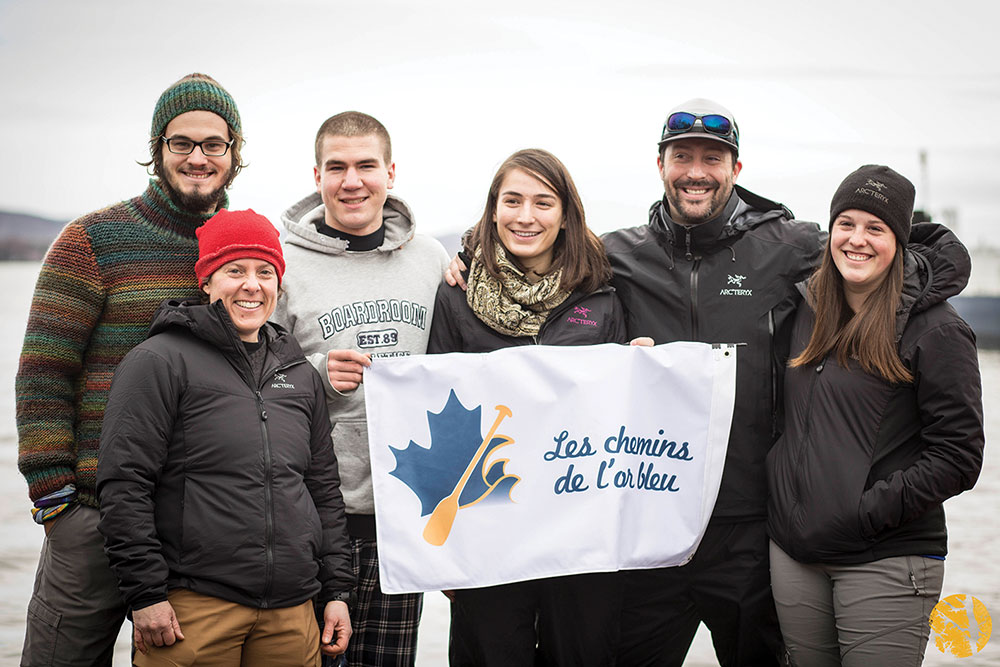
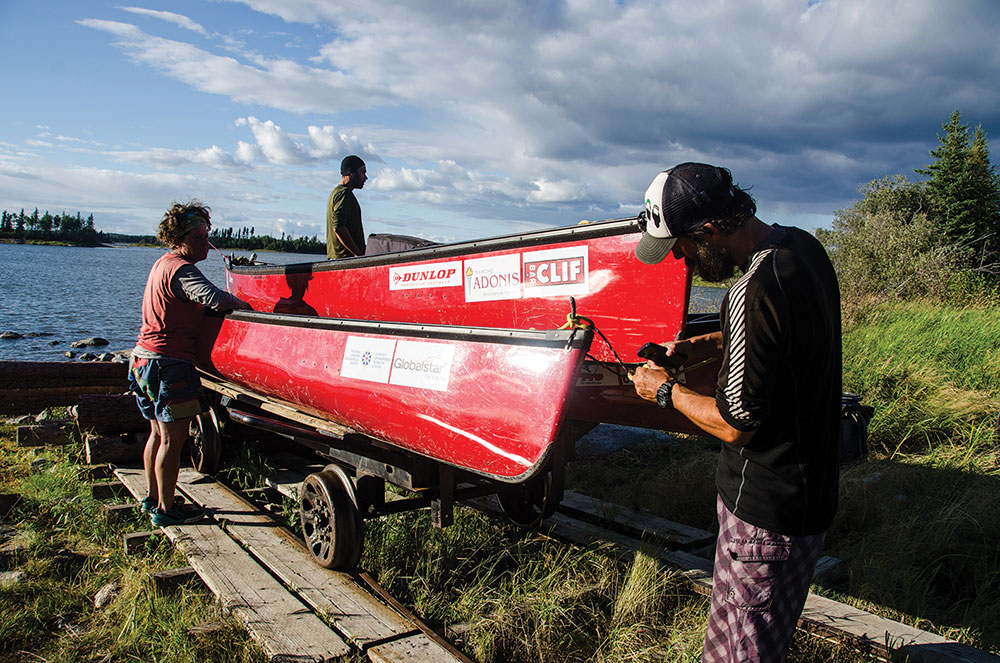
In 2015, our expedition Les Chemins de l’Or Bleu received the prestigious ‘Canadian Expedition of the Year’ award from the Royal Canadian Geographical Society. Our team of six paddlers crossed a vast portion of Canada by canoe, tracing a grand diagonal across the world’s second-largest country.
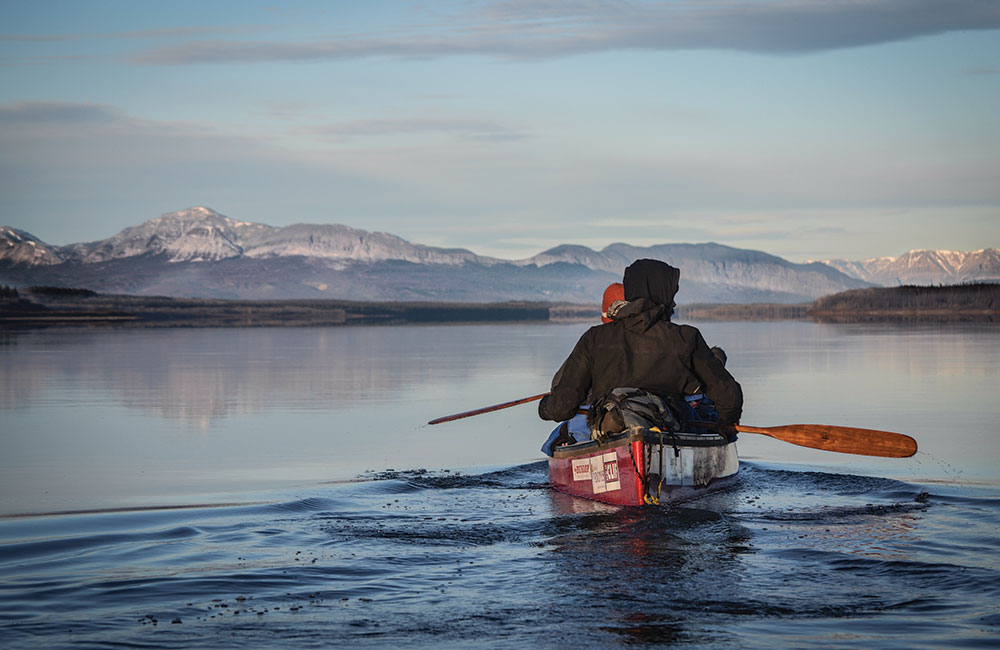
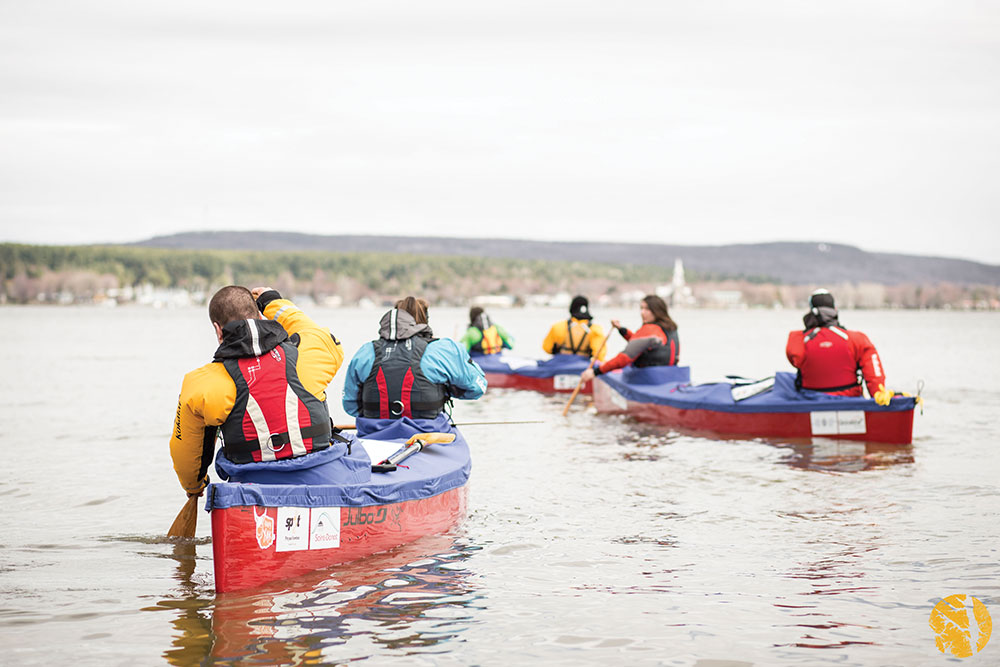
The journey began on April 25th in the icy waters of Lac des Deux Montagnes in Montreal. It ended 7,000 kilometres later, on October 16, on the Mackenzie River coast in Inuvik, within the Arctic Circle. This 175-day adventure included 117 portages and 13 food resupplies. The expedition was both challenging and rich in experience, where every paddle stroke brought us closer to something greater than ourselves.
Montreal and the Ottawa River
On the morning of our grand departure, nearly a hundred people gathered on the riverbank to wish us well. Friends, family members, and groups of former campers from Kéno and Minogami joined us. That sea of familiar faces, all there with affection and support, was genuinely moving. As our canoes slipped into the water and our first paddle strokes cut the surface, a spontaneous chorus rose behind us. Camp songs carried through the air like wishes for safe travels and fair winds.
After our memorable send-off in Montreal, we launched our major expedition across Canada’s vast landscapes by following the routes historically travelled by early explorers and Indigenous peoples during the fur trade. Our journey began northwest of Montreal Island, on Lac des Deux Montagnes. From there, we paddled 150 kilometres along the Ottawa River to Ottawa. Next, we continued upstream for another 325 kilometres, portaging around several hydroelectric dams to reach the Mattawa River. This section of the expedition occurred in the spring, immediately after the ice had melted, when the river was in flood. The high, powerful, and sometimes unpredictable waters during this period slowed our progress.
Mattawa and French Rivers:
Continuing onward, we left the Mattawa River and reached Lake Nipissing in North Bay, where we made our second resupply before paddling 110 kilometres along the French River, a waterway steeped in history and once travelled by Indigenous peoples and fur trade voyageurs. Canoeing this route was like stepping back in time, tracing the same waters that had seen countless expeditions connect the Great Lakes basin to the St. Lawrence. Between rapids and meanders, we could feel the echo of the past in the currents guiding us.
Georgian Bay/Lake Huron
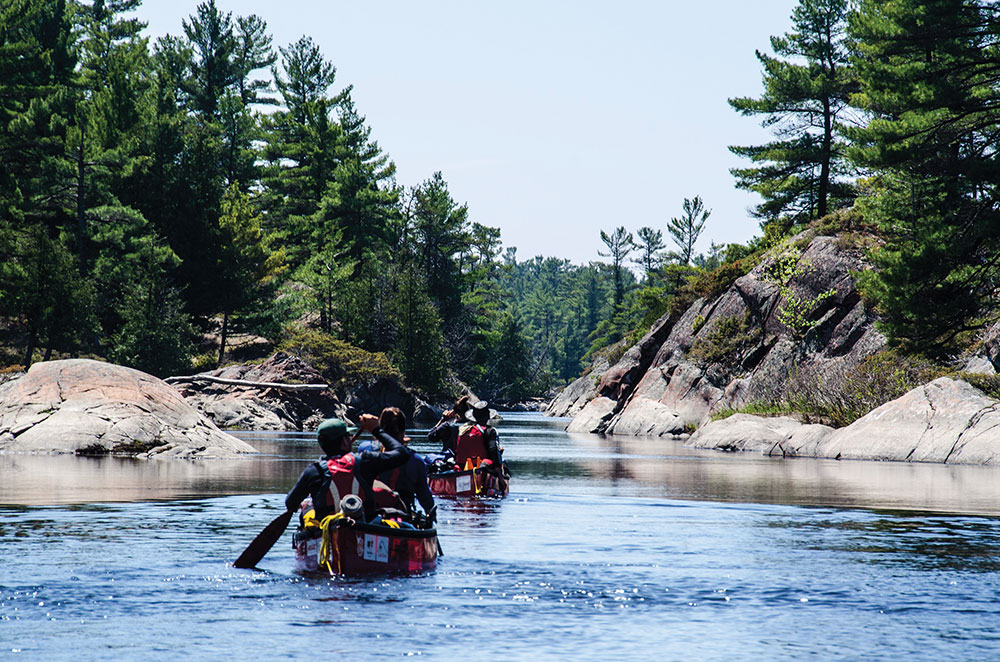
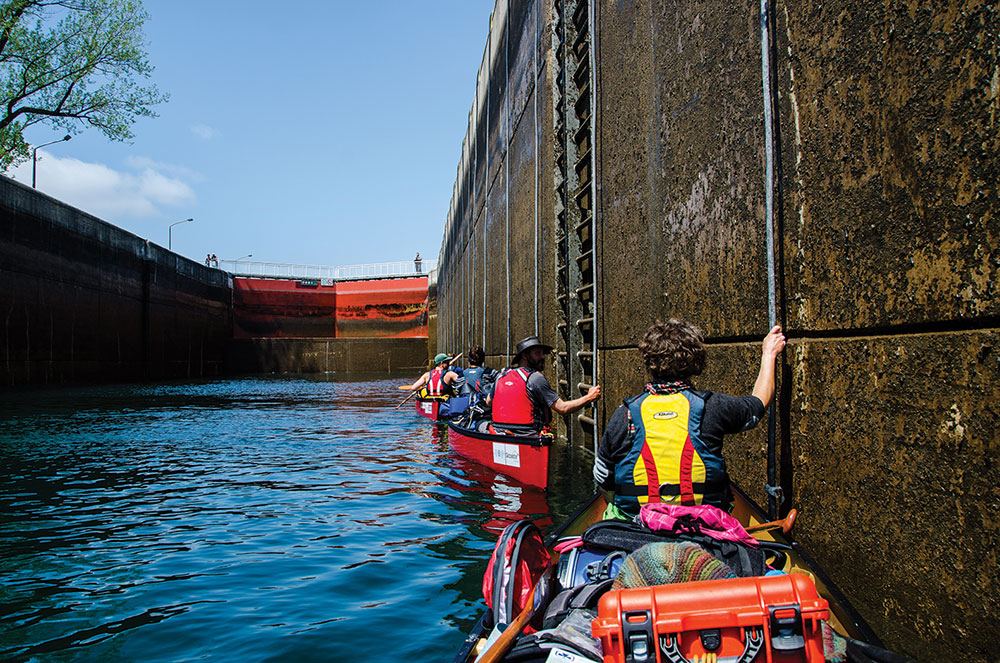
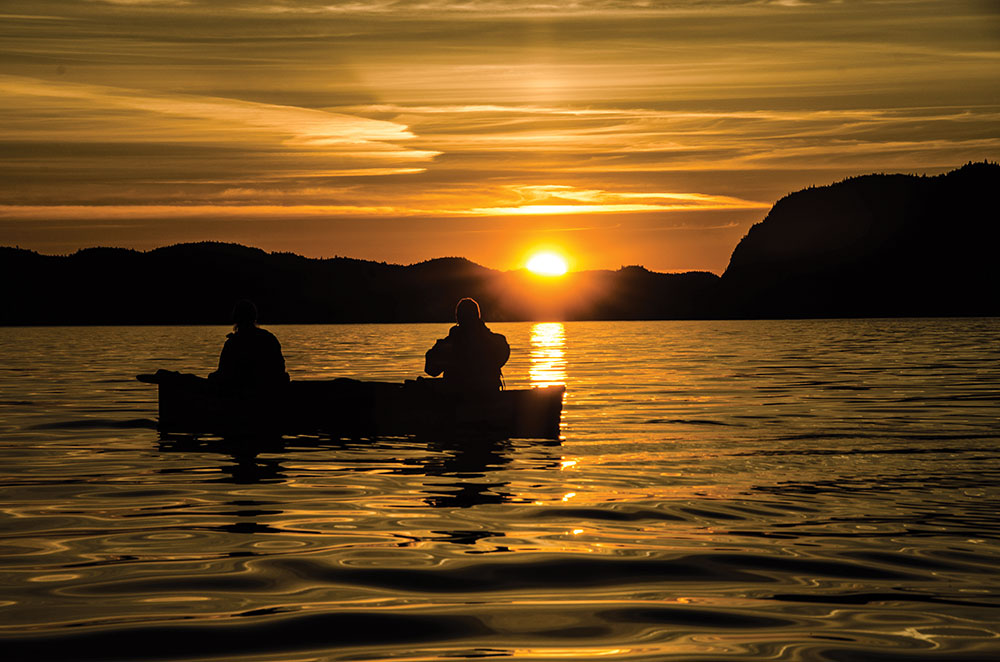
From the French River, the expedition brought us to Georgian Bay and Lake Huron, which we traversed over 300 kilometres to Sault Ste. Marie. This marked our first experience on such a vast body of water, and it did not spare us. The clear waters contrasted with sudden winds and breaking waves, often testing our endurance. Georgian Bay offered breathtaking scenery: shores dotted with pink granite islands, dense forests plunging into crystal-clear waters, and sunsets lighting the horizon. Here, we passed through a massive lock, opening onto the staggering expanse of Lake Superior – a new stage, both grand and formidable.
Lake Superior
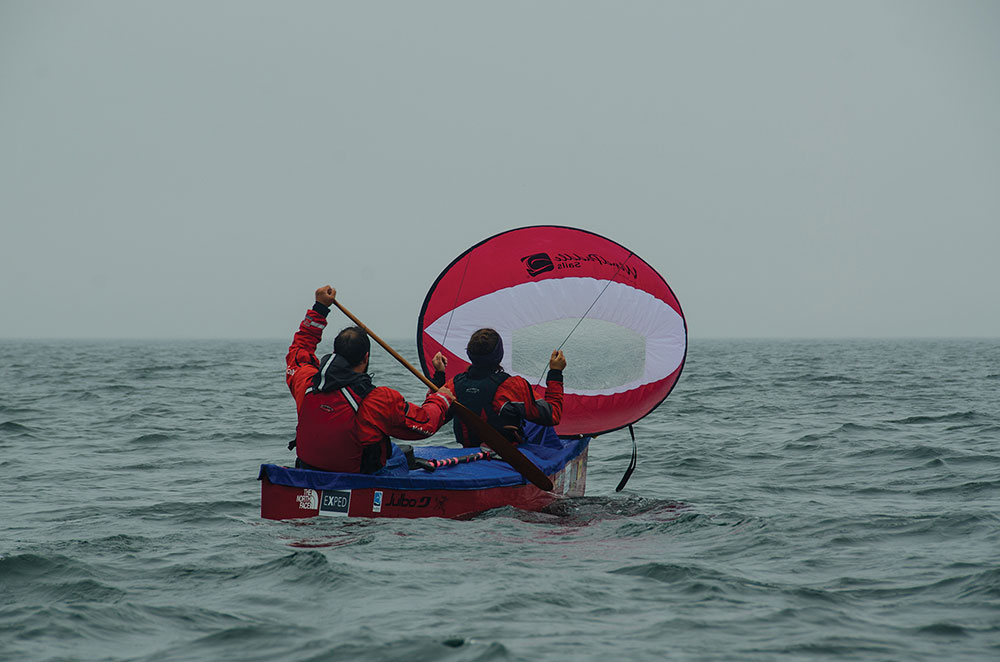
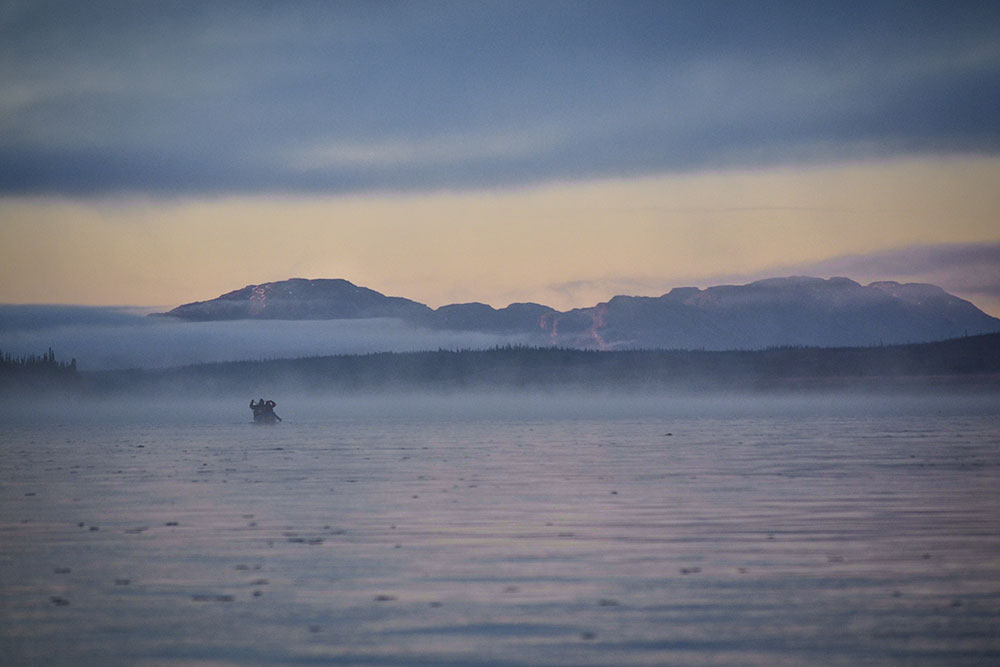
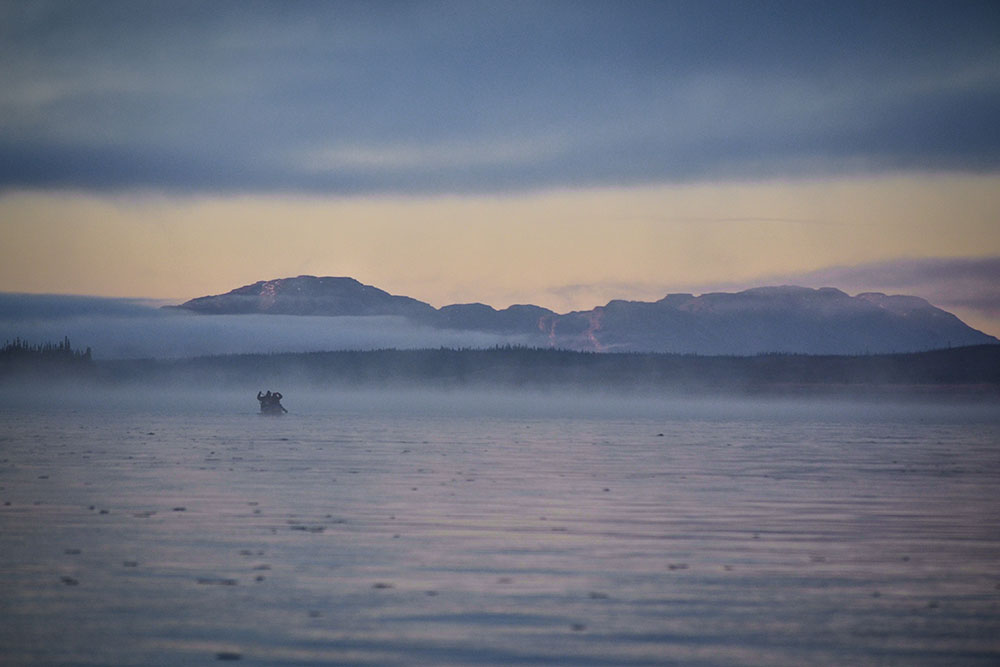
With Lake Huron behind us, we began crossing the majestic Lake Superior, the world’s largest freshwater lake by surface area, paddling nearly 800 kilometres through its powerful and unpredictable waters. Canoeing Lake Superior was like navigating an inland sea. At times, opaque fog enveloped us completely, erasing the horizon, while waves sometimes reached such heights that they demanded constant vigilance, reminding us of the raw power of this freshwater giant. Conditions were once so intense that one of our teammates became seasick, vomiting as though we were paddling across an unforgiving ocean rather than a lake. With water temperatures near 3 °C, the risks increased. Even basic hygiene routines became rare and particularly challenging, each immersion a test of endurance.
A teammate’s departure
Upon reaching Lake Superior, one of our teammates struggled with persistent back pain that significantly slowed our progress. On a time-sensitive Canada crossing, each delay threatened our ability to reach our goal before the ice formed. Lake Superior further intensified these challenges by creating demanding navigation conditions, making evacuation difficult and complicating the replacement of a team member. After the first few days, a difficult decision had to be made: our teammate returned home for treatment, with the understanding that a temporary replacement would join the team. Unfortunately, her back issues prevented her from rejoining the expedition.
Boundary Waters
Following the events on Lake Superior, we set out to navigate the Boundary Waters, following an invisible line between Canada and the United States, where each paddle stroke crossed a border discernible only on the map. This network of lakes and rivers required around forty portages. The largest, the 13.6-kilometre Grand Portage, allowed us to avoid the daunting Pigeon River climb. This 500-kilometre section posed many challenges, including a high tick population. All of us were bitten multiple times, raising concerns about Lyme disease. A four-day stop at Gunflint Lodge offered a well-deserved break, an opportunity to resupply and regain energy for the journey ahead.
The Boundary Waters are a canoeing landmark in the United States, rich in history and deeply rooted in North American culture. Indigenous peoples long travelled these waterways, followed by voyageurs and trappers. Over time, they became a protected and almost sacred space for generations of Americans. Scout camps, family trips, and first canoe adventures created a collective imagination steeped in learning, transmission, and respect for nature. Though I knew little of this area before paddling, I quickly realised it represents more than a route. It is a living heritage, carefully preserved.
Lake of the Woods & Lake Winnipeg
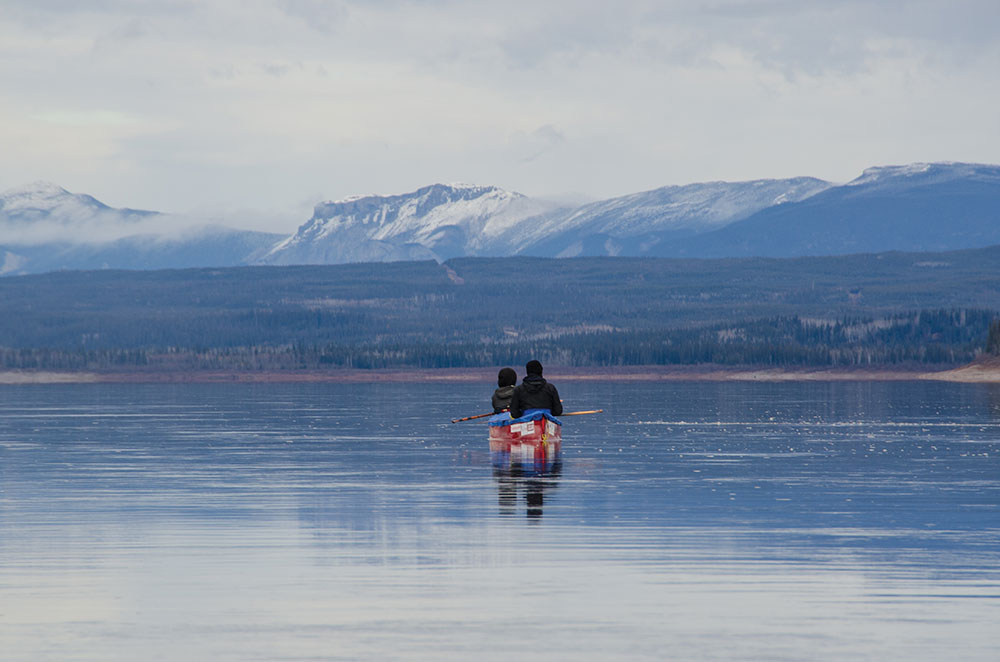
From Lake of the Woods, we travelled roughly 400 kilometres. We portaged around several hydroelectric dams to reach Lake Winnipeg. Crossing this vast lake – 425 kilometres – was particularly gruelling. Violent winds and unpredictable waves battered us. Instead of the planned 10 days, we ended up taking 16. The lake’s shallow waters made large waves unavoidable. These forced us to stop for days, giving our exhausted bodies time to recover.
Churchill System
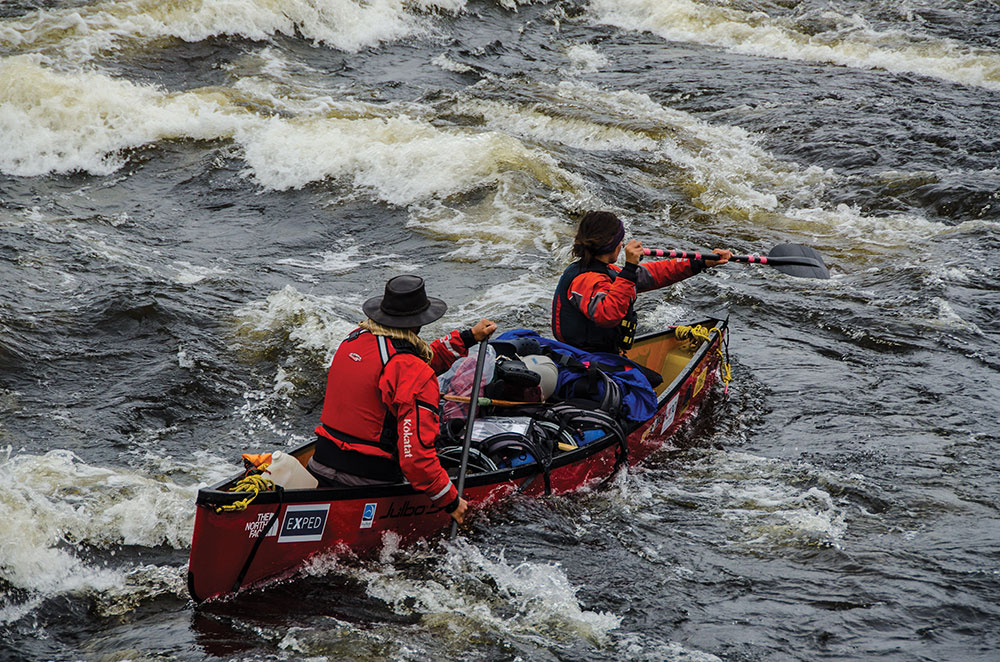
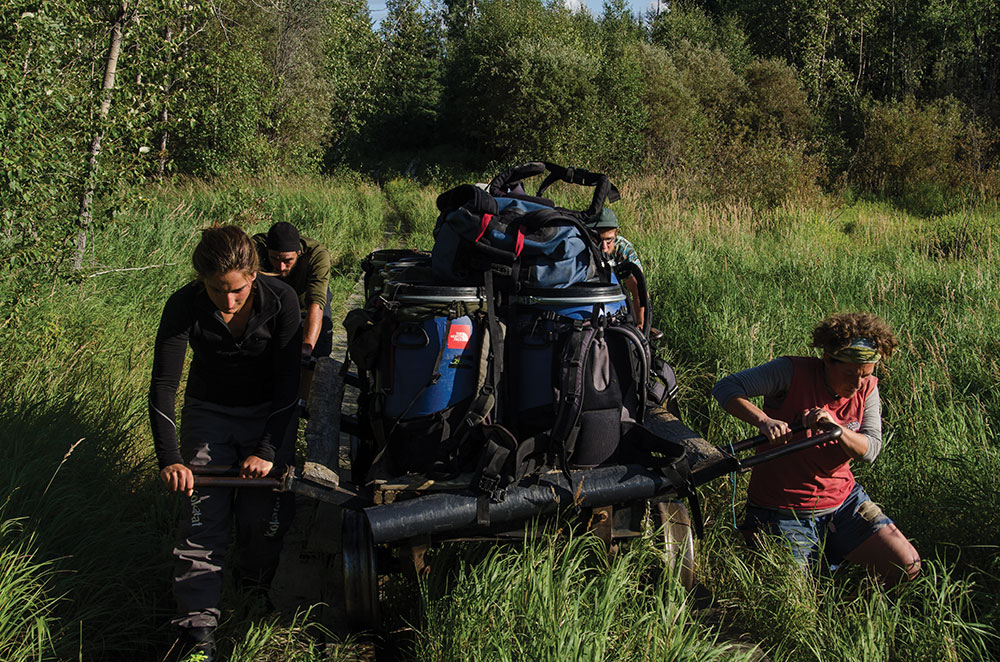
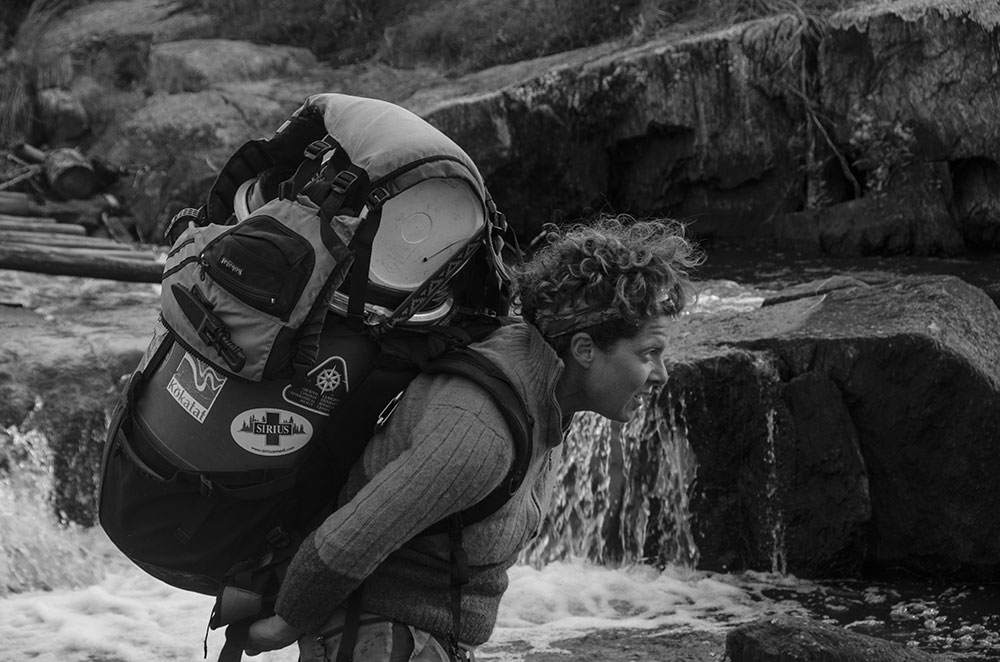
From Lake Winnipeg, our route continued through Cedar Lake – a true aquatic labyrinth – and up the Saskatchewan River to the Churchill system. Paddling upstream for about 900 kilometres required sustained effort, including 54 portages. The 19-kilometre Methye Portage took two days and was one of the greatest challenges of this section. We traversed territories rich in history and culture, home to many Indigenous communities, living witnesses to the ‘memory of waters’. At Churchill Canoe Outfitters, we were hosted by Ric Driediger, a living canoe legend and friend of the late Bill Mason.
We travelled through ancient lands shaped and inhabited by First Nations communities for generations. These rivers and lakes still sustain families who rely on hunting, fishing, and a deep connection to the land. Villages welcomed us with curious smiles, shared stories, and the attentive eyes of elders. For them, the canoe remains a symbol of continuity and transmission. My limited knowledge of these lands turned into profound lessons through these encounters. These were some of the expedition’s most memorable moments. Every paddle stroke reminded us we were only passing through paths long travelled before us.
Bannock
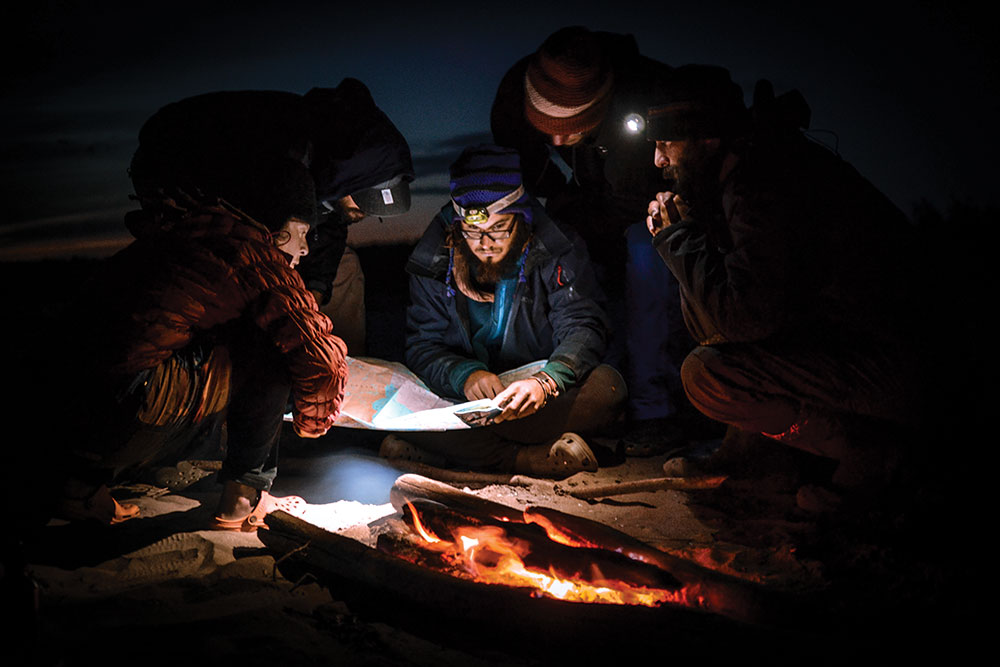
Bannock is a type of flatbread that references our native gastronomic heritage. It is a traditional breakfast enjoyed by the campfire. This bread with chocolate chips and dried cranberries or raisins brings immeasurable joy. Each adventurer has a unique recipe that adapts to available ingredients. Baked over the fire, it only needs a thick layer of Nutella or some maple syrup for comfort. This high-sugar meal is always very much appreciated.
Athabasca & Slave River & Great Slave Lake
With the Churchill system behind us, we reached the Clearwater River and could finally ride the current to Fort McMurray, where we swapped summer gear for cold-weather equipment, preparing for subfreezing temperatures that would soon test our endurance. We then paddled the Athabasca and Slave Rivers for 800 kilometres to Great Slave Lake, the ninth largest freshwater lake in the world.
During this next stage, the Athabasca River and its surrounding tar sands were by far the least scenic section of our Canadian crossing. Here, we had to carry our own water, as drinking directly from the river was strongly discouraged. The polluted waters, alongside visible tar sands facilities, created a stark contrast after weeks in the wild. At night, the flaring stacks lit the horizon – a surreal reminder of industrial intrusion in nature.
Shortly after our time on the Athabasca, cooler temperatures arrived. Though still above freezing, the air grew crisp, signalling the approaching change of season. Autumn was not yet official, but the landscapes reflected it fully. Days shortened, and the air became sharper.
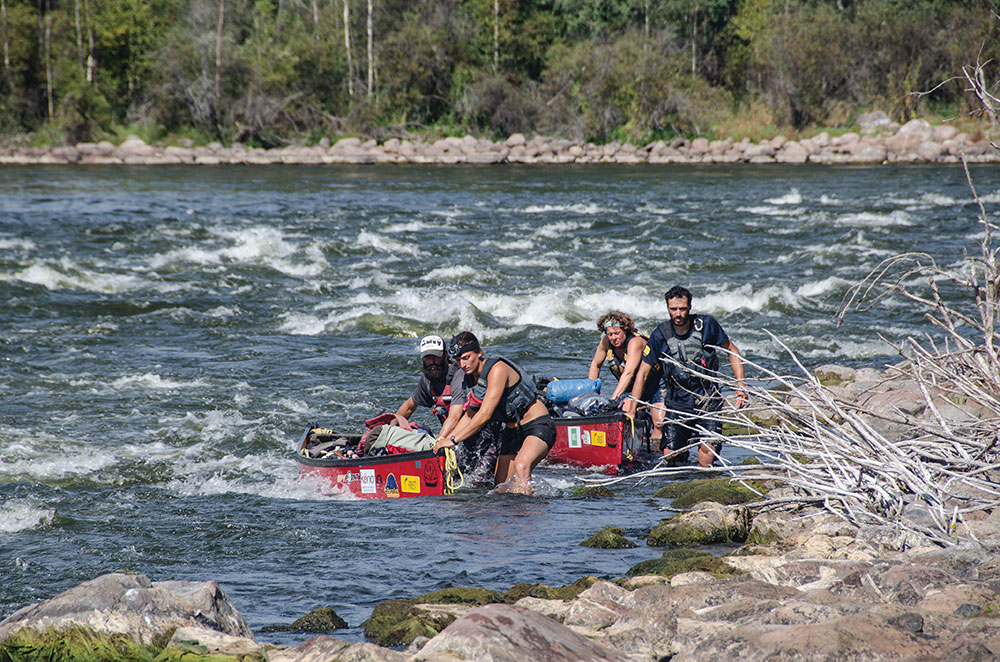
South of Fort Smith, the Slave River gathers strength and accelerates into a powerful stretch of whitewater that has long shaped travel in the region. The rapids between Fort Fitzgerald and Fort Smith have, for generations, forced travellers to leave the river and carry their loads overland. This necessity gave rise to a well-established portage corridor connecting the two communities.
In modern times, these same rapids have become a destination for whitewater paddlers. Each summer, kayakers from across Canada and beyond gather on the Slave River for the annual Paddlefest, drawn by the massive waves and technical nature of the rapids. For canoeists, however – particularly without local knowledge or a guide – this section remains a serious undertaking. In our case, the safest and most reasonable option was to complete the 27-kilometre portage by following the gravel road between Fort Fitzgerald and Fort Smith.
A particularly rewarding aspect of the Slave River was the strong current, allowing us to cover long distances, sometimes nearly twice what we could achieve on a lake, a major encouragement, especially knowing snowflakes were already falling further north along the Mackenzie River.
The Northern Lights
In Alberta, we witnessed a spectacle few expeditions experience: the northern lights. For the first time in my life and for several teammates, the sky became a living canvas, green ribbons undulating with unreal grace. We even camped overnight under freezing stars just to be enveloped by this mysterious light. Each movement seemed to whisper ancient stories, revealing the majesty and fragility of nature in its purest poetry.
Black Bears
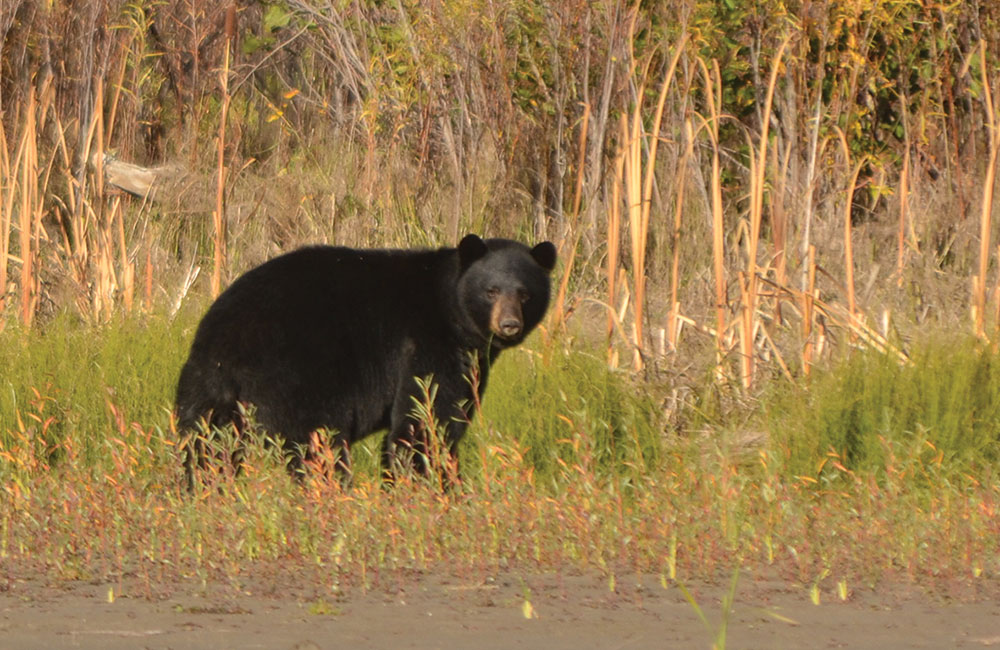
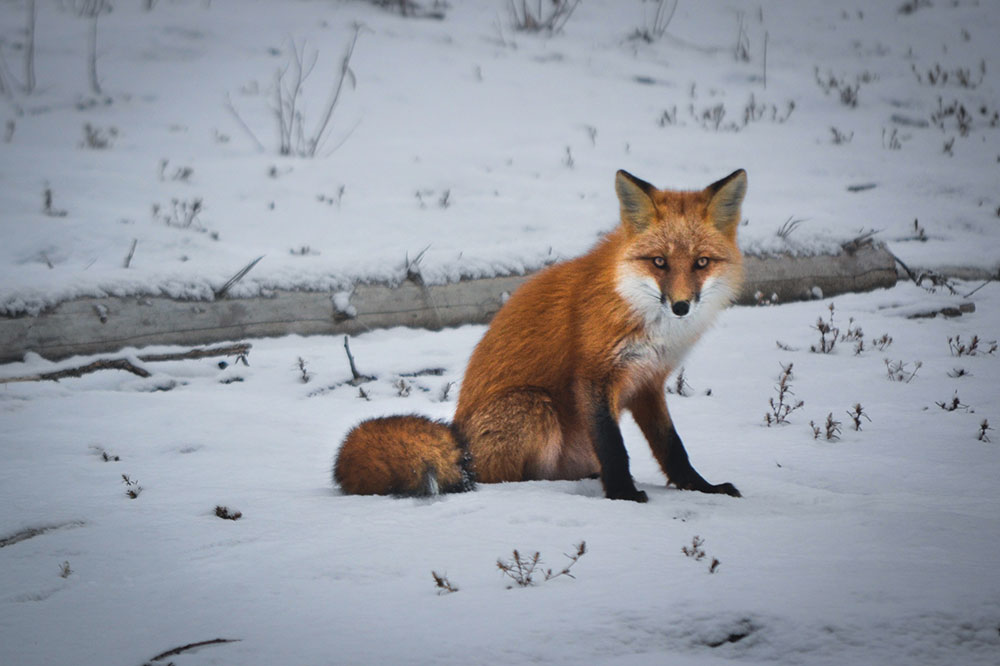
Our canoeing along the Slave River was observed by increasingly frequent black bears. At the end of summer, sated from the season’s abundance, they appeared massive, calm and deeply rooted in their territory. For me, it was the first time I shared space so intimately with such an animal, encountering them almost daily. One evening, as camp came alive around the fire, a curious, large black bear approached silently. Our six voices rose in unison to scare it off, followed by careful vigilance. Unarmed except for bear spray and bear bangers, we strictly managed food odours, storing all provisions in sealed barrels away from tents. Encounters with black bears are risky but profoundly impactful, revealing a majestic creature often reduced to a mere object of fear in popular imagination.
Mackenzie River
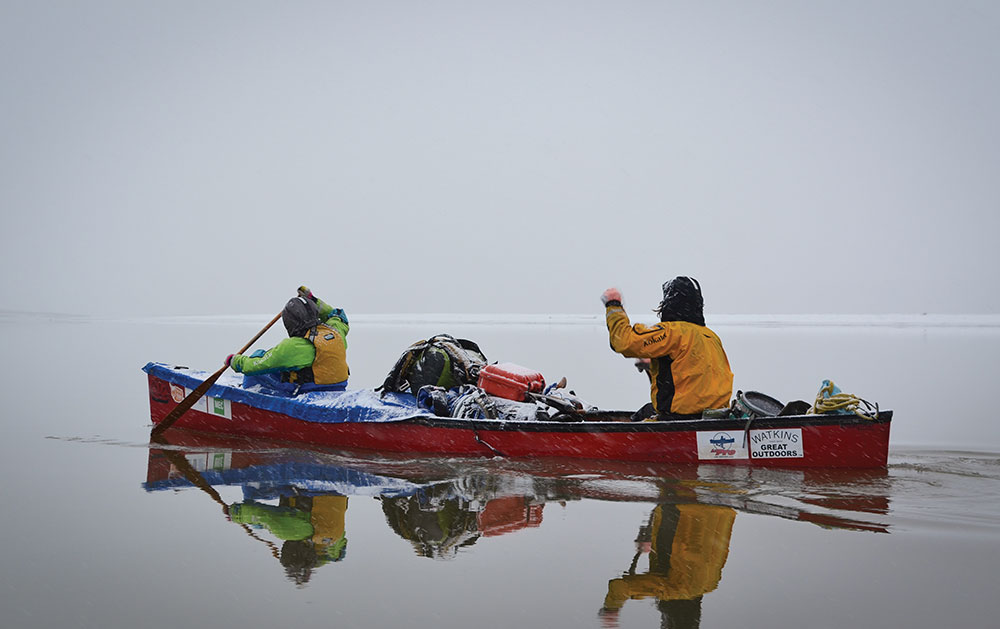
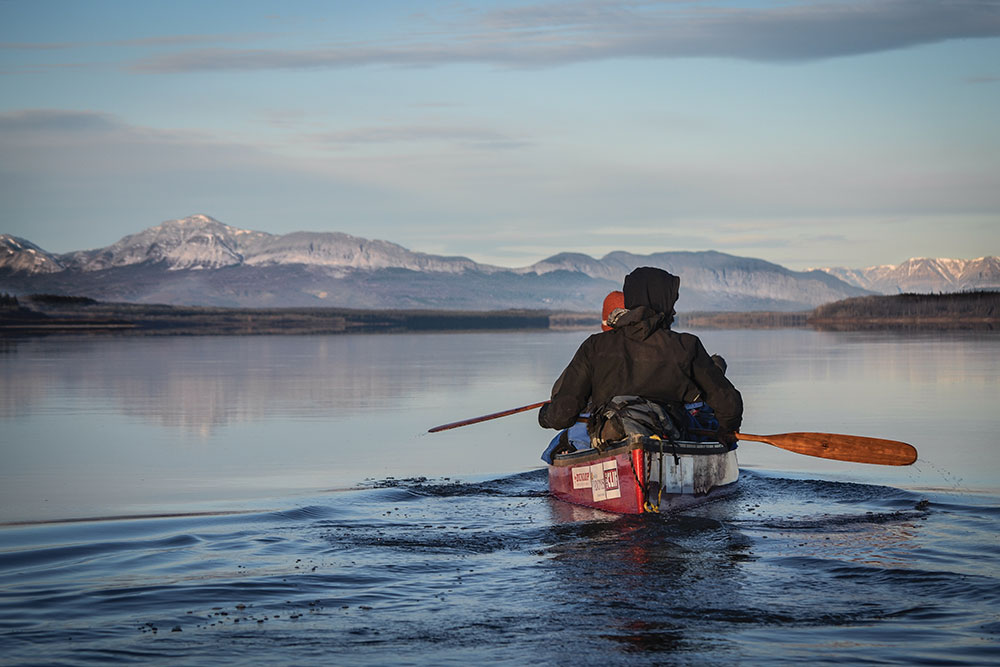
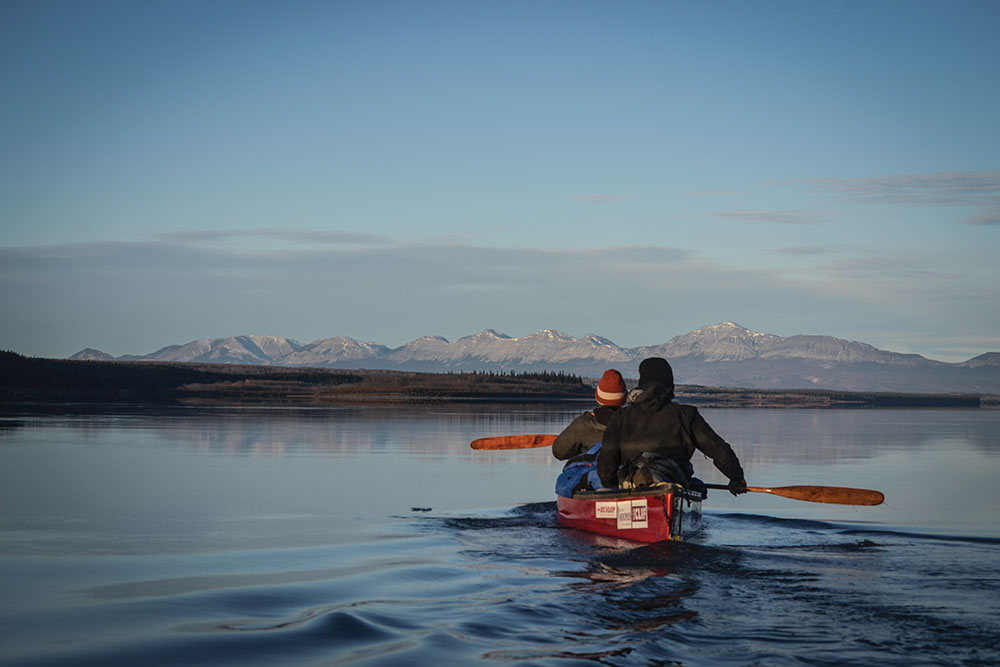
Our adventure concluded on the Mackenzie River, which we descended for 1,600 kilometres. It was here that we covered more than 100 kilometres in a single day – something we achieved only once. Along the riverbanks, grizzlies reminded us of the North’s raw power and beauty. In the final days, snow covered the ground, making it difficult to find firewood for cooking. Despite boots rated for -40 °C, I struggled to keep my feet warm.
With just a few days left in our Mackenzie River descent, a hard-to-document rapid had been worrying me for weeks. Our plan was simple: stop upstream, observe it and assess its safety. That afternoon, however, a stronger-than-expected current caught us by surprise and made the bank inaccessible, rising as a steep, sharp edge about 2–3 feet high.
Trapped in the wrong spot, we instinctively hugged the edge instead of aiming slightly offshore and plunged over a massive first drop. The impact tore off our velcro spray deck, already poorly secured by ice. For the second equally enormous drop, we had no protection and the canoe filled with water. In those icy waters, a capsize would have been disastrous, made worse by the fact that I hadn’t put on my dry suit, confident we’d have time to assess the rapid before committing.
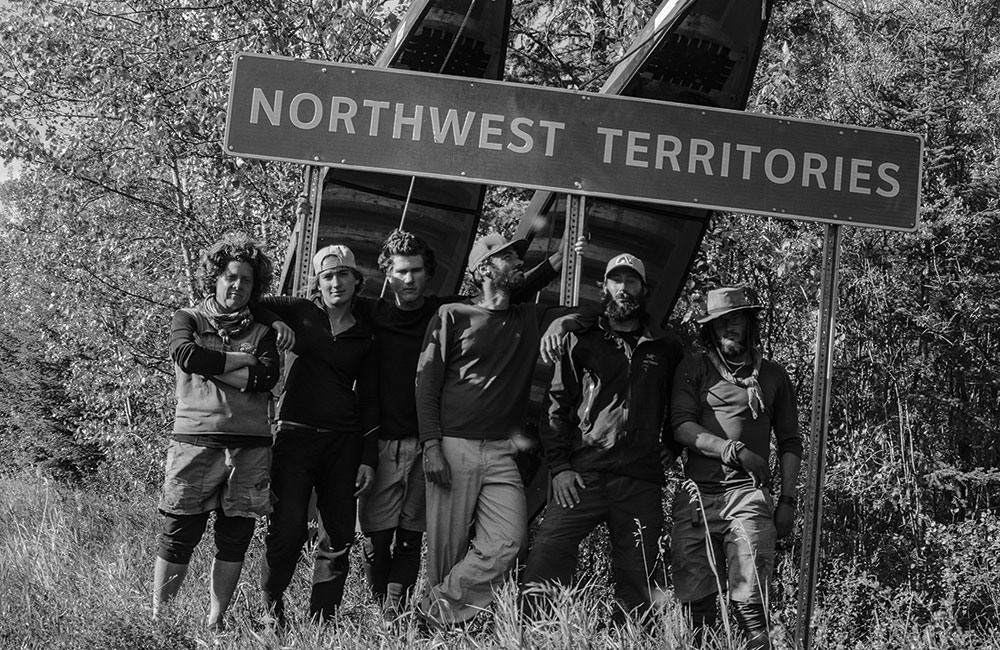
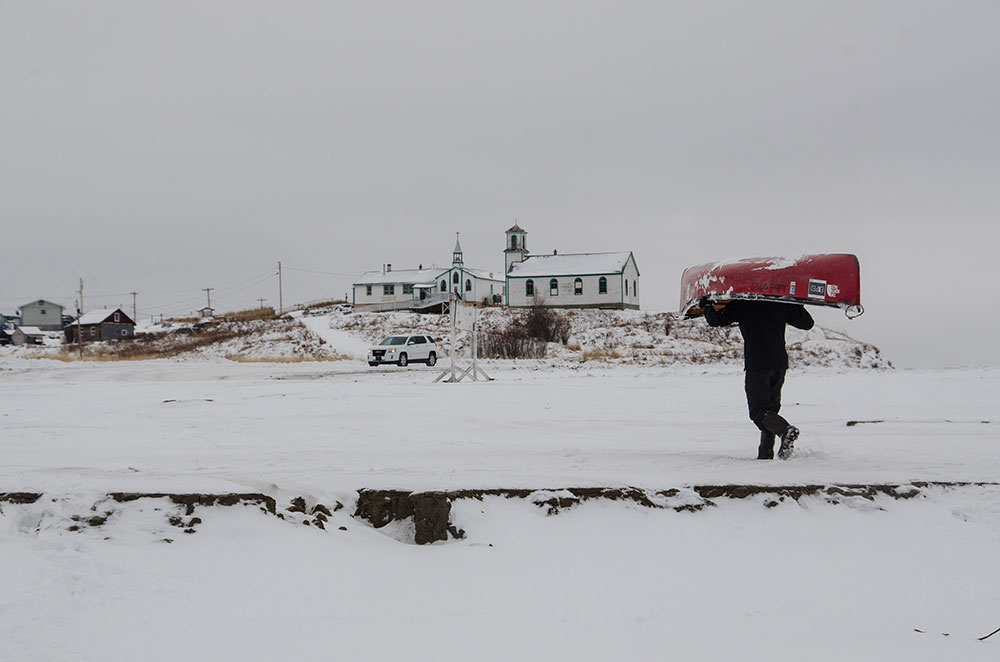
We were ultimately forced to end our expedition in the village of Tsiigehtchic, as the small river branch intended to carry us to Inuvik the following day had, unfortunately, already frozen. The remaining approximately 90 kilometres had to be covered by truck along a dirt road. We arrived in Inuvik quietly without fanfare or a welcoming committee to mark the conclusion of our journey. None of that mattered, for we were genuinely proud of what we had achieved.
After six months of effort, wonder and resilience, we departed Inuvik by air, partially retracing the route we had travelled by our own strength. I returned home with an unkempt beard, 40 pounds lighter and utterly exhausted. A period of readjustment was needed to reconnect with daily life.
Families & River Angels
We crossed lands full of history, beauty and extraordinary people. None of it would have been possible without my teammates and the incredible souls who supported us near and far. Family, friends and the river angels we met along the way showed us kindness beyond words.

Post-expedition depression
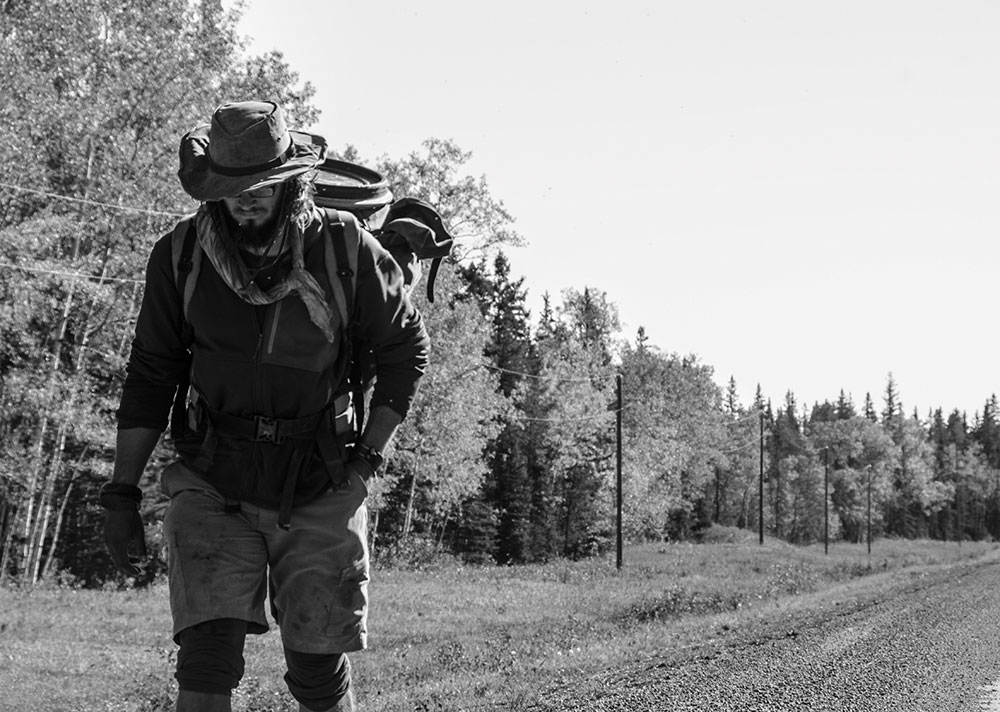
In reality, the adventure did not end upon leaving the water. Returning home was part of it, and for me, the most challenging phase. It was far harder than planning, logistics, or even managing tensions between teammates.
I faced a deep emptiness. A sudden, brutal depression hit me unexpectedly. I had invested months—years even—of energy, time and effort preparing this expedition, but gave little thought to life afterwards.
Weeks after returning, friends resumed their normal routines. I gradually found myself more alone and isolated, engulfed by a profound emptiness that was hard to name and even harder to manage.
A journey in resilience
Looking back, I smile at my own naïveté. I thought I had everything under control when planning, but I had only scratched the surface. Every step, decision, and challenge exposed gaps in my knowledge and experience. What seemed straightforward often demanded improvisation, patience, and humility—a lesson not just in logistics but in resilience, teamwork and self-awareness, revealed only in the midst of the journey.
Dream it. Dare it. Do it.
I simply believed in my dream. Sometimes, that’s all it takes. With effort, commitment and the right people around you, the impossible becomes attainable. Anyone can achieve great things; the courage to chase your dreams is the first step.