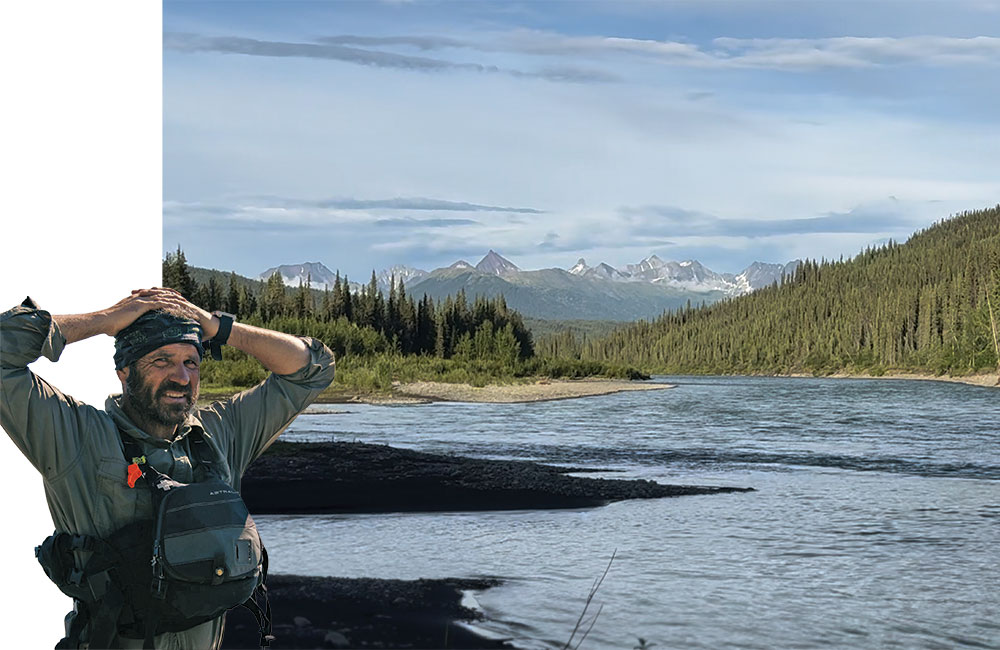
Words & photos:
Dan Smith
https://gofund.me/7023711be
Paddling the Hess River, Yukon, July 2025
I’ve spent years guiding others through the wild places of Northumberland, Scotland and Europe. I love watching people surprise themselves. Still, nothing quite prepared me for a 12-day 500km solo wilderness adventure on the mystical Hess that is seldom visited.
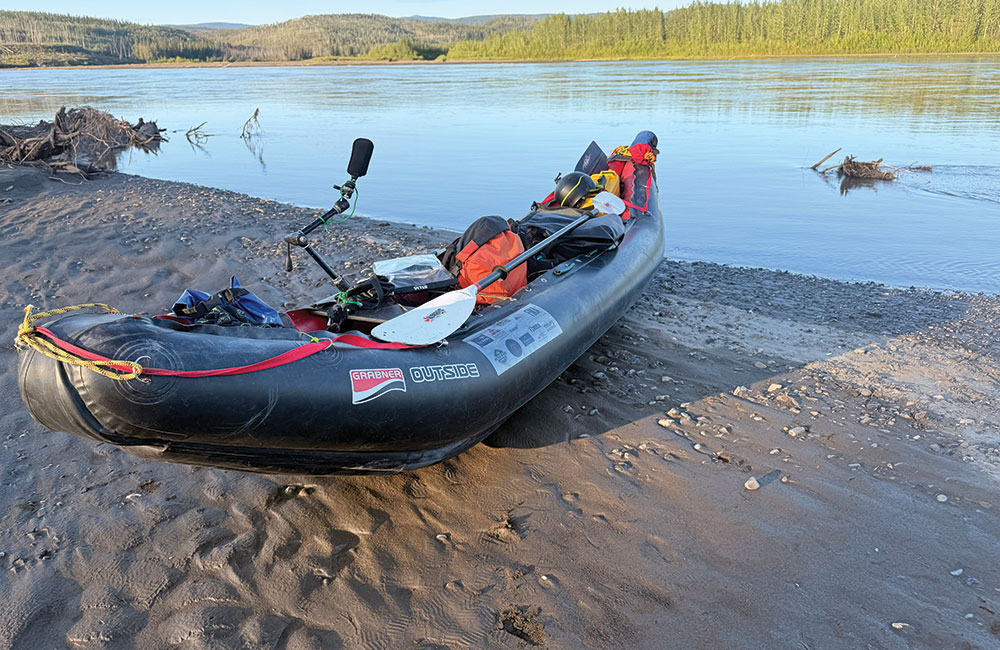
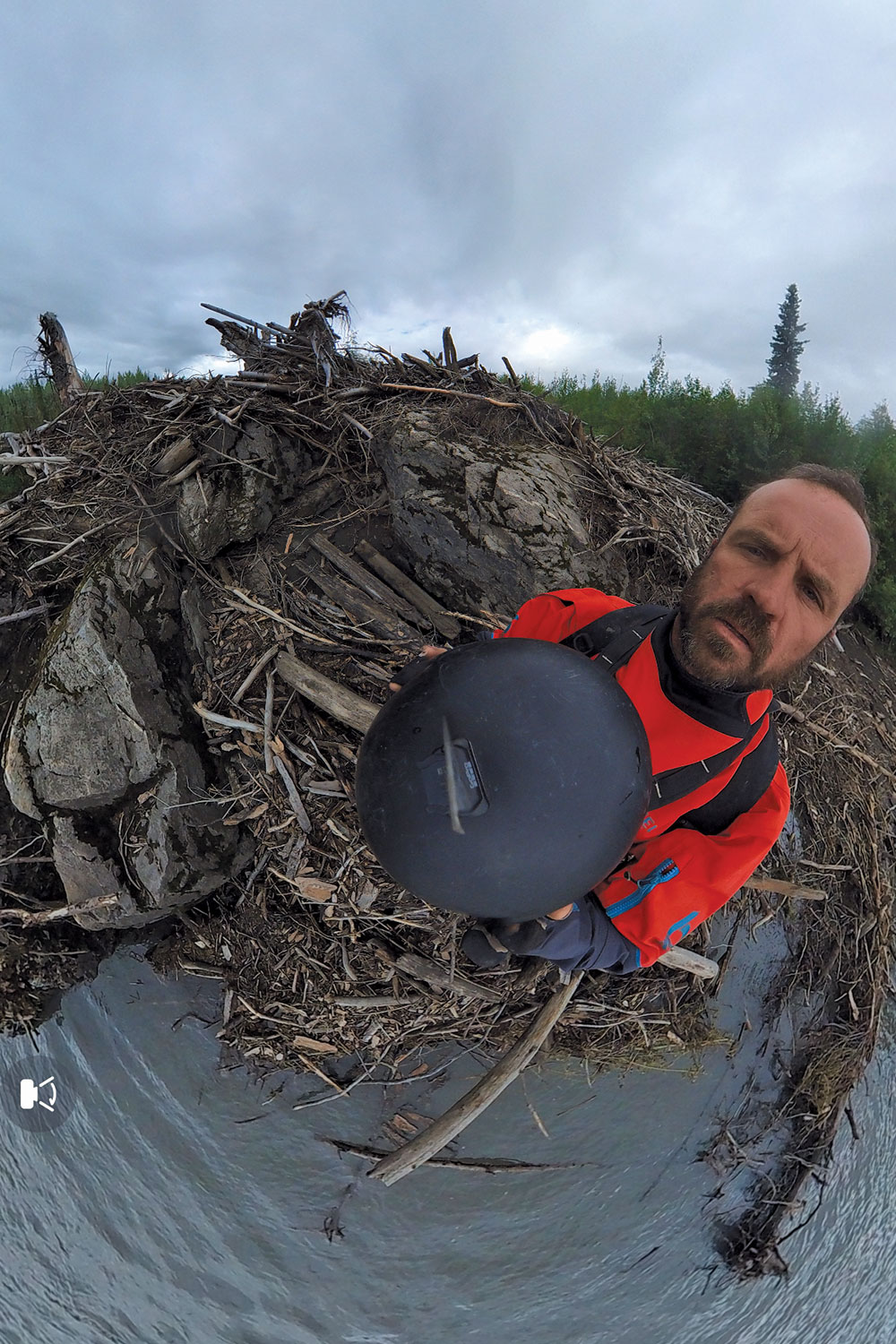
Just me, my small red inflatable canoe, shotgun, food barrel and a few more essentials, and the Hess River nestled in the Selwyn mountains- Northern Yukon, Canada. Twelve days downriver. No phone signal, no paths, no sign at all of human life. Just pristine wilderness.
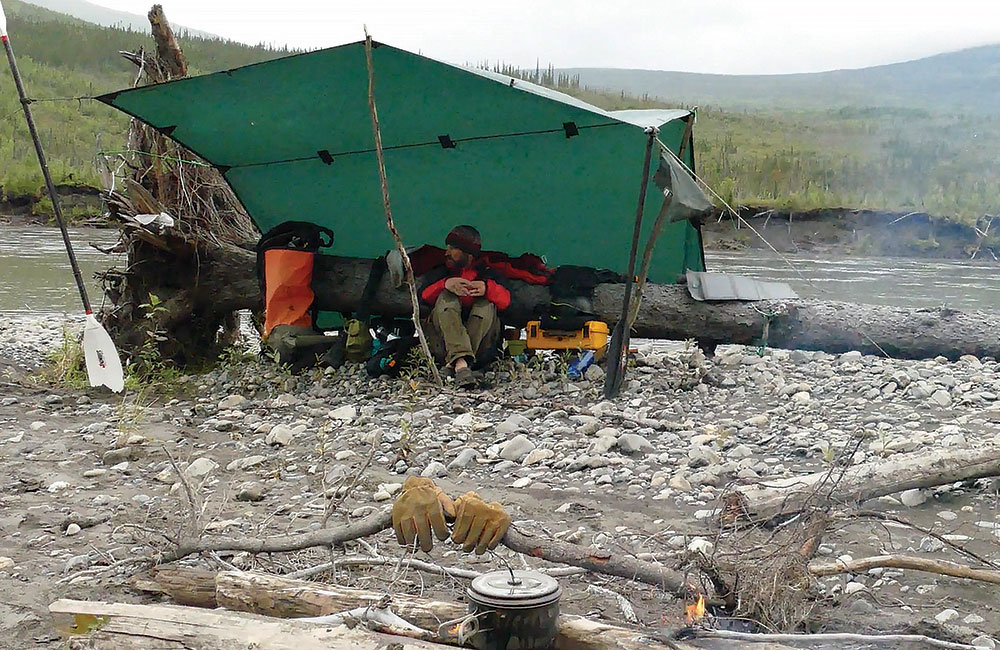
Gravel bars and small islands for camp, spruce debris for windbreaks, cold glacial water doing its old, patient work. The river set the pace and changed from day to day. I learned to follow.
The why
As well as a personal challenge of finally experiencing what it’s like in the actual wilderness, I was raising funds and awareness for UK homeless veterans, and, being a veteran myself, this is very important to me.
The Silence That Speaks Volumes
When that float plane took off from Porter Lake, I knew it was all on me now. Finally, that moment came, all the months of preparation and visualisation of this scenario.
The silence was deafening; it was a brilliant sunny morning, just the noise of pure nature.
The quiet was different on the Hess. Not empty – alive.
After sorting out my gear and inflating my kayak, I sat on a bank, fired up my jet boiler and made a strong coffee. With my wooden coffee cup cradled in my hands, I realised my shoulders had been up around my ears since we had taken off from the float plane base at Mayo. Steam lifted off the rim. My nervous system finally exhaled as I heard the faint sound of the plane engine fade away.
This was it! No turning back now, but there was no time to procrastinate, time for a 2km portage over a hill to the true source of the Hess and begin trying to film it all.
Learning to Be Small Again
That first day consisted of just getting to the river, and my 2km portage turned into a 7 km portage, with me having to go back for my kit each time: the boat, the food barrel, kit bags, and the camera on its tripod.
The upper Hess is truly stunning, with huge mountain ranges towering on either side. The map felt too small for the place in my hands.
As I crested the first hill, I locked my eyes on a huge bull moose who was just casually eating. He looked at me for a brief moment, our eyes locked, and then just like that, he and I carried on our daily business.
My first night was restless, but I did manage to get some sleep. When I woke up around 06:00, I realised I had camped on a beehive, with the furious buzz and hum all around me. I lay there protected in my cocoon, thinking about what the best plan to try and not get stung to death was.
I decided to just go for it – scrambling out with as much of my body covered as I could, I stuffed all my kit away quickly and paddled off. It worked, and I just managed to receive one sting.
Day one was a steady flow up in the headwaters. I counted strokes and kept my eyes open for any wildlife. Read the tongues, slipped across eddy lines, ferried to check a braid for sweepers. The current did most of the work when I let it. There was no rush. There couldn’t be.
The first two days settled into a steady rhythm: break camp, paddle, stop to scout a blind corner, push again. Land and water and weather, in conversation. I mostly listen. At the end of day two, I had an encounter that got my heart racing.
Two grizzlies
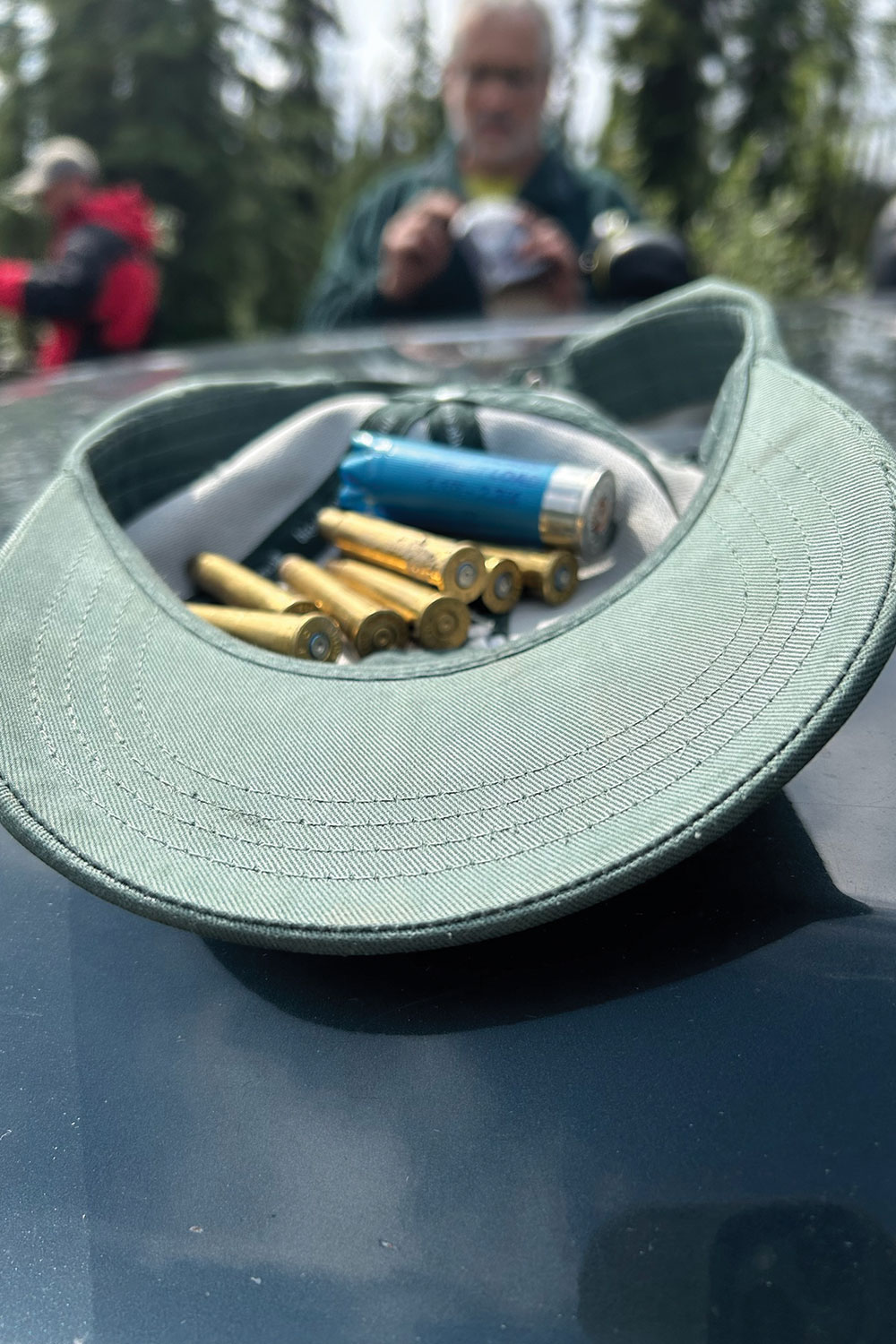
I was looking for a place to pitch my tent, but there was bear scat everywhere, not a good sign. Then I looked up and two grizzlies – a mum and her cub – appeared on the far river bend. I spotted their outlines and just had a strange feeling that something was watching me. I scrambled for my gun and spray, which was always to hand, and just took it all in and told myself to keep calm.
After observing them and snapping a few photos, I was ready to move on, but the bears had other ideas and lingered stubbornly on my route, or should I say me on their route. In the end, after lots of shouting and banging my paddle off the water, I had to resort to firing a shot into the air, and that seemed to do the trick.
Both bolted off into the willows, leaving me with adrenaline pumping and a story to tell.
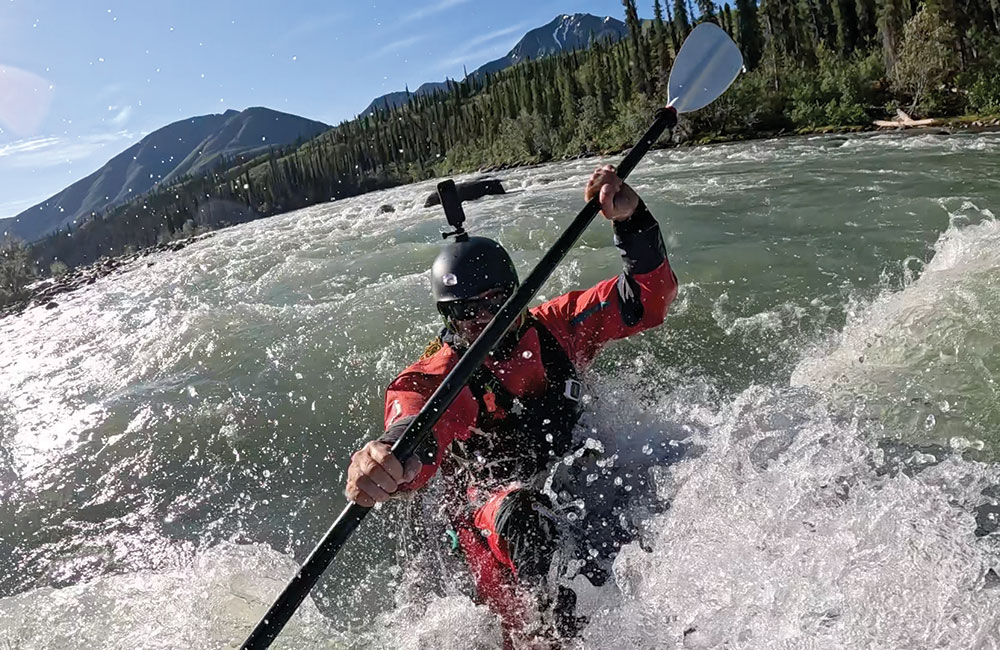
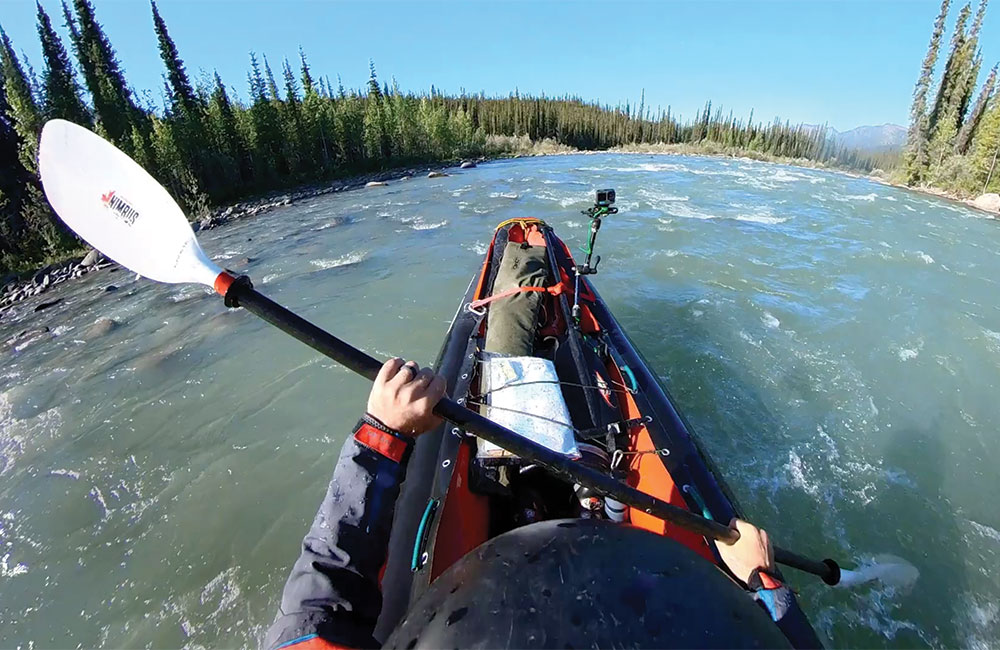
On day three, the mountains closed in on me, and the river picked up pace into white water grade 2/3 rapids. As I found a place to sleep for the night on a huge gravel island, I was met by another solo paddler, Joel (top guy). We agreed it made sense to paddle the biggest rapids together the following day. The rapids intensified, pushing the grade up to 3 and 4.
I nearly lost my boat – and all my equipment – when the current caught me out where I made a schoolboy error and didn’t tie boat off in between scouting rapids.
Luckily, Joel, my new pal, was downstream of me and spotted my runaway canoe and managed to save it before it floated off into more big rapids. Not long after, I rescued Joel’s boat when he had a close call, too, after capsizing while running a big rapid. Good job we had each other’s backs out there, we made friends for life after that day.
I’m so pleased that I chose the inflatable Grabnar canoe in the end, it was so forgiving, punching through the big stuff and had the added bonus of being self-bailing.
The remainder of the journey was still quite full-on and didn’t really let up, with stunning canyons with blind corners and uncertain outcomes, with a few near misses; I counted 17 rapids.
There is incredible wildlife, and evenings spent catching Grayling where the river slowed and the odd glimpses of a bear or a moose.
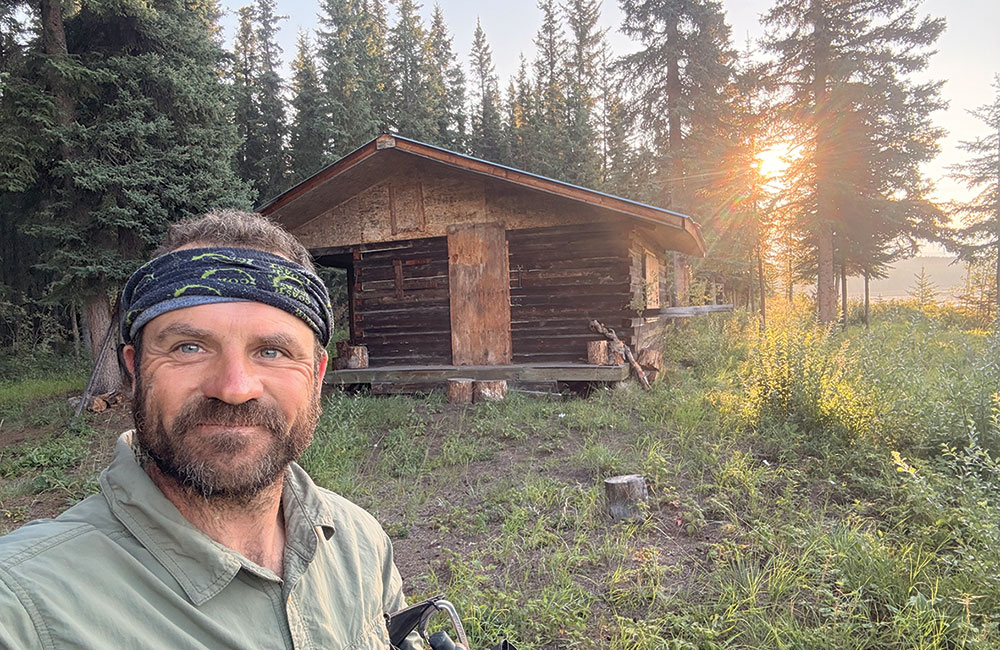
After the big portage on day nine around a large unmarked rapid, and then the mighty Fraser Falls on the Fraser River, I stopped at an open wilderness cabin, which was a lifesaver as I was feeling the heat and fatigue with the current much slower. I made some repairs to the cabin the next morning, left a note and 20 dollars.
The current was painfully slow, the heat was intense, and having solid shelter for a night made a real difference.
The Gift of Discomfort
I won’t romanticise it. The river asked for attention. Eventually, the Hess joins the Stewart River, which is much wider, with a final 90 miles of paddling back to Mayo.
A cold headwind one afternoon turned kilometres into hours. I lined the canoe around a massive tangle of pine tree sweepers, boots sliding on slick clay, and precarious stacks of logs. Rain came sideways. Then hail, then just like that, sunshine again.
Discomfort simplified everything. Food. Fire. Dry. Warm. The list got short, which made decisions easier. There’s a relief in that kind of clarity.
One morning, the world was rimmed with frost – the bottom of my inflatable craft was iced over, water bottles crusted, the river breathing mist. I packed on a gravel bar with numb fingers: roll the bag, drop the tarp, cinch the food barrel, slide the drybags into the hull. No drama. No bargaining with the weather. Just the next right task.
At some point, I realised I wasn’t fighting the conditions anymore. I was moving with them and adapting to my environment.
Rediscovering Presence
Back home in Northumberland, my head runs in parallel threads: safety, weather, group dynamics, kit, routes. It’s good work. It keeps me in planning mode.
On the Hess, that habit loosened. I noticed small things again. The colour shift in the water where a silted tributary joined was from tea-brown to slate.
A beaver’s tail-slap at dusk. An eagle’s shadow sliding over the gravel like a moving hole in the light, at dusk, a driftwood fire, the smell of smoke on my clothes. None of it was forced. Presence arrived when I left space for it.
What the Wild Gives Back
People ask what I got from the trip. The truth is, it took things away: the urge to hurry, the need for control, the hum of urgency I didn’t realise I carry without noticing.
What stayed was simpler: patience, attention, a quieter kind of confidence. On the Hess, good decisions were small and timely – eddy out, stand up, look, talk it through, set safety, walk if in doubt. No heroics. Just respect, one silly mistake could be your last!
Coming back to signal bars and schedules felt too bright, too quick. That faded, as it does. But the reference point remains. One thing the Yukon teaches you fast is just how much the wild puts life into perspective.
After close calls, big water days, and nights in silence, I thought about sharing these moments with family and friends. There’s something about being out there – swapping stories, navigating alone, Surviving the day – that makes you appreciate loved ones even more. Next time, I want my family with me to see, feel, and connect with the wild in their own way. These kinds of experiences remind you who matters most.
Bringing It Home
When days get loud now, I think about reading a line through moving water: breathe, look where you want to go, commit, make small corrections, keep paddling.
That’s what I try to make room for in my work as an outdoor guide- on our rivers and coasts closer to home. Not adventure as spectacle, but time and space to notice, to adjust, to let the place do some of the teaching.
The Hess keeps running, indifferent to my plans.
Somehow, that feels like a gift.