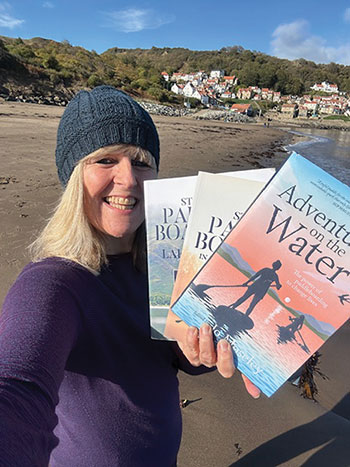
Hello, my name is Jo Moseley, and I am the bestselling author of three books about paddleboarding.
Two are guidebooks – ‘Stand Up Paddleboarding in Great Britain – Beautiful Places to Paddleboard in England, Scotland and Wales’ and ‘Stand Up Paddleboarding in the Lake District – Beautiful Places to Paddleboard in Cumbria’. The latter won the Lakeland Book Awards Zeffirellis Guides and Places Award 2025. My latest book is ‘Adventures on the Water – The Power of Paddleboarding to Change Lives’ – a collection of 27 inspiring personal essays from incredible paddleboarders on how SUP has enhanced their lives. I am also the host of ‘The Joy of SUP – The Paddleboarding Sunshine Podcast’.
In this column I share inspiring stories of environmental projects, mental wellbeing initiatives and how we can make SUP more accessible. If you have a story, please email me on jomoseley@yahoo.com or message me on Instagram @jomoseley.
Exciting Blue Health SUP training – from Portugal to the UK!
I’ve always had a personal interest in the benefits of being by water for our health and researching it for my third book Adventures on the Water – The Power of Paddleboarding to Change Lives. When I noticed SUP friends on Instagram were in Portugal for a Blue Health training, I was keen to find out more for you.
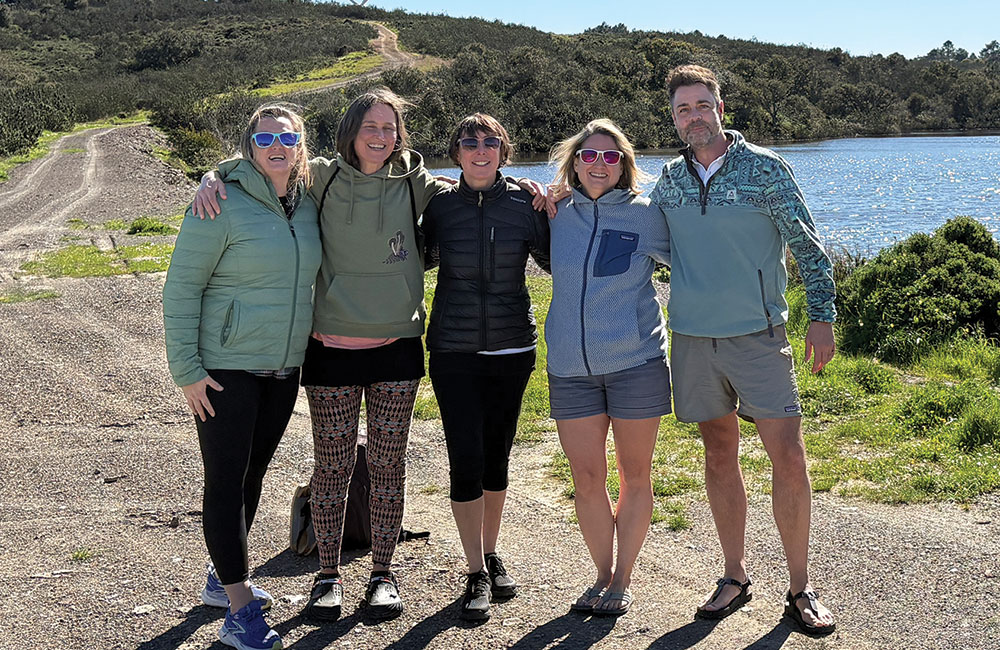
I asked James from Wittering SUP, Gemma and Sarah from Whitby Ebb & Flow, Cami from SUP & Soul in Brighton and Clare from Wild Ocean Soul based in North Wales to tell me more.
First of all James, what is Blue Health?
James: Blue Health is the growing body of research showing that time in or near water has measurable effects on physical and mental wellbeing; lower cortisol, slower heart rate, improved mood, sharper attention. It isn’t a feeling or a metaphor. The ‘Blue Mind’ state (a concept coined by marine biologist and author Wallace J Nichols) is what happens when the nervous system finally has somewhere soft to land. Activities on the water like SUP, surfing or wild swimming give people direct access to that state, often for the first time.
Please tell me more about the Blue Health Training Course in Portugal With ASI.
James: The Blue Health Skills for Watersports Instructors course is a six-module online certification covering the science of Blue Health, the Red Mind to Blue Mind arc, soft fascination, nervous system regulation, and how to weave these into a SUP, surf or any water based activity session without it feeling forced. It finishes with an assessment. The aim is to give instructors a framework so they can run sessions that genuinely shift how clients feel, not just what they can do.
ASI (the Academy of Surfing Instructors) is a global certification body for surf, SUP and adaptive watersports coaching. UK paddlers will know Paddle UK as a domestic governing body; ASI works alongside it internationally, with strong reach across Europe, Australia and the Americas.
What was your motivation for going on the course?
Gemma: Seeing people’s joy at being in blue spaces; their awe, as well as the achievement of physical challenge was key for me. I’m also researching risk & wellbeing on our coasts for my PhD, so this qualification brings together the evidence base on Blue Mind with the rigour of teaching SUP safely with ASI.
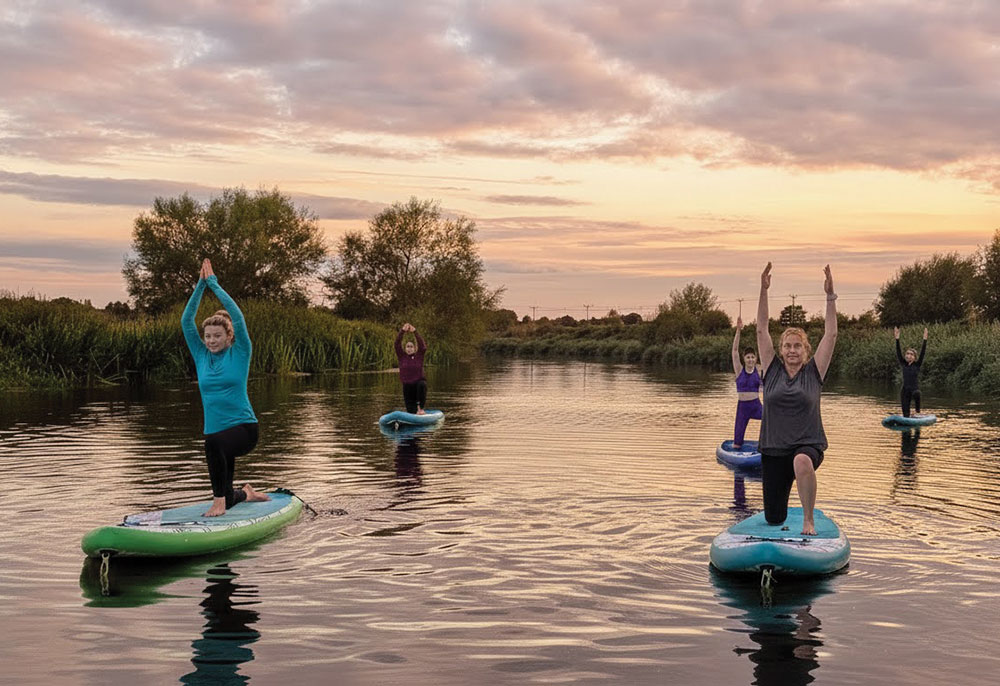
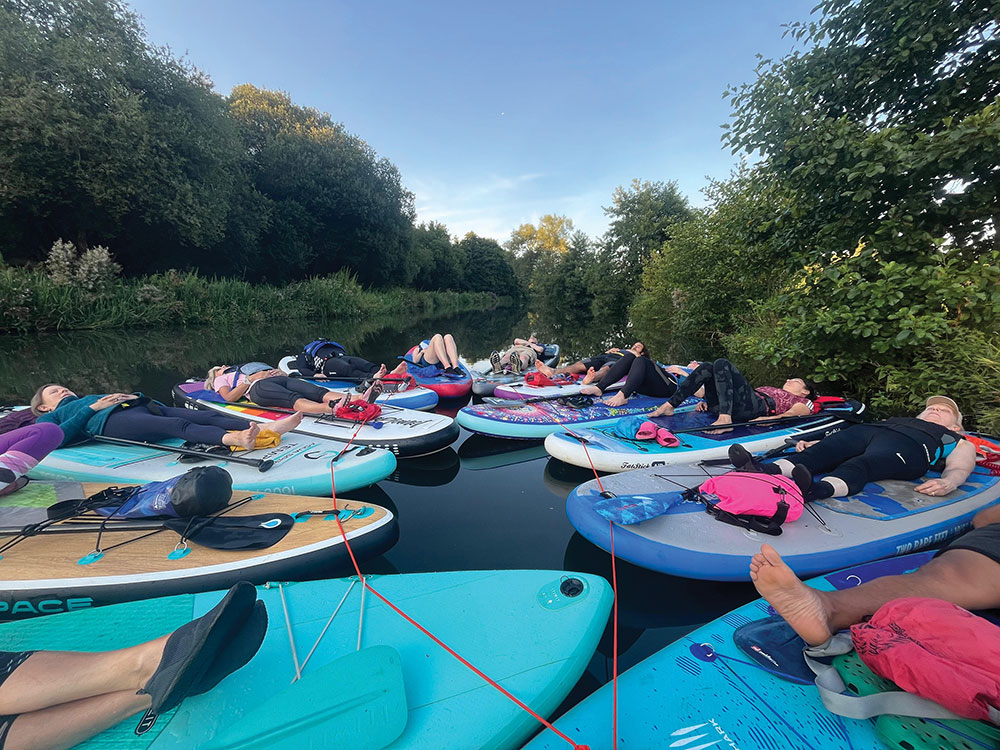
Sarah: Already being a Paddleboard Yoga Teacher, I knew that it would give me further skills to enhance my classes, in the area where I feel most passionate, the power of nature and the benefits that it brings to our health.
Clare: Blue Health has been at the heart of my work for years. I’ve seen what water does to people, the moment their shoulders drop and something shifts. Having trained as a Blue Health Coach with the pioneering Lizzi Larbalestier, the ASI course felt like a natural next layer, adding the watersports instructor framework and science to underpin what I’d already developed in practice. I’m also Senior Communities Officer at Surfers Against Sewage, mobilising communities to protect the waters we love to paddle in.
Cami: I read Wallace J Nichols’ book, Blue Mind, early in my SUP career and immediately knew it would become the foundation of my work. My own SUP journey began as a way to find space and healing after my Dad passed away in 2016. I wanted to share the power of water connection for wellbeing through SUP far and wide, so it was a no-brainer to sign up.
This sounds so interesting, what’s next for the training?
James: The course is live and open to any qualified watersports instructor, not just ASI coaches. Beyond the certification, we’re building a community around it, practitioners sharing how they’re applying it in their own waters, what’s working, where the science is going. Long-term, I’d like to see Blue Health become a recognised specialism within instructor training, the way first aid or safeguarding already are. The evidence is there. The framework is now there. We call it the Oxygen Mask Philosophy; self-care as a safety standard, not a luxury.
How will you each incorporate it into your SUP personally and professionally?
Gemma: Accessing Blue Mind really helps me as a coach and for endurance training. It has previously kept me going for 40km! Self-care is also vital, both for me professionally and for paddlers to have the best experience on the water. Starting in May, we’ll run ‘Mindful Mondays’ from Scaling Dam near Whitby, for both members and non-members, alongside our other sessions.
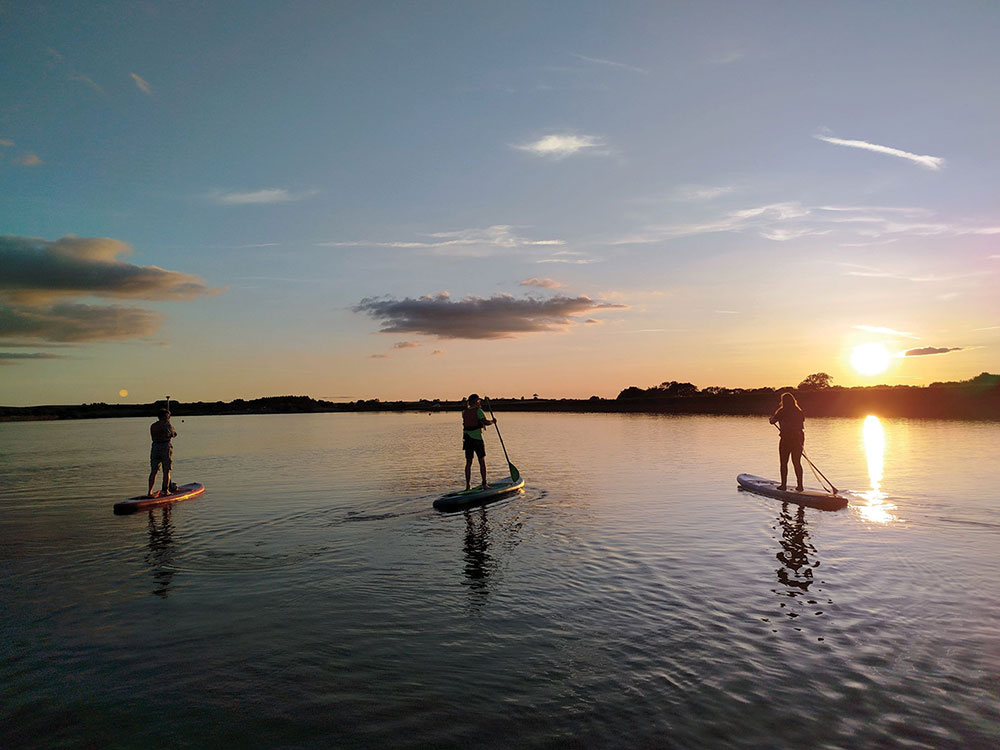
Sarah: Paddling in a blue state of mind not only helps me to tap into a much deeper sense of peace and calm on the water, but also helps me with more challenging paddles. It aids the mindfulness of my paddlestroke, helping me to get into the rhythmic flow of the stroke, helping performance and injury prevention.
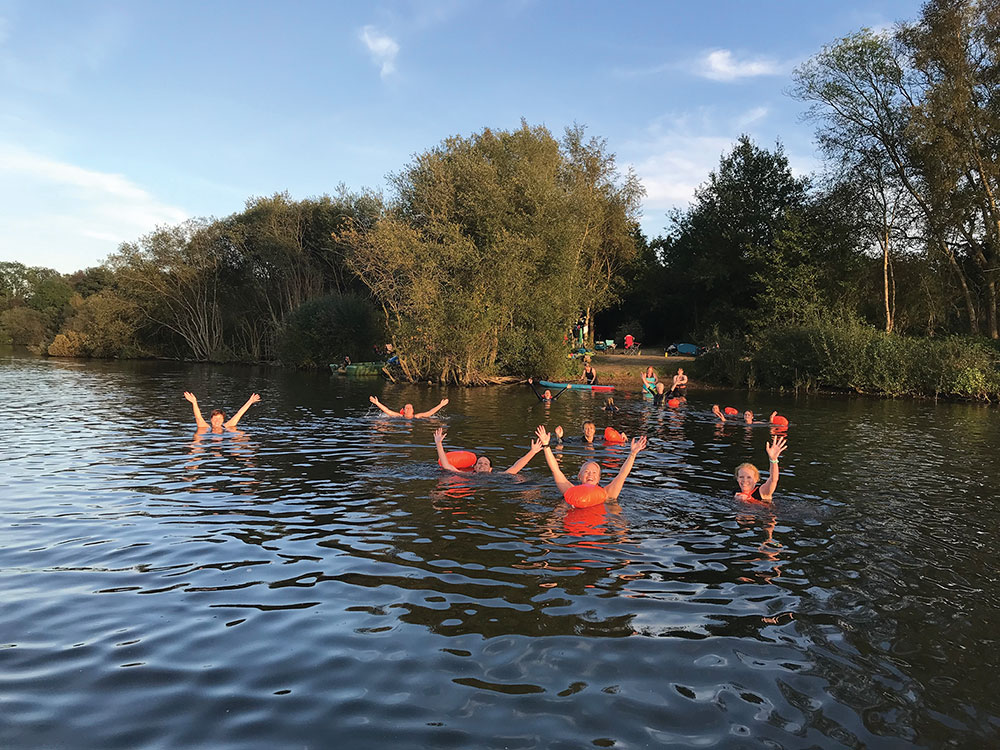
Clare: I’m training for a sea kayak expedition in Greenland this August, with Blue Mind principles very much part of my mental as well as physical preparation. Having recently relocated to North Wales I’m falling in love with my local waters including Llyn Padarn, an SSSI lake facing real pressures. I’ve joined a local water testing group working to protect it, and I’m planning informal blue health social paddles there later in the year. For me blue health and blue activism go hand in hand and I want to help people connect deeply with water, because people protect what they love.
Cami: the course has given me stronger science-backed foundations and the confidence, skills, language and tools to name what I already knew. I am weaving the Blue Mind learnings into the design of the experiences I host, along with sound healing, and exploring even more ways to bring people together around water and nature to support with their wellbeing – both on and off the water.
Are there simple tips you can share so we incorporate them into our SUP/life now?
James: Absolutely! Twenty minutes is enough. You don’t need a long session. Twenty minutes near water, with your phone away, measurably shifts your nervous system. Treat it like a dose, not an event.
Let the water do the work. You don’t have to meditate, paddle hard or ‘make the most of it.’ Soft fascination (light on water, the sound of it, slow movement) does it for you if you’ll just stop trying.
Notice the after. The Blue Mind effect lasts well beyond the session. Pay attention to how you feel an hour later, two hours later. That’s the bit that compounds.
Find out more for yourself – either for your personal use or as a SUP coach – go to: James @witteringsup, Cami @supandsouluk, Clare@wild_ocean_soul and Gemma & Sarah @whitbyebbandflow or www.academyofsurfing.com