BY LIAM KIRKHAM
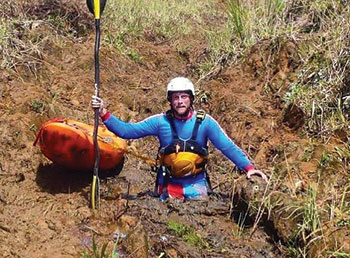
Liam Kirkham
Liam Kirkham’s lessons from the river 2
I’ve spent an ill-advised amount of time, money and energy on kayaking. It’s taken me all over the world and, despite never being a great kayaker, I’ve racked up a fair bit of experience. I’m not kayaking as much as I used to, but looking back, I realise some of my biggest life lessons have been handed out by the river. Though that may say more about my lack of education than anything.
To make sense of it all, I’d like to share some of these lessons with you in a series of true stories. Expect tangents, pseudo philosophy, solid advice and utter nonsense. I’ll leave it up to you to decipher which is which, as we move from one river memory to the next.
For context, my last article described the very early days of my kayaking journey in the early 2000s: two wetsuits, a cold river, and me, severely under-equipped in North Yorkshire. Clearly, I was the worst in the group. Now, let’s fast-forward about 15 years for this next tale.
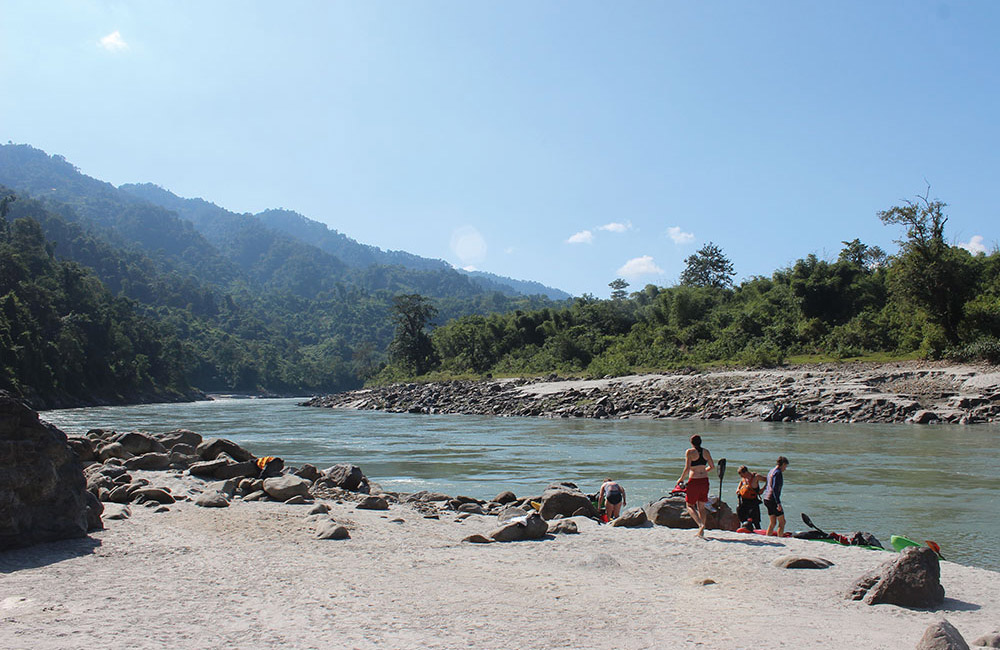
The Sun Kosi, Nepal
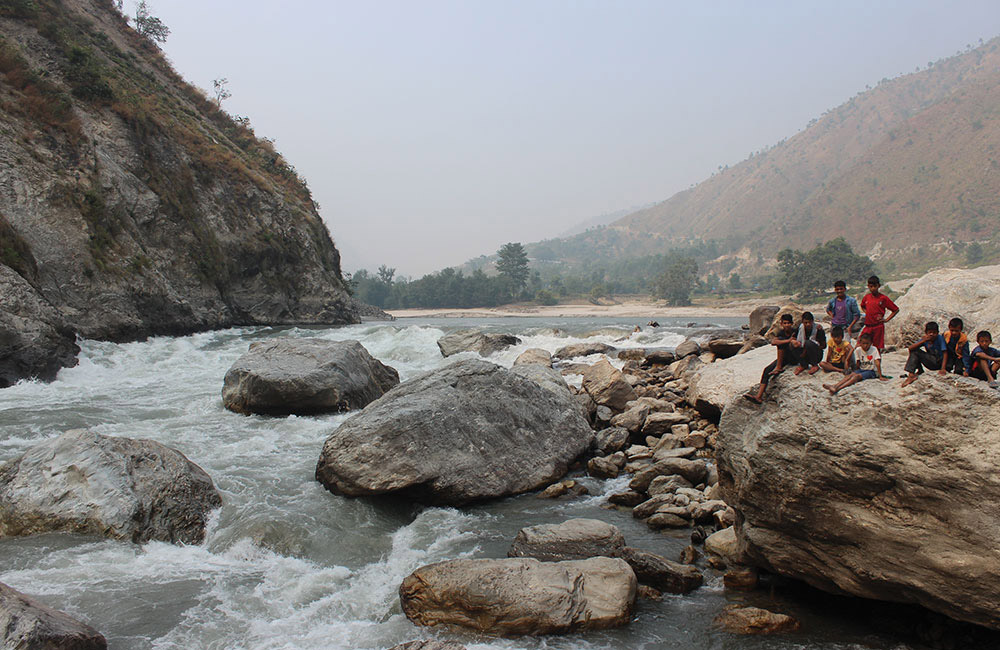
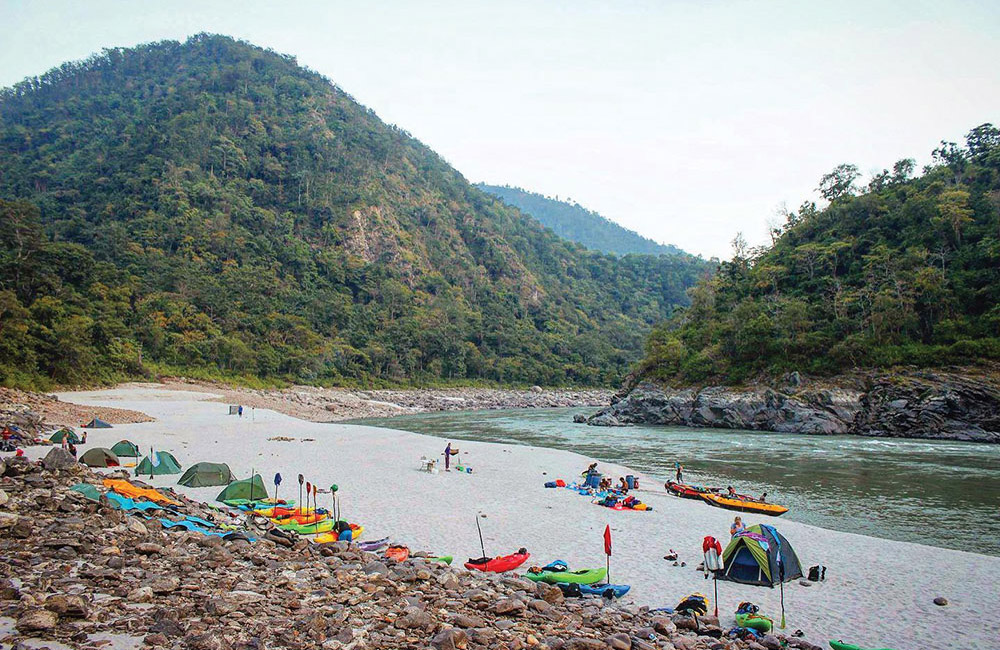
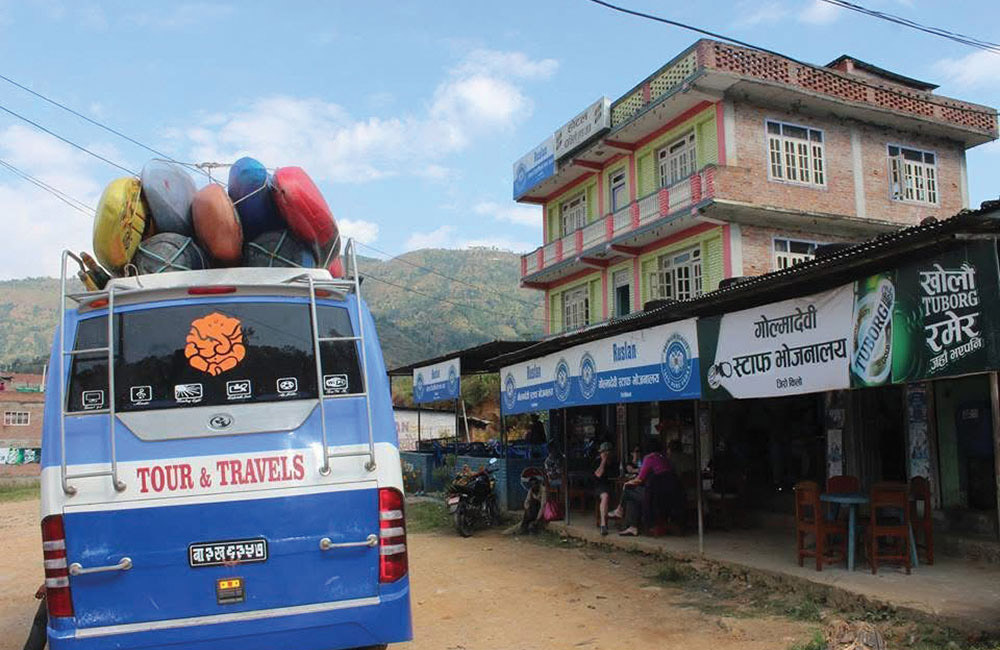
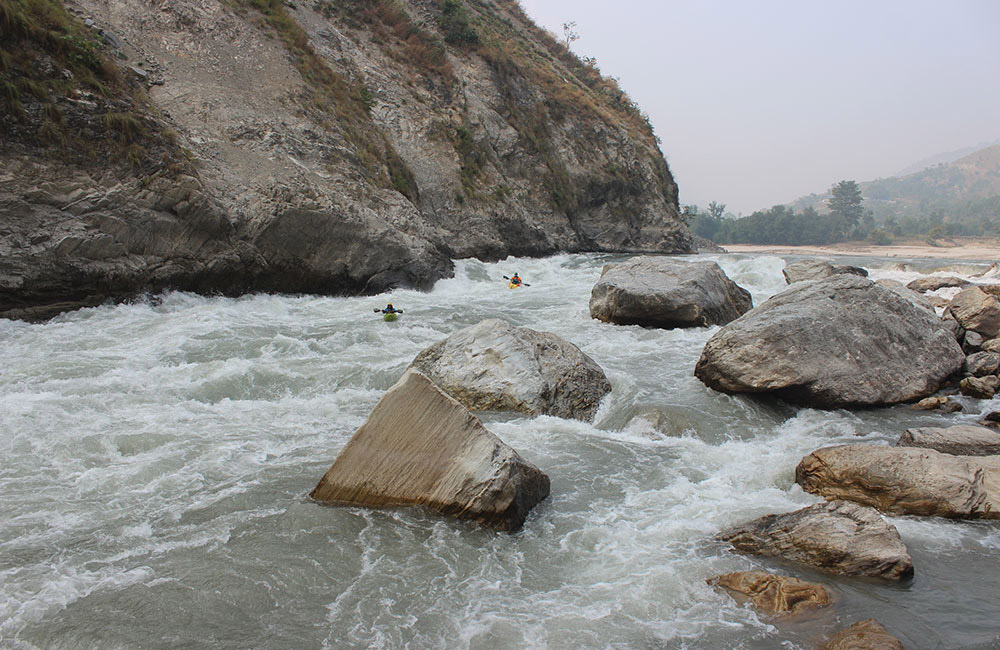
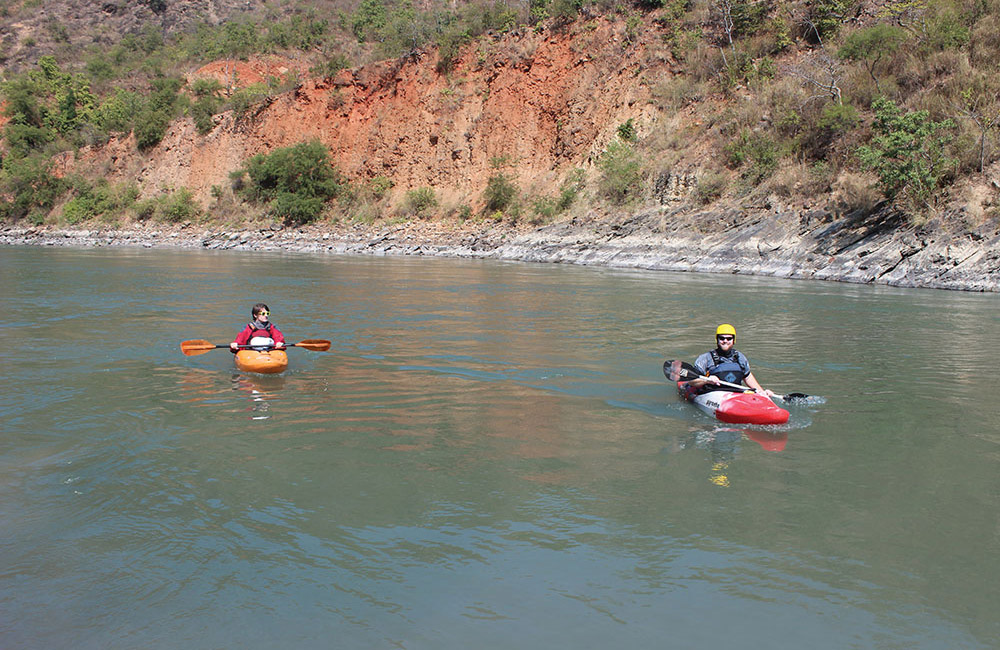
We were now on the final day of an eight-day raft-supported river trip on the Sun Kosi, Nepal – a far cry from those cold swims on the River Wharfe. I was comfy and looking rather flash (I thought) in my top-end kit. How things had changed.
Still, even after all that progress, I discovered there are a surprising number of different ways the river can humble you.
The trip had been a success. The team – a mix of paddlers from Australia, Devon, Hong Kong and the USA – had bonded well. For many, this was their first multi-day river. Combined with their first experience of ‘big water’, it made for a genuinely challenging expedition. We were on the last day, the river was petering out, and people were in good spirits.
Despite being a filthy little dirtbag in most of my life, I have a surprising habit on multi-day expeditions: I take hygiene very seriously. Water is treated, hands are scrubbed, etc.
An infected cut or a stomach bug ripping through the group can ruin what is supposed to be ‘the trip of a lifetime’. One of the roles of the ‘lead’ is to make sure everyone takes it seriously.
However, my stomach is not the strongest, even at the best of times. I’d turn the page now if you thought this was about how to tidy up your bow draw. Things are about to get messy.
A familiar cramp in my stomach
The major rapids were done, the team was paddling well, and the excellent local guides were in control. I’d taken a more laissez-faire approach to leading and was dawdling at the back when I felt a familiar cramp in my stomach. Then came the cold sweats in a warm country. Never a good sign. I knew the countdown was on. I needed to find a private, quiet spot now.
Despite spending days in the wild, we were now heading toward civilisation. Beaches were either occupied by school kids, fishermen, funeral pyres, women washing clothes, or all of the above. Time was going fast and slow at the same time. Every ripple on the river pushed another wave of sweat over my body.
Thoughts flooded my head. Was it my Sweet Shambhala shorts I had on under the spray deck? Why them? They’re my favourite. And: Surely I can’t hand this rental kayak back after this.
Fate wasn’t on my side. Any beach or patch of sand a human could reach was occupied. But then I spotted a possibility. A last-chance eddy. It wasn’t perfect, but I could make it work. I was saved.
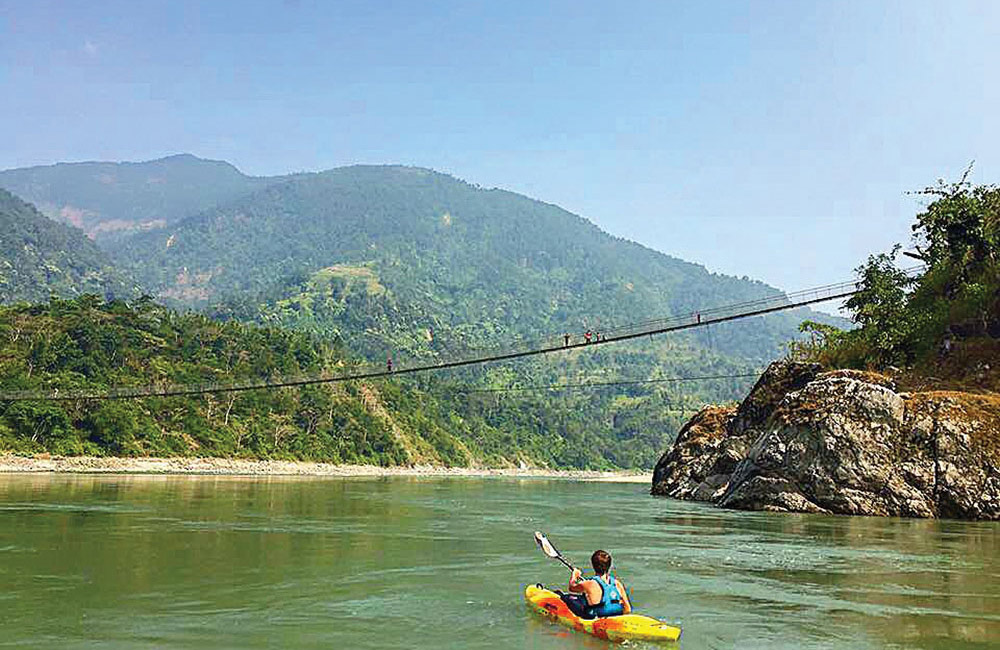
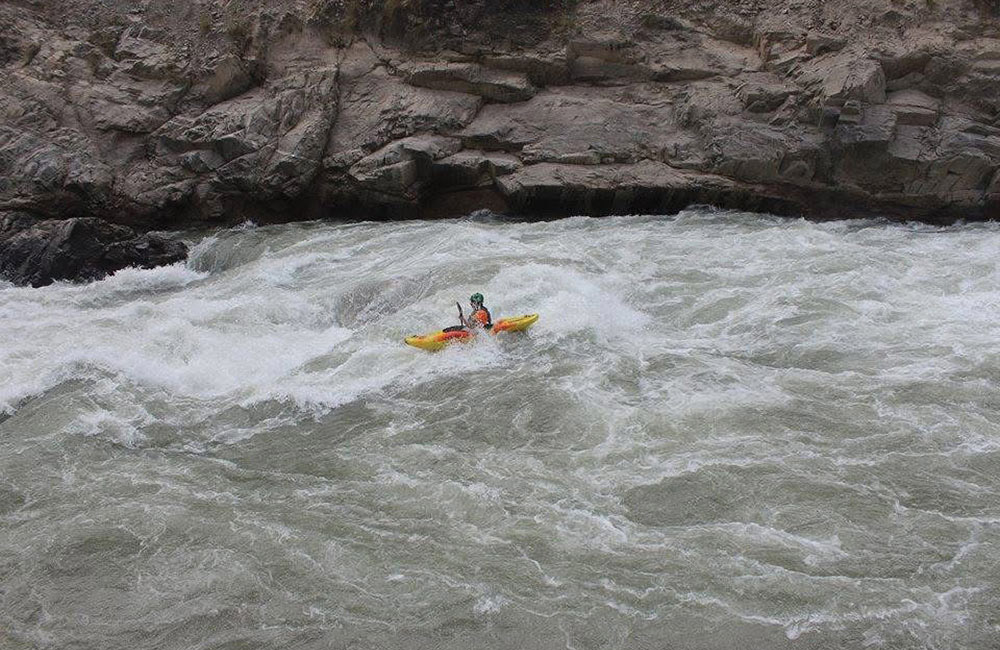
It wasn’t a beach, but a gentle 25-foot-wide pocket eddy tucked into a 15-foot cliff. Impossible to reach by foot and out of sight from anyone. It looked deep on the riverside but shallow enough near the cliff. I charged toward the sacred spot. My body stiffened in its final act of resistance against the inevitable.
Things weren’t going to be that easy, though. The cliff edge wasn’t as shallow as I’d thought. The eddy, however, was gentler than I’d realised. I had an idea.
Now, cow’s tails (a bungee cord with a karabiner attached to your buoyancy aid) aren’t very popular in the UK. I’ve always valued them for rescues on big-volume rivers. Today, they’d prove useful for another kind of rescue
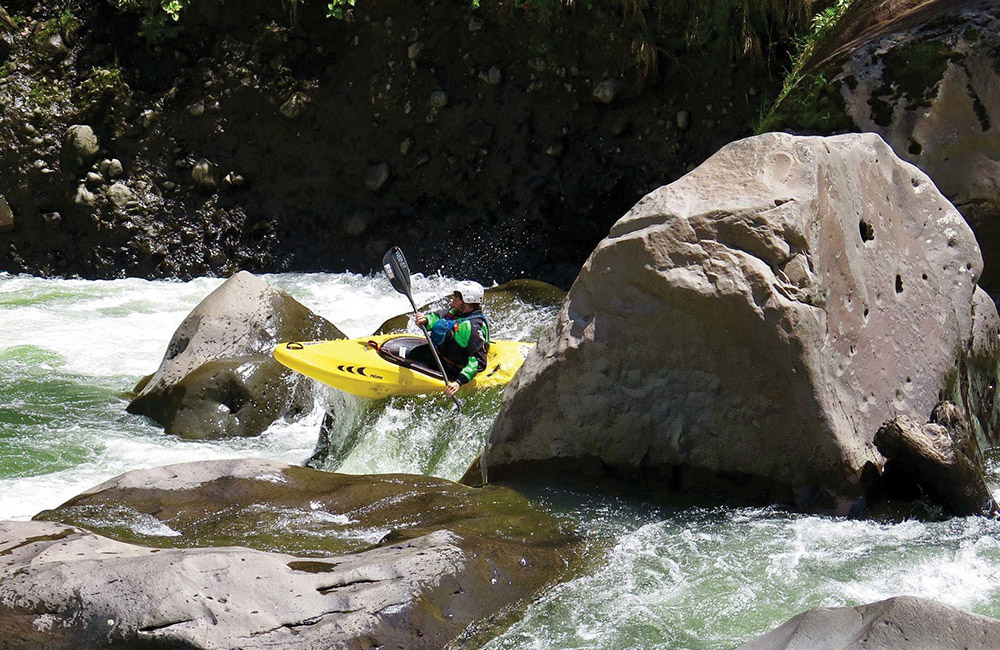
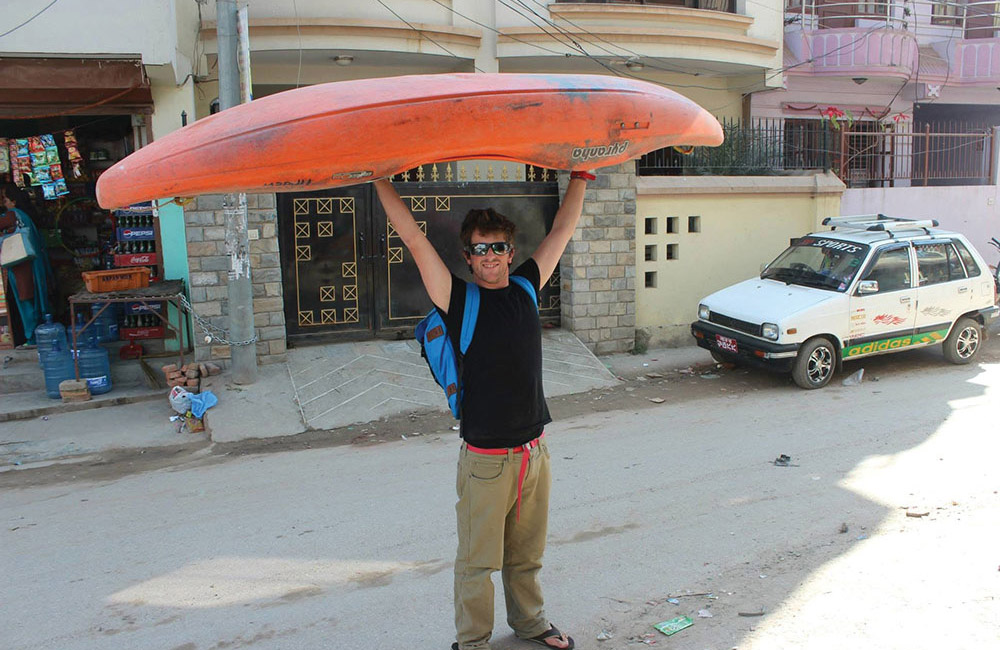
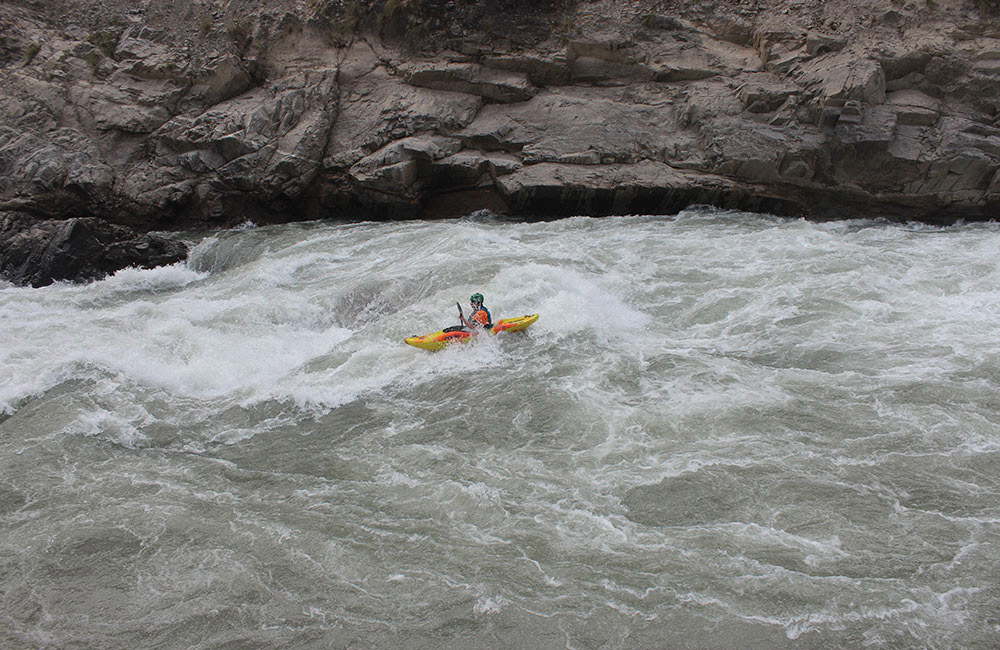
I popped my spray deck, swung my legs out and slipped free of the kayak, keeping it upright. Now I was afloat, spinning gently in the eddy, clinging tightly to my sun-kissed Pyranha Everest. I slid my paddle into the cockpit, shuffled to the bow and clipped the cow’s tail to the front grab loop.
Clipped together, I had effectively created a hands-free system for me, the kayak and the paddle. We spun gently, the eddy wall keeping us contained in the natural pocket. A merry dance – and with not a moment to spare, I had my chance in my private oasis.
Bliss
I peeled my neoprene shorts down, closed my eyes, gripped my life jacket, and let go. Bliss. “Liam, you genius. You’ve done it. You sneaky little devil.”
The instant relief was quickly overridden by shame. Flailing around in the slack water, shorts at my ankles, bum bobbing at the surface and attached to a bright yellow kayak, I thought, “This is a new low, you filthy little rat. What on earth is wrong with you?”
However, my body stopped shivering. I was myself again. I could hear the rush of water, feel the warmth of the sun, and I began coming to terms with my shame.
Then another sense kicked in. Sight – not mine. Someone else had seen this debacle. I scanned the opposite riverbank. Empty. Then I knew. I knew before I looked. I tilted my head back.
A whole family sat on top of the cliff, looking down into my swirling chamber of solitude. They weren’t speaking. Eyes locked on mine. They had just watched a sweaty, panicked man in a bright green top charge into the riverbank, hop out, reveal his impossibly white bottom and tarnish the river of gold.
A hot, red embarrassment flooded me. I unclipped and cowboy-scrambled back into the kayak. They politely pretended to look into the middle distance.
Back in England, still laughing about the trip, I had time to reflect. The river didn’t just humble me; it reminded me that things can go wrong no matter how much I prepare. Accepting that, and moving forward, is what really matters.
Lesson 2: s**t happens.