Words:
Marc Ornstein
Photos:
Marc Ornstein
Marc Ornstein
Functional vs interpretive FreeStyle canoeing
So, what is FreeStyle, and what is the difference between Functional FreeStyle and Interpretive FreeStyle? One of the best definitions of FreeStyle is ‘The art and science of precision canoeing.’ That definition is a catchy phrase and quite accurate, but it requires more discussion.
Freestyle is a canoeing discipline that emphasises the entire connection between the boat (canoe), the body (the paddler), and the blade (the paddle), maximising the effectiveness and efficiency of each element.
Boat: Freestyle instruction fosters an understanding of how the hull’s shape affects its movement through the water and how it can be effectively modified on the go by employing both heel (tipping the hull laterally) and pitch (tipping the hull fore or aft).
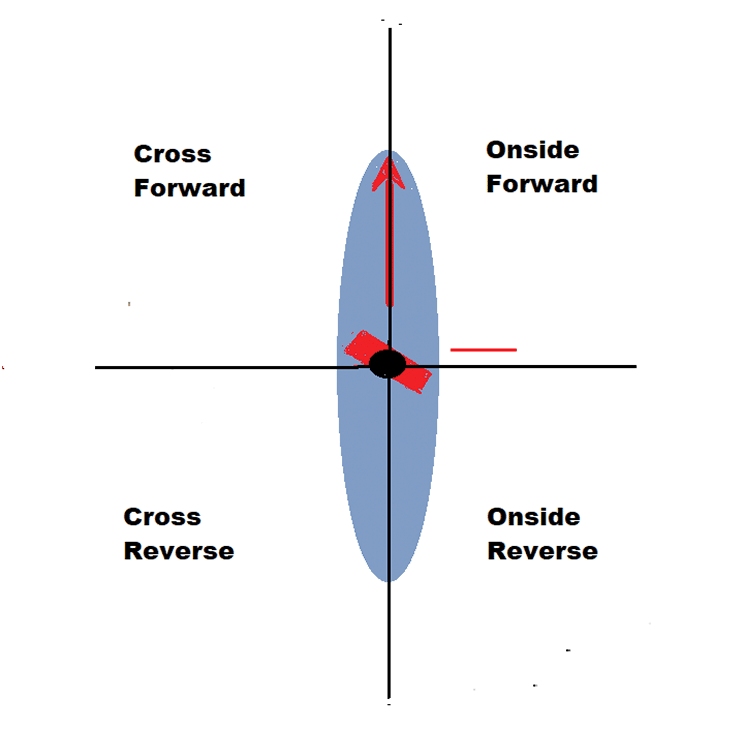
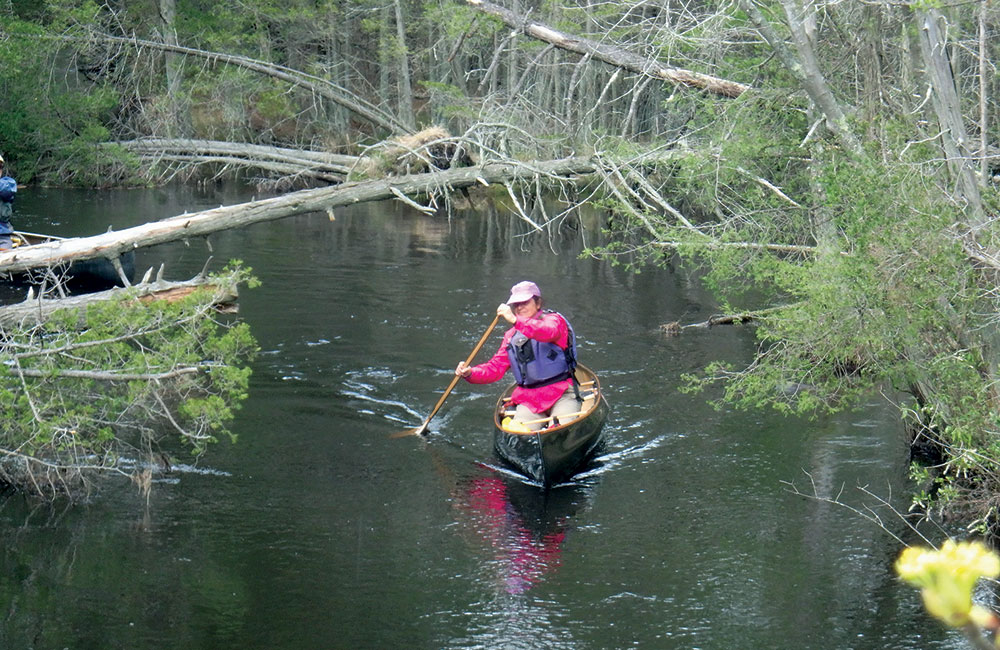
This paddler is working on her right side; the quadrants are named based on that paddle position.
Body refers to the connection of the paddler’s body to the hull. Kneeling with one’s butt against the forward edge of the seat or a kneeling thwart, with one knee in each chine (three points of contact), provides the most secure connection; however, maximising heel and pitch may require modifying or even converting the three-point connection to two points. In two-point, the paddler comes up on his knees, lifting his butt off the seat. Various knee positions are used to enhance both heel and pitch.
A blade is the paddle that connects the paddler to the water. Through proficient, accurate use of the paddle, she creates and controls the canoe’s movement through the water.
Photos
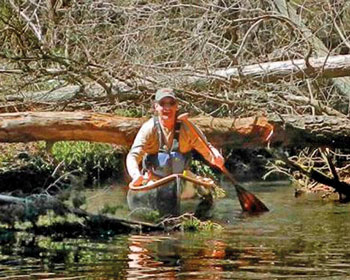
The photos below show several of the FreeStyle manoeuvres, in their ‘functional’/practical application, and in their more dramatic interpretive performance versions.
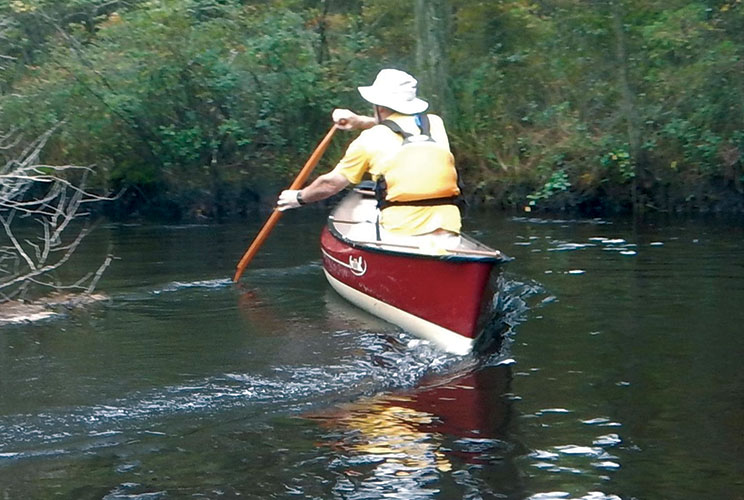
1. Functional Post Solo
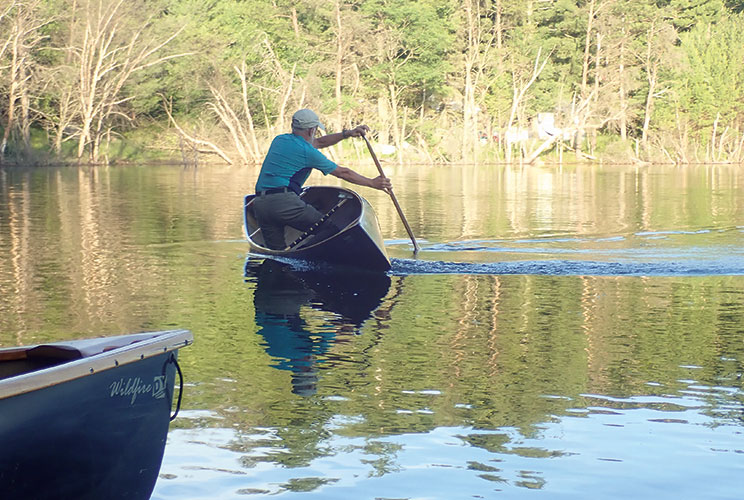
2. Interpretive Post Solo
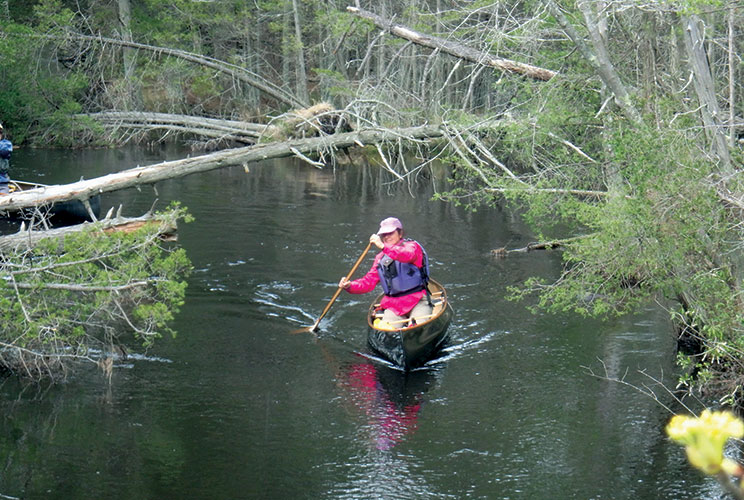
3. Functional Axel Solo
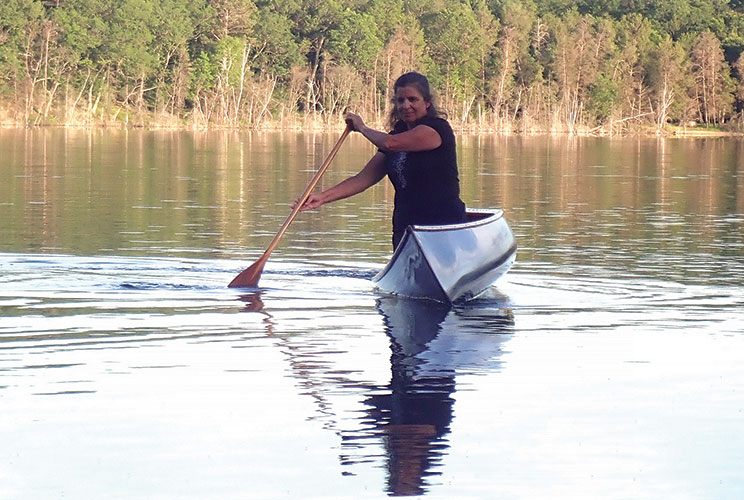
4. Interpretive Axel Solo
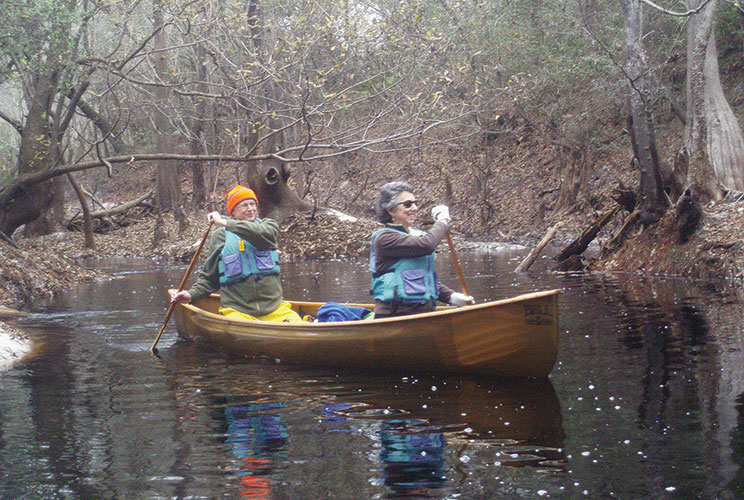
5. Functional Tandem Post
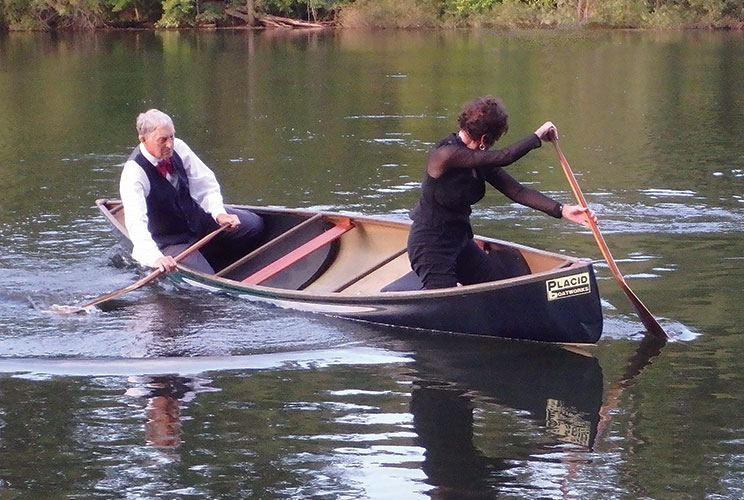
6. Interpretive Tandem Post
Freestyle canoeing consists of a series of basic manoeuvres that have been developed, along with a teaching curriculum based on them. While each manoeuvre is initially learned in the forward quadrant, a skilled practitioner of freestyle eventually learns how to apply those manoeuvres while travelling both forward and reverse, and on both the ‘on-side’ and the ‘cross’ side of the canoe. In other words, in all four quadrants. (Note: When paddling on the ‘cross’ or off side of the canoe, the paddler maintains the same hand on paddle positions as when paddling on the ‘on’ side. In other words, whichever hand was on the grip and whichever hand was on the shaft, while paddling on the side, remains so when paddling cross-side.
Most freestyle techniques are developed from a functional standpoint. Various techniques/manoeuvres are used to navigate lakes and streams. On narrow, twisty streams or crenulated shores, freeStyle shines. The movements of the paddle, the paddler, and the canoe are fluid, seamless, and efficient.
Outdoing each other
As the discipline developed, humans being human, a bit of friendly competition developed as canoeists attempted to outdo each other, kind of like, “You think that’s cool? Watch this.” More extreme versions of each manoeuvre evolved. Canoeists came up with novel ways to link one manoeuvre seamlessly to the next. Eventually, someone introduced music to the lakeshore, and people began paddling in time with it. And thus, the beginnings of Interpretive FreeStyle.
A good interpretive routine is not only paddled in time with the music, but also rises and falls with its intensity. Different variants of each of the manoeuvres may also be employed. Flourishes of the hand and body may be displayed, as well as costuming, if appropriate. It should be noted that the goal is to make the canoe dance, but not for the paddler to be dancing in the boat.