Words & photos:
John R. Dean &
Sam N. Dean
John R. Dean
Sam N. Dean
Thanks
Thank you to Naomi Dean, Margaret Perry and John Marshall for being excellent students.
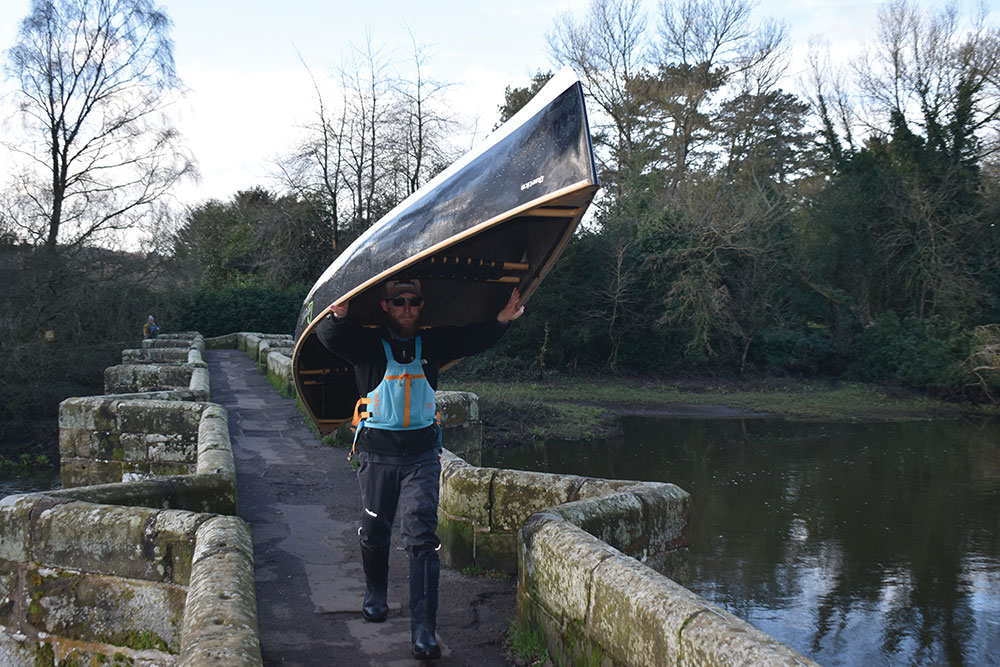
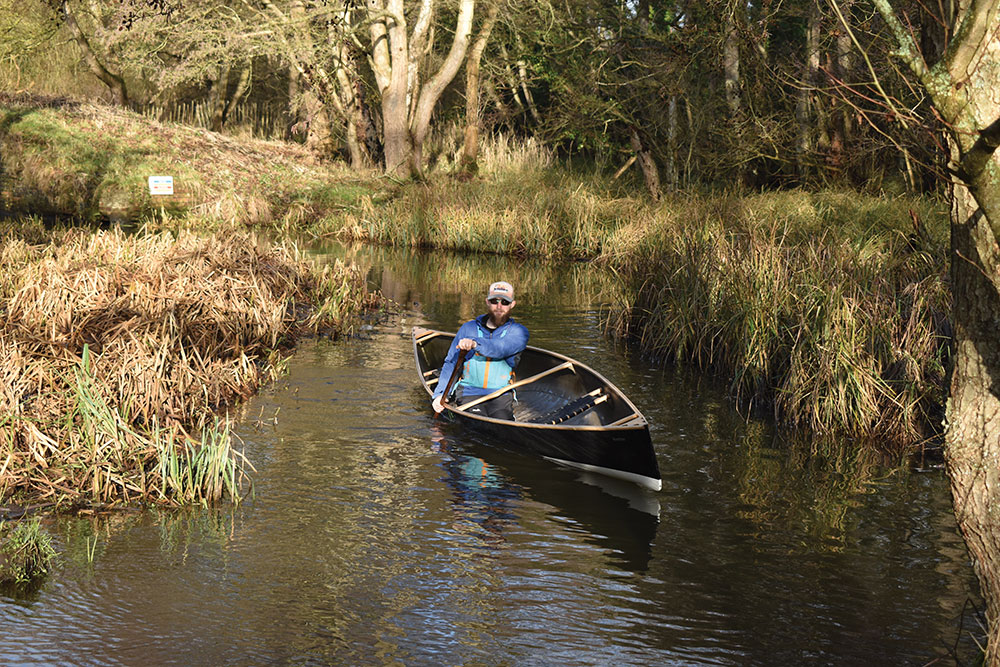
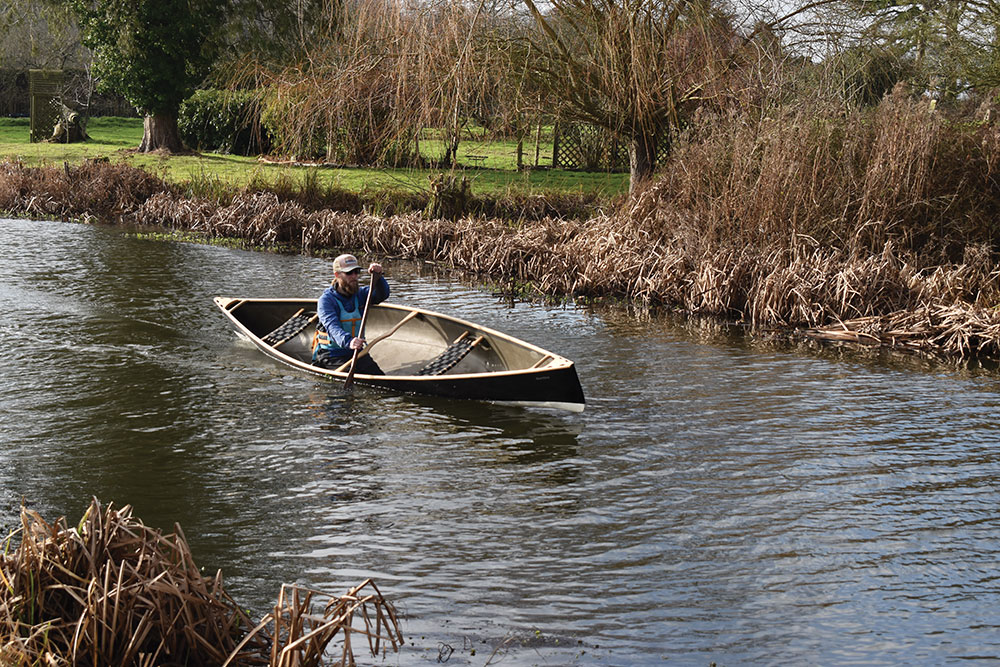
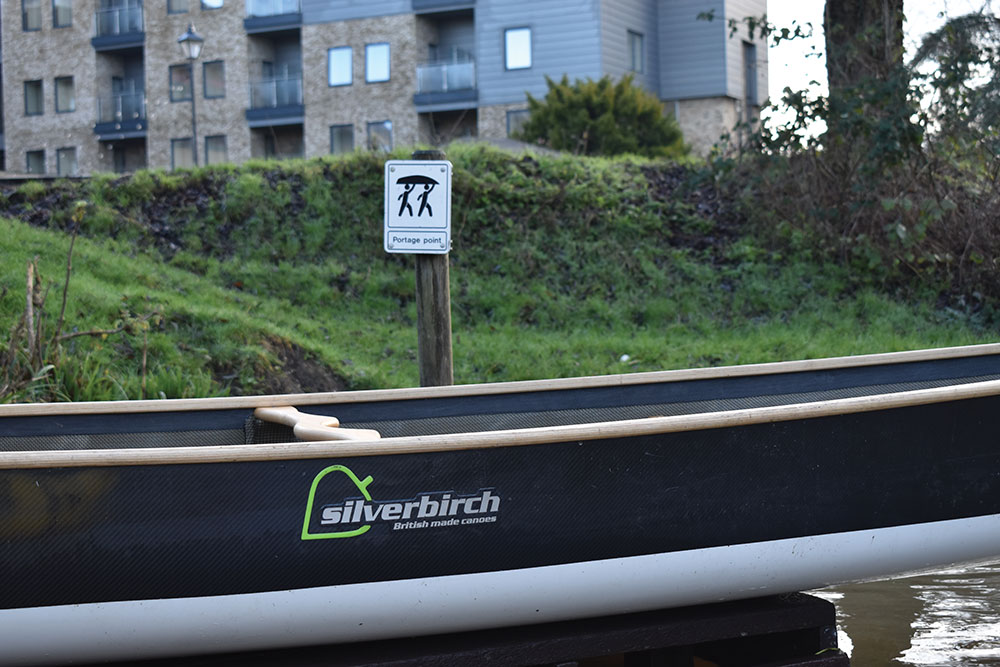
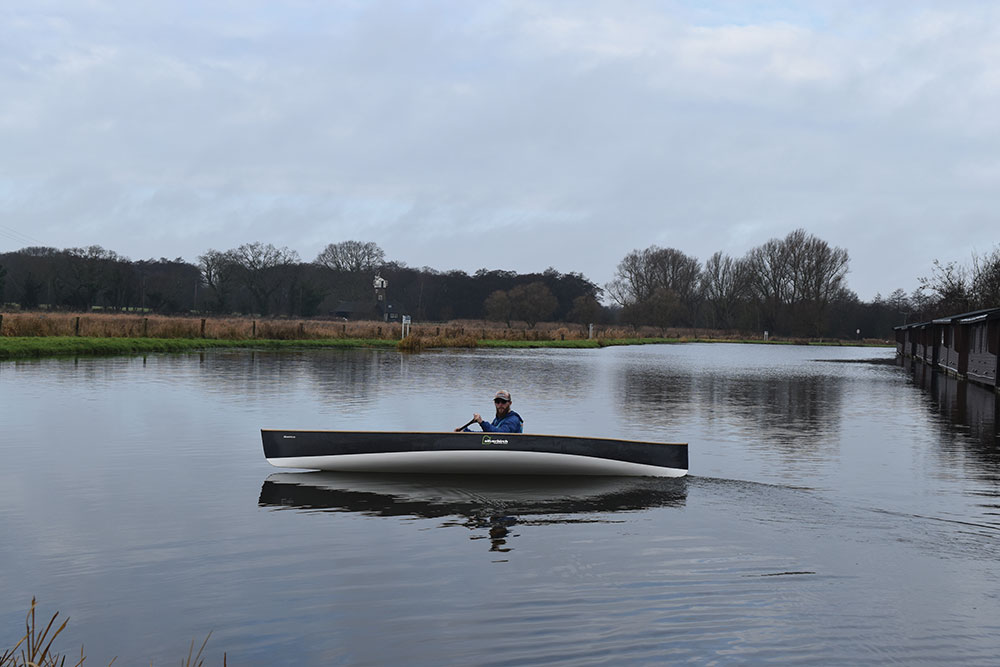
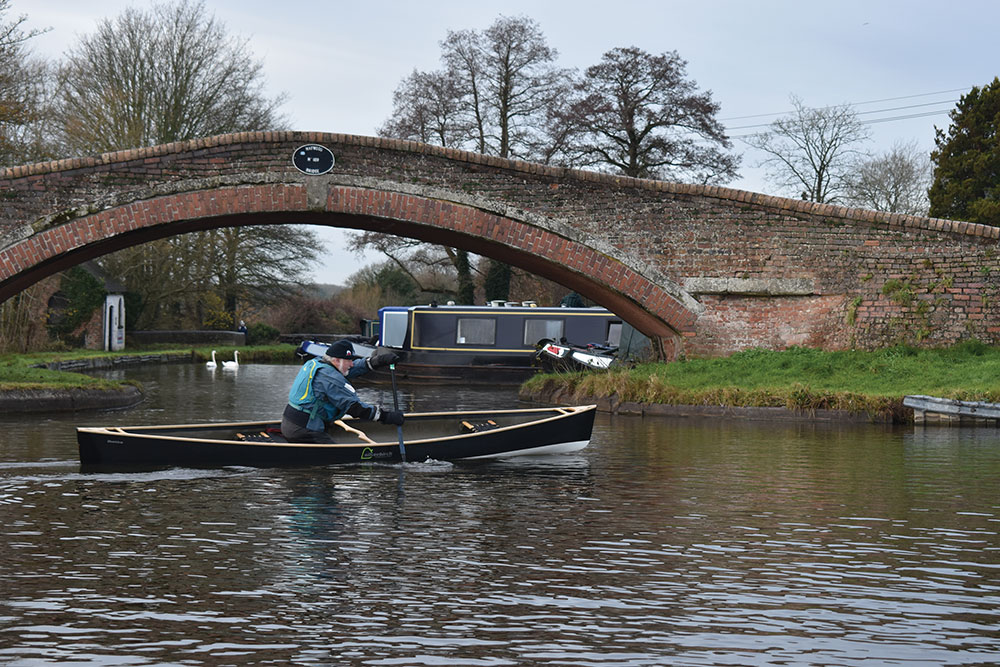
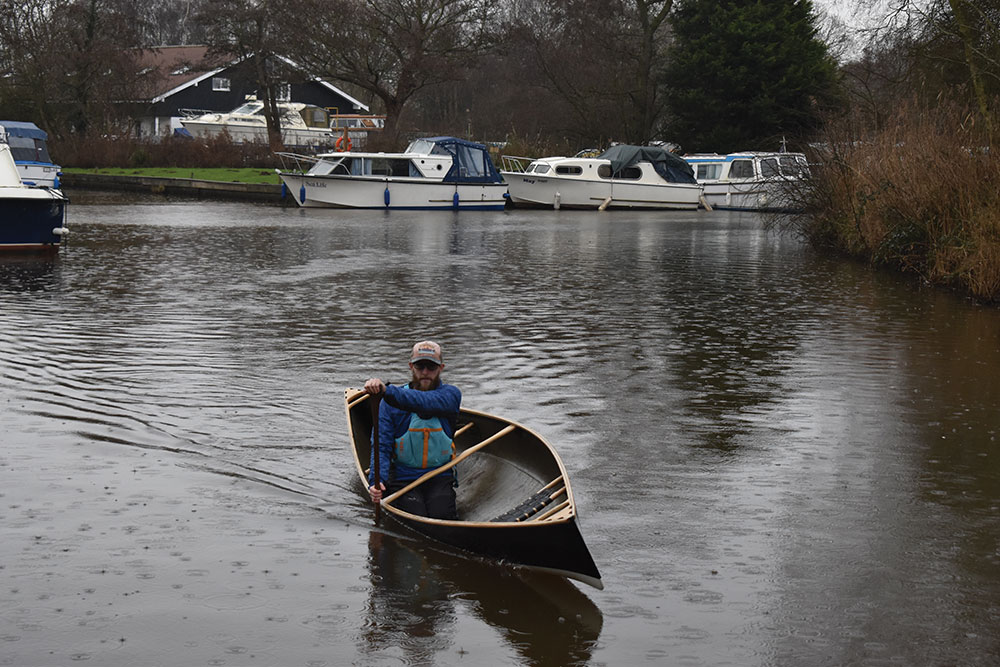
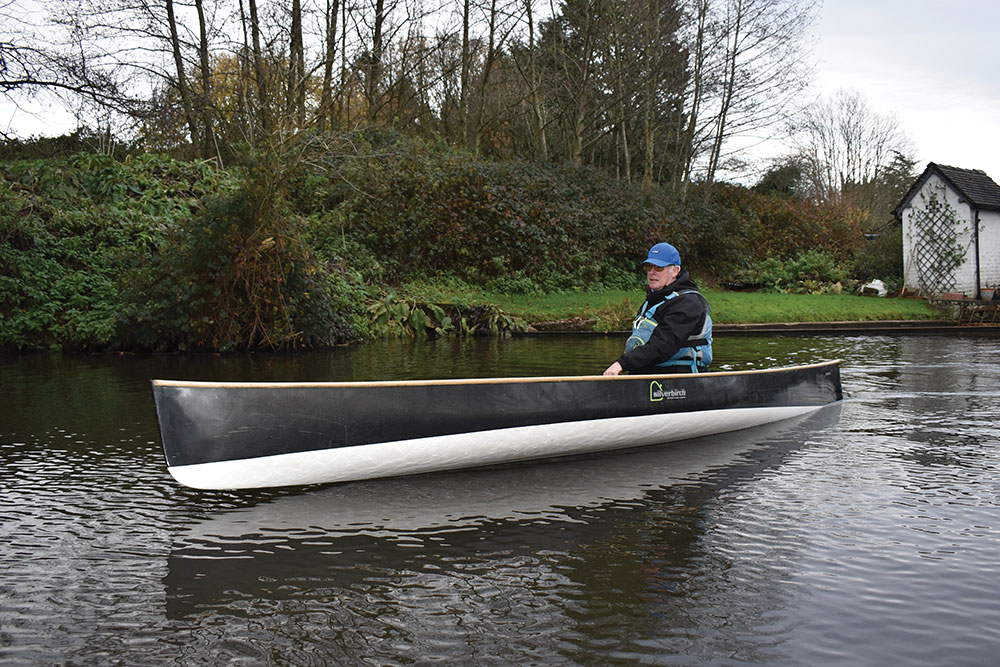
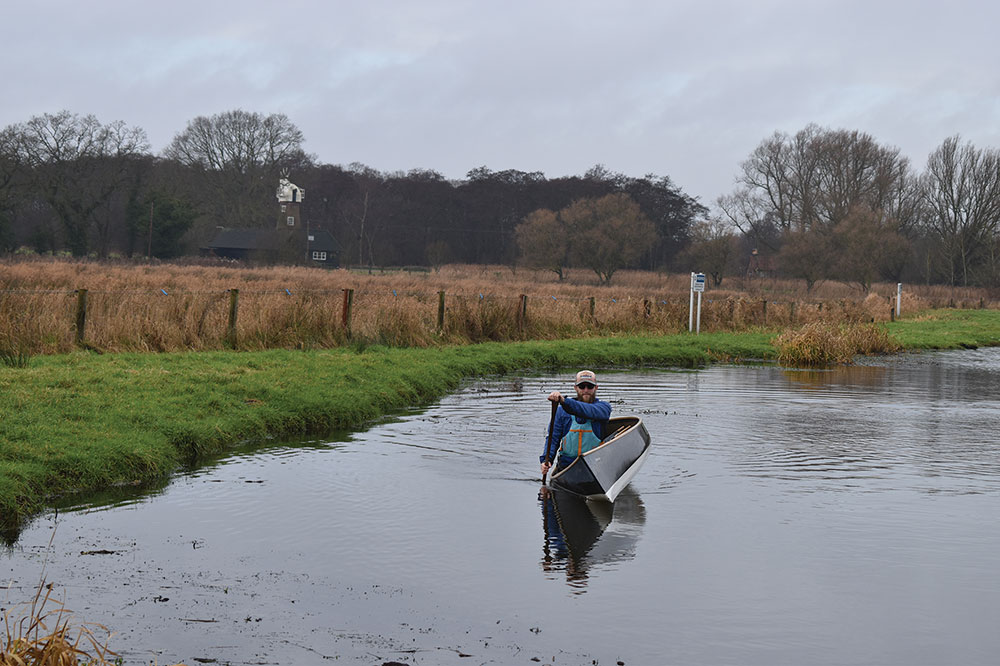
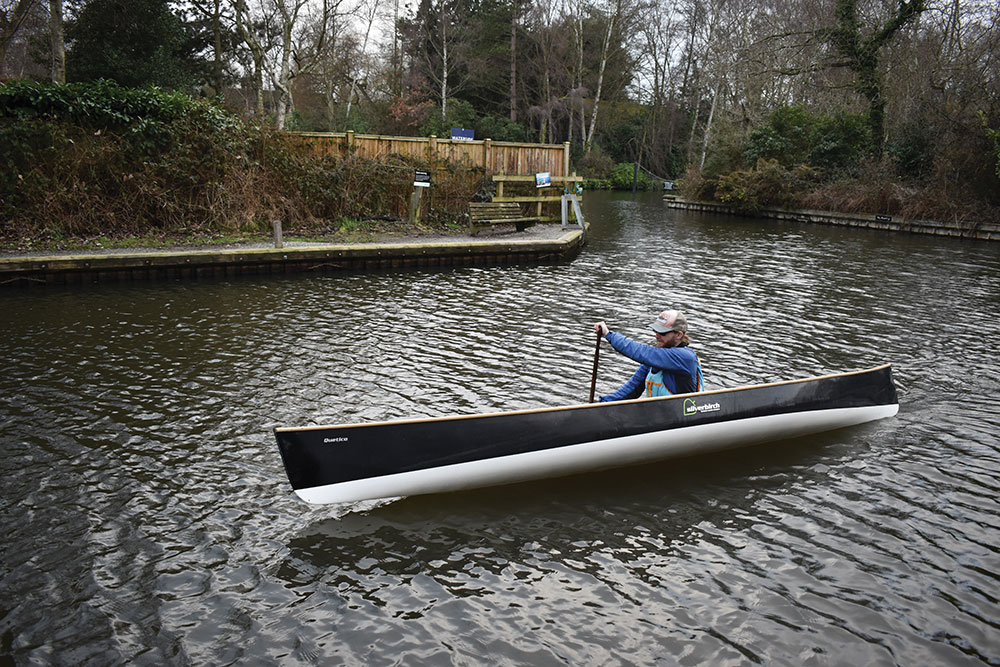
Thank you to Silverbirch Canoes (www.silverbirchcanoes.com) for the loan of the Silverbirch Canoes Quetico 15 composite canoe. This new composite canoe has been designed with a hull that rewards smooth paddling, natural tracking, and relaxed forward progress, while offering the practical benefits of reduced weight (around 18.5 kg) and long-term durability.
An Essential Guide to canoe touring
Focusing on practical tips and trips for beginners
What is essential when canoe touring? Well, almost certainly a few things will come to mind. The kit you carry, and how portable and light it is. Whether you are going for a day trip or a multi-day canoe camping trip, the lightness of the kit, its durability, and its fit for purpose in all weathers are important, as is the ease of portaging your canoe from the car to the water or around water-based obstructions.
So, what should you take with you for canoe touring? Here’s a single-day canoe touring checklist:
Safety gear: personal flotation device (PFD) – a properly fitted buoyancy aid; a whistle – for signalling in emergencies; first aid kit – compact but comprehensive; throw line – for rescue situations; a helmet – if paddling in moving water or rapids.
Canoe and paddling equipment: canoe – appropriately sized for your trip and load; paddles – bring at least one spare; dry bags – to keep gear and clothes dry; bailer or sponge – for removing water from the canoe; knee pads /mat – for comfort during paddling sessions.
Navigation and communication: map and compass – waterproof versions are best; GPS device – optional but useful for longer trips; phone or satellite communicator – in case of emergencies.
Clothing: quick-dry layers – avoid cotton; rain gear – waterproof jacket and dry pants; footwear – water shoes or sturdy sandals; warm layers – for evenings and unexpected cold; hat – for sun protection and/or warmth; gloves – for canoeing in cold.
Food: you’ll want food that is lightweight (easy to pack and carry); non-perishable (won’t spoil without refrigeration); high-energy (to keep you fuelled); and easy to eat (minimal preparation, ideally no cooking). A few suggestions are: breakfast – instant oatmeal packets (just add hot water), granola or muesli, dried fruit (raisins, apricots, cranberries); snacks (for during paddling) – a mix of nuts, seeds, dried fruit, and chocolate chips, energy bars or protein bars, beef jerky or plant-based jerky, fresh fruit that travels well (apples, oranges); lunch – tortillas (better than bread for packing), peanut butter and jam or honey, hard cheese (cheddar, gouda – lasts without refrigeration), cold meats or salami (shelf-stable); dinner (if you’ll eat before heading home) – instant noodles or pasta (quick boil), dehydrated meals (lightweight and easy) or fresh vegetables, couscous (cooks fast, just needs hot water).
Drinks: plenty of water (or a water filter if you’ll refill from a river), electrolyte tablets or drink mix, tea or instant coffee (if the weather is cold). Tip: pack everything in waterproof bags or a barrel to keep it safe from splashes.
Extras: bug repellent – essential in summer; sunscreen and lip balm – for comfort in summer; sunglasses with a strap – for glare from the water and the sun.
And for multi-day trips, additionally:
Camping and cooking gear: tent or hammock/tarp combination – lightweight and waterproof; sleeping bag and pad – rated for the expected temperatures; stove and fuel – compact camping stove; cookware and utensils – lightweight and durable; food and snacks – high-energy, easy-to-pack meals.
Extras: water filtration system or water bottles – pump, filter, or purification tablets; head torch – with spare batteries; repair kit – duct tape, zip ties, and canoe patch materials; multi-tool or knife: for minor repairs; waste bags – leave no trace.
What about some weight-saving tips:
Use multi-purpose items (e.g., your cooking pot can double as a bowl for eating). Pack freeze-dried meals for lighter food weight. Share gear among the group (e.g., one stove for two people).
Accessibility: safety gear (first aid kit, repair kit) should be on top or near the paddler for quick access and shared amongst the group.
Spare paddle: Secure a group spare paddle along the gunwale or under gear for easy reach.
What about some weight distribution tips:
It is important to think about the canoe’s weight distribution, or ‘trim’, to ensure maximum stability and tracking over the water. All gear should be packed in drybags or similar (barrels). The overall aim when packing is to ensure the canoe is either neutral or slightly stern-heavy in trim.
Keep the centre of gravity low: it is a good idea to pack heavy items on the floor of the canoe rather than high up to enhance stability.
Keeping heavy gear near the centre of the canoe: This enhances stability and maintains manoeuvrability.
Distribute the gear evenly: from side to side within the canoe to prevent unnatural edging.
Note: the placement of gear, and hence its weight distribution, may need to be modified depending on whether paddling solo or tandem, and can be influenced by the weather, e.g. windy conditions.
However, the single heaviest item is the actual canoe itself. The ability to transport it singly on your shoulders, via the carrying yolk, or with friend(s) in pairs or fours can sometimes feel like a bit of hard work. But the urge to get out and enjoy canoeing, whatever the time of year, has a certain draw, while the peacefulness of canoe touring cannot be overestimated. Canoe touring can be an amazing experience, but having the right canoe for the task can make the difference between total enjoyment and hard work.
Once you’re equipped, selecting the right canoe is vital for touring success. What are some of the key aspects that make a good touring canoe?
- Flexibility for solo or tandem paddling.
- Weight of outfitted canoe: weight is very important for transportation during launching and portaging, even with a trolley.
- Robustness for the type of touring to be done, whether it be lakes, canals or slow-moving rivers.
- Durability. As we do not buy a new canoe very often, we need one that can withstand wear and still look good when we pose for photographs.
- Speed over the water – as touring is often about distance travelled, the canoe’s efficiency on the water is an important characteristic.
As well as the wide range of canoes available from different manufacturers, another issue to consider is the diverse range of materials canoes are made from, which adds to your decision-making process when buying. Canoes are made from a diverse range of materials that include:
- Aluminium.
- Composites: often synergistic mixtures of synthetic fibres and resins, and include Kevlar, Aramid, TuffStuff, and Blue Steel.
- Plastic: rotational moulded plastic, e.g. high-density polyethene (HDPE) and SP3 – three layers of superlinear polyethene, as well as T-formex (an acrylonitrile butadiene styrene (ABS) plastic with a foam core and a proprietary outer skin), and Royalex (also a foam-core ABS plastic material with a vinyl outer skin, production stopped in 2014).
- Wood.
With your gear and canoe chosen, your next decision is the destination. Where shall I go?
With canoe touring, you are spoiled for choice in terms of the venue location and type of water to paddle. Within the UK, a wide variety of canoe trails, from tranquil canals to scenic river adventures, are available. Here are a few suggestions:
River and canal systems
England is blessed with a range of relatively short-distance loops which use a combination of a river and a canal system to allow you to gain access and egress at the same place. These loops allow for a short mid-day trip in winter, an afternoon leisurely paddle at any time or an evening paddle on those long summer nights.
The Shugborough Loop (extended) offers a couple of possibilities that both start and end at the Canalside Farm and Café in Great Haywood. While the Canalside Farm does offer parking, it is advisable to let them know if you are a large group and to be a customer either before (some lovely options in the shop to buy a picnic lunch) or after your trip. Alternatively, you can make a courtesy car park payment in the shop. Once afloat, head the short distance to the junction of the Trent and Mersey Canal with the Staffordshire and Worcestershire Canal.
The first option is to take the right-hand turn at Great Haywood Junction, heading towards Wolverhampton, and the Staffordshire and Worcestershire Canal. Passing over the aqueduct of the River Trent, continuing through the ‘wide’, a more open aspect of the canal, onwards for the short portage around Tixall Lock and finally the aqueduct over the River Sow.
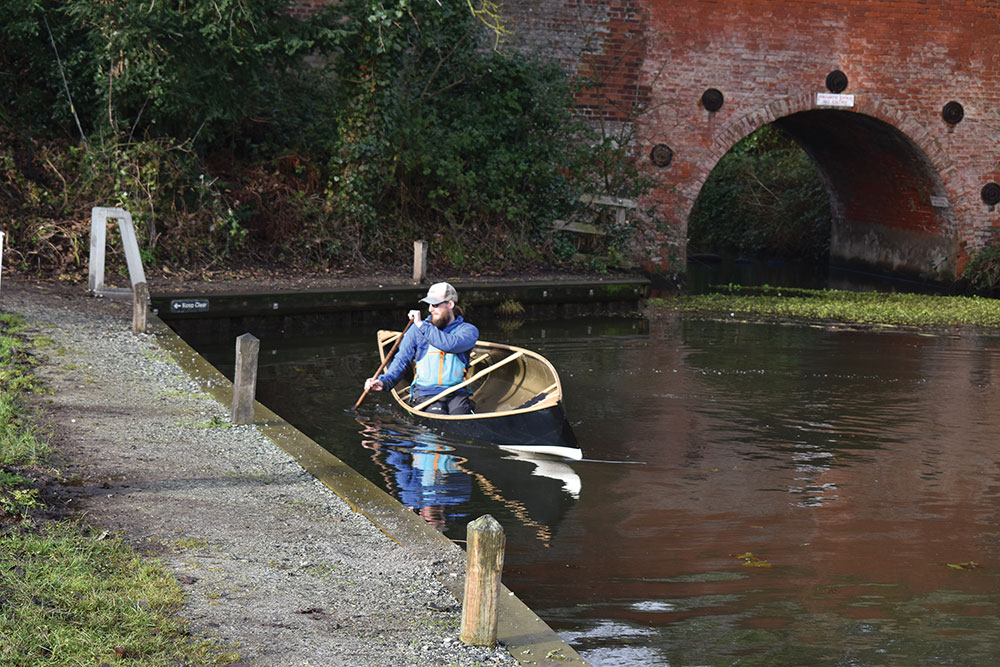
A short portage from the canal to the river below, and the journey continues down the river. The River Sow is normally a gentle flowing, picturesque river through the countryside alongside the National Trust property of Shugborough Estate. After a short distance, you come to the confluence of the River Sow and the River Trent at Essex Bridge. At this point, you can either continue down the River Trent (see Option 2) or egress at Essex Bridge and make a short portage back up a small gradient to the Trent and Mersey Canal.
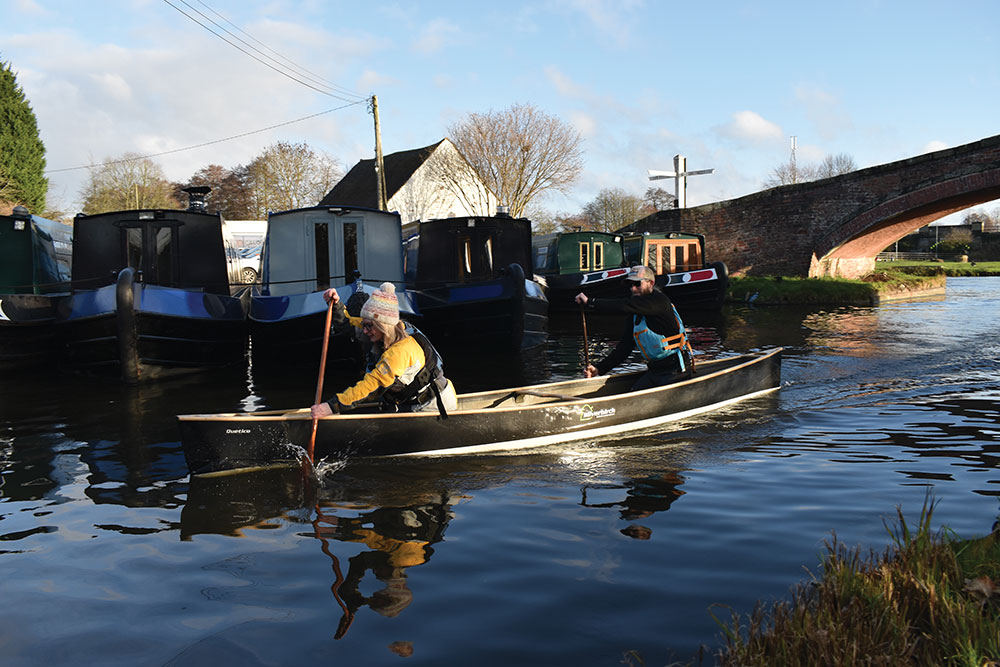
As you return to the canal at Trentlane lock, you should just continue the portage around the lock and continue the short distance by canoe past the moored canal boats to Great Haywood Junction and Canalside Farm. A perfect stop for a coffee and cake in the café or an ice cream in the shop.
Option 2 is to access the Trent and Mersey Canal at the Canalside Farm, Shop and Café and continue at Great Haywood Junction to Trentlane Lock.
After a short portage past the lock, take a right-hand turn down the path toward Essex Bridge. At this point, there is no need to walk across Essex Bridge but launch into the River Trent on its left-hand bank. Canoeing under Essex Bridge, the river winds its way through attractive countryside for a few miles until you encounter Wolseley Bridge south (a road bridge).
About 200 metres downstream of the bridge, you will see on the river left an egress point, and a short portage up a small gradient and back onto the Trent and Mersey Canal. Turning to the left, you continue the paddle along the canal, passing the villages of Colwich with its canal-side houses, people strolling along the canal bank, and continue via two attractive and interesting locks (Colwich Lock and Trentlane Lock) on your way back to Great Haywood Junction, and the egress at Canalside Farm, Shop and Café.
The canoeing distance for the round trip for option 1 is around four miles (7 km), with a portage from the Staffordshire and Worcestershire Canal to the River Sow, a portage around Tixall Lock, as well as a further portage from the River Sow to the Trent and Mersey Canal at Essex Bridge, and onwards past Trentlane Lock. While for option 2, the canoe distance is around six miles (10 km) with a portage from the Trent and Mersey Canal to the River Trent, at Trentlane Lock to Essex Bridge and a further portage from the River Trent to the Trent and Mersey Canal near Wolseley Bridge, then the canal locks at Colwich and Trentlane.
Useful Information:
Go Paddling: River Sow (https://gopaddling.info/rivers/river-sow).
Canalside Farm, Shop and Café, Mill Lane, Great Haywood, Staffordshire, ST18 0RQ. (www.canalsidefarm.co.uk).
Shugborough Estate, Milford, Stafford ST17 OUP (www.nationaltrust.org.uk/visit/shropshire-staffordshire/shugborough-estate).
Slow-moving rivers
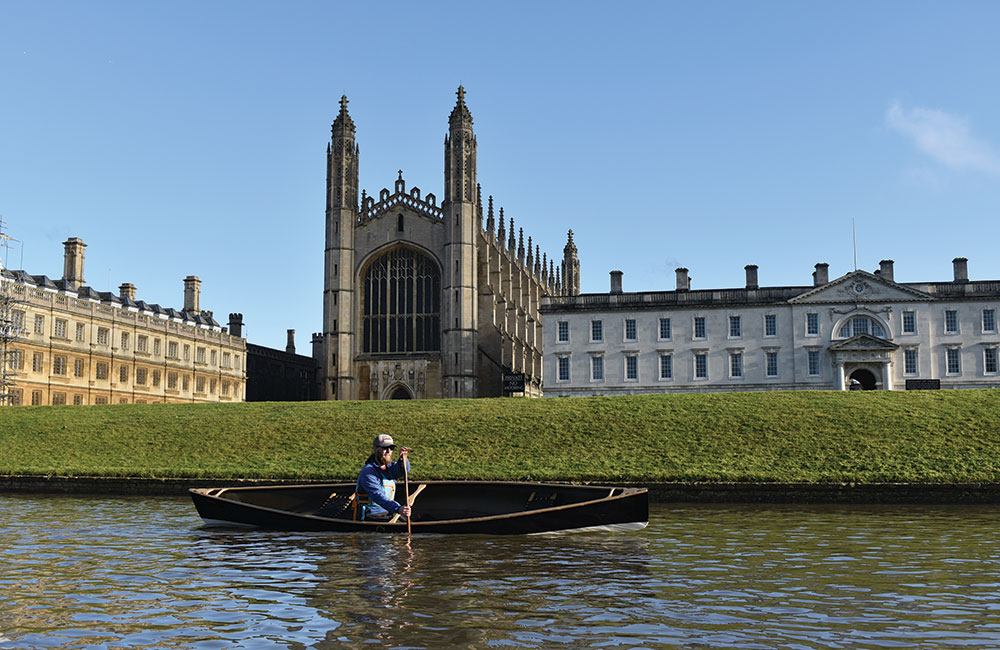
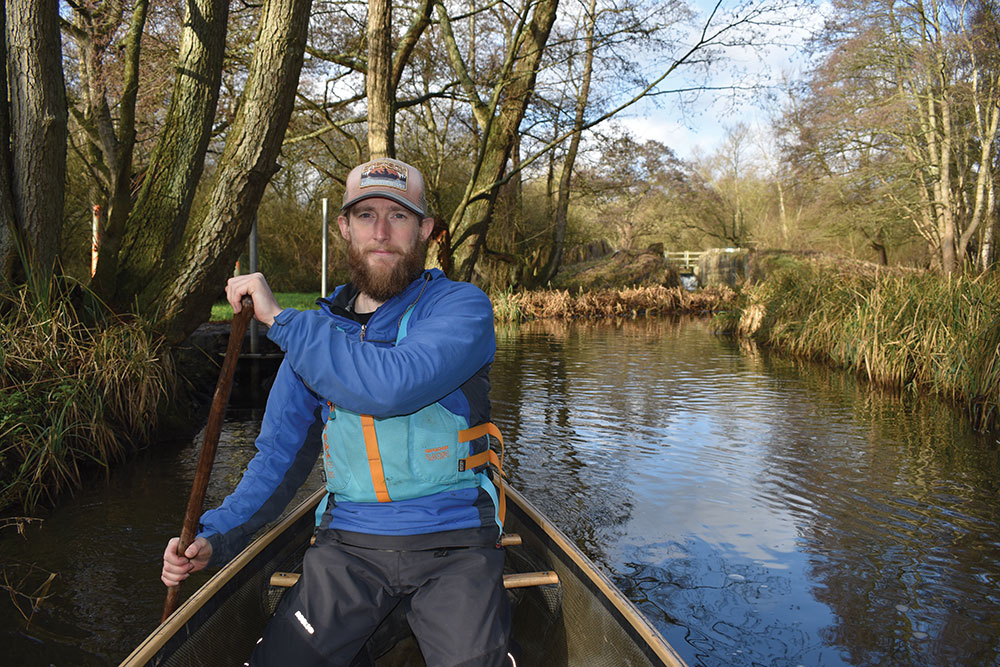
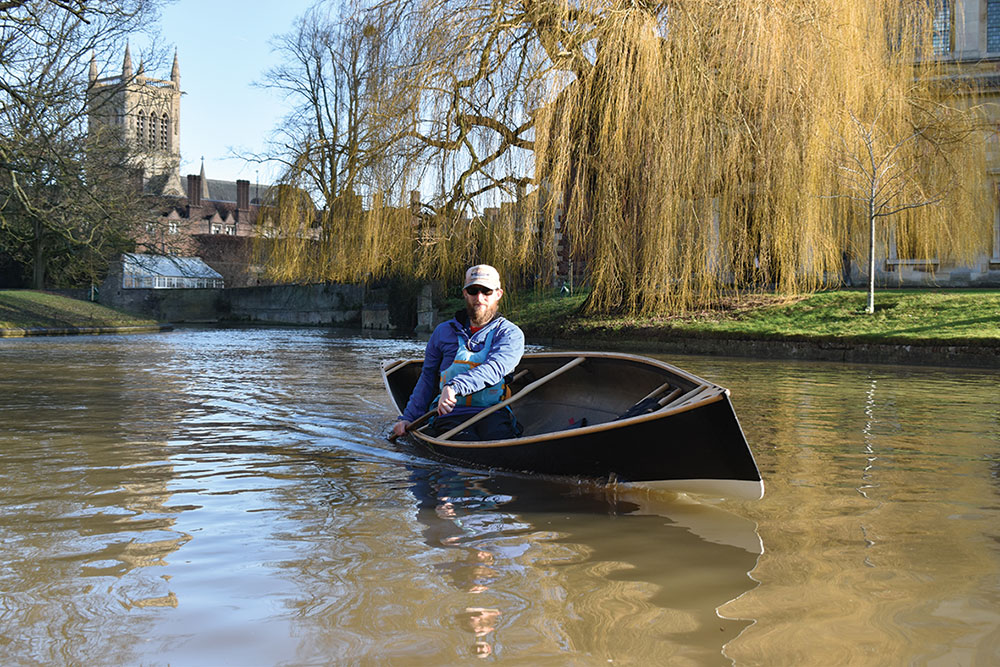
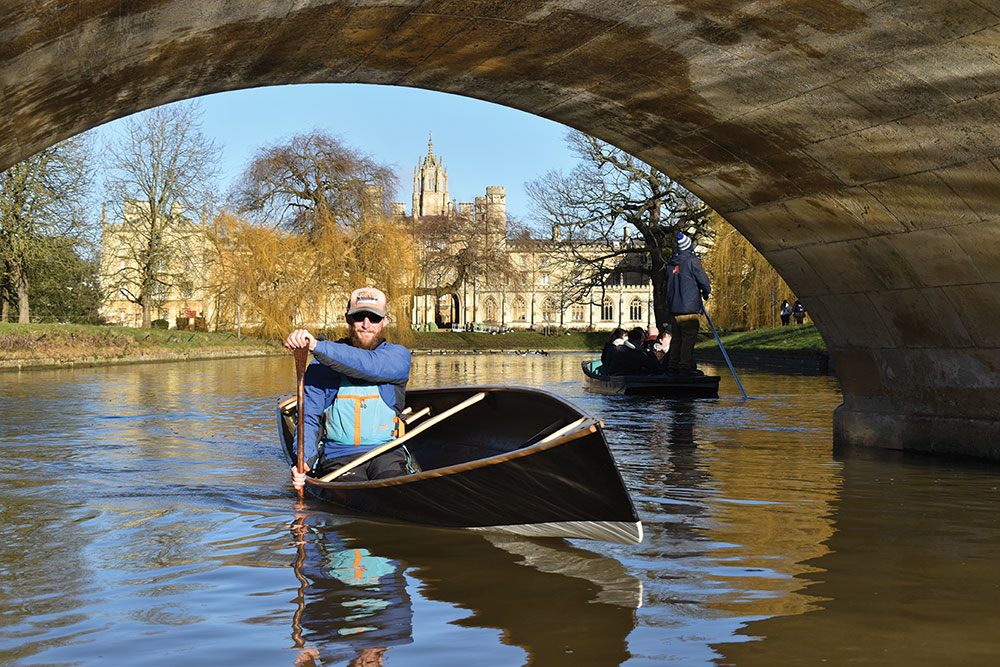
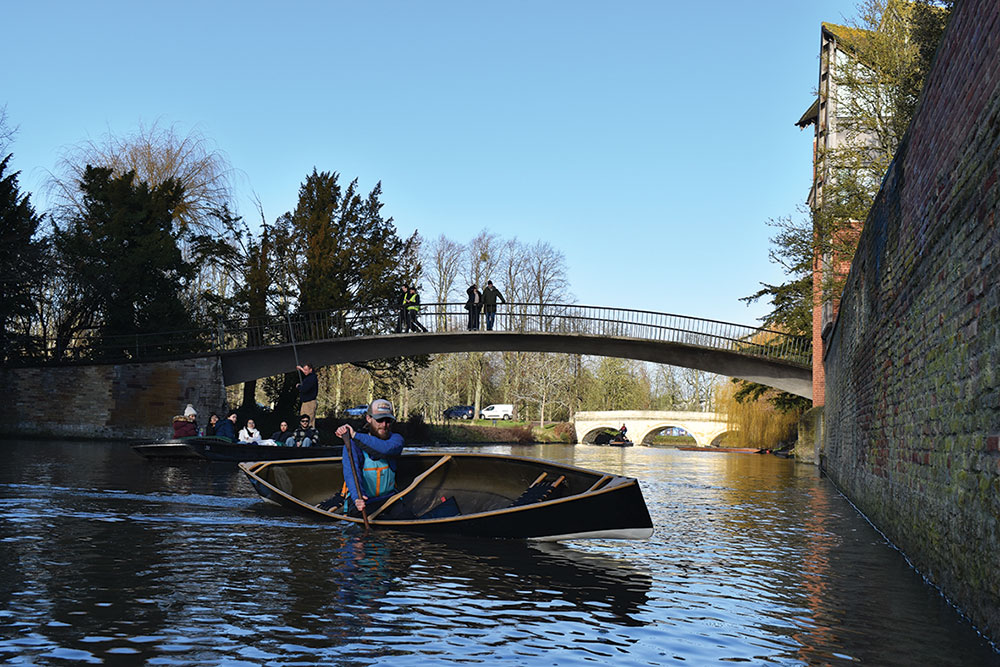
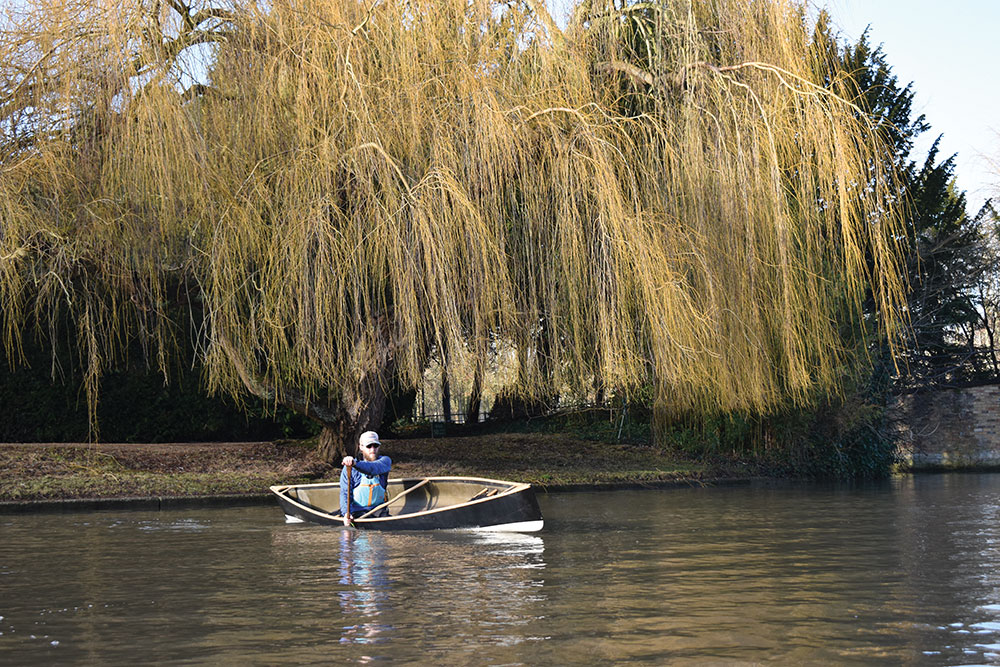
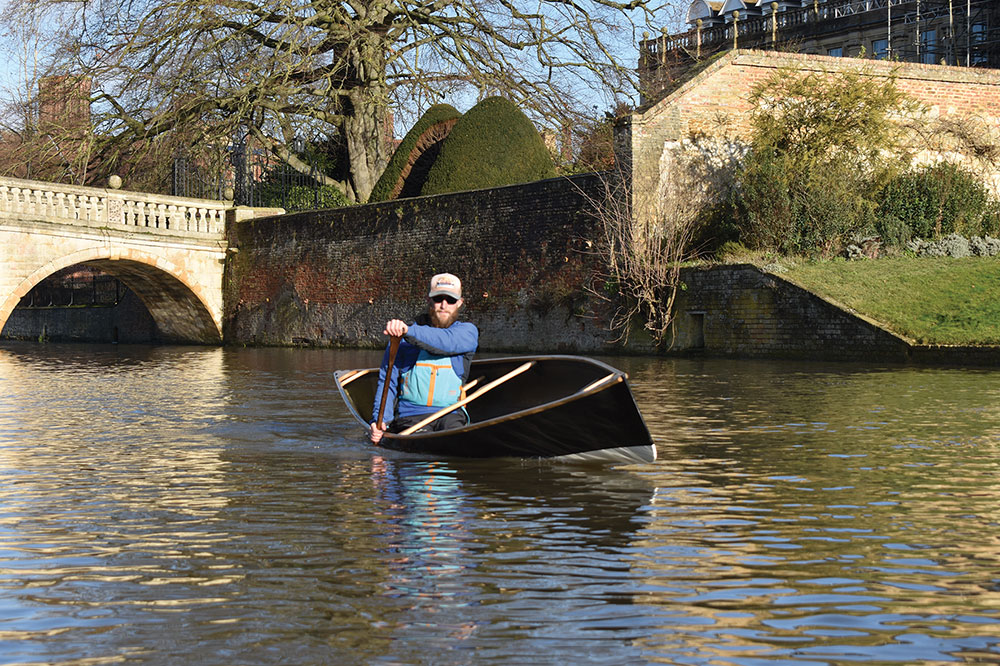
There are plenty of opportunities throughout the UK for a gentle river paddle (grade 1/2). We have chosen the River Cam, in Cambridge, though while it is within the city, you do canoe amongst the fantastic views of the city and its iconic university in an area known as ‘The Backs’, and it certainly has the wow factor for a summer evening or just a change of scenery to enjoy a totally different experience. On our trip, which was a beautiful sunny day in January, the river traffic, in the form of a multitude of punts, was limited. This is not always going to be the case, so if you ever want a calm, tranquil canoe along this iconic route, summer is probably not the time to do it. On the other hand, enjoyment can be found in all the sights at any time of year.
Parking was straightforward at the city’s car park at the Cambridge City Council’s Lammas Land site. While you currently pay for parking between 08.00 and 18:00 hours, it is free in the evening, so maybe it’s worth a visit in summer after all. Car park payment can be done at the machine or via the JustPark app (car park ID 16799). A disadvantage of the car park is that it has a maximum height barrier of 1.98 metres that is padlocked. So, we had to take the canoe off the car roof to enter.
It is a 100-metre walk from the car park to the River Cam with the access/egress point at Cambridge Canoe Club, next to Sheep Green Learner Pool. Initially, you pass under the Fen Causeway (the A1134, part of the city ring road), then under the footbridge at Crusoe Bridge. With a hotel on river right, and the Sheep’s Green Park on your left, you will identify a sluice gate on river left. This is where you take the short portage, at The Rollers, into the Mill Pond pool at Laundress Green. This is where it gets busy on the river with punts (Scudamore’s Mill Lane Punting Station is here), with the stunning scenery of ‘The Backs’ downstream.
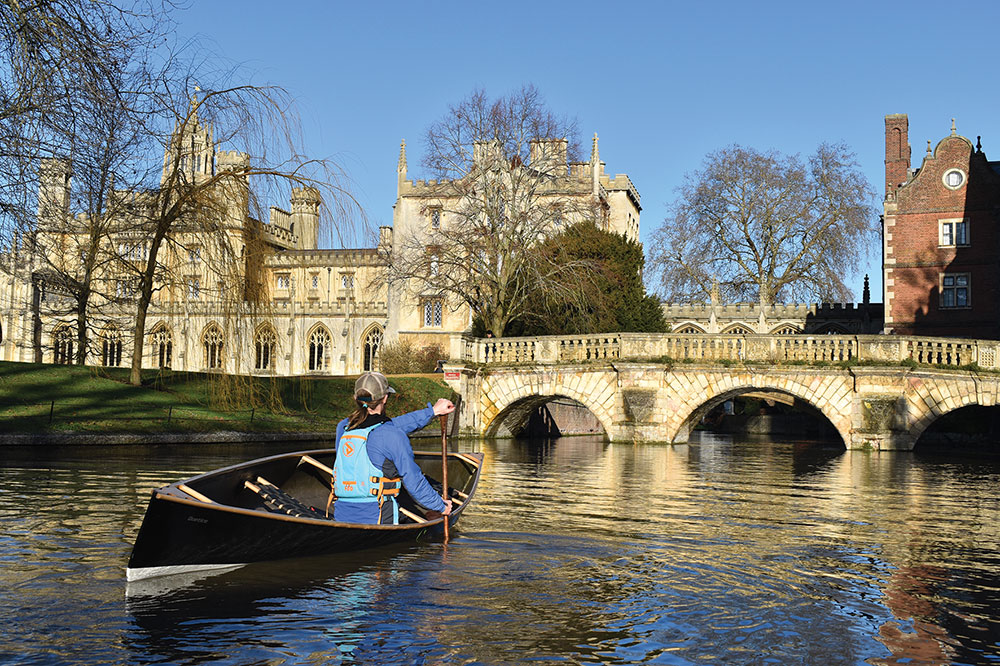
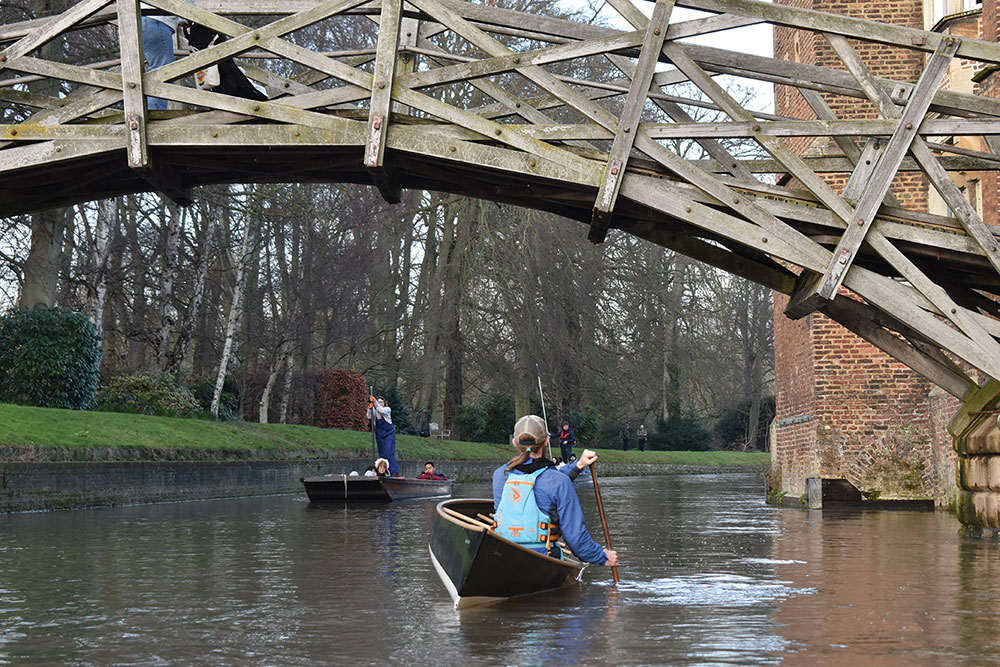
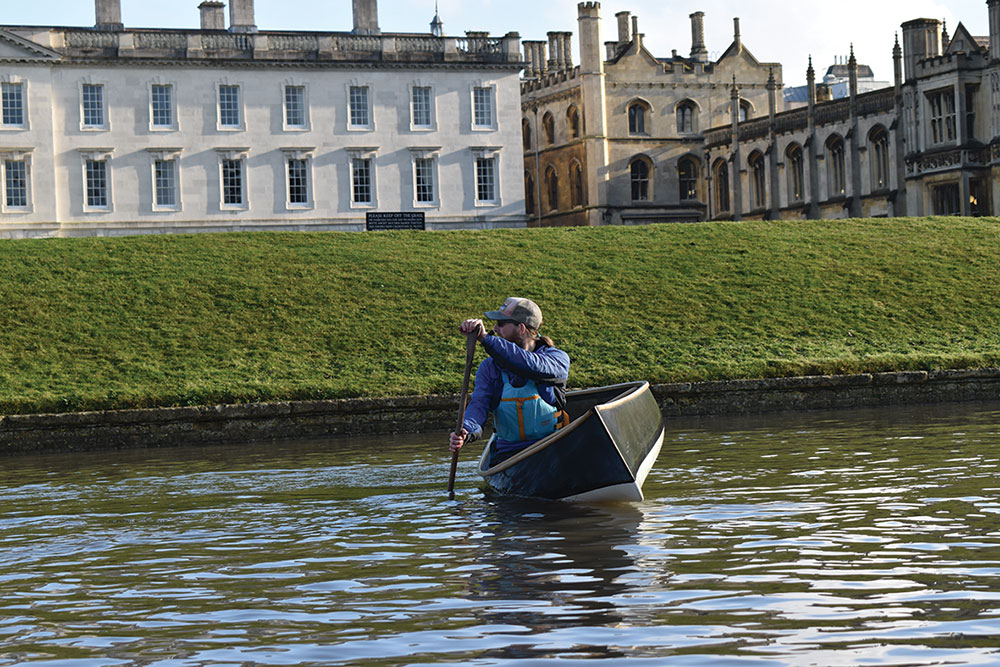
Passing under Silver Street Road bridge, the first of the iconic bridges you cross is the Mathematical Bridge, a uniquely designed wooden bridge built entirely of straight timbers. The original bridge was built in 1749, but the version you see today is a teak-wood replica from 1904. Continuing past Queen’s College on the river right, you next pass under the stone bridge of King’s College Bridge, with its elegant arches. On the river right, the vista opens, with the riverside lawns in the foreground providing the perfect setting for the iconic English Late Gothic style King’s College Chapel, completed during the reign of King Henry VIII in 1537.
Continuing the scenic paddle of ‘The Backs’, you next take sight of Clare College, which on this occasion was covered in scaffolding, as you pass under Clare Bridge. Clare Bridge is the oldest surviving bridge in Cambridge, dating back to the 17th century, which is contrasted by the next bridge, the Garret Hostel Bridge, which is itself unique in ‘The Backs’ as it’s a public bridge, so free to walk across, unlike the other privately owned college bridges. Just before the bridge is the Jerwood Library, a modern library for the University of Cambridge, built in 1998. The next bridge is Trinity College Bridge, a Grade 1-listed structure, part of the Avenue that connects the main buildings of Trinity College with the Trinity College Fellows’ Garden.
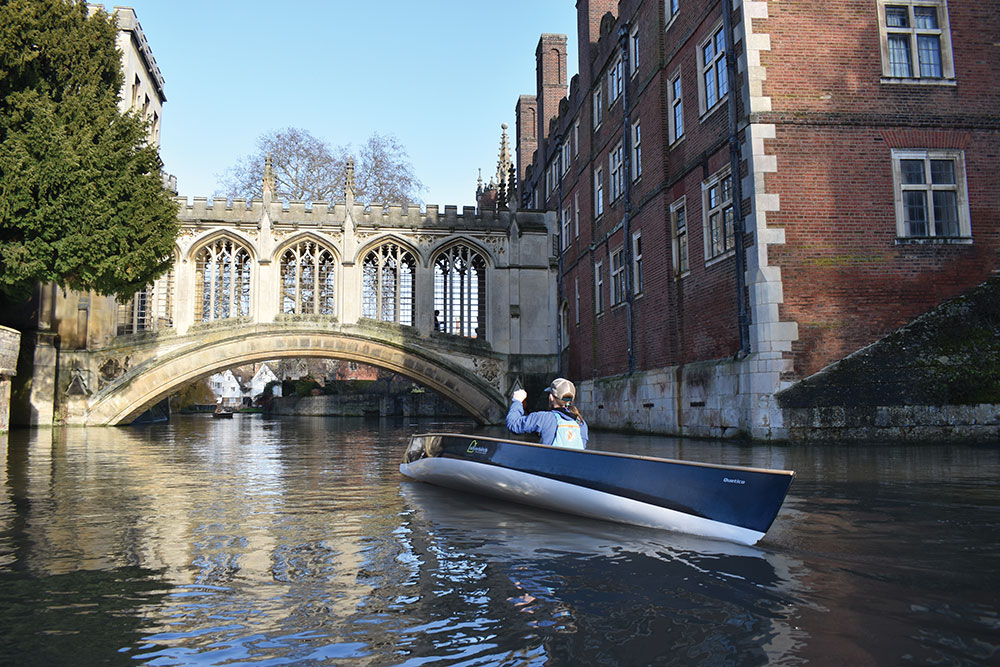
Taking a right-hand bend in the river, passing the 17th-century Wren Library on the right, you get a view of the next two bridges, the Wren Bridge (known as the Kitchen Bridge) and then, in the background, perhaps the most famous of the Cambridge bridges, the Bridge of Sighs. The Wren Bridge is the second-oldest bridge on the River Cam, designed by Sir Christopher Wren, and completed in 1713.
It gets its other name, the Kitchen Bridge, as it links St John’s College (left-hand riverbank) with the Buttery Dining Room (right-hand bank), built in 1831, as the quicker route for students and fellows to their dining room. The iconic stone-covered, Grade 1 listed, Bridge of Sighs, which was built in 1831, links St John’s College New Court (river left) and Third Court (river right) across the River Cam. Interestingly, it is named after the bridge of the same name in Venice.
Finally, we canoe under the road bridge of Magdalene Street, past another few punt hire companies, and continue another 300 metres to our turning point at Jesus Lock, built in 1831, with an iron bridge over the weir. At this point, we turn around and head back upstream, against the gentle river flow, and enjoy all the sites once again, on our way back to the egress point at Cambridge Canoe Club.
The round-trip canoeing distance is around three miles (5 km), with portages from the car park to the River Cam and from The Rollers to Mill Pond.
Useful Information: Lammas Land car park – Cambridge City Council www.scudamores.com/college-backs-map
Open water, canal and river systems
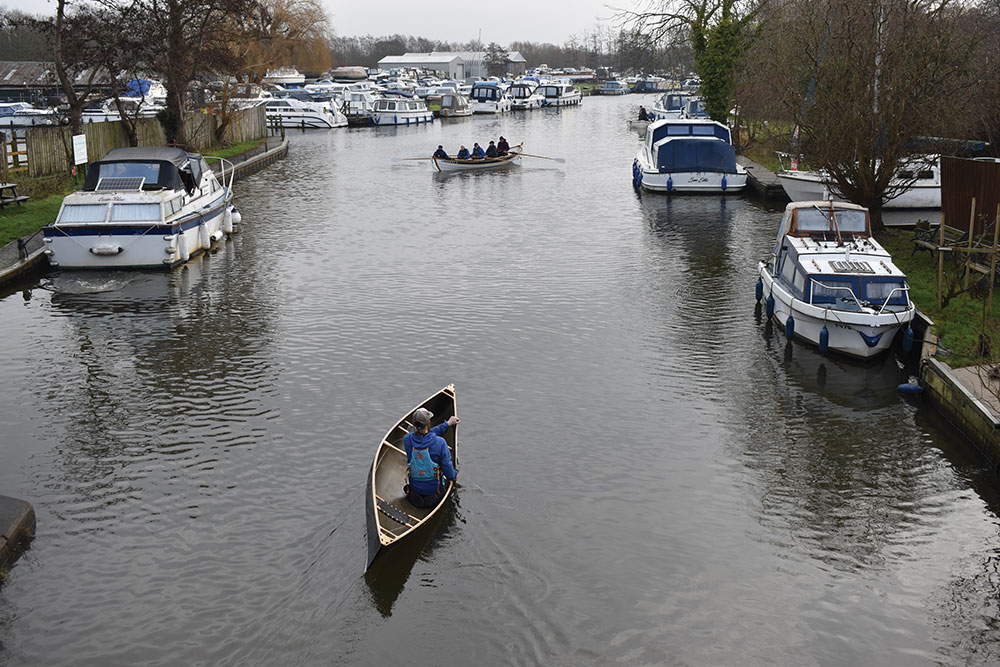
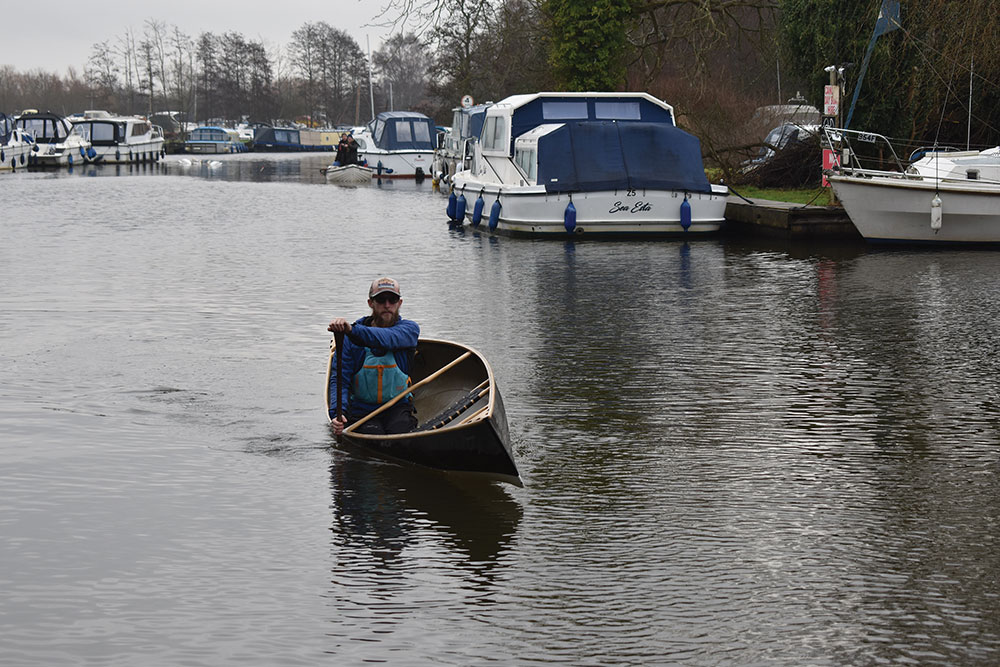
Norfolk Broads: The Norfolk Broads are an extensive network of navigable rivers and lakes (broads), perfect for relaxed paddling with opportunities to spot birds and explore charming villages. As an example of such a paddle, we have chosen one of the many options: Barton Broad and the North Walsham and Dilham Canal.
Launching at Neatishead Staithe and turning right into Limekiln Dyke and on into the wider expanse of open water that is Barton Broad (the second largest Broad). Just like all the bays, the waterway is full of bays and inlets that can make an interesting diversion or a great picnic site on a sunny day.
At the north end of Barton Broad, the waterway splits into two. To the left-hand side, the picturesque Barton Turf Staithe and boatyard (option 1).
While on the right-hand side, the River Ant flows with its many tributaries. Northwards along the River Ant, you can take a right-hand tributary to the staithes at Sutton (option 2) or Stalham (option 3).
Continuing in a northerly direction leads to Wayford Bridge (option 4), where, as well as having an Inn, is the entrance to the North Walsham and Dilham Canal. This canal was originally built in 1826 as a transport interchange to get larger boats (wherries) from Antingham to the River Ant at Wayford Bridge.
It is important to note that not all of the canal is navigable, as it fell into disuse in the 1930s. However, a charity (https://nwdct.org/) is working to re-establish the waterway for all users. A dedicated page highlights the best places to canoe on the canal (https://nwdct.org/paddle-sports/). Some suggested examples from Wayford Bridge are to canoe to Tyler’s Cut (near Dilham) (option 5) or Dilham Canal Lock, via Tonnage Bridge (option 6) for short paddles.
The approximate canoeing distances for different options around and including Barton Broad are as follows: option 1: Neatishead Staithe to Barton Turf Staithe two miles (3 km); option 2: Neatishead Staithe to Sutton Staithe four miles (6 km); option 3: Neatishead Staithe to Stalham four miles (6 km); option 4: Neatishead Staithe to Wayford Bridge four miles (7 km); option 5: Wayford Bridge to Tyler’s Cut one mile (2 km); and, option 6: Wayford Bridge to Dilham Canal Lock 2.5 miles (4 km).
It is perfectly possible to launch at other sites around Barton Broad and the North Walsham and Dilham Canal. For example, Sutton Staithe, which has direct roadside access via the A149, offers free car parking, a village public house (at the hotel) that serves food, and the possibility of hiring a canoe if you are planning a day out or overnight trip and have not brought your own craft from the boatyard.
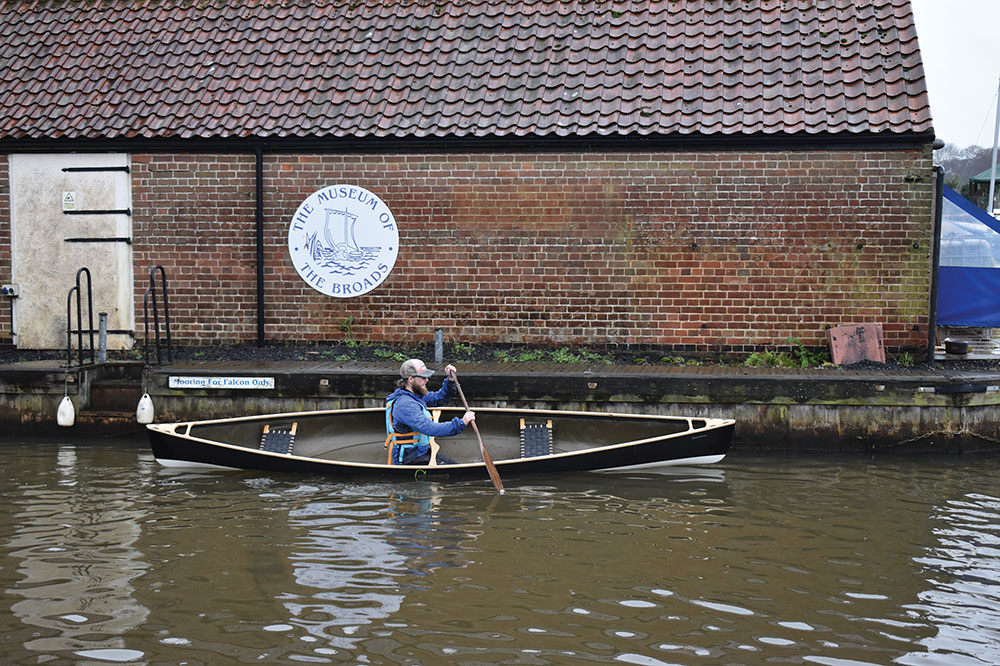
A short drive along the A149 is Stalham Staithe, which has direct access to the River Ant, opposite the Museum of the Broads, located just beyond Richardson’s Boating Holidays on Staithe Road. While parking is limited, the area offers camping at Broad’s Edge Marina Riverside Camping, with local restaurants and a supermarket, a short walk from Stalham town centre.
Continuing along the A149, you quickly come across the Wayford Bridge Inn, which offers car parking (fee payable at the bar but can be redeemed against purchased food and drink), food, drinks and accommodation on the banks of the North Walsham and Dilham Canal. Wayford Bridge itself is the crossing between the River Ant and the North Walsham and Dilham Canal (no lock, just a continuous waterway). The adjoining car park is also one option for hiring a canoe from The Canoe Man if you do not have your own.
Continuing along the A149 but now named Yarmouth Road, take a right-hand turn into Dilham and onto The Street, continue driving a further 100 m past the Cross Keys Public House (a pub that serves food) to a bridge at the junction of The Street and Honing Road. The village of Dilham, named from Old English as a homestead where dill is grown, featured in the Domesday Book of 1086.
This is the end of the North Walsham and Dilham Canal navigation at Tyler’s Cut (Dilham Staithe), but also a suitable place to launch your canoe. However, roadside parking is very limited. A short distance along Honing Street, turn right into Oak Road, where you will find Dilham Hall Retreats, which offers glamping, camping and canoe hire on-site. In addition to offering free parking and toilets, you can also self-launch your own canoe from their canal-side location adjacent to Tonnage Bridge. The site was the winner of the Channel 4 Four in a Bed programme in March 2025.
Further down Honing Road, you can access Canal Camping, with spaces for tents as well as Glamping, in a canal-side location that provides direct access to launch your canoe (or hire from the campsite). A donation is always welcome towards the upkeep and maintenance of the canal. The current most navigable part of the North Walsham and Dilham Canal, though improvements and restoration are an ongoing process by the Canal and River Trust, is Honing Lock. The canal along this stretch is particularly fen-like and narrow with reed, rush and sedge-covered banks.
Barton Turf Staithe, on the northwestern edge of Barton Broad, is a picturesque village. However, while you can visit via Barton Broad, it does not allow the launching of canoes or overnight camping from the road. Just south of Barton Turf is the village of Neatishead and its staithe. The site offers a small free car park, but unfortunately, overnight parking or camping is not allowed. In the village, however, and less than 300 metres away, is both a village shop and the White Horse Inn, both of which offer food and drink options. Being to the west of Barton Broad, Neatishead offers a great opportunity for a full-day canoe trip. Some of the houses within the village have their own waterside access to Limekiln Dyke and provide an interesting diversity of views.
Useful Information:
Neatishead Staithe Irstead Rd, Norwich NR12 8BJ. Grid reference TG 344 210). (https://maps.app.goo.gl/qS2qtnM47bxjyFTm9n).
Wayford Bridge Wayford Rd, Stalham, Norwich NR12 9LL (https://maps.app.goo.gl/d7G4MHujcvf6aYNJ7).
Sutton Staithe Hotel Staithe Rd, Sutton, Norwich NR12 9QS. (www.suttonstaithe-hotel.co.uk).
Sutton Staithe (postcode NR12 9QT; grid reference TG 381 237).
Sutton Staithe Boatyard (https://suttonstaitheboatyard.co.uk) and a useful canoeing map (https://suttonstaitheboatyard.co.uk/
wp-content/uploads/2023/10/Sutton-Staithe-Boatyard-Canoe-Map.pdf).
The Museum of the Broads The Poor’s Staithe, Stalham, Norwich NR12 9DA. (www.museumofthebroads.org.uk).
Stalham Staithe (postcode NR12 9BZ; grid reference TG 372 247).
Broad’s Edge Marina Riverside Camping Mill Rd, Stalham, Norwich NR12 9BT. (www.broadsedgemarina.co.uk/riverside-camping).
Wayford Bridge Inn Wayford Rd, Stalham, Norwich NR12 9LL. (www.wayfordbridge.co.uk)
The Canoe Man Wayford Bridge, Wayford Rd, Stalham, Norwich NR12 9LL (https://thecanoeman.com).
Cross Keys Public House The Street, North Walsham, NR28 9PS (https://crosskeysdilham.co.uk).
Dilham Staithe (postcode NR28 9PR; grid reference TG 332 255).
Dilham Hall Retreats Oak Rd, Dilham, North Walsham, NR28 9PW (www.dilhamhallretreats.co.uk) and (www.dilhamhallretreats.co.uk/canoe-hire).
Canal Camping Honing Rd, Dilham, North Walsham, NR28 9PL (www.canalcamping.co.uk/the-campsite/canoe-hire).
Honing Lock The Acorns, Lock Rd, Honing, North Walsham, NR28 9PJ. (Environment Agency Gauging Station TG 33119 27041).
Barton Turf Staithe Barton Turf, Norwich NR12 8AZ.
White Horse Inn The Street, Neatishead, Norwich NR12 8AD (www.thewhitehorseinnneatishead.com).
White House Stores Community Shop Irstead Rd, Neatishead, NR12 8BJ (www.whitehousestores.co.uk).

Note
Check out the map for other canal suggestions: https://canalrivertrust.org.uk/canals-and-rivers or places of interest along the canal systems: https://canalrivertrust.org.uk/canals-and-rivers/places-to-visit. To paddle on canals, you need a license. This can either be a license direct from the Canal and River Trust or by being an on-the-water member of your home nation of British Canoeing Awarding Body, e.g. Paddle UK. The latter provides access to 5,000 miles of inland waterways, including canals and rivers managed by the Canal and River Trust, Environment Agency and the Broads Authority. https://canalrivertrust.org.uk/things-to-do/canoeing-and-kayaking-near-me/licensing-your-canoe.