Words:
Jack Barnes.
Jack Barnes
Photos:
@j.thomsonphotos,
Andy Pagett,
Alex Robinson, &
Phoebe Ferns
Paddling whitewater as a double amputee
The day after the final exam of my degree back in June 2023, I was lucky enough to be loading up the car and setting off on a month-long paddling trip across the Alps with friends. Our first stop was the Upper Venter Ache, Austria. We were expecting a perfect warm-up full of boulder gardens and short gorges, but it was still early in the season. Large patches of undercut snow and ice started to appear, and my excitement soon turned to dread. There was a river-wide avalanche towering over the river, creating a nasty ice syphon. Everyone promptly eddied out. For me, I felt an extra level of concern, walled in by a steep bank: how on earth do you portage over an ice siphon with no legs?
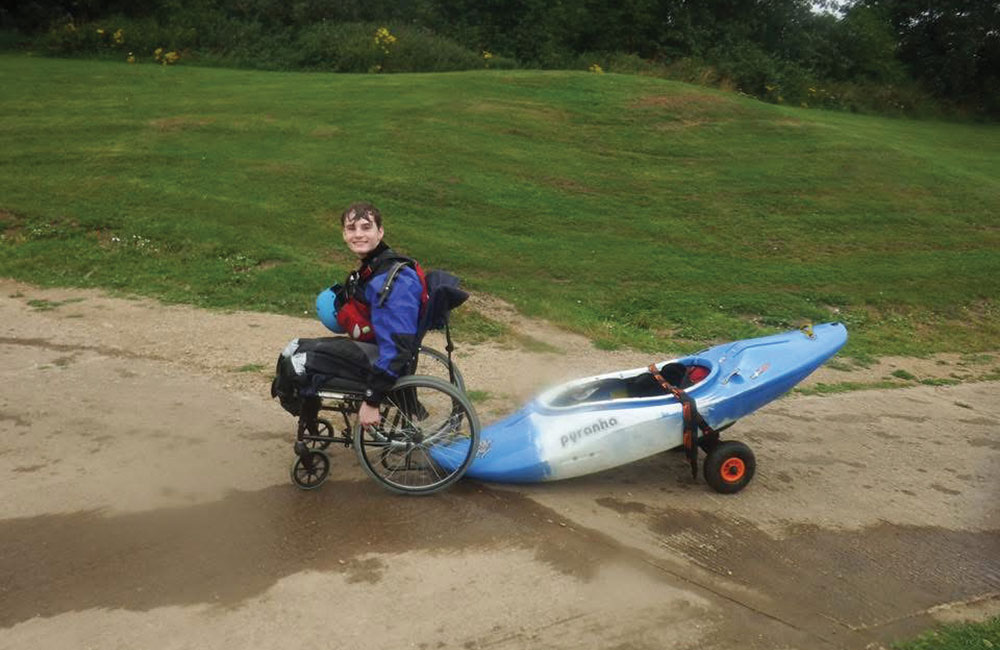
Born with a severe congenital deformity in both feet, the outcome of my first sports day at five years old wasn’t the most successful. I came last in every race – often by minutes. Back home, when asked how I was feeling, all I could say was that I wanted to slap my legs. It wasn’t about losing; I’ve never cared about winning. It was the frustration of seeing how trapped I was, isolated, and unable to complete even the most basic tasks.
Growing Up
I had countless appointments at Sheffield Children’s Hospital because my feet were incredibly stubborn. My first procedure was at seven months old – I could walk a short distance with splints, but spent most of my time wheelchair-bound. Some of the toughest years were in my teens: no cartilage in my ankles, bone grinding on bone, nerve endings crushed between them. I was barely getting through each day because of the relentless chronic pain.
People often call it brave that I asked for an amputation, but I never saw much of a choice. In June 2016, after exhausting every alternative, I underwent a general anaesthetic for the 21st time: a trans-tibial double below-knee amputation.
The legacy of my stubborn feet lived on, though. The pain and mobility challenges evolved, offering me ample opportunities to test a hard-fought ‘head down and just get on with it’ mentality.
Discovering kayaking
I’m lucky that kayaking has always been part of my life. My Dad had a small fleet tucked away in the garage, emerging for camping trips in France and the Lake District. I’m not known for being decisive, but when asked if I wanted to go on a paddling weekend with my church, it was an instant yes – a decision that has shaped my life.
Dad and I promptly joined Ichthus Canoe Club Chesterfield, where I discovered whitewater. It was one of the few places I wasn’t limited by my disability. On the water, I was just another paddler – recognised for what I could do, not what held me back. I had a great club that helped me get to the river. I am forever grateful for their coaching and for driving me around. By 14 years old, I had highlights of paddling the Glaslyn gorge, Tees, Leven, and much more.
Following amputation, my first paddle was eight weeks and two days post-surgery with no special outfitting and a duct-taped drysuit. Since then, there have been 872 entries in my logbook, progressively pushing the limits of what I thought possible.
Amputation swapped one set of problems for another. My ‘legs’ (I go with ‘egs’ instead of stumps; I lost 1/4 of my legs, so I drop 1/4 of the word!) have frequent pressure sores and infections. A day on the water or up a mountain can cost me days in my prosthetics. After all, I’m asking my ‘egs to do something they were never designed for. The pain didn’t magically stop either – I had some of my worst pain episodes post-amputation, due to nerve damage and my brain misinterpreting confused phantom signals.
Kayaking cut through all of this. Paddling whitewater, my brain is so focused, and for a few hours I’m completely pain-free. I like to think that my pain is absorbed by the sound of whitewater. The feeling of being free – uninhibited by my body – is why I got hooked on the sport, for the childhood Jack who would’ve given anything for this.
Paddling Adaptations
My first post-amputation paddle kicked off the never-ending job of improving mobility on the bank and connectivity in my kayak. Continuous new ideas developed through trial and error, I’ve beatered down more rapids than I’d like after a big boof or tailey ripped my ‘egs out my outfitting.
When I started, my ‘egs were completely exposed, and I was using knee pads on the bank. Looking back, I’m amazed I didn’t seriously damage my ‘egs and question how I made it to the water at all. I debated paddling with prosthetics. They’d help on the riverbank, but my balance is too poor for carrying a boat on steep terrain, and swimming with two heavy foot-entrapment-shaped objects isn’t appealing. I tried carrying my prosthetics in my kayak, but they’re heavy, too important to lose and don’t really work when wet!
Thankfully, my prosthetist was brilliant – creating my kayaking ‘egs or stubbies – fabricated ‘off the books’ because funding would never have been approved. Built from old foam moulds and a reinforced plastic shell, they extend slightly below my ‘egs’, offering impact protection and letting me stand – albeit at a short height. The ends were upgraded by my uncle using fibreglass and a bolted-on toffee wheel – an easily replaceable rubber drill-bit attachment. My prosthetist knew it would never pass an NHS risk assessment, so they went for the “Don’t ask, don’t tell” approach. Grip is still an issue, and I sink into boggy ground, but I manage.
The 2024 Moriston Enduro summed up all these challenges. By sheer will, I managed one lap unassisted, roping my boat up the slippery take-out where my prosthetics were waiting. The hike to the road was rough – boat on one shoulder; every step felt like walking on stilts, never knowing if I was truly stable. I eventually made it to the top, to be met with the 500m slog up the road. While the flat path is manageable, the dripping wet kayaking gear broke my prosthetic’s suction seal. Every 100m I’d lose a leg and collapse. It was a mental game of stubbornness, all to complete one lap and prove it was possible.
It’s why I prefer scrambling closer to the ground on my kayaking ‘egs for the majority of put-ins and take-outs. It’s more stable but exhausting work – shorter strides, no ankle/spring mechanism. My prosthetist told me a double below-knee amputee using prosthetics is three times less energy efficient than an able-bodied person. I dread to imagine the number when using stubbies.
I’ve adapted my boat as much as I can without professional help and expensive purpose-built prosthetics. I’m always looking for improvements, but with limited resources, you make the most of what you’ve got.
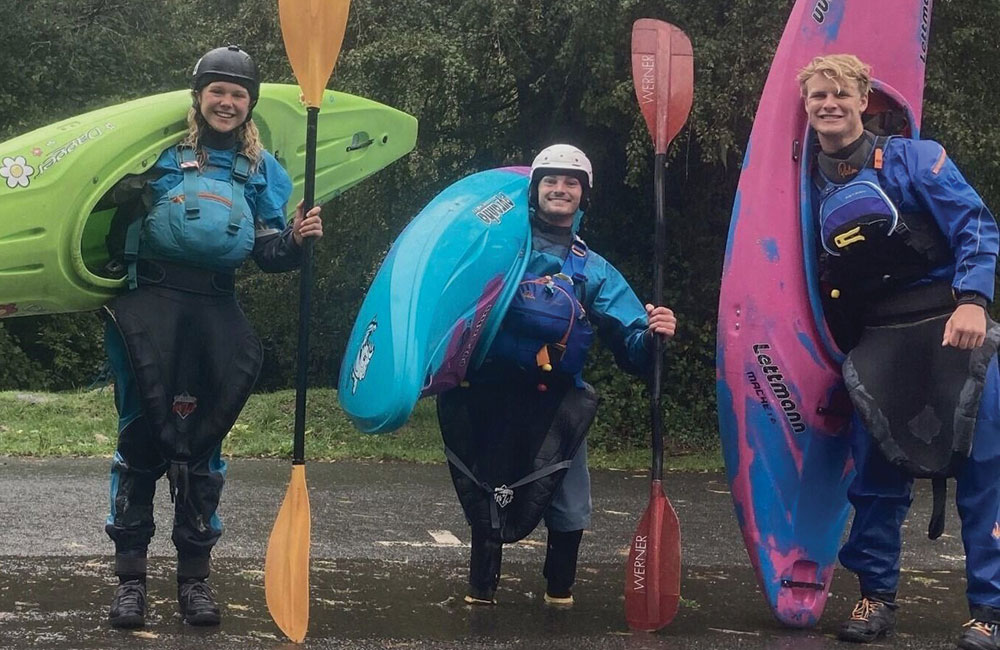
I avoided drysuits for years because the extra material around my ‘egs created additional pressure points, but during winter trips to Scotland, the need was too great. Palm was incredibly helpful in shortening the leg of my drysuit and rotating the foot 180 degrees, so the heel fits over my knee. This enabled me to keep my ‘egs dry – a huge win for managing skin health!
Getting to and from the river
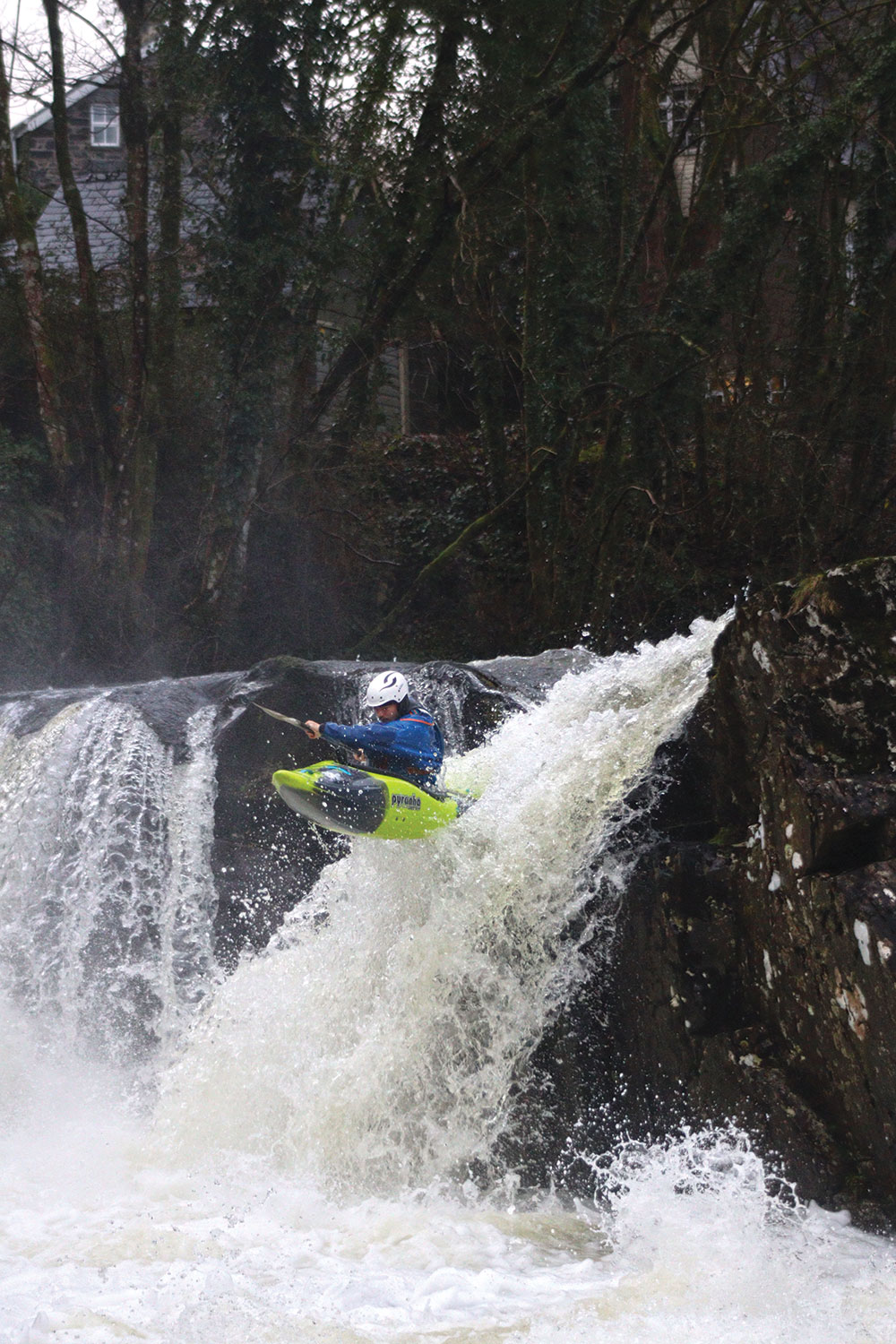
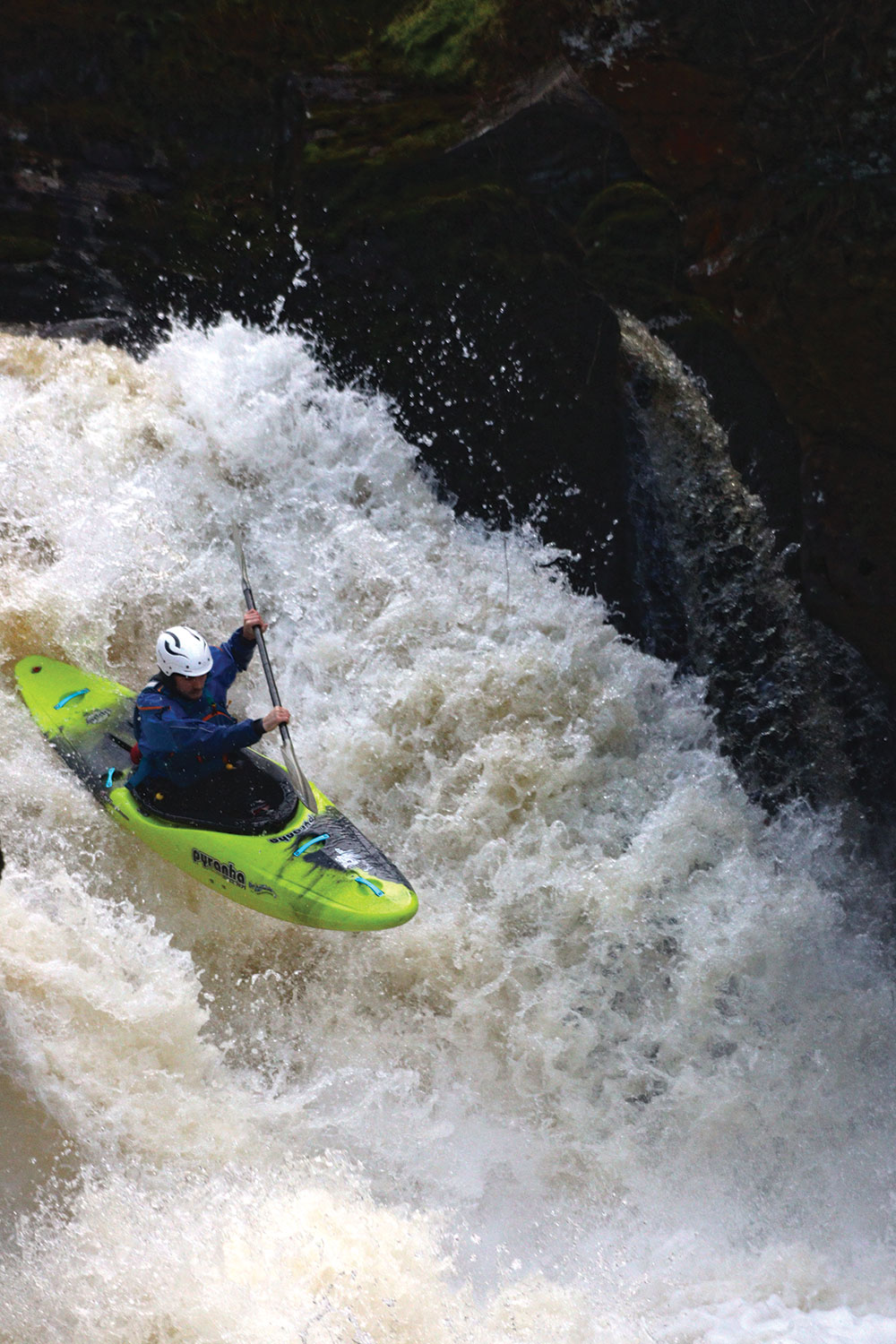
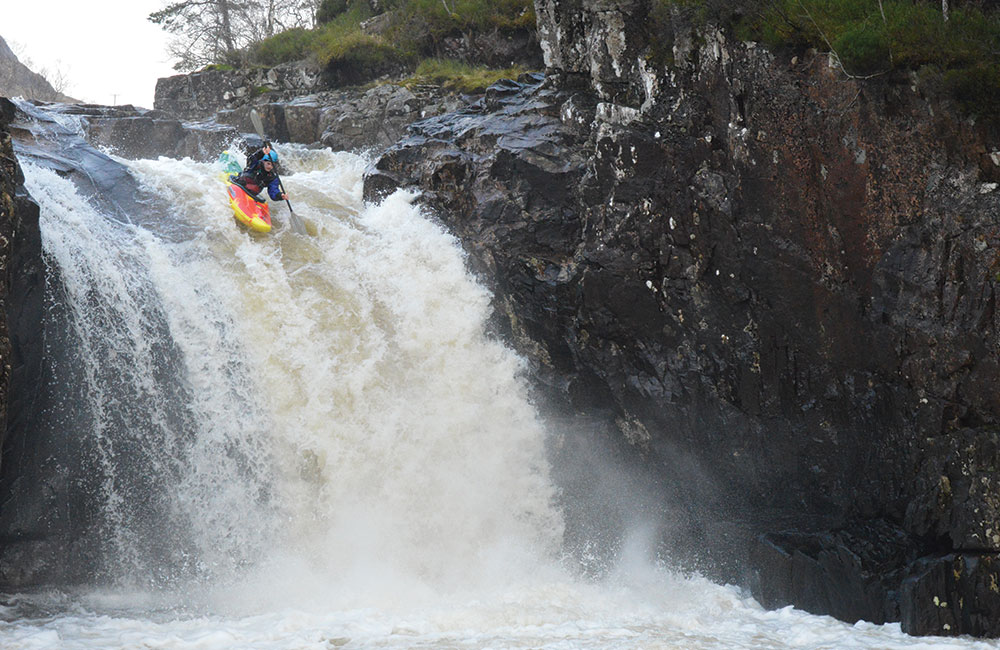
Unsurprisingly, grade 4/5 whitewater tends to go hand in hand with steep terrain and remote locations. The half-mile walk-out of the Swale waterfall section, the Mellte put-in, climbing up to the Falls of Falloch, climbing down the drainage pipe to the Ayasse, portaging round Rhaeadr Mawddach or Durance gorge – they all take their toll.
Surprise portages are also part of the process – like the Sermenzino in Italy, where we had to rope boats around an un-runnable 60-foot waterfall after accidentally putting on too high!
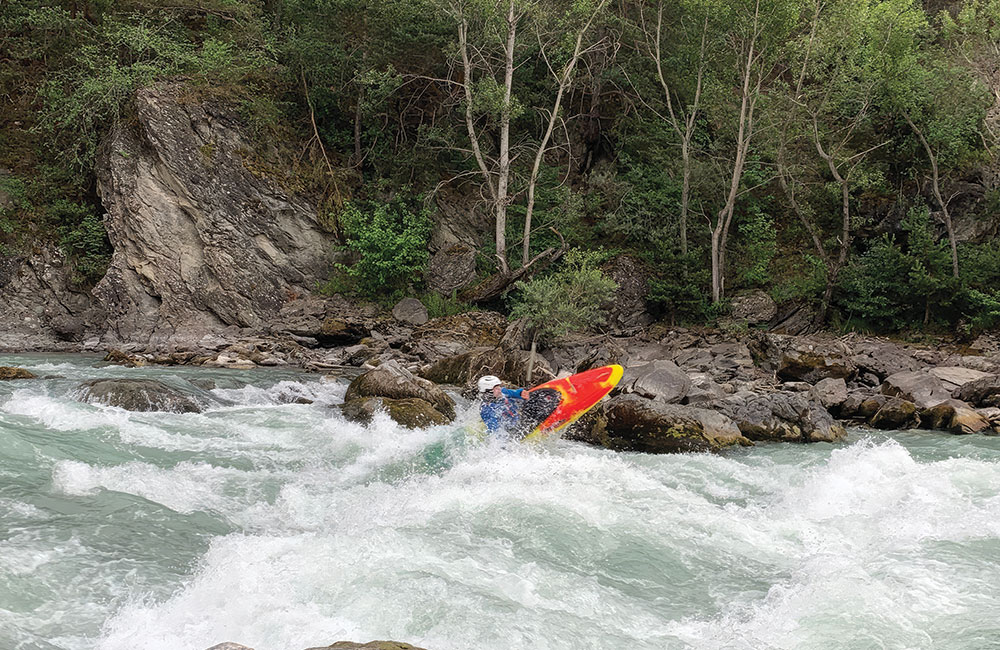
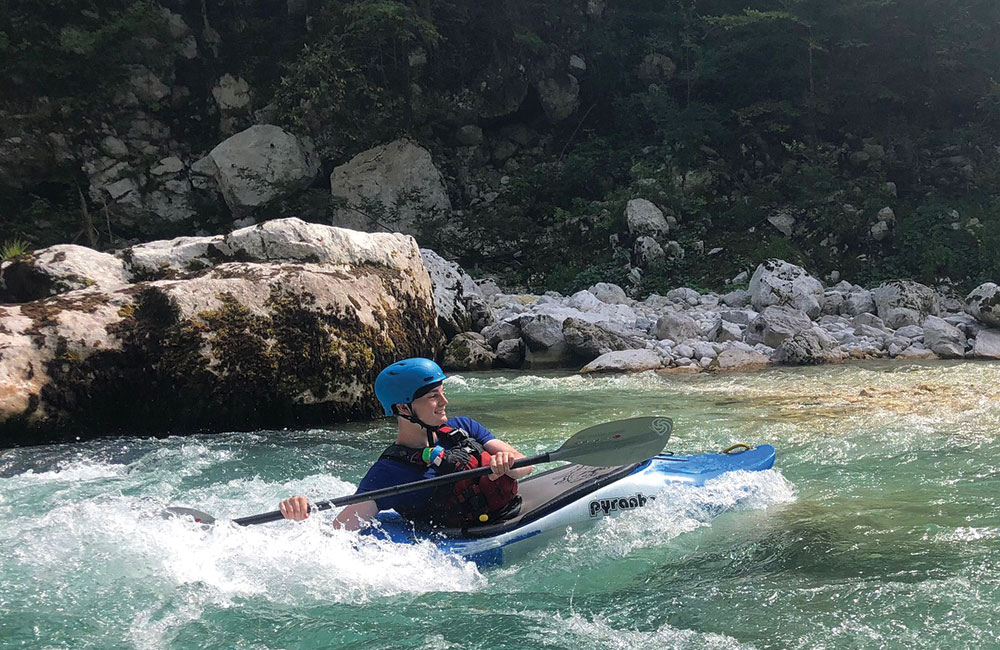
I’ve been going to the Alps every summer since 2018, and my favourite example is the steep hike into the Otona section on the Soča, Slovenia. I’ve attempted every logistical method possible, but now I have progressed enough to unlock the simplest solution – running the Katarakt ‘siphon canyon’ section above.
I shoulder my boat until it gets too challenging, then swap to dragging. I always make it – slowly. I’m desperate not to be a burden, but I’m lucky – I’ve got some of the best mates who will happily do whatever it takes (and just as importantly, let me get on with it when I need to do it on my own). The wider paddling community? Complete strangers will support – no questions asked.
Despite the faff, I always find the energy (stubbornness) to get to the river. On the water, equal with friends, as we all push and support each other, is worth it – even knowing the price of pain in the days after.
I dream about paddling further afield – Zambezi, Chile, New Zealand, and more. I nearly went out to Meglahaya once, but when my friend returned, it was clear it wouldn’t have been the trip for me. I’m still looking forward to experiencing those rivers one day – after some more problem-solving.
The Paddling
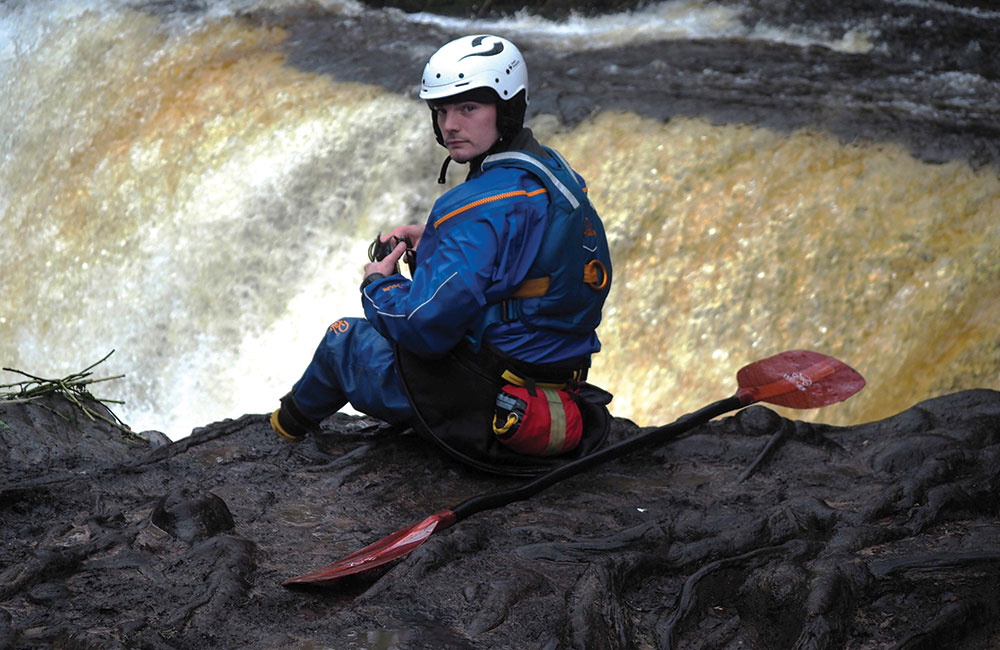
I started leading trips at university and love introducing new paddlers to the sport that’s given me so much. Adapting how I lead took practice. During my Advanced WWSR training on the Erme, I jumped into the slot drop and apparently all anyone could see was my two ‘egs bobbing downstream, so no – I’m probably not your live bait candidate or planted in fast flows to rescue pinned boats.
However, I’ve learnt to position myself where I’m most capable. Staying in my boat is best, but choosing a static throwline position also works. For more complex safety, I’m on the bank side of a live bait, rigging pulleys, and helping coordinate. When something goes wrong, I do whatever it takes to help those in a tricky spot.
I’ve luckily avoided any major swims since my amputation – likely out of extra caution. I’m a weak swimmer, and big-volume water could rip my kayaking ‘egs from me, turning a swim into a massive epic. I often run rapids blind – trusting friends who know my ability and what I need to scout. Most of the time, it works – though occasionally it backfires, thinking back to when miscommunication landed me in a hole on the Inn shoot.
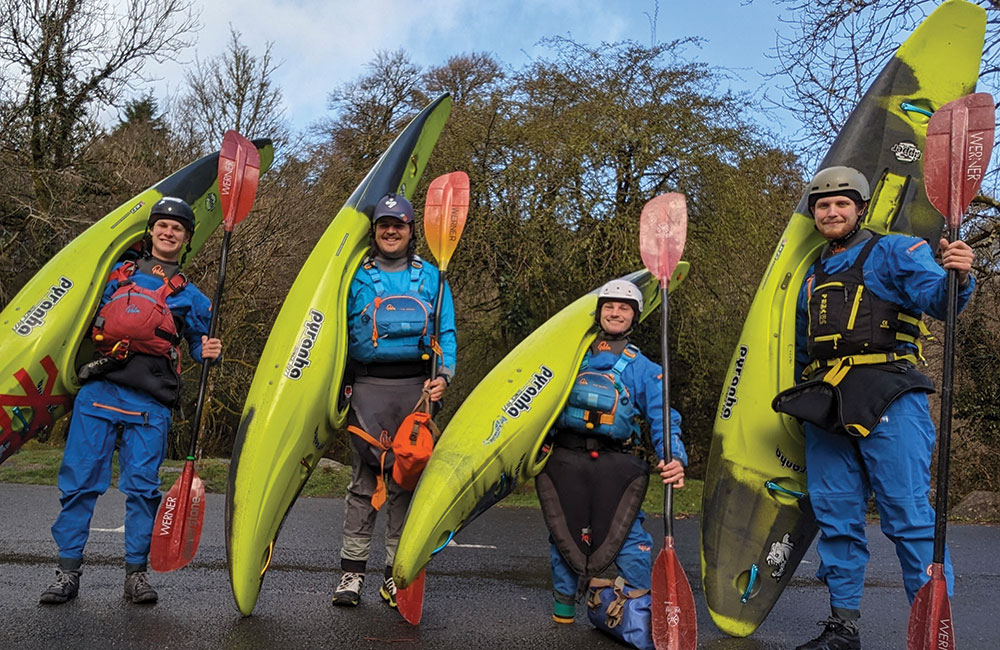
When necessary, though, I do get out my boat, for example, during my first Dartmoor triple crown (Upper Dart, Erme, and Upper Plym), it was everyone’s first time on the Plym, with its reputation for wood, I was scouting every other horizon line.
Kayaking has been, and still is, such a rewarding sport – full of peaks and troughs. Now it’s time for a new chapter: a new job, a new country (Norway!), and a new set of rivers to explore. I’m excited. I’m also a bit scared without the safety net of my friends who understand me. But mostly, I’m grateful – and want to say goodbye and thank everyone who has helped get me on the water. To those who navigated complicated put-ons, take-outs and portages with me; ideas for adaptations; or literally lifted me over barriers and threw me off bridge jumps – truly, thank you.