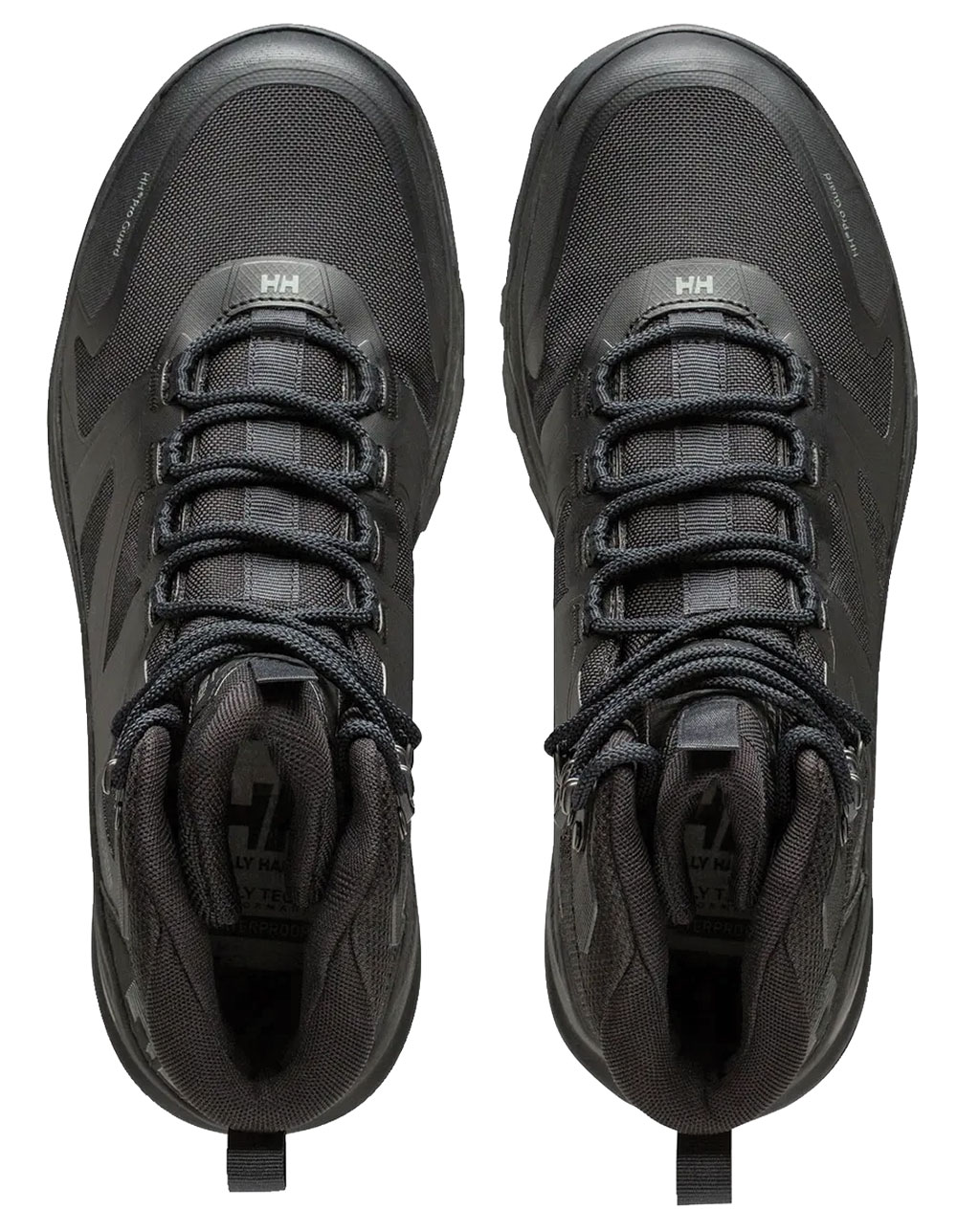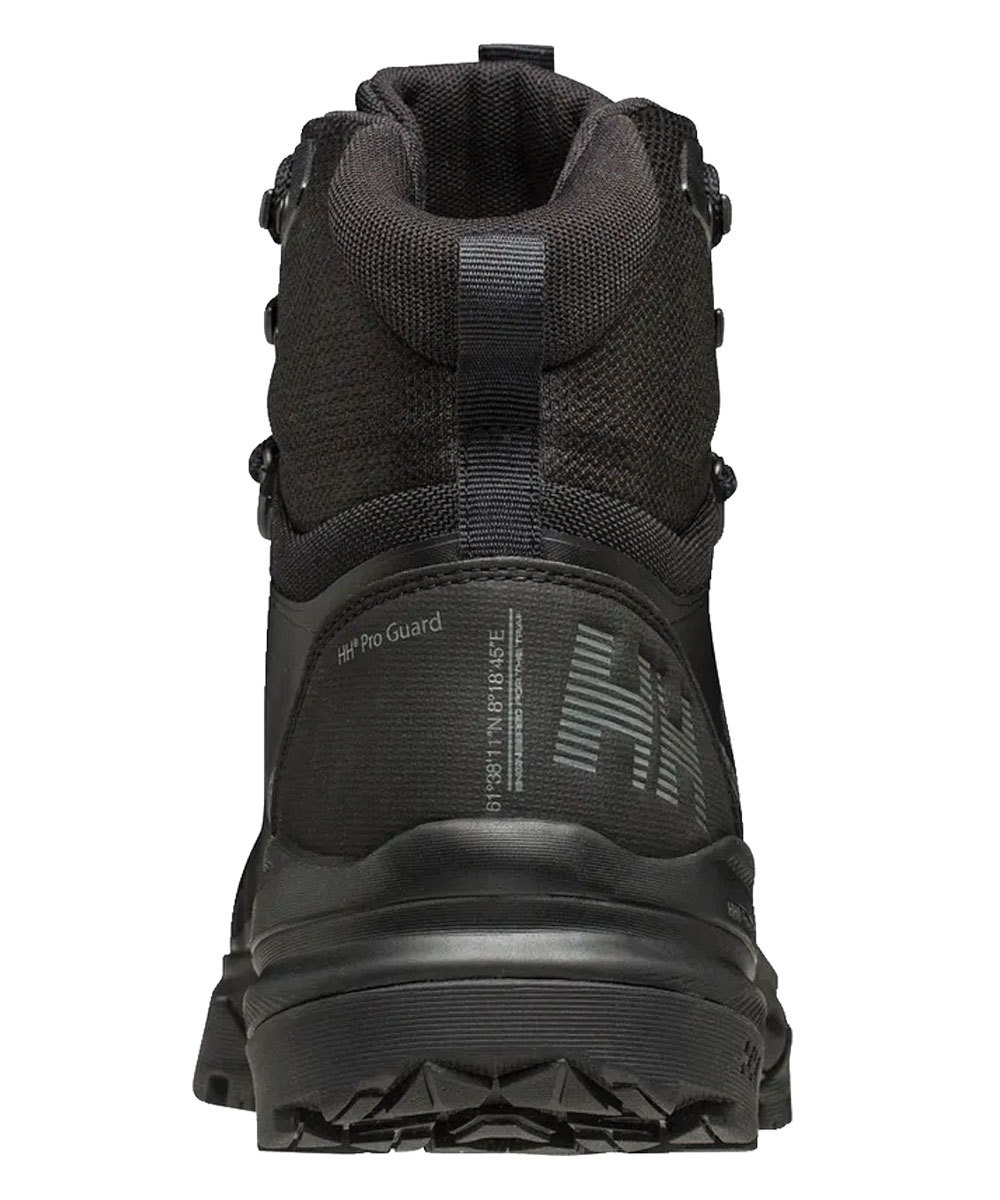
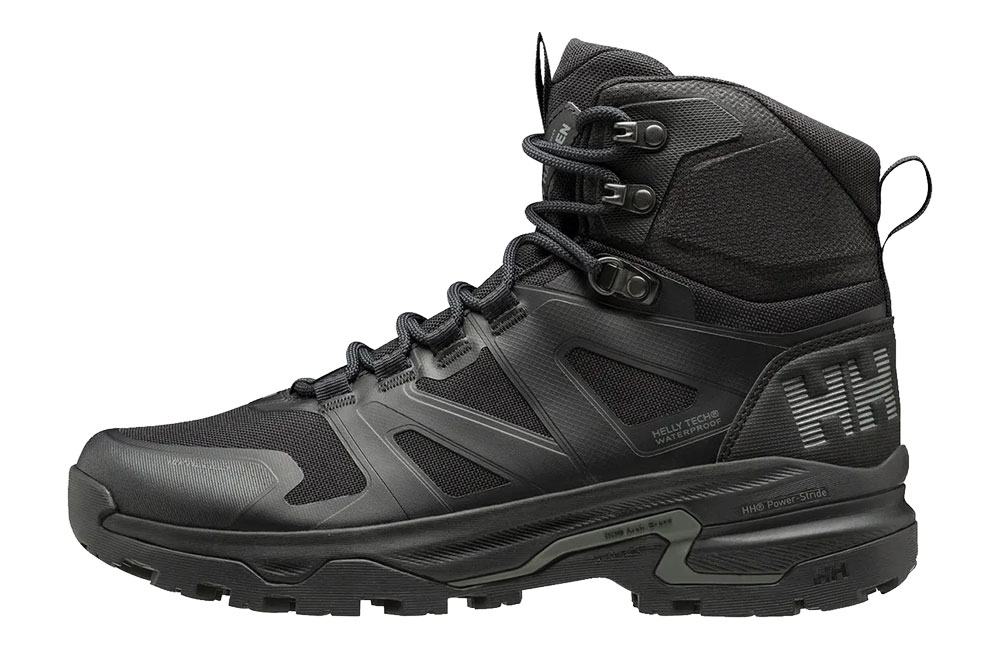

Men’s Ascender Mid Helly Tech® Waterproof Hiking Boots
By Peter Tranter
These boots sit squarely in the modern ‘lightweight mid-hiker’ category, blending trail shoe comfort with enough structure for day hikes and light backpacking. We never quite know where our kayaking can take us, and Helly Hansen has clearly prioritised versatility, designing a boot for the mixed-terrain paddlers may encounter rather than for heavy, mountainous use.
Comfort and fit
I’m sure I’m not the only one who loves a shoe we can put straight on without the mither of ‘wearing them in’. So for me, the one standout was the immediate comfort. I started with multiple dog walks, and the boots felt trail-ready almost straight out of the box.
The fit is modern and slightly athletic. It is secure through the midfoot. There is enough forefoot flex, allowing the boot to move naturally with your gait and reducing fatigue over longer distances. At about 490g each, they are notably lightweight for a mid-cut boot, ideal for what we would need them for.
Design and construction
At the core of the Ascender Mid is Helly Hansen’s proprietary Helly Tech® waterproof membrane. This combines with seam-sealed and hydrophobic-treated materials. In every day language that means strong wet-weather protection. The upper uses over 70% recycled polyester, demonstrating a growing focus on sustainability without compromising structure. Reinforcements at the toe and heel (HH® Pro Guard) improve durability in high-wear zones. The padded collar gives a nice amount of comfort around the ankle.
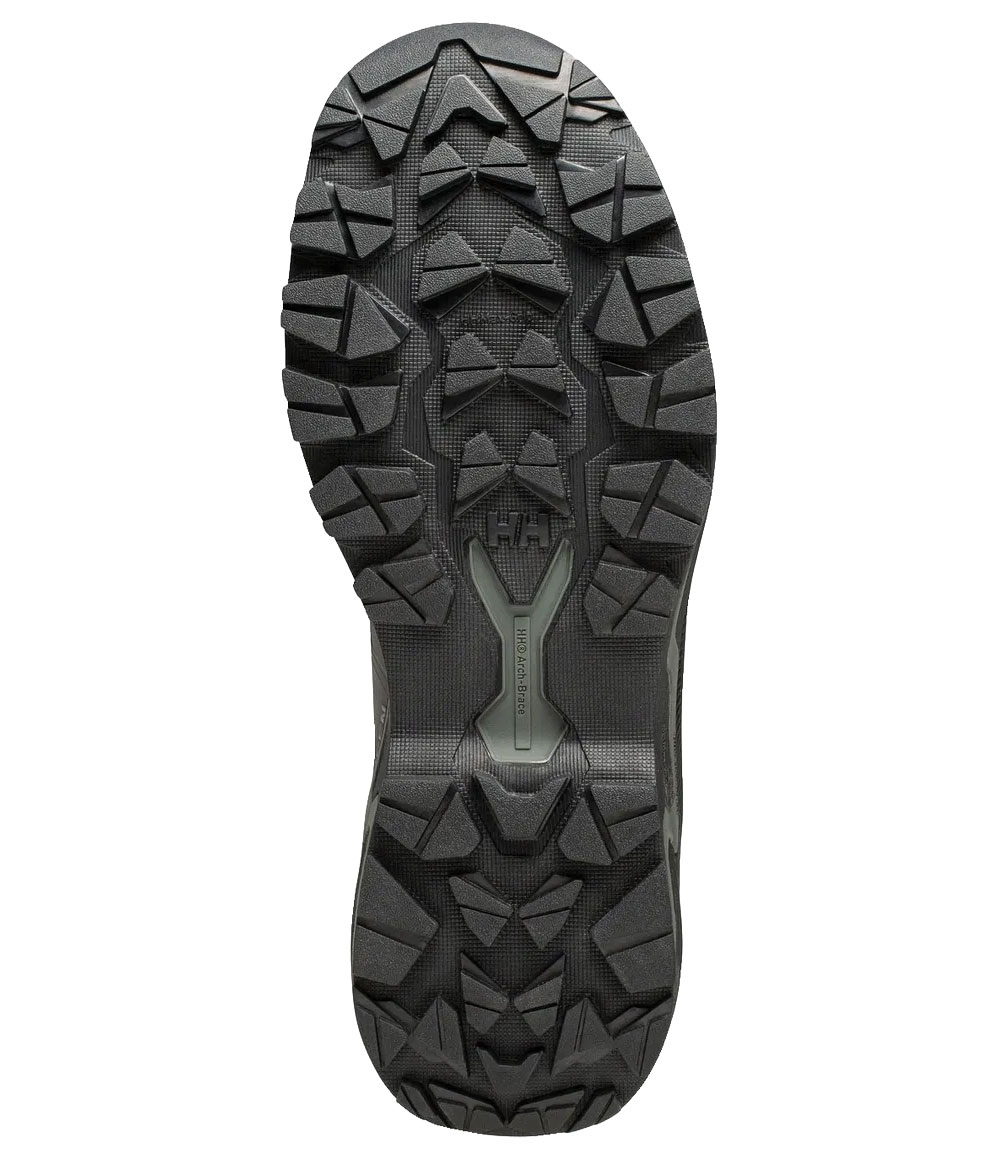
Underfoot, the boot features a multi-component system:
- HH® Max-Grip outsole for traction across varied terrain.
- HH® Power-Stride midsole for energy return and cushioning.
- HH® Arch-Brace for torsional stability.
This design gives the Ascender an athletic feel unlike traditional boots.
Performance
In our wet UK winter conditions – boggy paths, stream crossings, and persistent rain – the boots perform well, keeping my feet dry on even the ‘very wet’ trails. The outsole performs well on rock, hardpack, and descents. The lug pattern gives confident braking and stability. In deep mud, performance is more mixed; the tread struggles to shed thick clay, so grip is lower than with more aggressive soles. The breathability is pretty good, not exceptional. In cooler climates, this is rarely an issue, but in warmer summer conditions or during high-output hikes, some heat build-up is noticeable.
Support and stability
This is where the Ascender makes a clear trade-off. It offers decent structure but lacks the rigid ankle support of heavier trekking boots; however, for a paddler, the emphasis is getting to and walking between put-ins, rather than heavy hiking. For hikers carrying heavy packs or tackling very uneven terrain, this could be a limitation. The combination of synthetic materials and protective overlays suggests good durability for general hiking use. The outsole rubber, with partial recycled content, balances grip and wear resistance well.
Conclusion
The Ascender stands out as a capable, modern hiking boot that offers excellent comfort, low weight, and an impressive all-weather versatility. Its design best serves those seeking reliable performance across varied UK terrain and in unpredictable conditions, and, for paddlers, I feel, makes the perfect compromise. While moderate ankle support and limited traction in deep mud are its main drawbacks, these align with its focus on lightweight design. If comfort, light weight, and waterproof performance are your top priorities, as a paddler, they probably would be, then the Ascender is a strong option.
Price: £180.00